

Indian Farming Crisis : The Third Way — Part 2

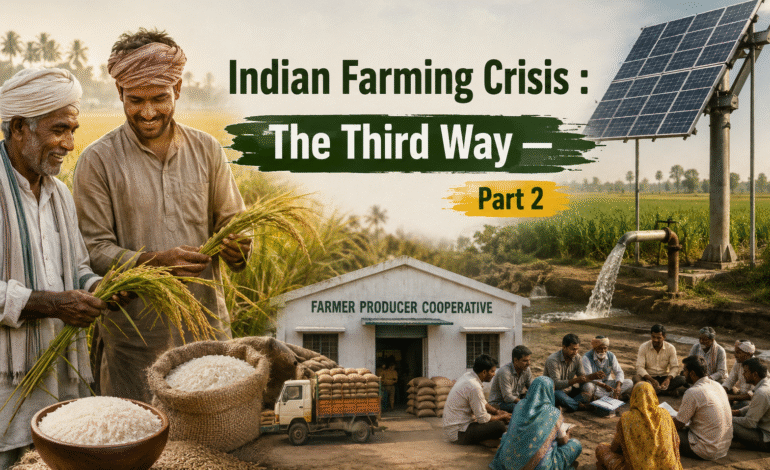
The Third Way: Producer Cooperatives for Food Grain
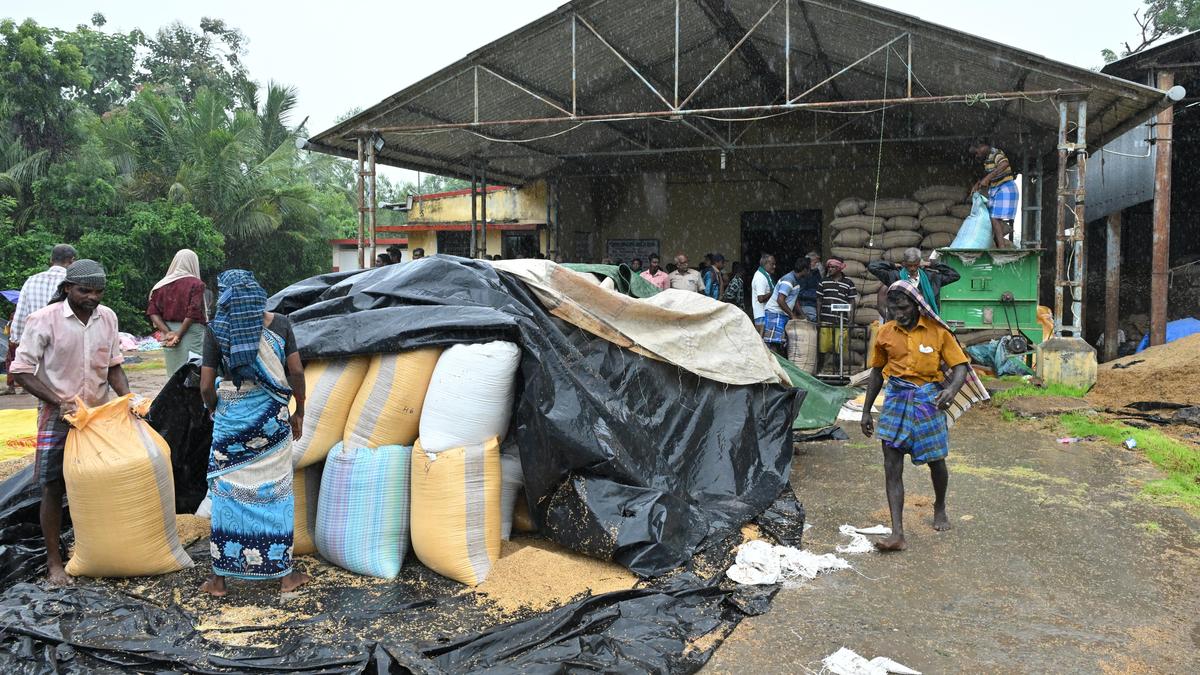
The proposal, then, is this: apply the institutional logic of the dairy cooperative to food grain. Create farmer-owned producer cooperatives that procure grain from members, process it into rice or flour or other value-added forms, and sell directly to consumers—bypassing the two to three layers of profit-taking intermediaries that currently capture the margin between farm and table.
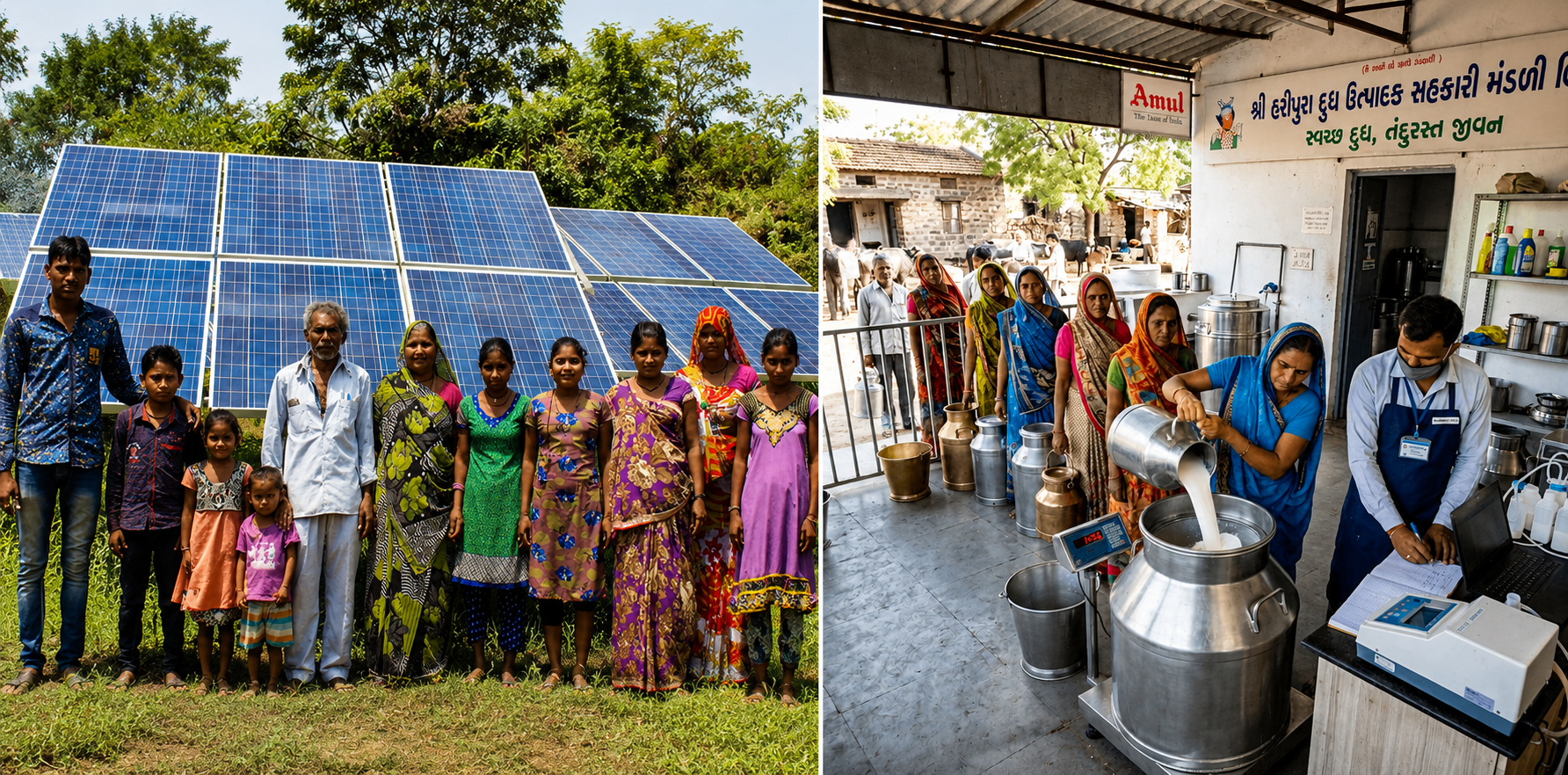
The arithmetic is not difficult to estimate, though it cannot be precise in advance. If the current arrangement returns, say, twenty-one rupees per kilogram to the rice farmer under MSP procurement, a cooperative model that processes paddy into rice and sells directly to consumers could plausibly return an additional five to six rupees per kilogram. For a farmer with two and a half acres growing two paddy crops annually, this translates to forty-five thousand to fifty thousand additional rupees per year—a meaningful improvement, though not, by itself, transformative.
The honest qualification is this: a twenty-five to thirty per cent income improvement, while welcome, does not close the decades-long gap between agricultural and non-agricultural incomes. Government salaries and private-sector wages have grown at rates that farm income has not approached in fifty years. The cooperative proposal is a necessary reform, not a sufficient one.
The standard objection to cooperatives in India—invoked with such regularity that it has acquired the status of received wisdom—is that they inevitably become vehicles for political capture. Maharashtra’s sugar cooperatives are the standard exhibit: politicians using co-op boards for patronage, managements running them for private benefit, the farmer-members left with worse prices than a well-functioning market would have given them.
This objection confuses the failure of particular cooperatives with the impossibility of the model. Maharashtra’s sugar cooperatives are troubled; But, they are also the reason sugarcane farmers receive better prices that their equivalents in unregulated crops do not. Onion farmers, tomato farmers, potato farmers—crops without cooperative structures and without any price floor—periodically dump their produce on highways because the open market has collapsed and they cannot afford the trucking costs to a distant mandi. The cooperatives, even in its imperfect forms, provide a protection that the market demonstrably does not.
The real challenge is governance: how to structure farmer-owned enterprises so that political capture is difficult, management is accountable, and the surplus genuinely reaches members. This is a solvable problem. Amul solved it. Kerala’s Milma solved it. The solution requires legal design, member education, transparent accounting, and active protection from political interference—none of which is beyond the capacity of a competent state government. What it requires, above all, is the political will to treat cooperatives as genuine economic institutions rather than as vote-bank management tools.

Amul solved the governance problem. Milma solved it. The solution exists; what is missing is the political will to replicate it in food grain.
The Second Leg: Solar Energy as a Farmer Income
There is a second element of the third way, less familiar but with compelling evidence behind it. It comes from a village called Dhundi, in Kheda district of Gujarat—and from a question that Theodore Levitt would have recognised.
In 1960, Levitt published a celebrated essay in the Harvard Business Review called ‘Marketing Myopia.’ His argument was that companies fail when they define their business too narrowly. The Hollywood studios of the nineteen-fifties thought they were in the film business. They were actually in the entertainment business—and when television arrived, they were slow to recognise that the new medium was a new distribution channel for the same underlying product. Most of them declined.
Apply this logic to Indian farming. Why must a farmer’s income come only from crops? A farmer with land in rural India is sitting on one of the most valuable resources for the twenty-first-century economy: land exposed to sunlight for three hundred days a year, with electricity grids increasingly designed to absorb distributed generation. The farmer who thinks of herself as a food producer may be missing the more remunerative business she is actually positioned to be in.
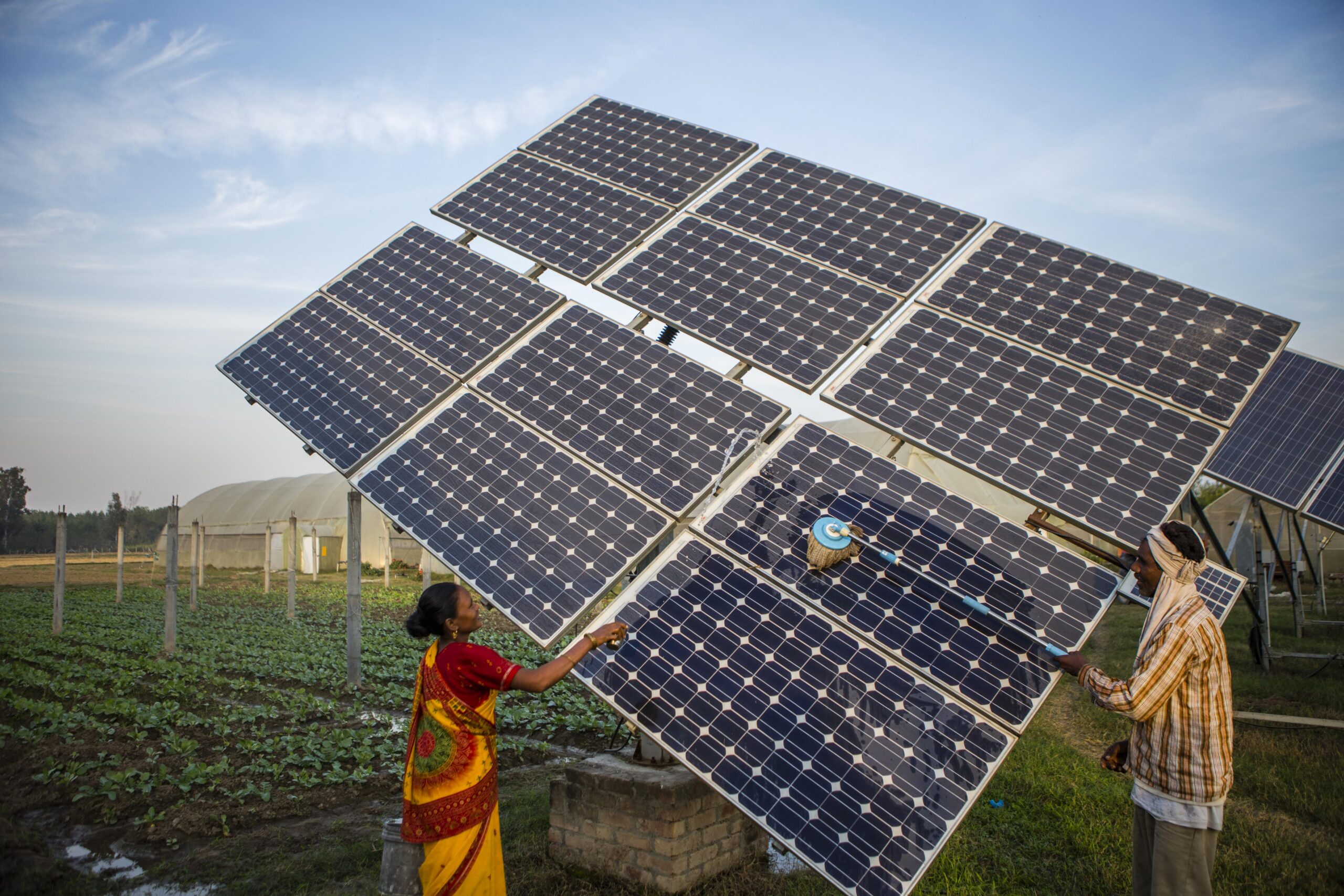
At Dhundi, Professor Tushar Shah of the International Water Management Institute designed and implemented a pilot that the Indian government would be wise to study carefully. Six farmers pooled resources to install solar panels on roughly a fifteen hundred square feet of their land each. The solar generation powers their irrigation pumps during the day—replacing the erratic, often nocturnal electricity supply that Indian farm pumps have always depended on—and the surplus generation is fed into the grid. Each farmer earns between sixty and seventy thousand rupees a year from the surplus electricity alone. For several of them, their total income has roughly doubled.
The advantages of this model deserve to be enumerated, because each one addresses a distinct failure of the current system. Electricity reaches farmers during daylight hours, when irrigation is actually useful. Because the electricity is consumed close to where it is generated, distribution losses—one of Indian power utilities’ most chronic and expensive problems—are substantially reduced. The government’s subsidy burden for agricultural electricity diminishes, because farmers are partly self-supplying. The income from solar generation is stable in a way that crop income never is: it is not vulnerable to drought, pest infestation, hail, or any of the other risks that make farming a gamble. And unlike large-scale solar farms, which take productive agricultural land out of cultivation permanently, rooftop or on-field solar installations can be designed to allow shade-tolerant crops to grow underneath—the panels above, the crop below.
The Infrastructure Transformation Required
The solar model requires a change in grid infrastructure that will be resisted by every interest that benefits from the current arrangement. India’s electricity grid is designed for centralised generation: a few large plants in each state produce power that travels long distances to tens of millions of consumers. The grid was built for this direction of flow. It was not designed to aggregate the small surpluses of millions of on-farm generators and route them efficiently to nearby consumers.
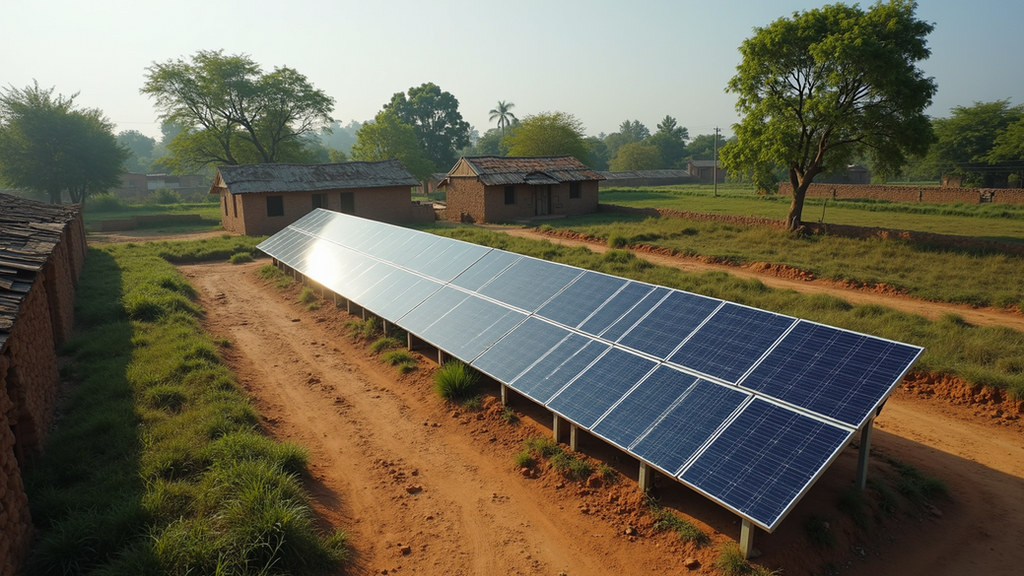
The reform needed is not technically impossible. It is the introduction of what engineers call a ‘smart grid’ architecture that can handle distributed generation: power flows from farms to nearby villages, with only the surplus reaching the main transmission network. This inversion of the current model—local production, local consumption first, excess exported outward—requires investment in new metering, new switchgear, and new regulatory frameworks. It will be opposed by large private generators who benefit from the current model, and by state electricity boards whose institutional culture is built around centralised control.
The analogy that should concentrate minds is the banking nationalisation of 1969. Before July of that year, India had roughly eighty-two hundred bank branches, concentrated in cities, serving the urban middle class and large industry. Agricultural credit accounted for about two per cent of total bank lending. Rural households kept their savings in insecure forms—cash, gold, chit funds or private banks with very high risks of bankruptcy. (Before Bank nationalisation, bankruptcy was very common in India. Even a great scientist like C V Raman lost his substantial part of his nobel money to bankruptcy). And Poor borrowed from moneylenders at rates that made capital accumulation impossible.
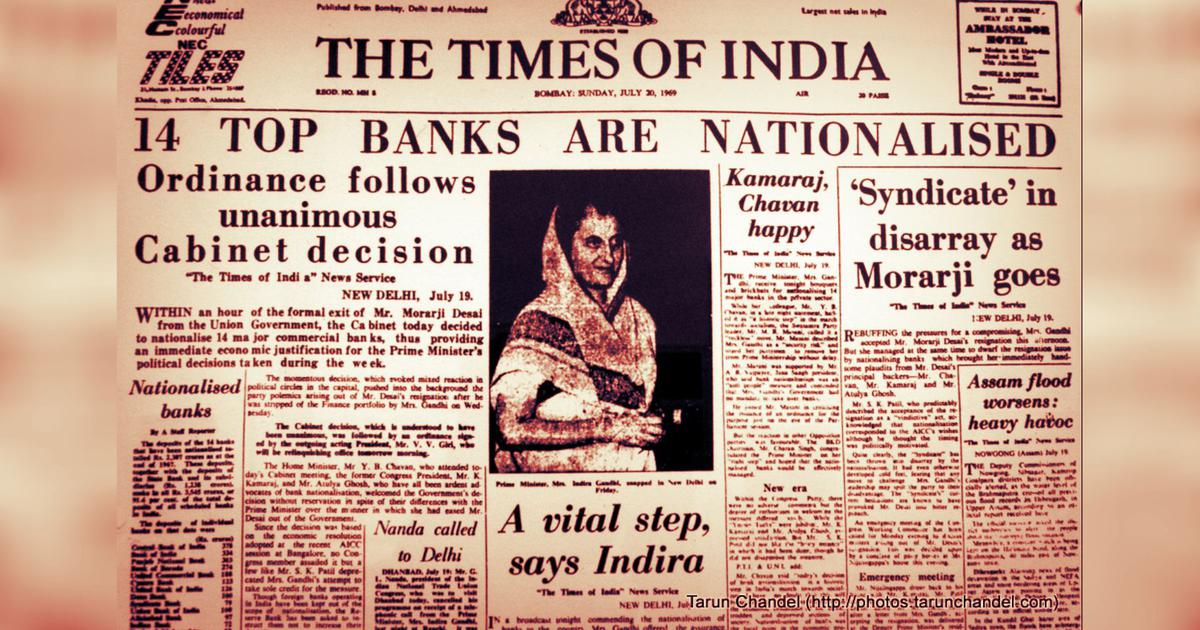
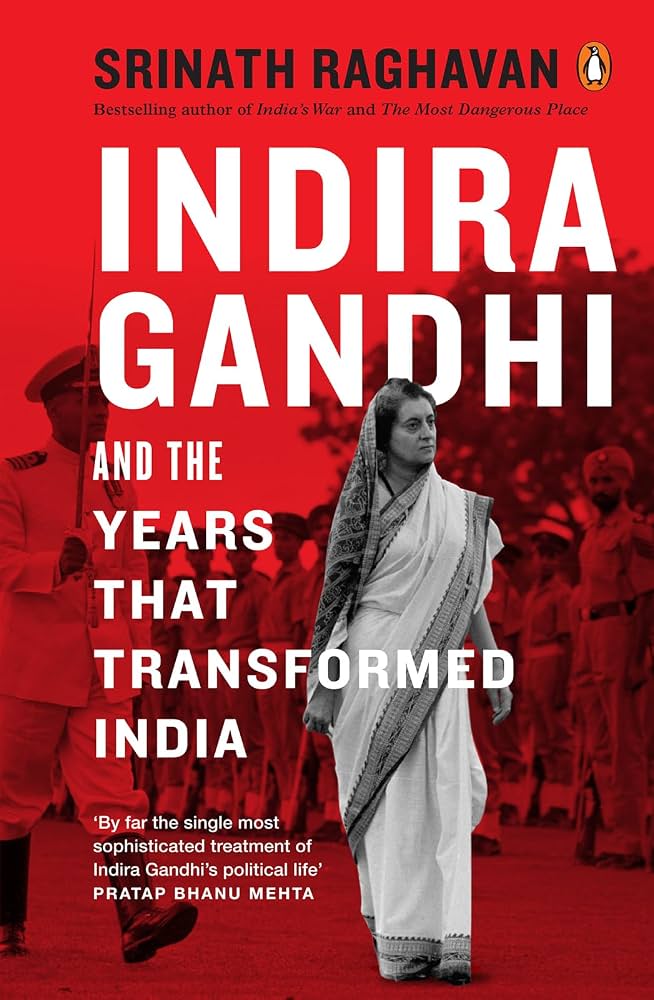
The nationalisation of fourteen major banks changed this structure fundamentally. Branches were opened across rural India. Priority sector lending targets required banks to channel forty per cent of their credit to agriculture and small industry. Farmers who had borrowed from moneylenders at usurious interest rates could now borrow from nationalised banks at ten per cent. The savings of hundreds of millions of ordinary Indians, now secured by a state-backed banking institution without any fear of bankruptcy, were mobilised for and used for industrial investment. By late 70s, the bank deposits formed 67% of the government borrowing says historian Srinath Raghavan in his latest book, ‘Indira Gandhi and the years that changed India’. He further adds, ‘By 1990, rural households were getting almost a third of their credit from the nationalised banks. Over this period, bank expansion, savings mobilisation and provision of credit significantly influenced growth in per capita output and poverty reduction in rural India’. India today has the largest bank branch network in the world—a consequence of a single structural decision taken fifty years ago.
The farmer solar cooperative is a proposal of equivalent ambition. It does not ask the government to give farmers more money. It asks the government to redesign the system so that farmers can earn more money from assets they already possess—land and sunlight—by removing the structural barriers that currently prevent them from doing so.
The Arithmetic of Rural Renewal
Put the two proposals together and the implications become visible. An average farmer who owns two and a half acres of land, growing two paddy crops annually, and who joins both a food grain producer cooperative and a solar generation cooperative, could plausibly see her annual income increase from a current baseline of perhaps one hundred thousand rupees to something closer to two hundred thousand. That is not guaranteed—the numbers depend on cooperative management quality, electricity tariffs, land configuration, and market conditions. But the Dhundi experiment and the dairy cooperative record together provide a reasonably solid empirical foundation for the range.
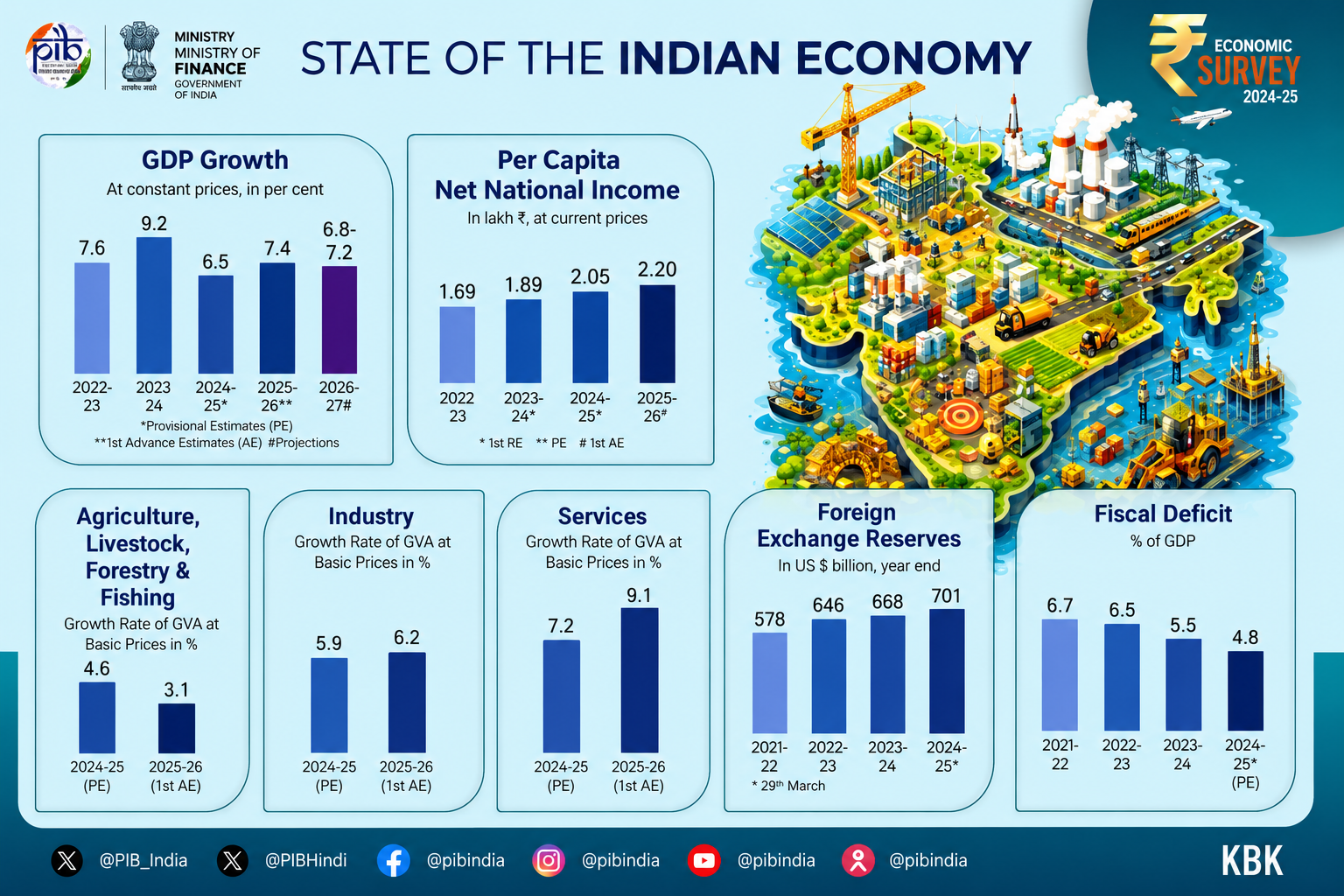
Fifty per cent of India’s population depends on agriculture for its livelihood which is more than double the number of people who depended on farming when India got independence. These seven hundred million people contribute about fifteen per cent of GDP—a gap that is by itself an indictment of the institutional structures they are embedded in. The grain cooperative and the solar cooperative together would begin to close that gap, not by redistributing income from elsewhere in the economy but by capturing value that is currently leaking out of the agricultural system through intermediaries and unused land capacity.
The rural economy that results would be different in quality, not just quantity. Farmers with stable, diversified income streams are farmers who can invest in their children’s education, access healthcare without borrowing, and participate as genuine consumers in the formal economy rather than as its dependents. Rural demand at this scale becomes a growth engine for the broader economy: the market for manufactured goods, construction, healthcare, and education that seven hundred million people with rising incomes would create is far larger than anything that can be conjured by urban consumption.
The farm crisis of 2024 will not be the last. In 1991, India’s foreign exchange crisis forced a reform of industrial and trade policy that unlocked three decades of growth. The farmer protests of 2020 and 2024—visible, disruptive, and fundamentally legitimate—are a comparable moment. The government that wasted the 2020 crisis by trying to force through reforms that farmers did not want should not waste this one. The third way—cooperatives to capture more of the supply chain, solar generation to diversify farm income, and grid reform to make farm solar power possible—is not a utopia. It is a possible programme. The question is whether the political system and the Leadership has the willingness to execute it.
Read Part 1 here: https://theaidem.com/en-indian-farming-crisis-the-third-way/

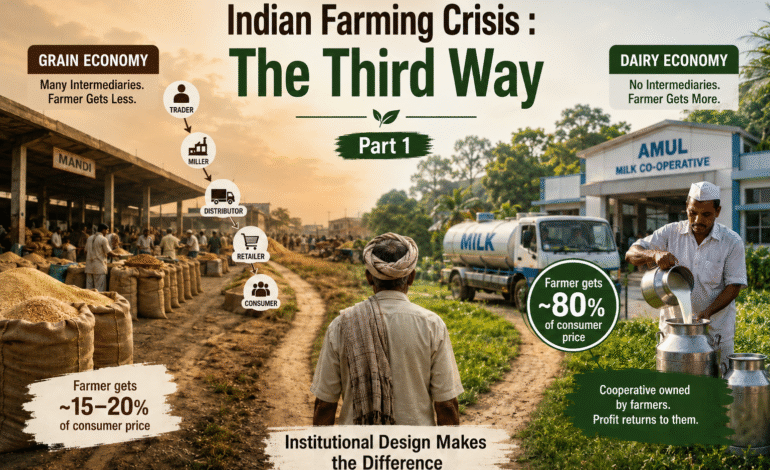








A powerful and practical vision for India’s farming future. Balasubramaniam Muthusamy shows that the answer to the agrarian crisis is not charity, but structural change—farmer-owned cooperatives, better value capture, solar income and smarter grids. The real question is political will: will we finally build systems that make farmers owners of value, not victims of the market?