The National Democratic Alliance (NDA) deserves credit for an unprecedented victory in Bihar. Nitish Kumar’s personal image and the astute political strategy adopted by the Bharatiya Janata Party combined to produce the sweep by the Alliance.

Narendra Modi and Nitish Kumar during oath ceremony after Bihar elections. While a victory for the Alliance was on the cards given the huge voter turnout, the extent of the victory may have surprised even the leaders of the NDA. But there was an external ally of the NDA that played a critical role and also deserves to be named: the Election Commission of India. It is difficult to recall an earlier occasion when the Commission acted in such a partisan manner as it has done in the Bihar elections.
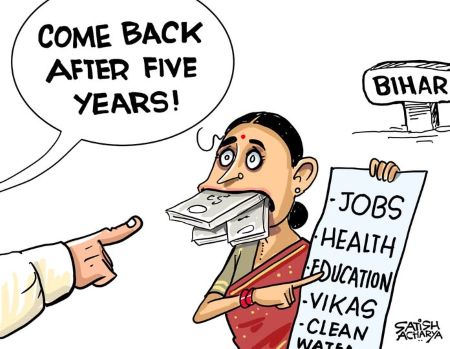
Its most brazen act was turning a blind eye to the open bribery it allowed when the state government announced an initial grant of ₹10,000 in cash to 1.76 crore women in Bihar on the eve of the elections. The government also indicated that this amount was only an advance and that up to ₹2 lakh would be given within the next six months to start a venture—provided the government was returned to power.
An amount of ₹10,000 and a promise of ₹2 lakh is indeed huge for the people of a state where the per capita income is the lowest in the country, at just about ₹30,000 a year, compared to the all-India figure of a little over ₹1 lakh.
As part of its strategy, the NDA announced this scheme just a few days before the official announcement of the Assembly elections and the commencement of the Model Code of Conduct.
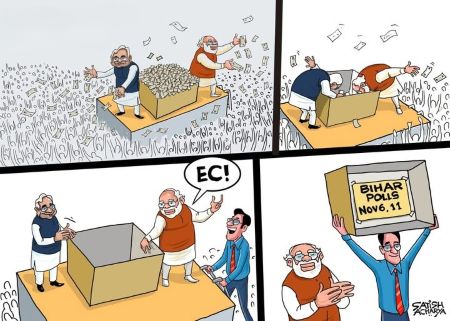
The announcement was timed in such a way that the money would be deposited in the bank accounts of women during the campaign and even up to a day before voting. The Election Commission cannot be faulted for the timing of the scheme’s announcement, but it surely deserves blame for not putting the cash transfer on hold after the elections were announced. Any Election Commission with a modicum of self-respect would have done so.
To let it pass under the thin excuse of an “ongoing scheme” was to make a mockery of democratic principles. In fact, it even gave special permission to the state government to carry out the cash doles. Why couldn’t it put the transfers on hold until after the election process was over?
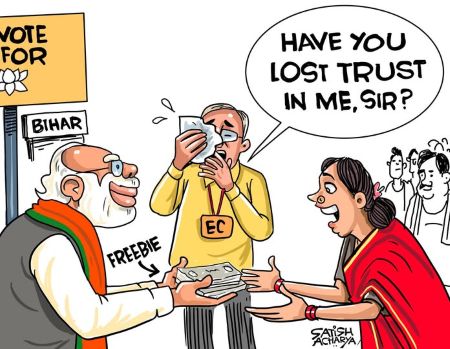
This turning of a blind eye towards such a blatant act has further eroded the credibility of the Election Commission of India, which has already been facing criticism for acting as a handmaiden of the government—particularly since the government amended the rules for selection of the Chief Election Commissioner and Election Commissioners.
This is enabling “vote chori” of a different kind, not the one Rahul Gandhi has been alleging over the last few months. Indeed, he has failed to convince voters—and even his own party leaders—that the so-called fake votes actually went to the Bharatiya Janata Party.
Even his “H-bomb” turned out to be a damp squib, as he failed to produce any voter who claimed that someone else had cast their vote.
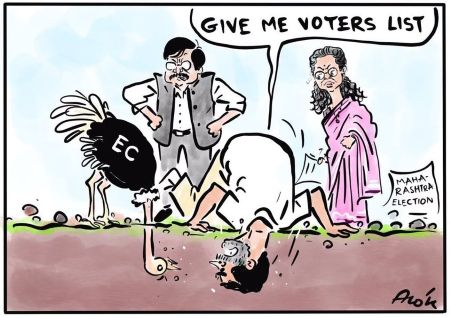
While the Election Commission should have stepped in to halt the transfer of cash as the campaign reached its peak, opposition parties like the Rashtriya Janata Dal and the Congress were wary of opposing the scheme for fear of a backlash from women. Instead, Tejashwi Yadav of the RJD announced a counter-scheme promising one government job for each family in the state. This promise was so ridiculous that no one was prepared to believe it.
The current strength of government employees is only around 20,000, yet he was promising 26 million jobs—costing a whopping ₹6,50,000 crore!
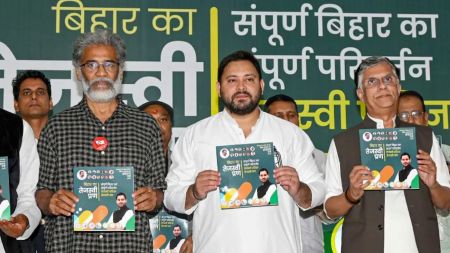
He also promised ₹2,500 per month to “eligible women” for the next five years. Obviously, cash in hand seemed more credible to voters than wild promises.
However, it must be said to Nitish Kumar’s credit that the cash transfer of ₹10,000 to 1.76 crore women was not the only factor that catapulted him to power for a fifth consecutive term.
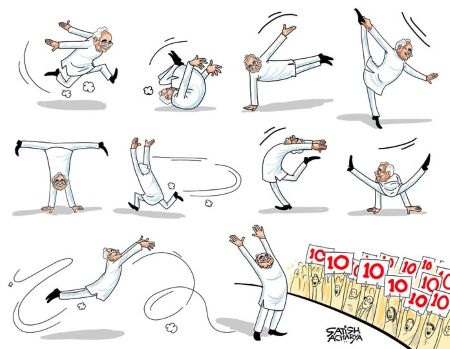
His long-standing focus on women’s welfare and empowerment has paid dividends since the days of distributing bicycles to high-school girls about two decades ago.
Those girls became empowered women, and many of them are now mothers who received ₹10,000 to start a business, along with the promise of a grant of up to ₹2 lakh. He has also implemented several other commendable schemes for women, leading to their unprecedented turnout in his support.
The point in contention is the announcement of this particular scheme on the eve of the elections and the Election Commission allowing cash transfers during the peak of the campaign.
If only Nitish Kumar had announced the ₹10,000 scheme a few months—or even a year—before the elections. But perhaps he feared that public memory might be short.
This article was originally published by Punjab Today and can be read here.