

Custodial Violence, CCTV Mandates, and the Common Man’s Hope in the Rule of Law


“Power without scrutiny is violence waiting for a room,” a jurist once warned. In India’s police stations, that room too often has no witnesses. Court orders promise transparency; practice breeds opacity. Between constitutional guarantees and the citizen’s bruised body lies a failing apparatus of compliance. Cameras that should remember forget. Records that should protect vanish. When the State’s coercive arm escapes the public eye, the rule of law becomes an article of faith. This is where hope pleads for proof.
As an Advocate, my professional calling has always been to take up and fight for public causes, to aid the ailing humanity, and to ensure that the majesty of law is not diminished by administrative inertia. Among my notable contributions stands the amendment of the ten-day bail rule of the Allahabad High Court, which once mandated that an accused languish in incarceration for at least ten days before his matter was heard by a competent Bench of the Hon’ble High Court. Through persistent advocacy, that period was reduced to two days, a reform that safeguarded liberty and restored constitutional dignity.
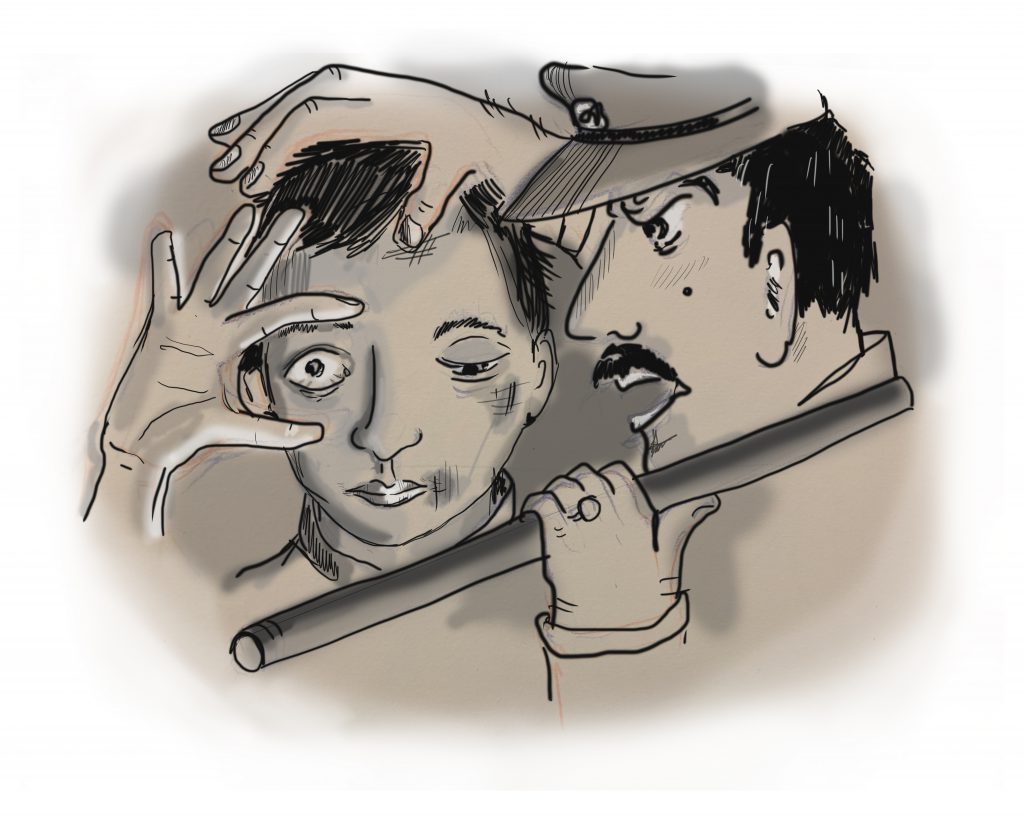
Today, I find myself engaged in another pressing cause, the systematic violation of the Supreme Court’s binding mandate on CCTV installation and footage preservation in police stations, a matter that directly implicates the rights of countless citizens subjected to custodial violence. Plato, in his “Republic”, warned that unchecked power breeds tyranny, and tyranny inevitably devours the liberties of the people. Custodial violence exemplifies this descent where the guardians of law become violators of it, and the police stations become theatres of indignity rather than a chamber of lawful restraint. In such spaces, unfortunately, the individual ceases to be a citizen and is reduced to a mere subject of force.
The Supreme Court, in Paramvir Singh Saini v. Baljit Singh¹, issued directions of profound constitutional significance. It mandated that CCTV systems in police stations must be equipped with night vision, must record both audio and video, and most importantly, must preserve footage for eighteen months, with a minimum threshold of one year. These directions were not mere administrative guidelines; they were issued in furtherance of Article 21 of the Constitution, the right to life and personal liberty. The Court emphasized that compliance was to be both “in letter and in spirit,” emphasising that transparency in custodial spaces is the bedrock of human dignity.
Yet, the reality unearthed through my RTI applications across various districts in Uttar Pradesh, such as Lucknow, Kanpur, Ghaziabad, Bahraich, and Lakhimpur Kheri, revealed a disturbing picture. Police stations reported retention periods as meagre as seven days in Kanpur’s Naubasta police station, fifteen days in Barra police station, thirty days in Lucknow’s Chowk police station, and forty-eight days in Unnao’s Kotwali police station. In Bahraich’s Dargah Sharif Police, only three of five cameras were found to be functional, and in many stations, power outages and lack of backup rendered cameras inoperative. Maintenance was often outsourced to local vendors, raising grave concerns about tampering and reliability. This patchwork of practices, devoid of a uniform standard operating procedure, stands in stark violation of the Supreme Court’s directives.
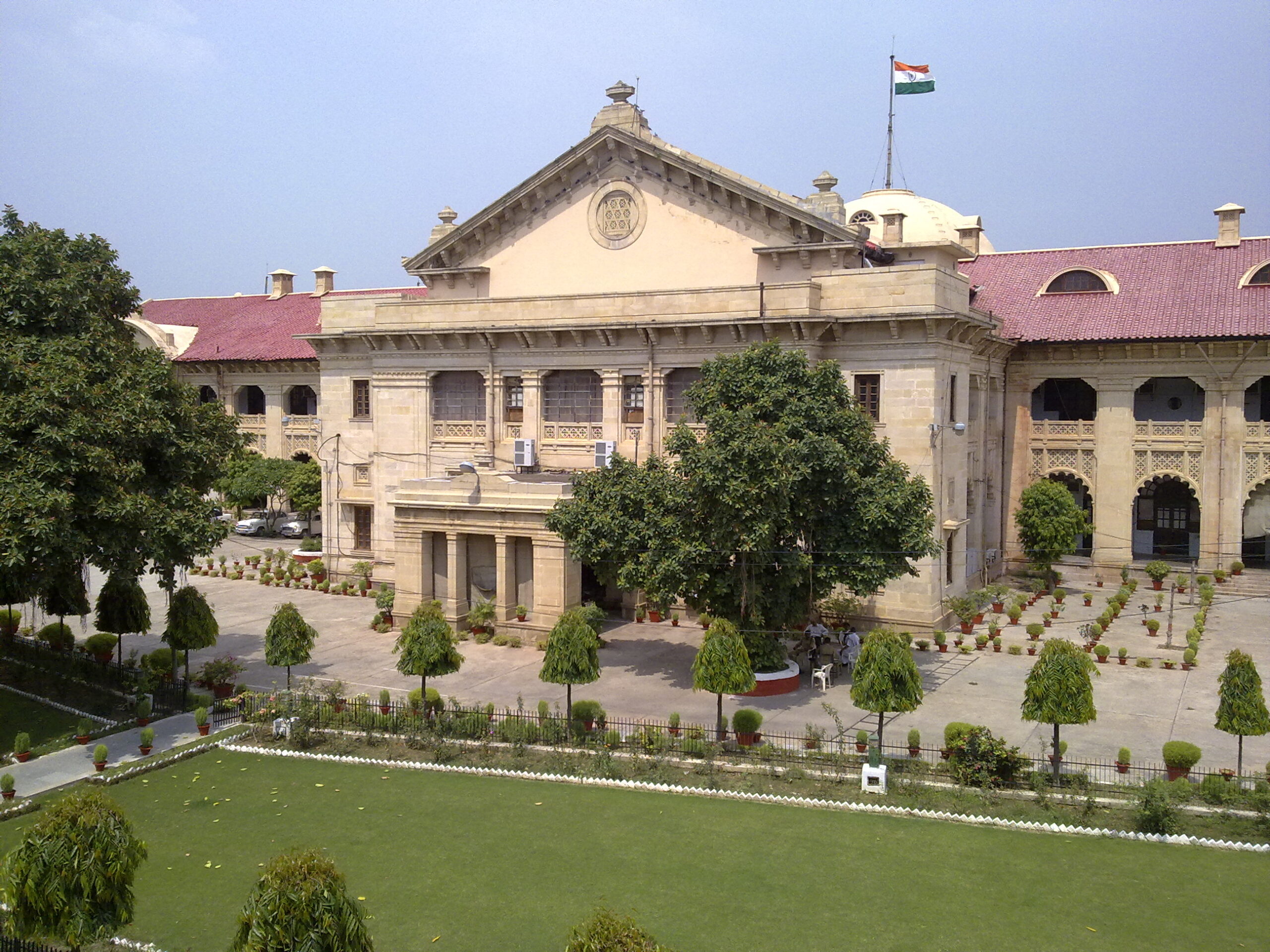
The Lucknow Bench of the Allahabad High Court, in CRLP No. 11121 of 2025 (Rubi Singh v. State of U.P.)², confronted this malaise directly. The petition alleged illegal detention, custodial assault, extortion, and sexual harassment at Unnao’s Kotwali police station. When the Court sought CCTV footage, the police astonishingly submitted that only two to two-and-a-half months’ footage was available, citing a circular dated 20 June 2025 issued by the Director General of Police. The Court’s response was scathing: “We fail to understand the logic of the Director General of Police in issuing the aforesaid circular… which mandated CCTV footage storage not to be less than six months, and thereafter restricting the storage to two to two-and-a-half months”³ The Court held that the circular “prima facie runs in contempt” of the Supreme Court’s order and summoned the Chief Secretary to explain the circumstances under which such a circular was issued.
This judicial censure is not merely a rebuke of administrative misjudgment; it is a reminder that the State’s fidelity to constitutional mandates cannot be compromised. The High Court’s order also highlighted violations of Section 179 of the Bharatiya Nagarik Suraksha Sanhita, 2023⁴, particularly the proviso that no woman shall be required to attend at any place other than her residence. Yet, in the case at hand, a woman petitioner was summoned to the police station, a glaring violation of statutory safeguards.
My detailed representations to the Chief Secretary and the Director General of Police, first in January 2025 and again in January 2026, sought to preempt this institutional embarrassment. I highlighted, with documentary evidence, the widespread non-compliance across districts, the absence of reliable backup, and the lack of centralized oversight. Regrettably, these representations were met with silence. The opportunity to correct course was lost, and the High Court was compelled to intervene. The Hon’ble Supreme Court of India in the case of K.H.Shekarappa Vs State of Karnataka⁵ was constrained to note that “Though several Constitutional and Statutory provisions have been enacted to safeguard the personal liberty and life of citizens, incidents of torture and death in the police custody are ever on the rise. Despite condemnation of such acts by this Court and the High Courts, certain police officials conduct themselves in a manner resulting in the gruesome torture and death of suspects in police custody. There is no manner of doubt that these are the most heinous crimes committed by persons who claim to be the protectors of the citizens. What is distressing to note is that the incidents of torture and death in police custody take place under the shield of uniform and authority, in the four walls of a police station or in the lock-up, where the victims are totally helpless.
With the dawn of modern modes of communication and the inexorable march of Information Technology, the State has been armed with instruments of transparency hitherto unimaginable. When these advancements are coupled with the binding mandate of the Hon’ble Supreme Court in Paramvir Singh Saini v. Baljit Singh, the menace of custodial excesses can indeed be contained. The violation of human rights within police stations, long a blot upon constitutional conscience, may now be minimized provided that the State discharges its solemn responsibilities with fidelity to the Rule of Law and unwavering adherence to constitutional mandates.
For the common man, the expectations from the legal fraternity, the student community, and the government are profound. From lawyers, there is the hope that they will act as conscience-keepers, filing RTIs, PILs, and representations that hold the State accountable. From law students, there is the expectation that they will study these cases not as sterile precedents but as living reminders of the Constitution’s promise. From government officers, there is the demand that compliance be ensured not out of fear of contempt but out of reverence for the rule of law. CCTV cameras are not mere machines; they are instruments of transparency, deterrence, and dignity.
The saga of custodial violence and CCTV non-compliance in Uttar Pradesh is a sobering reminder that constitutional rights are only as strong as their enforcement. The Supreme Court has spoken, the High Court has admonished, and advocates have crusaded. What remains is for the State to act, decisively, uniformly, and faithfully. The common man hopes that the guardians of law will heed the philosopher’s wisdom: Fiat justitia ruat caelum — Let justice be done though the heavens may fall. Until then, the struggle continues, and the lawyer’s pen remains the sharpest sword against the silence of institutions.
Before I conclude, I may humbly submit that the sweep of these far-reaching directions must not be circumscribed merely to police stations. Every locus of interrogation by law enforcement agencies, whether it be the Forest Department, the Enforcement Directorate, the Central Bureau of Investigation, or any other arm of the State’s enforcement agencies, vested with coercive authority, must be enveloped within the ambit of this constitutional mandate. Only through such comprehensive application may the specter of human rights violations be dispelled, and the deprivation of liberties assured to the common citizen under Article 21 of the Constitution be meaningfully curtailed.
For readers interested in examining the RTI applications, responses received, and the representations I have mooted before the Chief Secretary and Director General of Police, I would be more than happy to share the same. Kindly contact me at myvakil@gmail.com or via WhatsApp on +91 9936609293
References
- Paramvir Singh Saini v. Baljit Singh & Ors., SLP (Crl.) No. 3543 of 2020, Order dated 02.12.2020, Supreme Court of India.
- Ms. Rubi Singh & Ors. v. State of U.P. & Ors., Criminal Misc. Writ Petition No. 11121 of 2025, High Court of Judicature at Allahabad, Lucknow Bench.
- Ibid., Order dated 05.01.2026, per Abdul Moin, J. and Babita Rani, J.
- Section 179, Bharatiya Nagarik Suraksha Sanhita, 2023 (BNSS).
- 2009(17) SCC Page 1.








“A beautifully written and thought-provoking piece. The story not only highlights the surface events but also uncovers the deeper social and political layers behind them. It challenges the reader to reflect critically and engages with the subject in a bold yet balanced way. Truly impactful and timely.”