


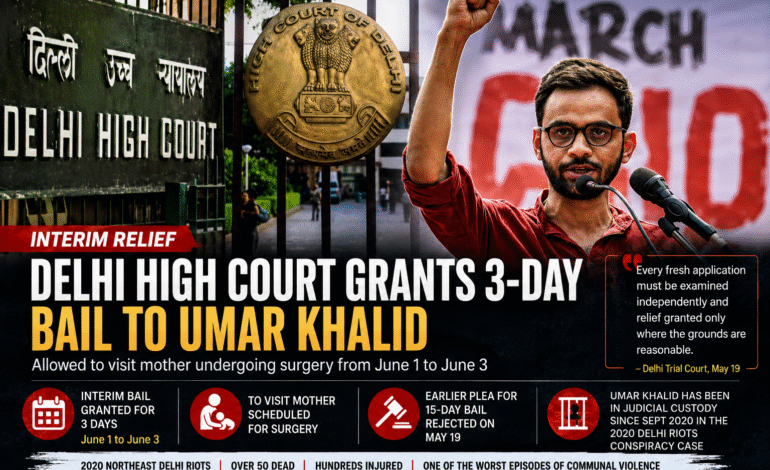
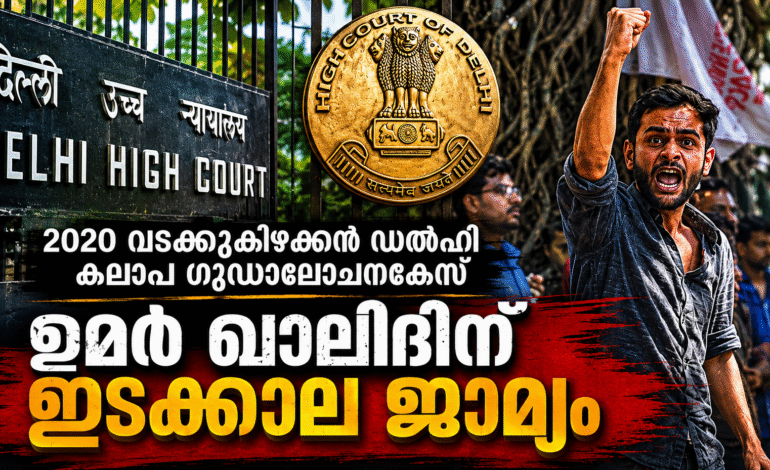
The Delhi High Court on Friday granted three-day interim bail to Umar Khalid in connection with the 2020 Northeast Delhi riots conspiracy case, allowing him to visit his mother who is scheduled to undergo surgery.
The interim relief will be effective from June 1 to June 3.
The order comes days after a Delhi trial court had rejected Khalid’s earlier plea seeking 15 days’ interim bail to attend the chehlum — the 40th-day ritual following the death of his uncle — and to assist in caring for his mother ahead of her surgery.
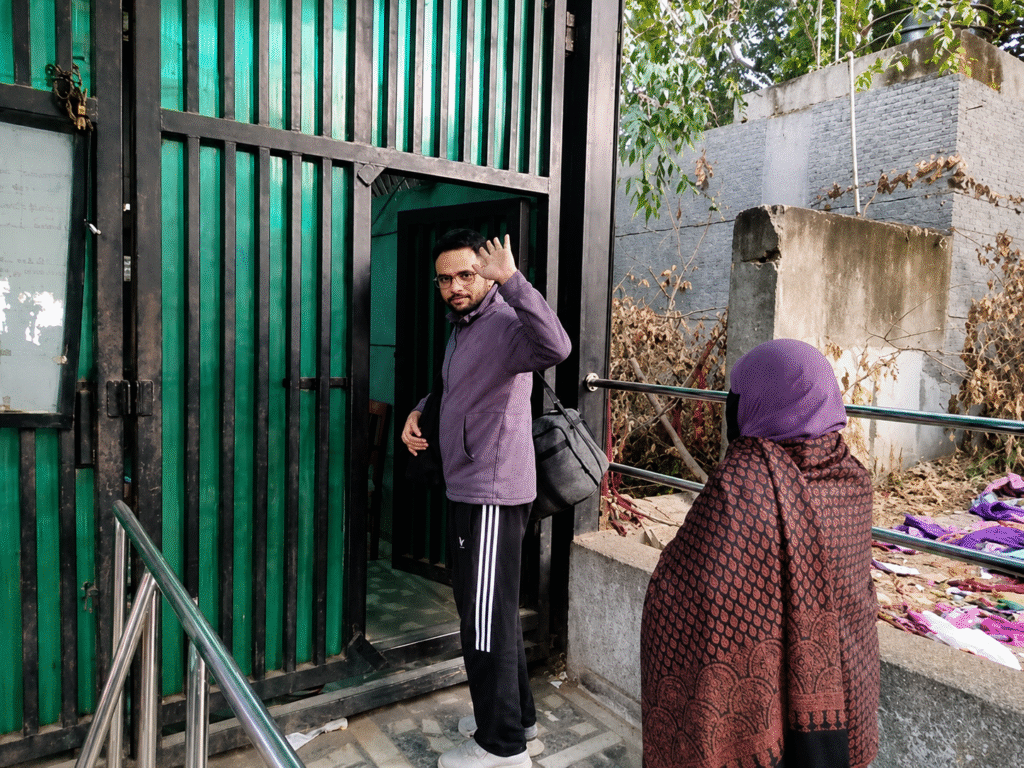
Rejecting that application on May 19, the lower court had observed that while Khalid and other co-accused persons had previously been granted interim bail without violating conditions imposed by the court, such compliance alone could not become grounds for routinely granting relief.
“No doubt that on previous occasions, as mentioned by Counsel for the applicant, not only the applicant but other co-accused persons have been granted interim bail and they never flouted the conditions as imposed by the Court, but it doesn’t mean that on every occasion whenever the accused seeks bail, the Court should grant the same,” the court had said.
The court further held that every fresh application must be examined independently and relief granted only where “the grounds are reasonable.”
Khalid, a former student activist associated with the protests against the Citizenship Amendment Act (CAA), was arrested in September 2020 under the provisions of the Unlawful Activities (Prevention) Act in the larger conspiracy case linked to the communal violence that engulfed Northeast Delhi in February 2020.
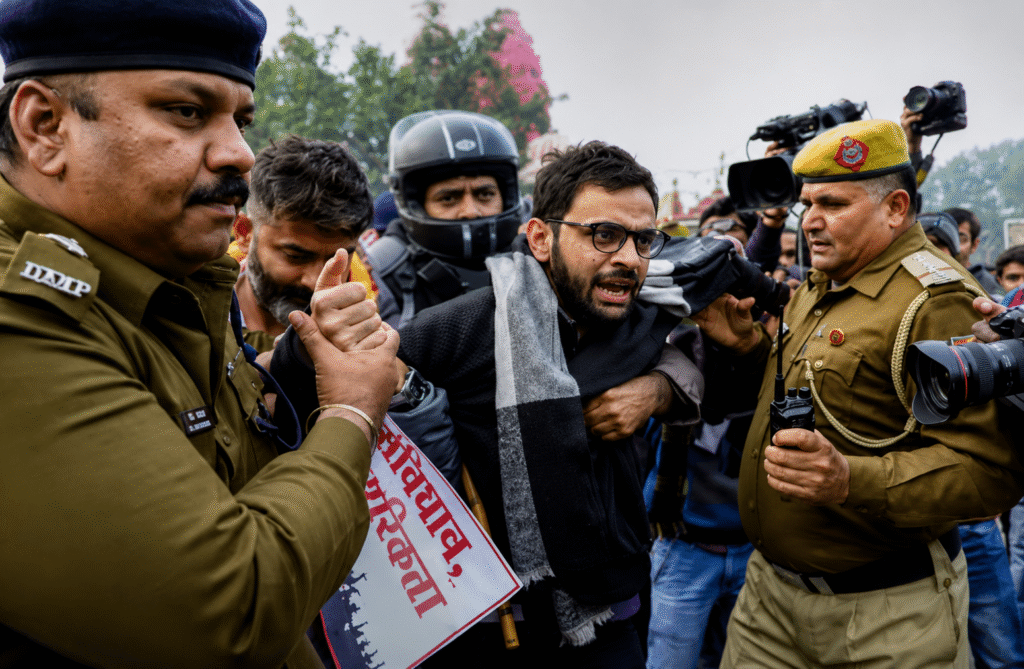
The riots had left over 50 people dead and hundreds injured, marking one of the worst episodes of communal violence in the national capital in recent decades.
Investigating agencies have alleged that Khalid was part of a larger conspiracy behind the violence, a charge he has consistently denied.
His prolonged incarceration under the stringent provisions of the UAPA has repeatedly drawn attention from civil liberties groups, legal scholars, and sections of the political opposition, who argue that anti-terror legislation is increasingly being used to prolong detention without trial.
Over the past several years, the case has also come to symbolise broader concerns regarding bail jurisprudence under the UAPA, especially in light of repeated judicial observations that the process itself should not become punishment.








पर ऐसा इंग्लिश कमेंट कर सकते हैं:
“A deeply thought-provoking piece that raises important questions about justice, due process, and the balance between national security laws and individual rights. The article thoughtfully examines how prolonged incarceration without trial impacts democratic values and civil liberties in India.”