

Evasive Peace: How the US-Iran Ceasefire Is Unravelling


The ink on the Islamabad Memorandum was barely dry when missiles and drones began flying again across the Persian Gulf. A week of tit-for-tat strikes between Washington and Tehran, compounded by Israel’s relentless pounding of Lebanon, has exposed the US-Iran ceasefire of June 2026 as a fragile construct held together more by diplomatic exhaustion than by genuine strategic convergence.
When US President Donald Trump and Iranian President Masoud Pezeshkian signed the Islamabad Memorandum on June 17, 2026 — Trump at the Palace of Versailles following the G7 summit, and Pezeshkian in Tehran — the world was offered a tantalising vision: the most dangerous military confrontation in the Middle East since the 2003 Iraq war finally winding down.
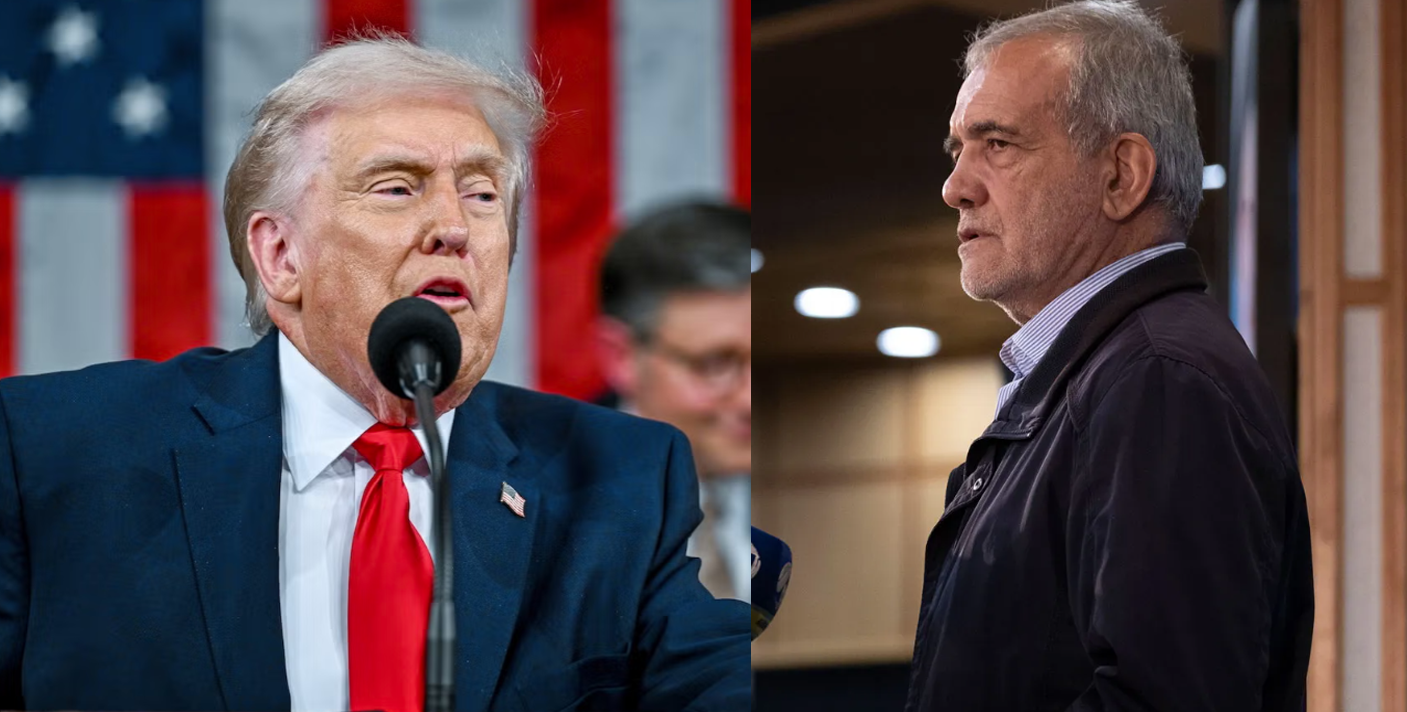
The deal, mediated over months by Pakistan and Qatar, established a 60-day ceasefire framework to negotiate a permanent end to the 2026 Iran war. Less than two weeks later, that vision lies in tatters — the victim of broken pledges, Iranian provocations, Israeli defiance, and the mercurial impulses of a US president who has threatened Iran with annihilation one day and dangled trade incentives the next.
The Ceasefire That Never Was
To understand the current crisis, it is essential to grasp how fitfully the ceasefire has operated since its earliest iteration. The initial two-week truce brokered by Pakistan on April 7-8, 2026, was violated by both sides almost immediately. Low-intensity skirmishes never stopped. Trump extended the ceasefire “indefinitely” on April 21, yet US forces launched strikes on Iranian targets in May, targeting what CENTCOM described as “missile launch sites and Iranian boats attempting to emplace mines” in Bandar Abbas — framed publicly as self-defence. Iran retaliated against shipping. Each side accused the other of being the original aggressor; both were right.
The June 17 memorandum was supposed to move beyond this cycle. Instead, it has accelerated it. On June 26, the Islamic Revolutionary Guard Corps struck a Singapore-flagged cargo ship in the Strait of Hormuz with a drone. Trump called it a “foolish violation” of the ceasefire agreement and, true to his rhetorical style — “You’ll find out” — ordered the US military to respond.
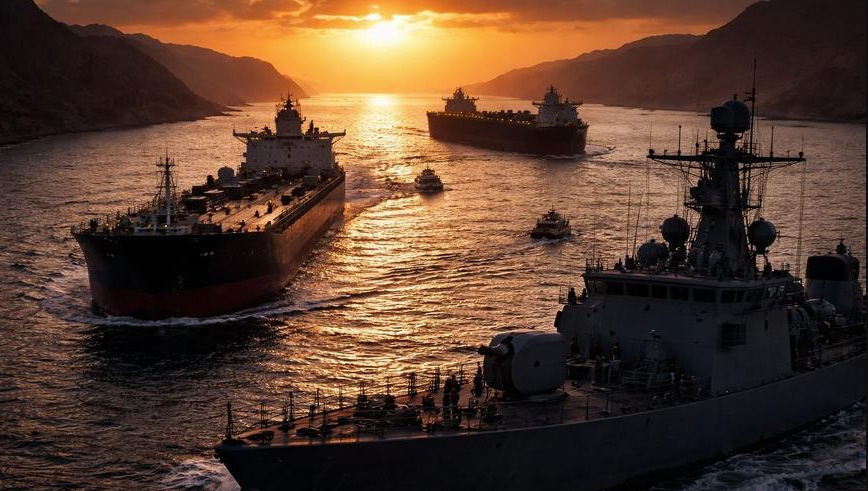
US Navy and Air Force jets struck ten Iranian military targets in and around the strait, hitting surveillance infrastructure, communication systems, air defence sites, drone storage facilities, and minelaying capabilities. Iran’s foreign ministry declared these strikes a “clear violation” of the June 18 memorandum, stating that the conduct demonstrated that “the US regime places no value on its commitments.”
Iran then launched ballistic missiles and drones at US facilities — the Ali Al Salem Air Base in Kuwait and the US Fifth Fleet headquarters in Bahrain. Kuwait’s air defences scrambled to intercept incoming fire; sirens blared across Bahrain. The US struck again, with a second wave of attacks targeting Iranian coastal infrastructure. By June 28, both sides had agreed to halt strikes before renewed peace talks — but only after two days of the most intense exchanges since the April ceasefire.
This is not a ceasefire. It is a managed escalation masquerading as diplomacy.
The Netanyahu Factor: An Ally Turned Spoiler
No actor has done more to sabotage the fragile US-Iran diplomatic architecture than Israeli Prime Minister Benjamin Netanyahu. From the moment peace talks gained traction, Israel moved in the opposite direction in Lebanon, where its war against Hezbollah has continued with a ferocity that has killed more than 4,000 people, displaced over one million, and flattened dozens of southern villages.

Iran has consistently made one demand non-negotiable: a cessation of Israeli attacks in Lebanon must be part of any broader deal. Netanyahu has just as consistently refused, insisting that the ceasefire with Iran “does not include Lebanon” — a position that has infuriated Tehran and repeatedly brought negotiations to the brink of collapse. In early June, when Netanyahu threatened to bomb Hezbollah’s strongholds in Beirut’s Dahieh district, Iran suspended indirect negotiations with the US entirely, warning that “without fully restraining America’s rabid dog in Lebanon, there will be no ceasefire.” The bluntness of the language reflected genuine fury.
This divergence goes deeper than tactics. Reports from late May suggested that Netanyahu and his inner circle privately view the emerging US-Iran agreement as “disastrous” — fearing it will rehabilitate Iran’s regional standing, release frozen assets, and leave Tehran’s nuclear programme ambiguous rather than dismantled.
Trump’s Oscillating Hand
The deeper structural problem is the incoherence at the top of the American strategy. Between March 23 and June 9 alone, Trump claimed at least 38 times that a deal with Iran was imminent. He threatened Iran with unconditional surrender, then offered to use frozen Iranian assets to buy American crops for the Iranian people. He declared that the US had “won” the war in late March even as Iranian missiles continued to rain down. He ordered strikes on the Fordow, Natanz, and Isfahan nuclear facilities on June 21 — and three days later declared a ceasefire.
This is not strategic ambiguity as a deliberate negotiating tool; it is the erratic output of a leader operating without a coherent endgame. Trump’s threats to “militarily complete the job” if Iran continues to strike — warning that the Iranian regime could “cease to exist” — serve simultaneously as deterrence and as a provocation that hardens Iranian hardliners. His administration disputes claims that peace talks have stalled even as US warplanes conduct fresh strikes, a contradiction that undermines American credibility as a guarantor of any agreement.
What Trump wants from the deal is relatively clear: the reopening of the Strait of Hormuz to ease energy markets and claim a grand diplomatic victory. What he is less willing to confront is the harder architecture of a durable settlement: verifiable nuclear constraints, a framework for Iran’s regional proxy network, and a mechanism to restrain Israel in Lebanon.
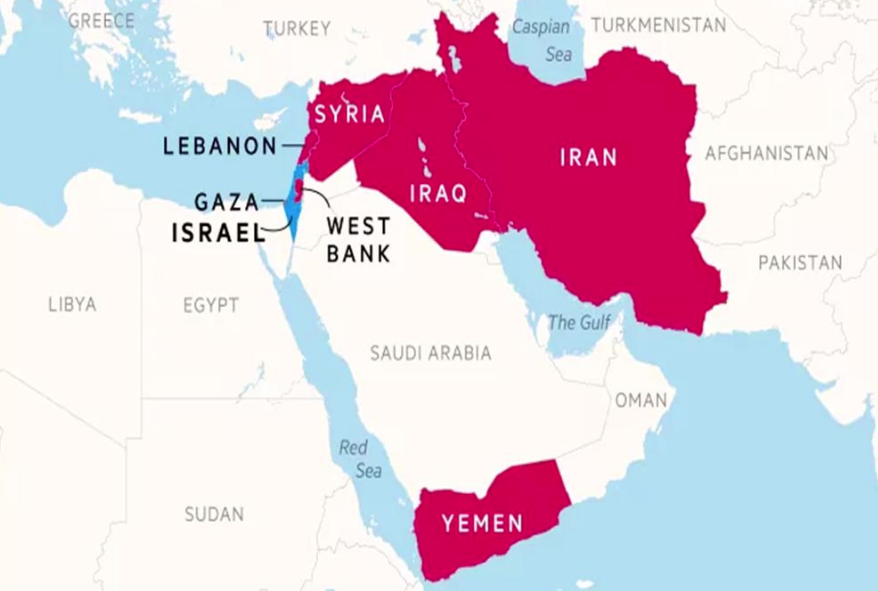
West Asian Security: A Landscape Transformed
Whatever the ultimate fate of the memorandum, the 2026 war has already redrawn the strategic map of West Asia in ways that will outlast any single ceasefire. Iran, despite surviving the war, emerges militarily degraded, economically crippled, and diplomatically isolated. Its new supreme leader, Mojtaba Khamenei, is regarded as more hawkish than his father — a dangerous variable in a country whose politics were already fractured by massive popular protests in January 2026.
The Gulf states — Bahrain, Kuwait, Qatar — have borne severe costs from Iranian missile attacks and the Hormuz closure, and will push hard for permanent freedom of navigation guarantees. Israel’s occupation of parts of southern Lebanon and its continued military presence raises the spectre of a protracted Lebanese quagmire echoing its disastrous 1982-2000 occupation.
The June 28 agreement to pause strikes and resume talks offers a slender thread of hope. But as long as Israel continues to strike Lebanon, Iran views the memorandum as unimplemented; as long as Iran harasses Hormuz shipping, the US views the memorandum as violated. The ceasefire is being undermined from within by the very parties that signed it and sabotaged from without by an ally no one can fully control. Until the Lebanon question is resolved — and until Trump decides whether he is making peace or simply performing it — the Middle East will remain suspended between war and its simulation.










“A ceasefire is only the first step toward peace, not its guarantee. This article highlights how unresolved political disputes, mutual distrust, and competing strategic interests can quickly undermine fragile agreements. Sustainable peace requires consistent diplomacy, transparency, and a genuine commitment from all sides to address the root causes of conflict rather than merely pausing the violence.