

From Alliance Dharma to Survival Politics: How and Why Did Congress Leave DMK to Choose TVK

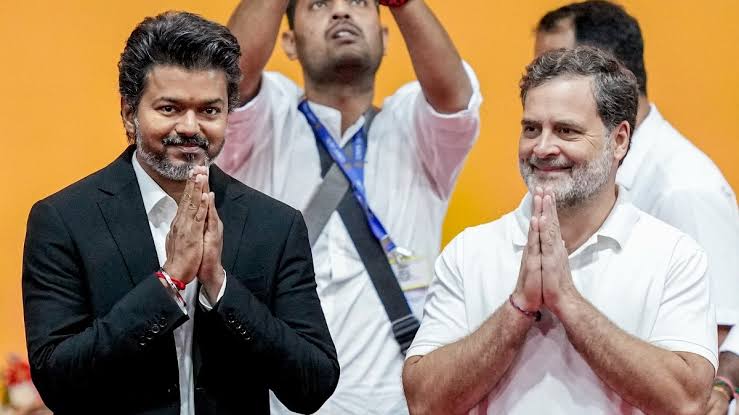
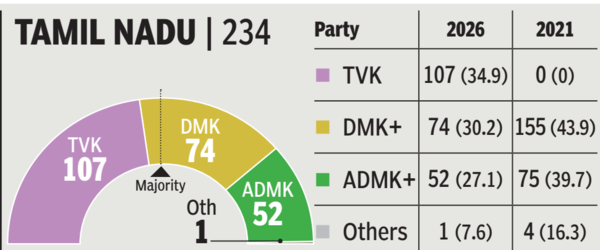
In the recently concluded Tamil Nadu assembly elections, TVK shocked everyone by winning 108 seats and emerging as the single largest party in the 234-member state assembly. Congress swiftly broke its decades-old alliance with DMK and threw its 5 MLAs behind TVK.
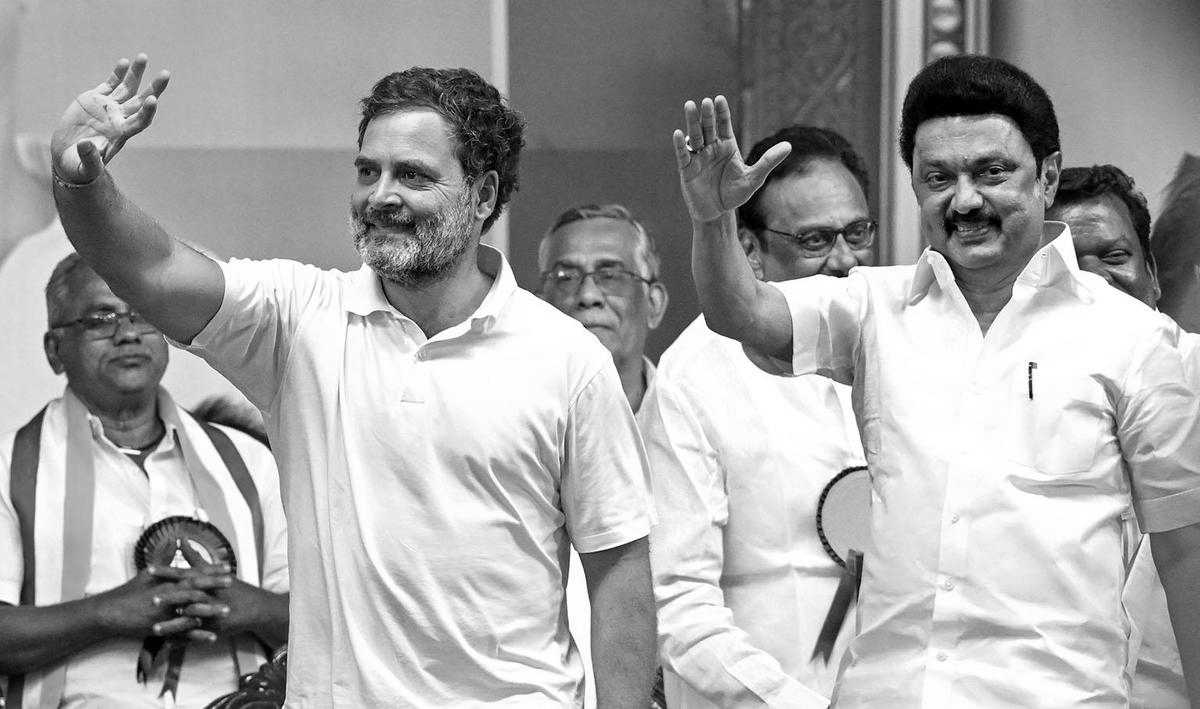
Congress and DMK are both members of the INDIA bloc, a national alliance of parties opposing the BJP-led National Democratic Alliance, which currently rules the national government. Except for a brief period between March 2013, when the DMK quit the Congress-led United Progressive Alliance government at the centre over a United Nations resolution on alleged human rights violations on Tamils in Sri Lanka, and the 2016 assembly elections, when they came back together to contest the election, both parties have been in alliance, at the centre and the state, since 2004.
Leaving its elder-brother-like alliance partner for a political newcomer in the state has its own perils, foremost among them the perception of voters in the state about this act and its implications for its electoral future. Some have termed it a betrayal of the alliance dharma, while others have praised the party for swiftly moving in to preempt any shenanigans by the Bhartiya Janata Party. It raises the question — how do people and party supporters see it? Do they see it as pragmatic politics or political opportunism?
More Alike Than Different
A section of Congress leaders in the state had supported the idea of a pre-poll alliance with TVK. Vijay’s ideological viewpoints aligned with Congress’s political values. “As long as ideology matches, it is fine for the Congress. TVK wanted to align with the Congress before the elections,” says Vinoth, a software consultant based in Chennai. “There is ideological harmony between TVK and Congress,” stressed Nikki(name changed), an oncologist from Chennai, pointing to the Kamaraj bust as evidence of a shared political inheritance.
While some see the ideological similarity as the background to the decision, others see this as a dishonest act. “Leaving your pre-poll alliance partner after the results to support the winning party belittles your voters’ trust,” says Kuraisa, a teacher living in Vellore. “You have to have a steady partner in politics. Leaving a long-term alliance partner for short-term gain is a betrayal of coalition dharma. This decision may impact Congress’s alliance in the states of UP and Bihar, where it plays a similar role of a junior partner,” warns Vidya Subramaniam, senior journalist and former Associate Editor of The Hindu.
A Deserter or a Prisoner?
“It’s a good move by the Congress, considering the way they have been treated as an alliance partner by the DMK. Although Congress can’t contest alone, with TVK, it may increase its footprints,” said Nikki. “For the past 50 years, with DMK or ADMK, Congress has only existed in alliance,” says Andavan Muthu, an entrepreneur and voter of the Maduravoyal assembly constituency. “Congress has remained largely irrelevant in state politics for the past many decades, despite its alliances,” reminded Ikram. “DMK wasn’t giving space to the Congress to grow. This move by Congress to join the government may help it regain some political space,” added Kuraisa.
Not everyone sees this as a savvy move. “Without alliance, you are zero, but unhappy with the alliance,” says Vidya Subramaniam, highlighting Congress’s lack of appeal among voters. “After contesting the election together with DMK, Congress had no cogent reasons to leave the alliance. In hindsight, though, alliance with TVK would have been better,” admits a senior Congress leader from Tamil Nadu.
Some see it as pragmatic politics, plain and simple. “The kind of result we got, with TVK falling short of a majority by 10 seats, demanded the support of smaller parties. Congress did the right thing by deciding to support the popular mandate,” says Ikram, an IT executive and native of Ambur. Congress’s swift move took TVK’s tally from 108 to 113, just five short of the 118 required for a majority in the 234-member house, taking it closer to the podium. It may seem pragmatic in the current circumstances, but TVK is an untested political outfit, and how it evolves will affect Congress as well. “What will happen to Congress if TVK aligns with other parties or breakaway factions?” asks Vidya Subramaniam, a suspicion not entirely unfounded after a section of AIADMK MLAs cross-voted in favour of TVK in the assembly.
Beyond the Alliance
Young voters see Congress’s decision to join the TVK alliance as its commitment to the larger cause of secular politics. “Communalism has grown under the BJP’s rule, and Muslims have suffered more from the government’s heavy-handedness,” says Kuraisa. Prof Sudhir Pawar, Samajwadi Party leader, situates this within a national crisis: the BJP’s pursuit of power, he argues, has weakened the very institutions entrusted to protect democracy, making rigid alliance loyalty a luxury the opposition can ill afford. “There is no point in being rigid in alliance and eventually helping the BJP.” “It should surprise no one that AIADMK will soon be subsumed by the BJP. In such situations, Congress has done right to support a secular party,” adds Andavan Muthu.
The Road Ahead
Voters, generally, don’t feel that Congress’s return to power in Tamil Nadu will affect their decision to vote for it if Congress decides to go solo, as it did in the 2014 Lok Sabha elections, where it won 0 seats, got a measly 4% of the vote, with 38 of its 39 candidates forfeiting their deposits. Much will depend on the party’s efforts to revive its organisation.
“Too early to say, but it does sound promising for Congress for the next general elections due in 2029. Importantly, Congress should work on overhauling its organisation. If it continues to behave like a hanger-on, as it did with DMK, its future remains in the abyss,” warned the senior Congress leader. “These decisions are best left to the state party leaders and workers. If they feel that the party’s interests are best served by joining the TVK government, it should be honoured,” says Satyanarayan Sharma, senior Congress leader from Chhattisgarh.
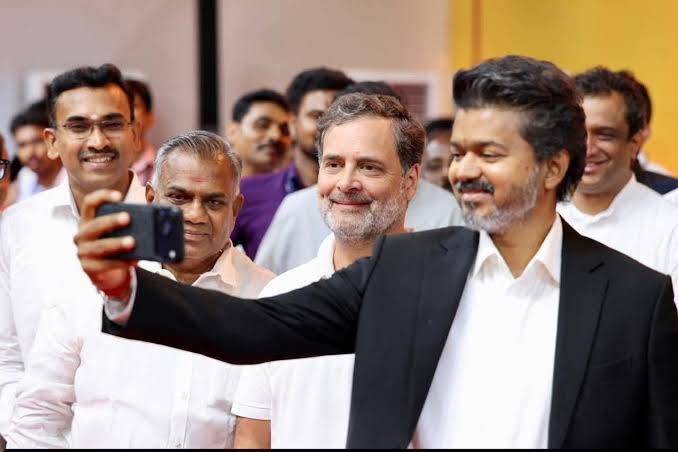
Congress is seen as a credible ideological opponent to the BJP in national politics, and that credibility, more than any alliance arithmetic, may prove to be its most durable asset in Tamil Nadu. Its decision to leave DMK and join TVK may be a good one in the short term, but the longer game depends entirely on its intent, determination, and the hard organisational work it has so far avoided.

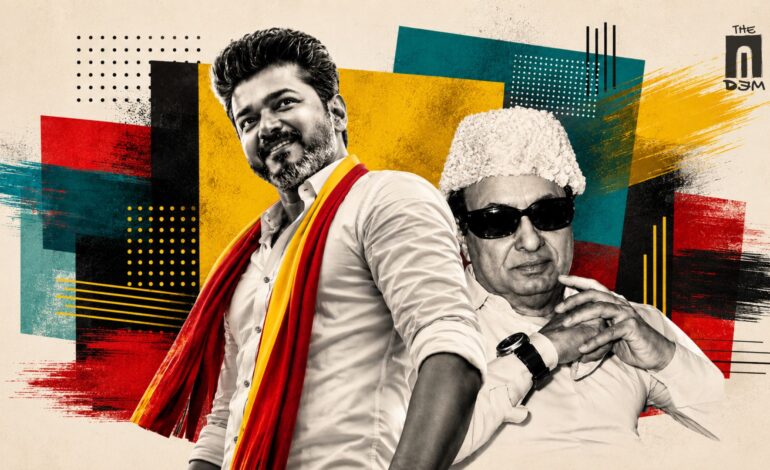







Gaurav Tiwari’s analysis sharply captures the shifting sands of Tamil Nadu politics, where ideology, alliances, and survival instincts constantly collide. The transition from the Congress–D.M.K. understanding toward the growing relevance of T.V.K. reflects not just electoral calculations, but also the changing aspirations of a younger political generation. A deeply layered political reading that connects cinema, charisma, regional identity, and national strategy with remarkable clarity.
It’s more alike than different. But what is the road ahead. Finishing Sanatan dharma is not a feeling with which any regional or national party can survive in India, or in fact any liberal society, where you have thought of finishing a way of life – may be good bad or evil. Great analysis.