

How the War on Ukraine Shaped a World Chess Championship; the Sad and Incredible Journey of a Legendary Grandmaster Part 1

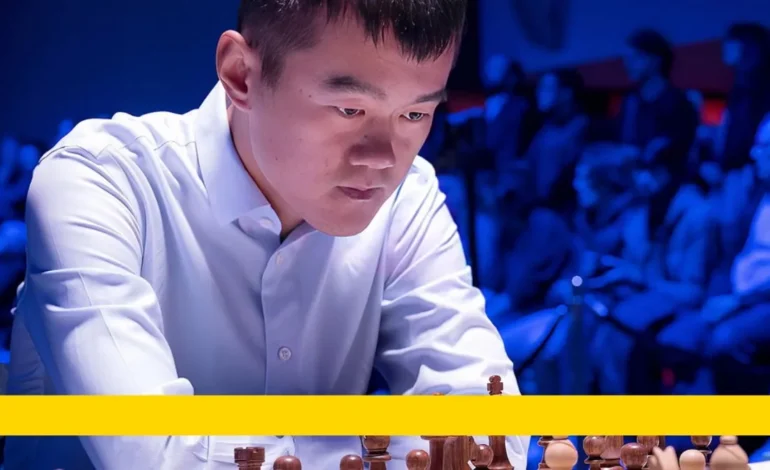
Chess is often seen as a silent, detached battle of the mind, safely tucked away from the currents of the real world. Yet, the history of the game reveals that even its greatest masters are susceptible to the shifts of our time. Sometimes, a single, distant event can create a “butterfly effect,” altering the trajectory of a life in ways no one could have imagined.
This is the first article in a three-part series by Mohammed Shahil delineating the story of Chinese Grandmaster Ding Liren—a player once considered an unstoppable force, feared even by the legends of the game.
In this series, we pull back the curtain on how the war in Ukraine and the resulting global instability unexpectedly reached into the quiet, analytical world of professional chess, forever changing the life of a legendary grandmaster and the course of a World Championship.
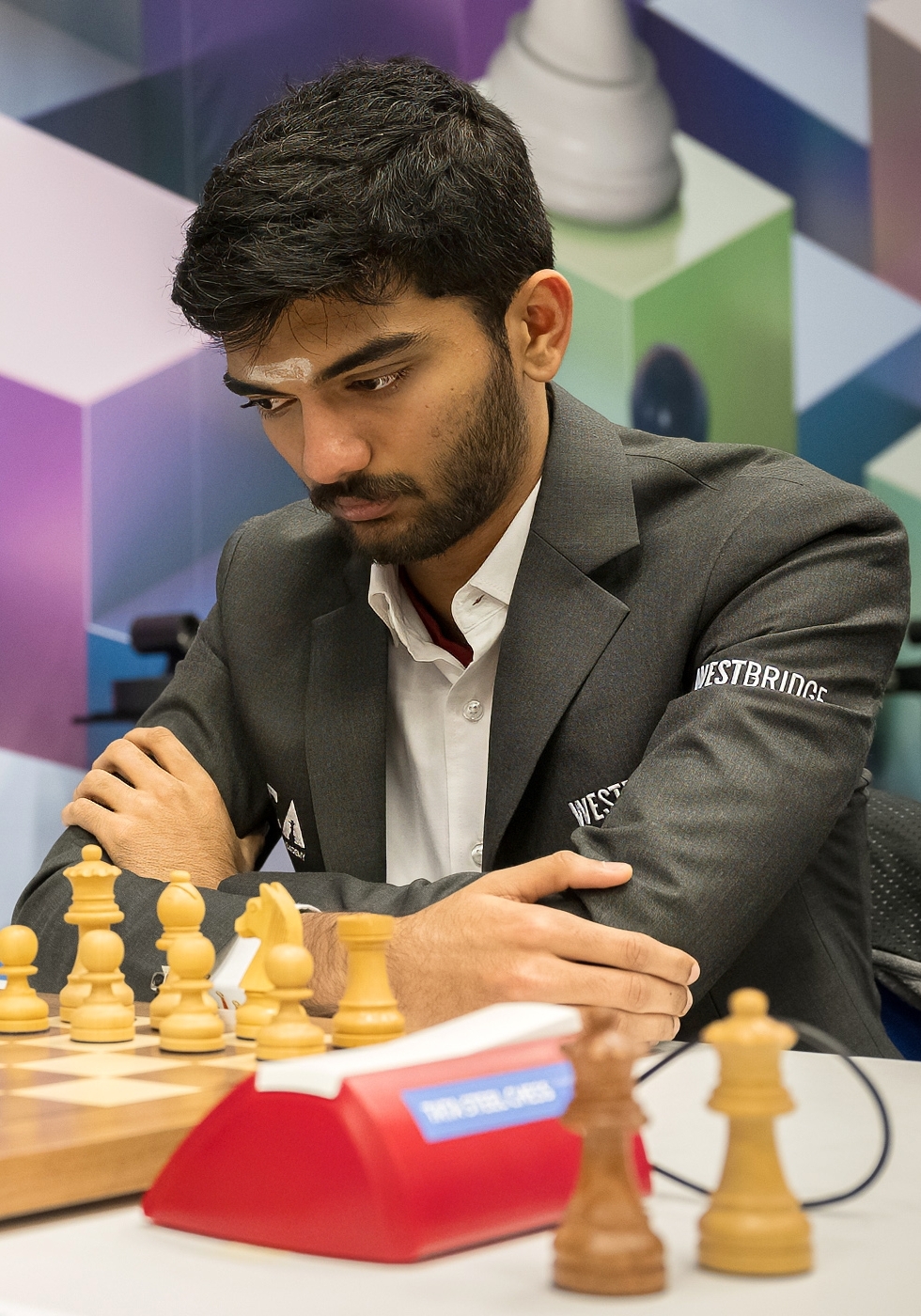
On December 12, 2024, an 18-year-old kid from Chennai became the youngest classical chess champion of the world, the second Indian to do it after Viswanathan Anand. At Least some of you, even if you are not a chess fan, might have heard the name Gukesh Dommaraju for this incredible achievement but this story is not about Gukesh. It is about the guy he defeated to take the crown, the Chinese grandmaster Ding Liren, who was once an absolute force of nature, an elite among the elites.
The Rise
When Gukesh sat down at the Equarius Hotel in Singapore on a Monday for the first game of the 18th World championship, looking to make history, he was sitting across the shadow of a titan, a washed-up king, everybody had already written him off, including himself. The Chinese phenom who used to ragdoll the legends of the game said he was afraid that he might lose badly, in an interview prior to the tournament. The weary warrior who is now just hoping not to embarrass himself in front of the world is the very conqueror who wrote the unprecedented saga of an undefeated one hundred chess battles in a row. Gukesh, the heavy favourite has the white pieces, he opened the game with Pawn to e4, and Ding responded with Pawn to e6, a surprising choice, the French defence is on the board, something he hardly plays. As the game progressed Ding’s performance was as expected. In a game where the players only had 2 hours for making 40 moves, he spent 20 and 30 minutes on each move. Gukesh played instantly, he was still in his prep while Ding burned his clock. But the tides slowly turned, in the middle game old Ding Liren reappeared and it was just too much for the young challenger to handle, Gukesh resigned and Ding took the lead. It was his first win in 304 days.
The story of how the butterfly effect of history opened a way in the wilderness for the Chinese grandmaster to become the 17th undisputed classical champion of the world is a fascinating case of fiction manifesting itself as truth.
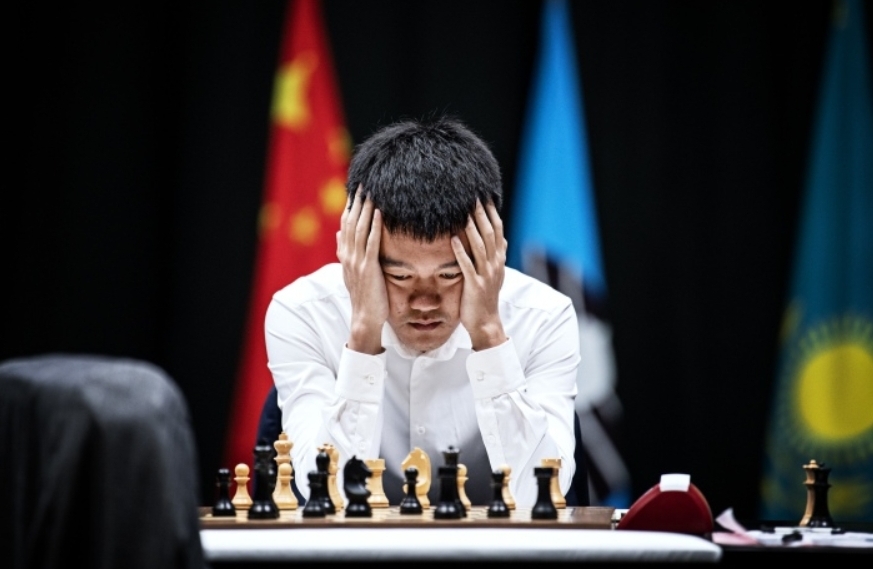
In the world of chess, the phrase that I used earlier to describe Ding, “an elite among the elites” is not a subjective superlative, it is a fact based on ratings.
There are just over 2000 grandmasters in the world right now who are active players and the minimum rating for someone to be a grandmaster is 2500. Ratings are given by FIDE, the primary governing body of international chess. Even though the highest title one can officially achieve in chess is “Grandmaster“, the top 1 percent are called super grandmasters, an unofficial title for players rated above 2700. As of today, we have a total of 32 active super GMs in the world. There are 5 Indians in the 2700 club, and the reigning champion Gukesh is one of them. The 2700 threshold is what you cross to become an elite in chess, however 16 players in the history of the game have crossed a rating of 2800, the threshold of immortality in chess. Ding Liren crossed it in September 2018, the first and only Chinese player ever to do it and became an elite among the elites.
Starting from Paul Morphy in the mid-1800s, Chess has always had at least one formidable force in every era. In the 70s it was Bobby Fischer, the American grandmaster. He came in during a time when the Soviets ruled the world and then wiped the floor with them.
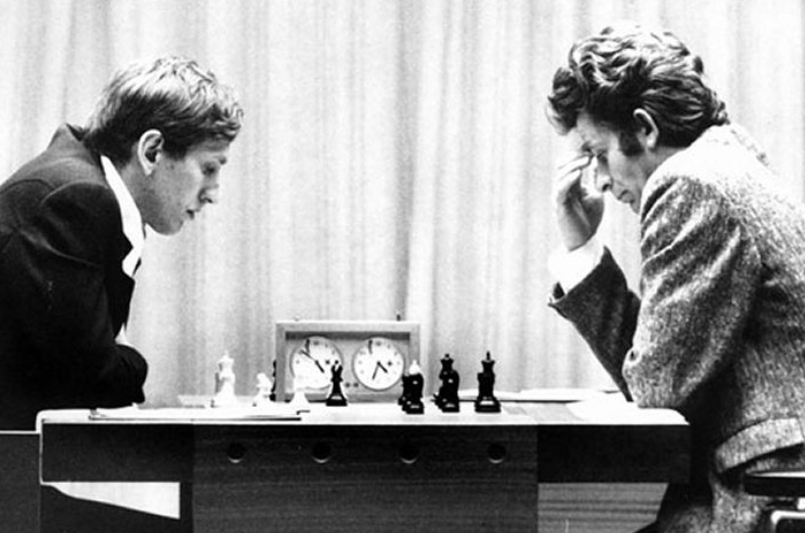
His famous world championship win against Borris Spassky was even considered as the triumph of the US over the Soviet Union during the cold war. Then came Garry Kasparov, from the 80s to early 2000s Kasparov absolutely dominated the chess world. He was the one who created the 2800 threshold while crossing it first in 1990. After Kasparov’s prime, for a brief period there was no such dominance. Even though there were absolute great players like Viswanathan Anand, Vladimir Kramnik, Veselin Topalov, Levon Aronian, shakhriyar Mamedyarov, none of them really dominated the way Fischer or Kasparov did, they were all more or less equal, until a mythical force, a young kid from Norway named Magnus Carlsen, entered the scene. On November 22, 2013, he defeated Viswanathan Anand and crowned himself as the classical champion of the world in front of a smiling Jayalalitha poster in Chennai. In May 2014 Carlsen reached a peak rating of 2882, the highest rating achieved by any human being in history. After becoming the world number 1, in July 2011, nobody has been able to take that spot. Even though he has shown some shakiness in recent events, we are still living in the Carlsen era, and he is still world number 1.

Ding Liren was born in Wenzhou, a port city in China’s Zhejiang province. His mother introduced him to the game at a very young age and within a few years, he became the youngest person ever to win the national chess championship of China. When He won the title, in 2009, he was not even a grandmaster officially. After 2010, millennials became the strongest force in chess, Ding ascended to the top as one of them alongside Carlsen, Fabiano Caruana, the current world number 2, Sergey Karjakin, Hikaru Nakamura, Anish Giri, Wesley So and others. He entered the top 10 rankings in August 2015 to become the second Chinese player ever to do it after Grandmaster Wang Yue.
Chess has mainly three time formats, Classical, rapid and Blitz. Ding’s highest achievement in the Classical format in terms of ranking is becoming the world number 2, In the Carlsen era that is the highest rank anyone can realistically hope for, however, Ding has taken the world number 1 spot from Carlsen in both Rapid and blitz formats.

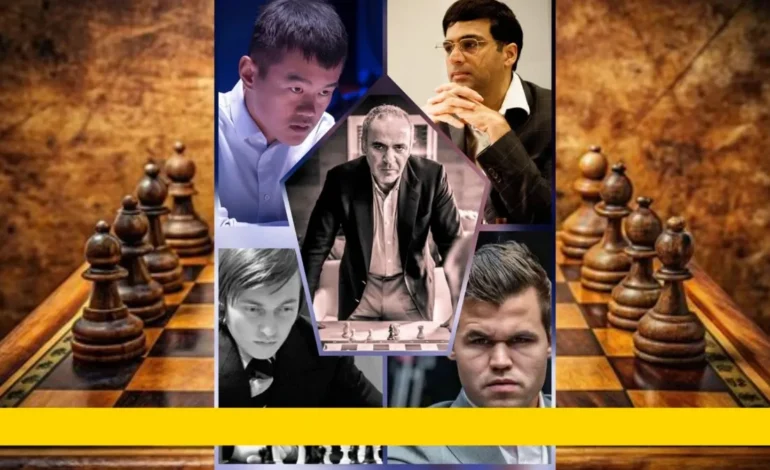
Peak Ding was an unassailable force, Between 2017 and 2018 he went unbeaten for more than 100 games, an unprecedented streak in the history of top level chess, he continuously created art on board, won two chess Olympiads for China while also winning individual gold on board 1, countless chess classics. During Carlsen’s peak, beating him even once in a direct play off is something that happens only on a cold day in hell, Ding did it twice in a row to win the 2019 Sinquefield cup. He obliterated Carlsen 2 to 0 in direct playoffs, something nobody had done to Carlsen at his peak until then. Many in the chess world looked at him as the one who can dethrone Carlsen, he became a nightmare opponent to all the super GMs, nobody wanted to sit across him. Magnus himself said that Ding has been outperforming him and finds it extremely difficult to play against him. Ding completed the set winning the 2019 Grand chess tour and everything was looking great for the Chinese grandmaster until a virus stopped his clock.
The victory march is over; the corona virus seized him by the neck and threw him into the pit.
Read the rest of the story tomorrow in Part II.






Interesting!!
**A fascinating and deeply researched account of how war reshaped the world of chess beyond the 64 squares. It shows that politics, conflict, and human resilience often influence sporting history in unexpected ways. Looking forward to Part 2 of this remarkable story.**
A gripping and beautifully researched piece that connects global events with the deeply personal journey of Ding Liren in a way that feels both original and compelling. Shahil’s storytelling brings chess history to life, especially his portrayal of Ding’s rise from an elite grandmaster to a world champion shaped by forces far beyond the chessboard.
Ejjathi reviewaaa monee..
A fascinating perspective on how events far beyond the chessboard can reshape a player’s life and even the history of the game. Ding Liren’s journey is truly compelling. Looking forward to the rest of this series! ♟️
Ding is a favorite, glad that he is being discussed