

India and China: A Tale of Two Paths


It was during my years at the Agricultural College in the 1980s that I first encountered serious discussions about China. Until then, my understanding had been shaped by the fragments of history we grew up with: that China was our adversary, that India had lost the 1962 war, and that the Chinese once launched a bizarre campaign to eradicate sparrows—leading to a devastating, self-inflicted famine where crores of ordinary citizens perished. There was no image of China as a nation advancing in science or technology.
During those college years, I learned of China’s stunning success with hybrid paddy cultivation. Millions of hectares under high-yield hybrid rice produced 80 percent more than the varieties grown in India. The obvious question—why we weren’t pursuing the same—had no clear answer. Cross-breeding Paddy was difficult, we were told. Our professors dismissed China as opaque and untrustworthy. And for decades after, their response, “information from China cannot be trusted”—was enough to flatten any curiosity.
The Chinese Factory Floor
In 2004, when I joined the procurement division of a consumer product company in Chennai, our key raw material for shampoo manufacturing came from the United States. But as crude oil prices spiked and the global financial strain spread, costs of raw materials soared. Could we source this more cheaply elsewhere? Naturally, China came to mind.
An 18-day trip ensued—first to Sichuan province, to a sulfonation plant at the heart of an industrial estate. In one vast industrial complex, sulfur was produced in one factory and piped directly into the neighboring units that converted it into intermediates and final products. The efficiency and scale were astonishing. And yet, the basic input—alpha olefin—was not produced in China then, making the overall cost higher than we’d hoped.
Next, in Guangzhou, we visited perfumery and cosmetic manufacturers. Their facilities didn’t impress us. They were technologically modest and were no better than our facilities in India in terms of Good Manufacturing practices (GMP). Many of the consumer goods manufactured in those factories were blatant imitations of global brands. But their costs were astonishingly lower compared to our manufacturing costs in India.
China’s electricity costs were comparable to India’s, and minimum wages were 1.5 times higher. “Then how do they still manufacture things cheaper?” I asked. My local trade contact, who was Indian, helped me to understand the paradox.
“They work 12 hours a day, often seven days a week,” he said. “And every factory has a Communist Party liaison—someone who ensures smooth navigation with the state bureaucracy.” That, I was told, was the invisible hand powering the Chinese industry.
Indian firms importing chemicals from China had stationed their own quality inspectors there to ensure the quality of the imported materials were checked and personally sealing containers before shipment. “Trust, but verify,” one friend reminded me. My understanding of China had crystallized: it was a nation that could manufacture almost anything—cheaply—but not always reliably.
African Cross Over
In 2015, I took up a leadership role at a consumer goods company in Tanzania. Apart from cosmetics and personal-care products, we also produced the plastic bottles and caps used for packaging—because Africa had few reliable suppliers. The moulds and machinery came mostly from China (some from Taiwan). My instinctive scepticism—“cheap equals poor quality”—soon met reality.
When we compared quotes from India and China for similar high-end moulds and machinery, the Chinese costs were 20 to 25 percent lower. European machines weren’t even in the same league—their costs were astronomical. Within months, my perception of Chinese manufacturing had transformed.
In 2024, I went to Guangzhou after a gap of 16 years. The city had reinvented itself: ultramodern, almost futuristic. Robots zipped through our business hotel corridors, like characters from the Hollywood film, “The Star Wars.”
We were there to purchase cream-filling machines. The factory also made toothpaste tube fillers. Our own Tanzanian facility had used German and Swedish machines—the fastest filling 300 tubes a minute machine, cost over $1.5 million.
The Chinese offered a model that filled 60 tubes per minute—for $30,000. I almost gasped.
Even if we bought five of them to match a single European machine’s output, our total capital investment would still be a tenth.
Diverging Destinies
Two years after India’s independence, Communist China was born under Mao Zedong. In the 1950s, both countries were impoverished and agrarian. India depended on imported food; over 90 percent of its people lived below the poverty line. There was barely an industrial base to speak of.
In its first three decades, India achieved food self-sufficiency. But strict industrial controls stifled industrial growth. Meanwhile, China liberalized quicker, merged with global economy a decade ahead of India.
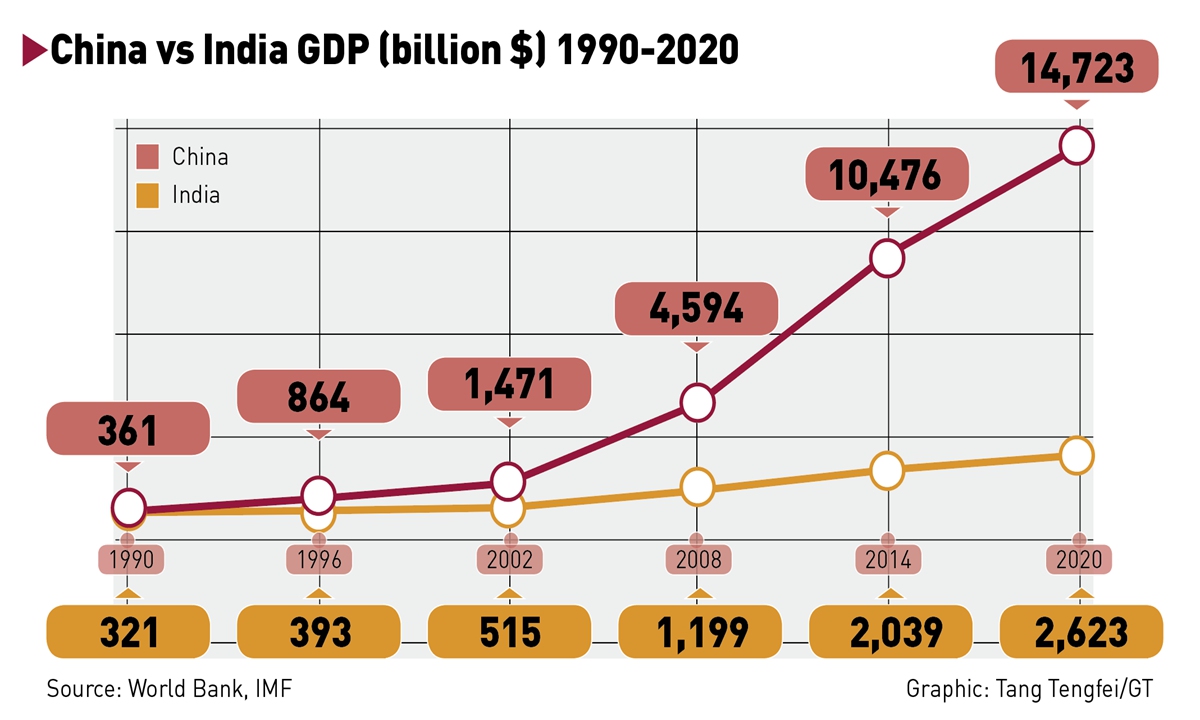
In 1991, during India’s balance-of-payments crisis, Prime Minister Narasimha Rao initiated landmark economic reforms. Even then, India’s per capita income ($370) was slightly higher than China’s ($350). But, having initiated the trade reforms a decade earlier, China grew at an average of 9.5% over the next 25 years, India too grew, but lagged at 6.5%.
Economist Amartya Sen attributes China’s sustained economic acceleration to one thing: its early, massive investments in basic education and healthcare. That social foundation became the fuel for its economic engine.
Sadly, India, to this day, has not reached the literacy levels of China in the 90s.
The Higher Education and Research Revolution
Starting from the mid-1990s, China poured billions into higher education and research. The “211 Project” upgraded 100 universities; the “985 Project” in 1998 elevated a few to global prominence—Tsinghua and Peking Universities were among them. Today, 15 Chinese universities rank among the world’s top 100. India has none.
China registers 49 percent of all global patents. Chinese scientists publish more research papers than any other country. In fields like medicine and artificial intelligence, China leads—its top laboratories rival the best in the West.
All of this traces back to the investments made in the 1990s.
India launched similar efforts in 2004. But it was too little, too late.
Space, Defence, and Technology
China began its space program in the 1950s, launching its first satellite in 1970. India followed a decade later. Today, India excels in cost-efficient satellite launches while China sends humans into orbit—an achievement driven by heavy investments.
In defence, both nations once depended on Russia. But China now develops fifth-generation fighter jets rivaling Western models, while India still imports from France and Russia.
The “first mover advantage” worked in India’s favor in one sector—software. In the 1990s, Indian IT firms like TCS, Infosys, and Wipro created a brilliant model: providing world-class service at a fraction of Western costs. Yet, three decades later, they remain service-centric, while Western firms have evolved into innovators—building empires like Google, Facebook, and OpenAI.
The AI Race
When OpenAI launched ChatGPT in the United States, it took nearly $10 billion in funding. Within a year, China responded with “DeepSeek”—built for just $500 million.
Could Indian software conglomerates, alone or in collaboration have done it?
Probably not. We remain bound by our antiquated corporate mindsets, fixated on working hours rather than visionary ambition.
As one critic quipped: “A nation led by traders cannot birth technological revolutions.”
The Power Shift: Renewable Energy
India, in the 1980s, was the first to create a separate ministry for renewable energy. Since then, both countries have made great strides—but China has achieved near dominance.
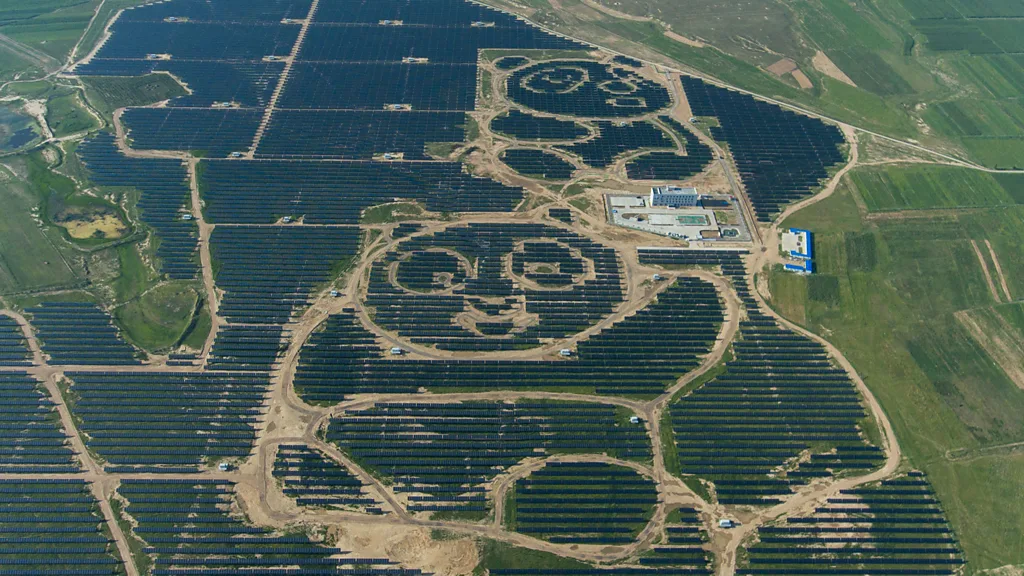
Today China produces 880 gigawatts of solar power and 520 gigawatts of wind energy, compared to India’s 97 and 48 gigawatts, respectively. More strikingly, China supplies 80 percent of the world’s solar panels—a manufacturing feat unmatched anywhere else.
Trade and the Asymmetry
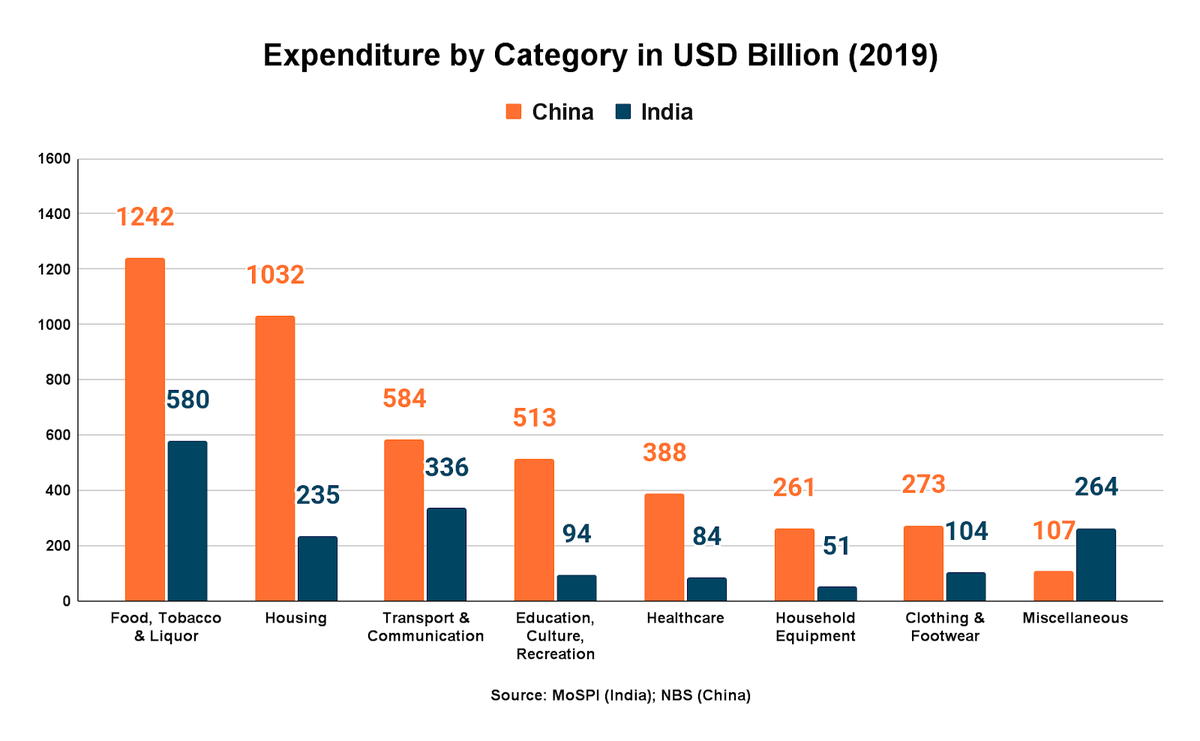
Since Rajiv Gandhi’s 1988 visit, India–China trade ties have exploded. It helped India to lead in generic pharmaceuticals and two-wheelers business worldwide as China supplies the raw materials for Generic Manufacturing and components for two wheeler manufacturing. It has also helped in reducing capital expenditure in major infrastructural projects.
As of 2024–25, India imports goods worth ₹10 lakh crore from China, while exporting only ₹1.3 lakh crore in return—a staggering trade imbalance.
Democracy and Development
It is tempting to claim, as some economists including Raghuram Rajan have suggested, that authoritarianism breeds faster growth. But the evidence says otherwise. Democracies like India’s have produced social innovations unmatched by centralized regimes—the world’s largest and successful dairy cooperative movement being one.
Democracy is not a luxury. It is as essential as food and healthcare for humanity to survive. To trade it for the so-called, ‘authoritarian efficiency’, would be to sell one’s sight for a painting.
The Core of China’s Success and lessons for India
China’s triumph lies in its executional efficiency—its ability to build advanced technologies and massive manufacturing capacities for a fraction of the global cost. Behind that lies a deliberate, decades-long investment in science, research, and skill development.
India’s early focus on self-sufficiency in food, basic industry, nuclear power, higher education and space research, etc… were farsighted and paid back rich dividends. But India failed to invest, early enough, in universal basic literacy and healthcare, to build human capital.
That, more than anything, is what separates us from China today.
If we delay further, the gap will only widen.
Where Is India Headed?
Alarmingly, today’s political leadership seems to be steering the country away from science, technology, and human development—toward myths, identity politics, past glory and cultural regression.
When Heads of India’s premium technological education institutes, profess the medicinal qualities of cow’s urine or claim that earthquakes were caused due to eating meat, it does not give the confidence that India is marching towards great strides in education and technology.
At independence, Nehru created institutions like IITs, AIIMS, Atomic Research institutions and ISRO and envisioned them as the “temples of modern India”—symbols of our collective aspiration. Today, our ministers tie lemons to imported fighter jets to ward off the evil eye.
The current ideological tide—rooted in religion rather than reason—threatens to rewrite the secular, scientific constitution which is the foundation of modern India.
History offers grim warnings: nations that traded progress for fundamentalism—Pakistan, Iran, Afghanistan—did not ascend; they regressed.
Three decades ago, the world spoke of “the Indian elephant and the Chinese dragon” as equals.
No one does now.
The dragon has long since leapt ahead—becoming an industrial, scientific, and economic superpower.
That is the bitter truth India must finally confront.








happy to see your article here in Aidem!
nice