
Lenin, Philosophy, and the Politics of Unity: From Capri to Ideological Practice


On the 102nd death anniversary of Vladimir Lenin, academic T. T. Sreekumar returns to the Bolshevik leader not as an icon embalmed in history, but as a thinker whose unresolved tensions continue to speak to the present. Moving beyond ritual commemoration, the essay probes Lenin’s fraught engagement with philosophy, intellectuals, and political praxis —revealing a legacy shaped as much by strategic restraint as by theoretical combat. In revisiting the Capri episode and its afterlives, Sreekumar invites readers to reflect on a question that still haunts the Left: how to balance critical thought with collective discipline without hollowing either out.
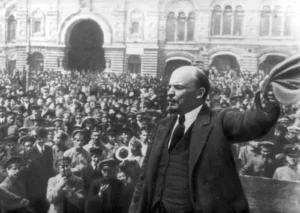
January 21, marking the 102nd death anniversary of Vladimir Lenin (1870—1924), offers an occasion not merely for commemoration but for a critical re-engagement with one of his most insightful, yet unresolved contributions: the fraught articulation between philosophy, the workers’ movement, and the role of intellectuals. Lenin approached philosophy neither as an autonomous realm of abstract speculation nor as a neutral supplement to politics, but as a site of ideological struggle whose effects were inseparable from class organization. At the same time, his insistence on subordinating philosophical debate to political unity leaves an enduring ambiguity: while it protected the revolutionary movement from intellectual factionalism, it also risked constraining the autonomy of critical thought. Similarly, Lenin’s conception of the intellectual, as necessary yet always in need of discipline and subordination to the party, remains both strategically lucid and theoretically problematic. Remembering Lenin on this anniversary thus invites not reverence but reflection: his framework does not offer settled answers, but it continues to pose a productive tension between critique and organization, intellectual autonomy and political discipline, an ambiguity that remains instructive for contemporary left politics.
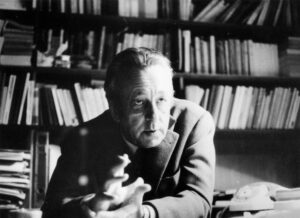
Louis Althusser, in his influential essay Lenin and Philosophy, recounts an anecdote involving Vladimir Lenin and Maxim Gorky, set in the context of the Capri circle in 1908. Althusser narrates that Gorky invited Lenin to participate in philosophical discussions with Bolshevik intellectuals associated with empirio-criticism, notably those around Bogdanov. Lenin, according to Althusser, declined, on the grounds that philosophy tends to divide while politics must unite. Althusser uses this remark as a conceptual point of entry into his thesis that philosophy, for Lenin, is not a neutral theoretical enterprise but a form of ideological intervention that draws lines of demarcation rather than producing consensual knowledge. Importantly, the phrase “philosophy divides, politics unites” does not appear verbatim in Lenin’s writings; it should be understood as Althusser’s theoretical condensation of Lenin’s position rather than as a literal quotation. ¹

The documentary basis for Althusser’s anecdote lies in Lenin’s correspondence with Gorky from early 1908, especially Letters 168 and 172 in Lenin: Collected Works, Volume 34. In Letter 168, dated 7 February 1908, Lenin responds to Gorky’s proposal for philosophical discussion by explicitly distancing himself from the initiative. He states that he is not adequately prepared for philosophical debate and, more crucially, insists that philosophical disagreements—particularly those between materialists and Machists—should not be incorporated into what he calls “integral Party work.” Lenin argues that such disputes, if institutionalized within party organs, would weaken rather than strengthen political unity. ² In Letter 172, dated 24 March 1908, Lenin develops this argument further. He warns that allowing “any kind of philosophy” into a party-aligned journal would inevitably provoke polemics, personal animosities, and factional bitterness. Philosophy, he suggests, has a structural tendency to intensify division when it is not carefully regulated and politically subordinated.³
These letters reveal Lenin’s distinctive approach to party work and philosophical factionalism. For Lenin, the party is not an academic forum but a political instrument whose effectiveness depends on unity of action and clarity of purpose. Philosophical disputes, especially under conditions of repression and organizational vulnerability, risk becoming vehicles for factional disintegration. Lenin’s insistence on separating philosophy from immediate party work should therefore not be misread as hostility to theory. On the contrary, it reflects a strategic understanding of theory as a secondary, mediated practice whose political effects depend on its institutional placement and timing. Philosophy is necessary, but it is not sovereign; it must be subordinated to the practical requirements of revolutionary organization.
Empiriomonism, associated with Alexander Bogdanov and developed by Anatoly Lunacharsky and Vladimir Bazarov, formed the immediate philosophical backdrop to the Capri episode. Drawing on the ideas of Ernst Mach and Richard Avenarius, empiriomonism sought to revise Marxism by grounding it in a theory of experience, treating reality as a complex of socially organized sensations rather than as an objective material world existing independently of consciousness (Bogdanov 1904–1906; Bazarov 1908).4 In his correspondence with Gorky in early 1908, Lenin claimed that he was “unprepared” for philosophical debate and declined to participate in Capri-style discussions, arguing that such disputes would only intensify factional divisions within the party (Lenin 1908a; Lenin 1908b).5
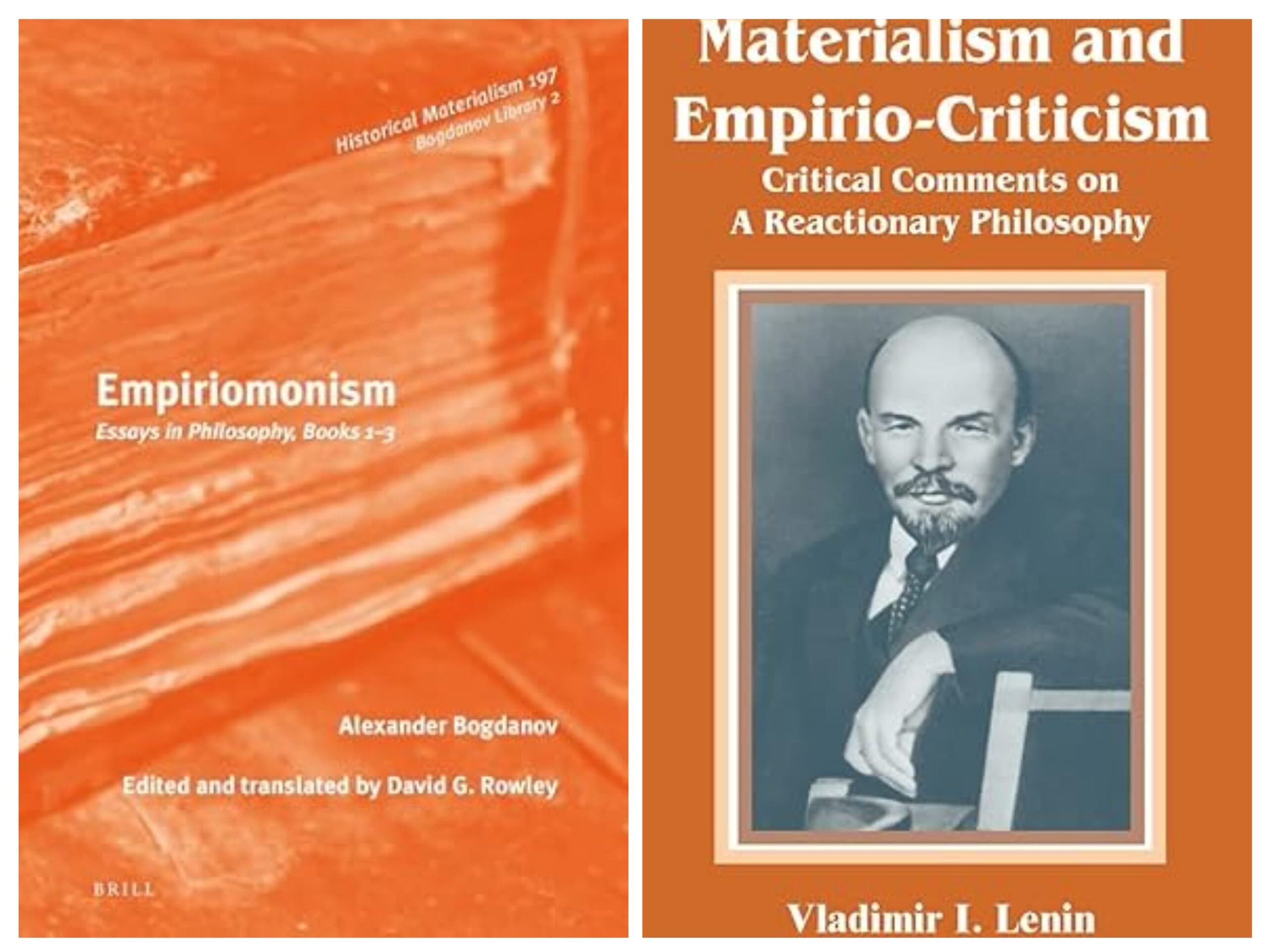
Yet this professed unpreparedness should not be mistaken for philosophical indifference or incapacity. In the period immediately following the Capri exchanges, Lenin undertook a systematic and sustained engagement with empiriomonism, culminating in his polemical work Materialism and Empirio-Criticism (Lenin 1909).6 There, Lenin mounted a comprehensive critique of Bogdanov, Lunacharsky, and Bazarov, accusing them of abandoning materialism in favor of a covert idealism that threatened the theoretical foundations of Marxism. The episode thus reveals a characteristic Leninist strategy: a tactical refusal to turn philosophy into an arena of immediate party conflict, followed by a carefully prepared theoretical intervention conducted on terms that would decisively reassert both philosophical materialism and political authority.
Lenin’s concern with philosophical factionalism is inseparable from his broader critique of intellectuals. Throughout his writings, Lenin expresses deep suspicion toward intellectuals as a social stratum inclined toward individualism, moralism, and theoretical self-assertion. In the Capri context, the Machist philosophers exemplify for Lenin a recurring danger: intellectuals who transform philosophy into a badge of cultural or moral distinction, thereby undermining collective discipline. Lenin’s critique is not anti-intellectual in a crude sense; rather, it targets the intellectual’s tendency to substitute debate for organization and critique for political responsibility. Philosophy, when monopolized by intellectual circles detached from mass struggle, becomes a centrifugal rather than a unifying force.
This position is already clearly articulated in Lenin’s earlier polemical work What Is to Be Done?.7 There, Lenin famously argues that socialist consciousness does not arise spontaneously from the working class but must be brought in “from without,” through systematic theoretical and organizational intervention. Yet this argument is often misunderstood as a celebration of intellectual authority. In fact, Lenin sharply distinguishes between bourgeois intellectual autonomy and revolutionary intellectual labour subordinated to the party. Intellectuals are indispensable, but only insofar as they accept discipline, collective responsibility, and the primacy of political organization. Their task is not to redefine the party according to theoretical fashion, but to place their knowledge at the service of a coherent political project.
Seen from this perspective, the Capri episode acquires a broader theoretical significance that extends beyond its immediate historical context. Althusser’s formulation— “philosophy divides, politics unites”—anticipates his own later concept of philosophy as an ideological practice rather than a science. For Althusser, philosophy does not discover truth in the manner of science; instead, it intervenes in ideological struggle by drawing boundaries, affirming positions, and excluding others. In this sense, Althusser radicalizes Lenin’s intuition: philosophy is inherently partisan, and its political effects depend on how it is articulated within a broader field of social practices. Lenin’s refusal to engage in Capri-style philosophical discussion thus appears, retrospectively, as an early recognition of philosophy’s divisive power when detached from political strategy.
A parallel insight can be found in Antonio Gramsci’s reflections on intellectuals and hegemony.8 Gramsci rejects the idea of “neutral” or “traditional” intellectuals and insists that all intellectual activity is embedded in social relations and political projects. His distinction between traditional and organic intellectuals, mirrors Lenin’s concern: intellectuals must be organically linked to a collective political will rather than operating as autonomous philosophical authorities. Like Lenin, Gramsci views theoretical work as effective only when integrated into a hegemonic project that unifies disparate social forces. From this standpoint, philosophy does not unify by virtue of its abstract universality; it unifies only insofar as it is embedded in a concrete political practice.
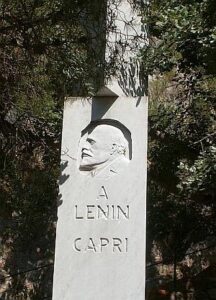
Althusser’s anecdote should be read neither as a casual historical remark nor as a literal quotation from Lenin, but as a theoretically faithful paraphrase of Lenin’s enduring position on philosophy, intellectuals, and party unity. The Lenin–Gorky correspondence demonstrates that Lenin viewed philosophy as a potentially divisive practice whose political effects must be carefully managed. Althusser and Gramsci, each in their own way, transform this strategic intuition into a general theory of ideological practice. What unites these thinkers is the conviction that theory is never innocent—and that without political discipline, philosophy risks becoming not a weapon of emancipation, but a source of fragmentation.
Notes
- Althusser, Louis. Lenin and Philosophy and Other Essays. Translated by Ben Brewster, Monthly Review Press, 1971, pp. 27–30.
- Lenin, V. I. “Letter to A. M. Gorky, 7 February 1908.” Collected Works, vol. 34, Progress Publishers, 1965, pp. 388–390.
- Lenin, V. I. “Letter to A. M. Gorky, 24 March 1908.” Collected Works, vol. 34, Progress Publishers, 1965, pp. 393–395.
- Bogdanov, Alexander. Empiriomonism. 3 vols., Moscow, 1904–1906; Bazarov, Vladimir. Studies in the Philosophy of Marxism. Moscow, 1908.
- See notes 2 and 3.
- Lenin, V. I. Materialism and Empirio-Criticism. Collected Works, vol. 14, Progress Publishers, 1962.
- Lenin, V. I. What Is to Be Done? Burning Questions of Our Movement. Collected Works, vol. 5, Progress Publishers, 1961, pp. 375–529.
- Gramsci, Antonio. Selections from the Prison Notebooks. Edited and translated by Quintin Hoare and Geoffrey Nowell Smith, International Publishers, 1971.