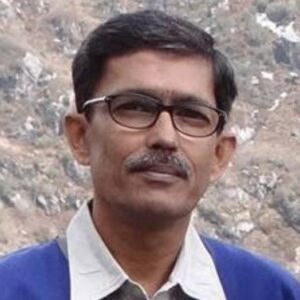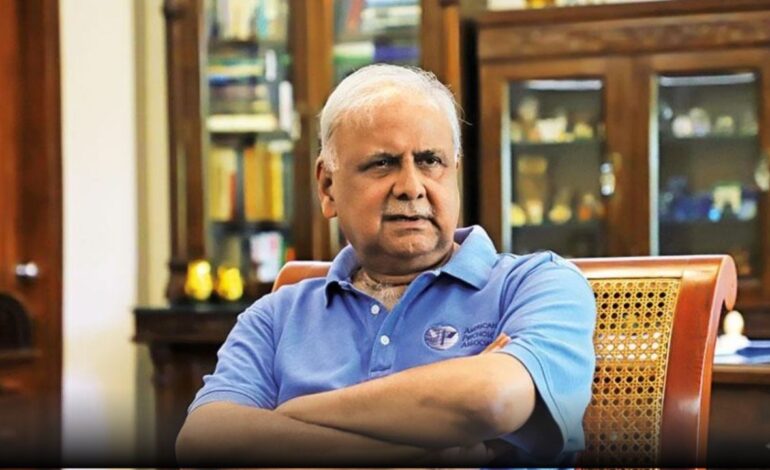
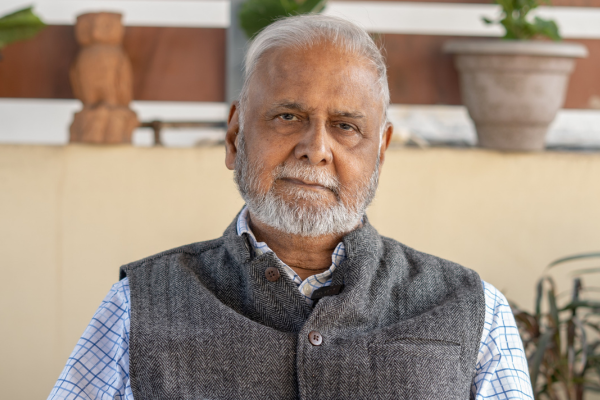
In the dim hours before dawn on September 12, 2025, India lost not just a man, but a quiet inferno—a force that burned steadily against the shadows engulfing its democracy. Jagdeep S. Chhokar, the 81-year-old co-founder of the Association for Democratic Reforms (ADR), slipped away in Delhi following a sudden heart attack, leaving behind a legacy etched in the annals of electoral justice. His passing, amid recovery from a fractured shoulder and a lingering lung infection, feels like the abrupt silencing of a lifelong sermon on integrity. For those who knew him, it is a rupture; for the nation he served, a poignant reminder that true change-makers often depart without fanfare, their work a whisper that echoes through generations. Chhokar’s life was a tapestry of improbable turns, each thread weaving him closer to the heart of public service.
Born in 1944, he began as a mechanical engineer with the Indian Railways, where the rhythmic clatter of trains mirrored the steady cadence of his early ambitions.
A chance encounter with a colleague rushing to an MBA class ignited a spark: in 1974, he enrolled in Delhi’s Faculty of Management Studies evening program, balancing tracks and textbooks. Deputized to a public sector unit to accommodate his wife’s academic pursuits, Chhokar found himself pestered by a trainee into applying for a PhD abroad. Half in jest, he did—and the world cracked open.
By 1980, he was at Louisiana State University, his days filled with scholarly rigour and evenings pondering life’s fragility. A visit to the University of Chicago during a break led to a pivotal nudge: join academia. Skeptical of his own path, he quipped about his university’s fame leaning more on basketball than books. Yet, persistence paid off. Letters flew, papers published, and soon a cable arrived: meet I.G. Patel, the legendary director of IIM Ahmedabad, in New York. With characteristic dry wit, Chhokar demanded travel and lodging; Patel, amused, obliged over the phone. Thus began a 26-year odyssey at IIM-A, from deputation in 1982 to full-time professor by 1990, ascending to dean and director-in-charge.
He retired in November 2006, his classroom a forge for minds on organizational behavior, cross-cultural management, and the ethics of power.
But academia was merely the prelude. In 1998, during a teaching stint in New Orleans, a quadruple heart bypass laid him low, staring mortality in the face.
Depression shadowed his return to India, until a bird-watching tour of Gujarat with his brother-in-law injected color into his convalescence. Majestic plumes against azure skies taught him patience—a virtue that would define his activism. He earned a certificate in ornithology from the Bombay Natural History Society, finding solace in the silent vigil of observation. Little did he know, this patience would soon be channeled into a far graver watch: over the soul of Indian democracy.
The Spark of a Movement: From Classroom to Courtroom
The catalyst arrived in 1999, courtesy of colleague Trilochan Sastry, 14 years his junior. Aghast at newspaper headlines touting criminals in politics, Sastry pored over nomination papers for Ahmedabad’s Lok Sabha candidates. What he found—or rather, what was absent—stunned eleven academics, including Chhokar: mere names, addresses, voter numbers, and paternal references.
No whisper of qualifications, finances, or felonies. “How can voters choose blindly?” they wondered, the question festering like an open wound.
This indignation birthed ADR in 1999, a ragtag association of professors from IIM Ahmedabad, alongside figures like Ajit Ranade. Registered as a non-partisan NGO, it vowed to fortify democracy through electoral reforms. Chhokar, ever the self-effacing engineer-turned-educator, became its moral compass. They filed a Public Interest Litigation in the Delhi High Court, demanding disclosures.
In November 2000, victory: candidates must swear affidavits revealing education, income, liabilities—and crucially, pending criminal cases where charges were framed.
The political establishment recoiled. The Union government appealed to the Supreme Court, which in May 2002 granted the Election Commission two months to enforce it. Panic ensued; politicians across aisles clamored to amend the Representation of the People Act, 1951.
With Parliament adjourned, an ordinance loomed. Chhokar and 29 others beseeched President A.P.J. Abdul Kalam, who returned it unsigned—a rare presidential rebuke.
Re-promulgated, Kalam had no choice but to assent. Undeterred, ADR stormed the Supreme Court. In March 2003, the ordinance fell: the amendment was unconstitutional.
Candidates’ disclosures became mandatory, a seismic shift that peeled back the veil on political underbellies.
This triumph was no isolated flare. It ignited a crusade. Chhokar, shocked by the elite’s stonewalling, transformed into a “diehard activist.” He qualified as a lawyer in 2005, arguing ADR’s cases himself. His LL.B. joined an MBA (1977), Ph.D. (1983), and dual engineering degrees (1967), arming him for battles intellectual and legal. Teaching stints in Australia, France, Japan, and the U.S. had honed his global lens; now, he turned it inward, dissecting India’s democratic frailties.
A Lifetime’s Arsenal: Against Corruption’s Insidious Grip
Chhokar’s war on electoral corruption was multifaceted, blending data, advocacy, and unyielding litigation.
ADR’s flagship, National Election Watch, since 2002, dissected over 182,000 candidates’ affidavits, arming voters via myneta.info. Revelations poured forth: in 2024 Lok Sabha polls, 251 MPs faced serious criminal charges, including murder and rape. Such exposures weren’t mere statistics; they were lifelines for an electorate adrift in opacity.
He championed the 2013 Supreme Court verdict barring convicted MPs and MLAs from office, intervening in Lily Thomas’s petition to dismantle Section 8(4) of the Representation of the People Act. That year, ADR backed Common Cause for the “None of the Above” (NOTA) button on EVMs—a defiant “no” option introduced in 2014, symbolizing voter agency.
In 2018, his data fueled a ruling mandating disclosures of spouses’ and dependents’ income sources in affidavits, curbing asset concealment.
Financial shadows drew his fiercest ire. In 2008, ADR wrested a Central Information Commission order mandating public access to parties’ income tax returns. Analyzing returns from FY 2002-03 onward for six national and 51 regional parties, Chhokar exposed opaque funding: between 2004-05 and 2014-15, unknown sources dominated, fueling suspicions of cronyism. Contribution reports from corporates and individuals over Rs 20,000, electoral trusts’ flows (FY 2013-14 to 2017-18), and parties’ expenditure in 91 assembly and three Lok Sabha polls—all laid bare under his scrutiny.
The pinnacle came in February 2024: ADR, with Chhokar as lead petitioner, toppled the electoral bonds scheme. Deemed unconstitutional for enabling anonymous, unlimited donations—often from black money—the verdict severed a vein of corruption. “Quid pro quo” deals, where donors secured favors, were eviscerated. Even in April 2024, as the Court rejected full VVPAT counting but mandated SLU sealing and cross-verifications, Chhokar pressed on, warning of EVM vulnerabilities.
His gaze extended to appointments: in March 2023, ADR’s petition reformed the Election Commission’s selection, vesting it in a committee of the Prime Minister, Chief Justice, and Opposition Leader—insulating it from executive whims. He decried Bihar’s 2025 special intensive revision of rolls, fearing mass disenfranchisement, especially among marginalized voters.
At 80, birdwatching parallels abounded: just as patience revealed hidden nests, his vigilance uncovered electoral malfeasance.
Broader still, Chhokar’s intellect spanned. Editor of the 2007 GLOBE tome on global leadership, he penned on cross-cultural dynamics, safety, and public sector ethics. Yet, activism eclipsed all. Volunteering 1,200 NGOs under ADR’s umbrella, he fostered inner-party democracy, RTI expansions, and Rajya Sabha interest registers—unveiled after a two-year RTI skirmish in 2011.
Echoes of a Gentle Titan: Tributes and Enduring Void
News of his death rippled through civil society like a suppressed sob. RJD MP Manoj Kumar Jha mourned a man who “forced the nation to look into the mirror of its electoral practices and confront the cracks beneath.” Lawyer Sanjay Hegde saluted: “Rest in Power sir, you fought well to preserve India’s democratic institutions.” Former Election Commissioner Ashok Lavasa deemed it tragic, praising ADR’s “yeoman service” in upholding standards, vital for questioning authority. Journalist Maneesh Chhibber lamented, “The nation will be poorer without you.”
Chhokar’s humility shone in his final wish: body donation for medical research, a selfless coda to a life of giving. Headed by Maj. Gen. Anil Verma (Retd.), with trustees like Jaskirat Singh and Vipul Mudgal, ADR endures, its 25-year odyssey now shadowed by loss.
Awards accrued—Yashraj Bharati Samman (2024) for ethical governance, Fight 4 Justice (2024) for bonds battle, eNGO Challenge (2020) for voter campaigns—but accolades paled beside impact.
The Patient Watch: A Legacy for Tomorrow’s Wings
In his twilight years, Chhokar often reflected: “Our democracy cannot be vibrant as long as political parties remain non-democratic.”
He knew the road ahead—firewalling EVMs, purifying rolls, enforcing funding transparency—remained treacherous. Yet, like the birds he cherished, he trusted in migration’s inevitability: flawed systems could evolve.
Jagdeep S. Chhokar was no bombast; his revolutions were quiet, his arguments ironclad. He leaves a wife, family, and a democracy marginally brighter, less prone to the criminals he abhorred. As India hurtles toward 2029 polls, his absence aches—a void where once stood a man who, with infinite patience, dared politicians to earn their ballots. In death, as in life, he reminds us: vigilance is not a spectator sport. It is the patient, relentless flight toward light.
Rest, professor; your watch has inspired a thousand more.
This article is also published in the print edition of The Emerging World.