
Gaza: A Genocide the World Chooses to Ignore

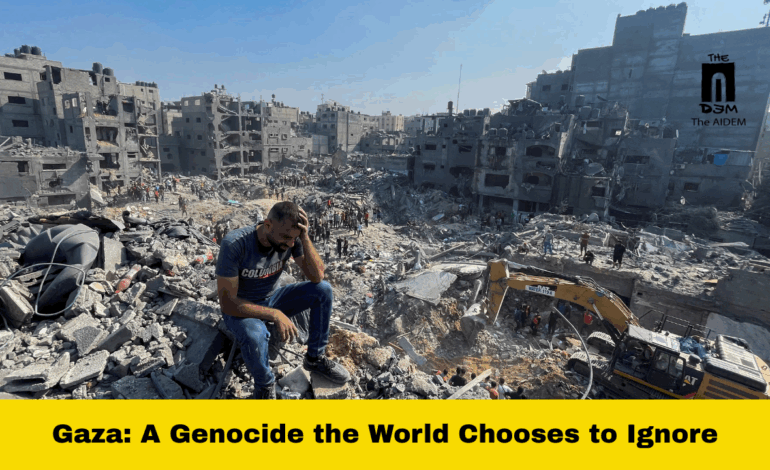
Israel’s war on Gaza is no longer a regional flashpoint—it is a moral reckoning for the world. Months of relentless bombardment, deliberate famine, and the expansion of strikes into Qatar and Iran reveal a campaign of destruction that defies the language of “defence.” More than 64,000 Palestinians are dead, half a million face starvation, and international law lies in tatters while powerful nations look away. Gaza is not only a humanitarian catastrophe but a test of global conscience. To witness this and remain silent is complicity. The question is stark: will the world uphold justice, or allow an entire people to be erased?
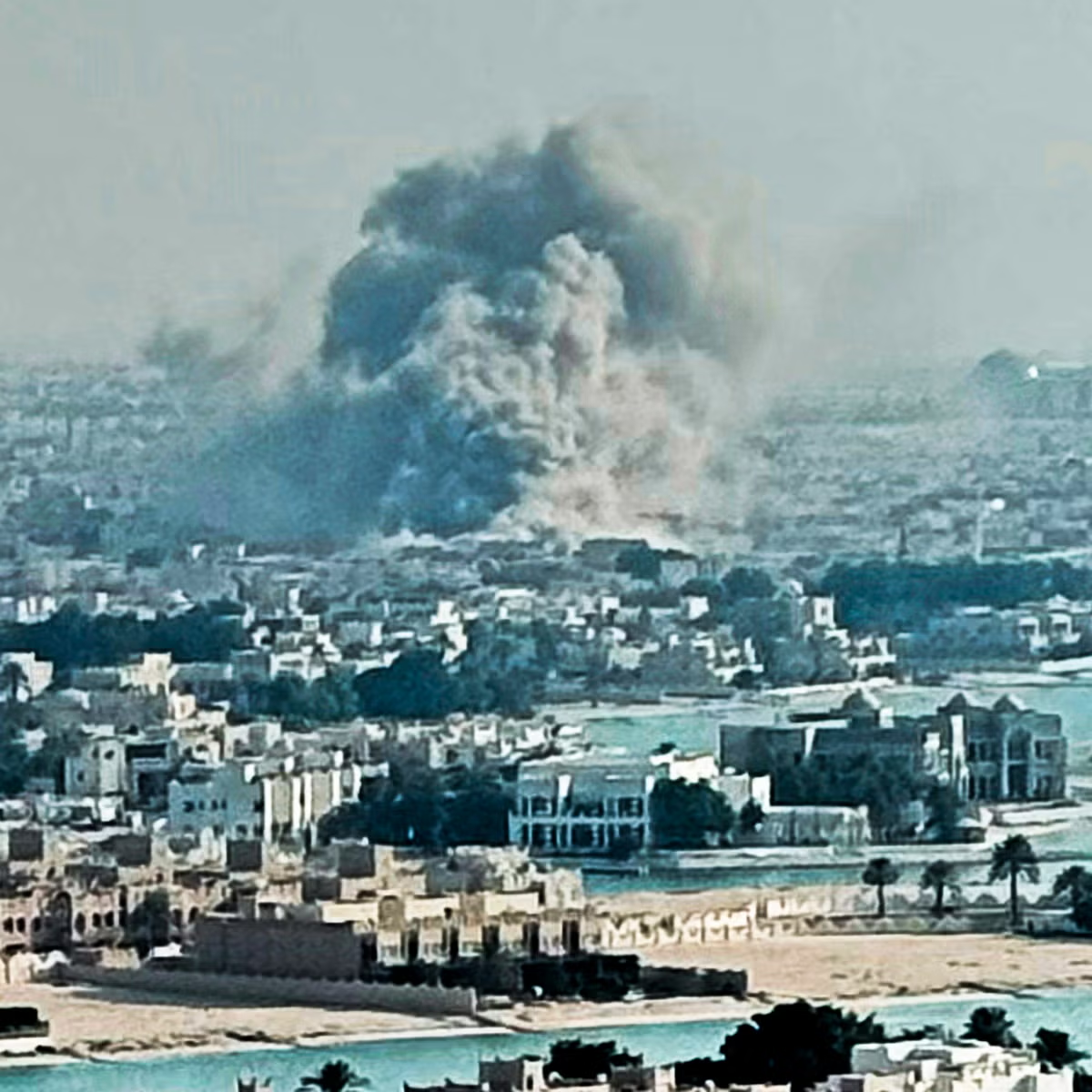
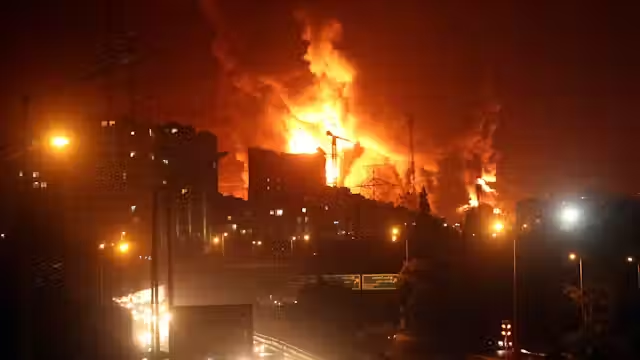
On 9 September, Israeli warplanes struck a Hamas political office in Doha, killing six people, including a Qatari citizen. This assault on a neutral state hosting cease-fire talks was not merely an escalation but a direct affront to diplomacy itself. Months earlier, on 13 June, Israeli strikes killed 950 inside Iran, including senior military personnel; evidence that the campaign of violence is no longer confined to Palestine but radiates across the region.
A Manufactured Famine
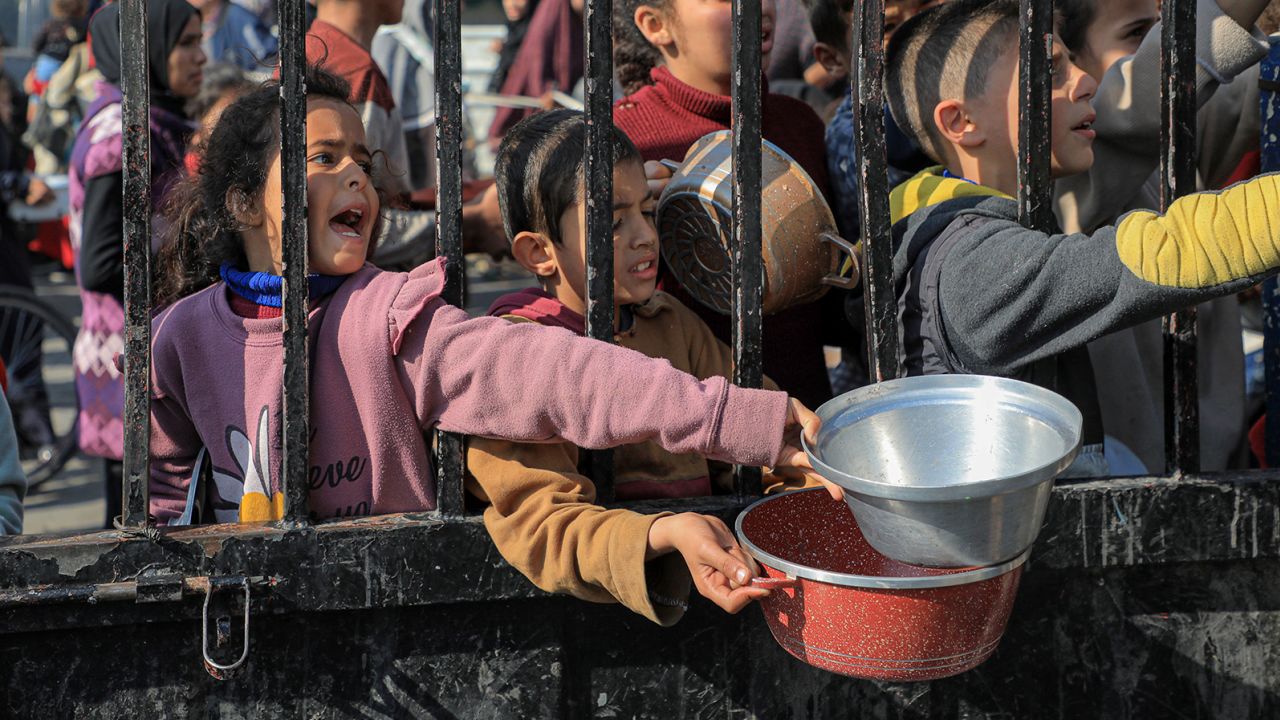
For decades, Palestinians have endured wars, occupation, and blockade. Families are atomised, homes pulverised, childhood itself denied. On 15 August 2025, famine (IPC Phase 5) was confirmed in the Gaza Governorate. After 22 months of relentless conflict, more than half a million people face starvation, destitution, and death. A further 1.07 million (54%) are in Emergency (IPC Phase 4) and 396,000 (20%) in Crisis (IPC Phase 3). This is not a natural disaster; it is an engineered catastrophe — one driven by blockade, bombardment, and deliberate attacks on civilians.
Gaza: An Open Prison
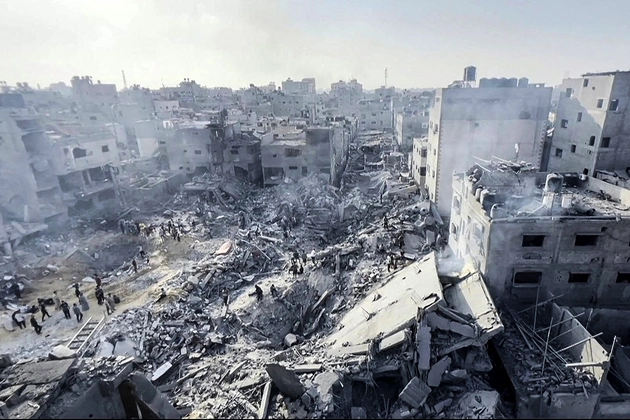
Inside Gaza, the catastrophe is beyond words. More than two million people remain trapped in what has long been called the world’s largest “open-air prison.” Since October 2023, bombardments have killed over 64,000 people, many of them children. Entire families have been erased, hospitals and schools destroyed, mosques reduced to rubble. Restrictions on aid convoys, food, water, and electricity have deepened famine conditions. The United Nations and humanitarian organisations have repeatedly warned that this is not collateral damage but collective punishment. By legal definition, it constitutes genocide. The International Association of Genocide Scholars (IAGS) has already declared Israel’s actions in Gaza as genocide.
Killing civilians, starving millions, and destroying homes is not defence—it is genocide. Yet while global opinion increasingly recognises Palestinian suffering, powerful states remain complicit through silence or selective outrage. Human rights are defended elsewhere but denied to Palestinians. Gaza has become the ultimate stress test of the international order’s moral authority.
Faith, Law, and the Right to Resist
For Muslims, Gaza is not only a humanitarian crisis but a test of conscience. The Qur’an permits resistance against oppression but forbids excess: “Do not exceed the limits. Allah does not like transgressors” (2:190-193). Verses such as 4:75 also call on believers to defend the oppressed. These teachings make clear that resistance, when oppression becomes unbearable, is both legitimate and necessary. To reduce these verses to mere counsel for patience is to drain them of their urgency.
Palestinians have long embodied this principle through sumud—steadfastness. Their resilience, both spiritual and physical, represents active defiance in the face of overwhelming odds. International law also recognises the right of people under occupation to resist, including through means of struggle. United Nations resolutions, including Security Council 605 (1987), 607 (1988), and 608 (1988), reaffirm the legitimacy of struggles for independence and self-determination against colonial domination and foreign occupation. Palestinian resistance, therefore, is neither terrorism nor aberration; it is the lawful insistence on self-determination.
Beyond the Battlefield
Yet resistance cannot be confined to the battlefield. It must extend into politics and diplomacy. Protests and charity drives, while vital, are insufficient. The occupation is structural, and so must be the response. The two-state solution, though battered, remains the most widely recognised framework for peace: an independent Palestinian state, based on 1967 borders with East Jerusalem as its capital. Without sovereignty, Palestinians remain trapped in a limbo of dispossession and apartheid. The alternative is permanent occupation and eventual erasure.
Muslim states must act not only as donors but as political actors. Diplomatic pressure must be applied at the United Nations, the International Criminal Court, and all global forums. Economic tools—boycotts, divestment, and sanctions—remain powerful non-violent means to hold Israel accountable. Civil society worldwide should also reject normalisation that erases Palestinian suffering. The Abraham Accords and similar deals cannot be accepted if they come at the cost of Palestinian sovereignty.
The Imperative of Conscience
Faith, too, demands action. To pray for Gaza while remaining passive misunderstands the link between divine mercy and human responsibility. Divine mercy manifests when believers mobilise resources, voices, and pressure against tyranny.
The attacks in Gaza, the strike in Qatar, the escalation into Iran, and the famine consuming Palestinian lives must all be seen as parts of the same policy of destruction. The obligation is clear: resist, organise, and demand justice.
A Wound on the World
Gaza today is more than a Palestinian wound; it is a gash across the world’s conscience. It challenges us to decide whether we will accept an international order where people can be starved, bombed, and erased with impunity. For Muslims, the answer cannot be rhetoric alone. It must be solidarity expressed through action, rooted in faith and braided with the universal demand for justice.
To stand with Gaza is not simply to oppose occupation. It is to affirm life, dignity, and the right of a people to be free. If Muslims can unite in this cause, Gaza will not remain only a symbol of suffering but also of resistance, resilience, and the struggle for justice. The way forward is uncompromising: end the occupation, stop the genocide, and establish an independent Palestinian state. Anything less is betrayal—of faith, of humanity, and of Gaza’s children who still dream of freedom.