

Karbala, Kurukshetra, and the Fire in Tehran


What turns a battlefield into a legend? Why do some deaths echo across centuries while others vanish into statistics? In the moral imagination of the East, martyrdom is memory’s fiercest flame. From the dusty fields of Kurukshetra to the parched plains of Karbala, sacrifice has shaped how societies remember courage, justice, and defiance. Today, as the world watches the turmoil around Iran and the violent end of Ayatollah Ali Khamenei, uncomfortable questions return. Are we witnessing merely geopolitics — or the making of yet another martyr? In this 30th edition of Everything Under the Sun, Nalin Verma traces the cultural memory that binds ancient epics to modern conflict.
“Jis dhaj se koi maktal mein gaya, woh shaan salāmat rahti hai,
Ye jaan to aani–jaani hai, is jaan ki to koi baat nahin.”
(The dignity with which one walks to the slaughter-ground — that honour endures. Life itself comes and goes; in itself, it is no great thing.) — Josh Malihabadi
In the oriental sensibility, the sun does not shine on the victors; it lingers over the martyrs who stood firm. It pauses, as though unwilling to move past the dust where a martyr fell — whether on a thirsty plain or across rugged hills. The light, our elders say, knows where to rest.

In the fading glow of the setting sun on the Gangetic plains, when cattle return home, and smoke rises from earthen chulhas, the elders recount how Abhimanyu of the Mahabharata entered the whirling chakravyuh (military formation), knowing only half its secret. They loathe the warriors who encircled and killed the young son of Arjuna; they extol the manner in which Abhimanyu fought — and the grace with which he laid down his life for justice.
Mothers and grandmothers sing the ballad of Hazrat Imam Hussein — thirsty and hungry beneath the pitiless sky of Karbala — who chose the blade over submission, and sacrifice over compromise.
The two battlefields — Kurukshetra and Karbala — lie far apart geographically. Yet for millennia, they have shared a home in oriental folklore and moral imagination. This writer — a Hindu by birth — still remembers his grandmother, eyes moist, singing: “De re daadi laung ke chhariya, main chaloon Karbal ko” (O grandmother, give me a sliver of clove, let me go to Karbala), when the tazia — symbol of Hussein’s martyrdom — would be placed at our door during Muharram.
Khamenei — A Quintessential Martyr
The Supreme Leader of Iran, Ayatollah Ali Khamenei, was not as young as Abhimanyu or Hussein. At eighty-six, he stood at the twilight of life. Yet in courage, conviction, and resolve to defend the material and civilisational inheritance of his ancient nation, he bore a striking resemblance to both Hussein and Abhimanyu.
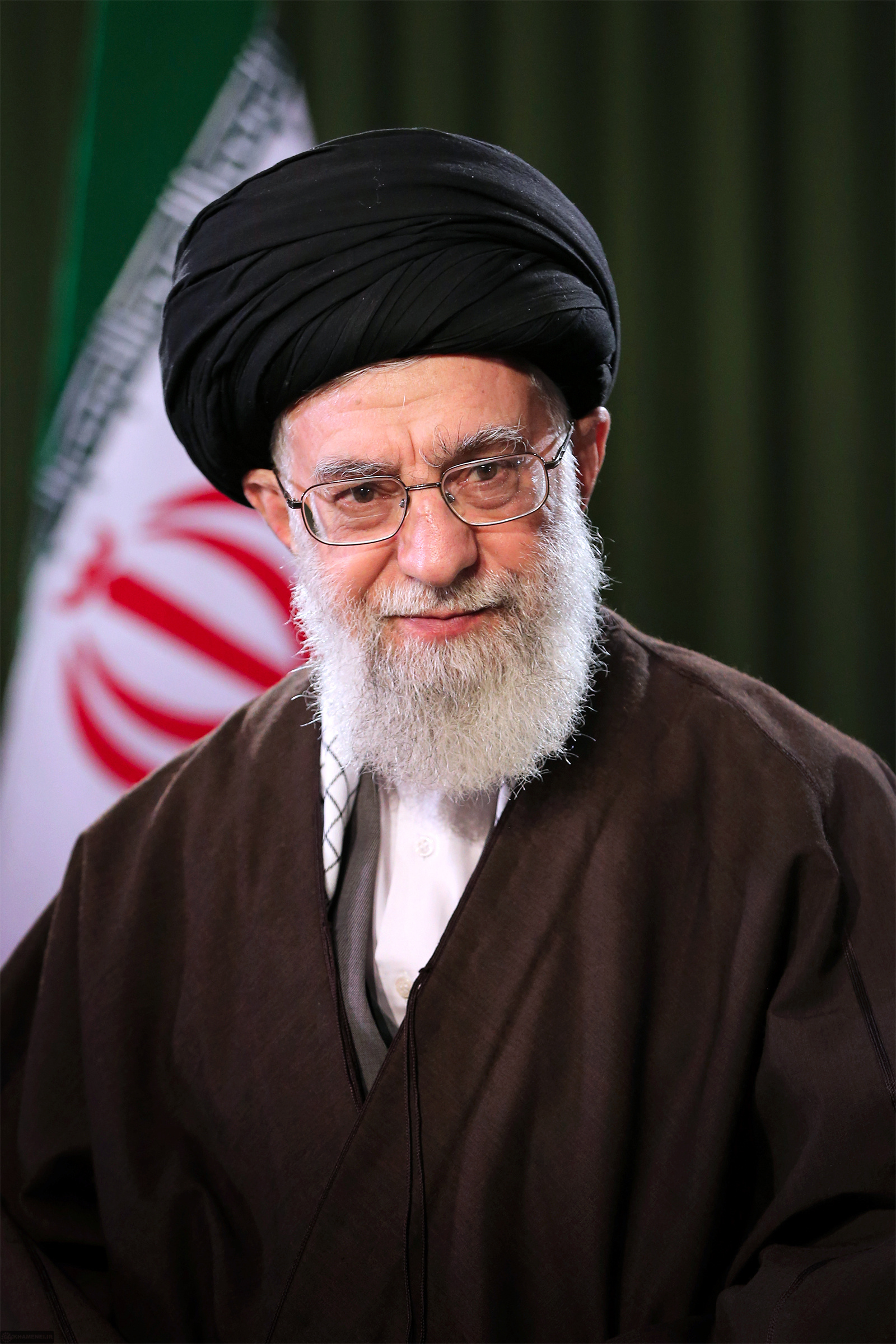
He chose death over submission — refusing to bow before those who, in what was a cold-blooded and clinical operation, assassinated him along with members of his family, including women and children.
The President of the United States, Donald Trump, and the Prime Minister of Israel, Benjamin Netanyahu — presented here as the ringleaders behind the assassination — have advanced a different narrative in the global media, one that largely reflects their strategic standpoint. According to them, the objective was to free the Iranian people from what they describe as a dictatorial regime pursuing nuclear weapons and ballistic missiles capable of striking the United States and destabilising West Asia. They frame their actions as an attempt at regime change — to pave the way, they claim, for democracy, liberty, and justice in Iran.
The fact remains that Trump’s and Netanyahu’s forces struck the Iranian establishment at a time when diplomatic negotiations were reportedly underway. Media reports — including from Western outlets — indicated that Iranian officials were participating in, and complying with, the process. Yet the attack came.
Despite their repeated description of the Iranian regime as “terrorist,” there is no evidence of Iran initiating unprovoked aggression against Israel or its Arab neighbours. In 2025, it was Israel that launched a unilateral strike on Iran, later joined by the United States. Now, the U.S. and Israel jointly attacked Iran once again. Tehran’s actions since then have been framed by its leadership as retaliation — a defence of sovereignty rather than an expansionist move.
What, then, drives Trump and Netanyahu to target Iran?

In an interview with Rajdeep Sardesai on India Today, a U.S. military official suggested that Netanyahu wielded extraordinary influence over Trump and his inner circle — perhaps more than the U.S. Congress or even the broader institutional framework of the American state.
On the domestic front, both leaders have faced crises of credibility in their respective countries. Netanyahu continues to grapple with multiple corruption charges. Trump, for his part, remains surrounded by controversies — including allegations tied to financial misconduct and the shadow of the Epstein files, which threaten to expose uncomfortable associations among powerful elites.
The convergence of Netanyahu’s long-standing hostility toward Iran and Palestine, and Trump’s reputation for transactional politics driven by wealth, lucre, and leverage, may offer one explanation for the attack. For those who view American foreign policy through a historical lens, the stated objective of “restoring democracy” in Iran invites scepticism. The United States has, over decades, entrenched its strategic dominance across large parts of the Arab world — often through close alliances with monarchies whose survival depends heavily on American military protection.
Since the overthrow of Reza Pahlavi and the Islamic Revolution of 1979, Iran has remained the only major regional power consistently resisting U.S. influence. What may particularly attract a leadership known for prioritising economic advantage is Iran’s immense natural wealth? Estimates suggest that Iran holds approximately 208 billion barrels of crude oil, 1,200 trillion cubic feet of natural gas, and roughly 320 metric tons of gold — in addition to substantial reserves of silver, copper, iron ore, lithium, zinc, and other strategic minerals.
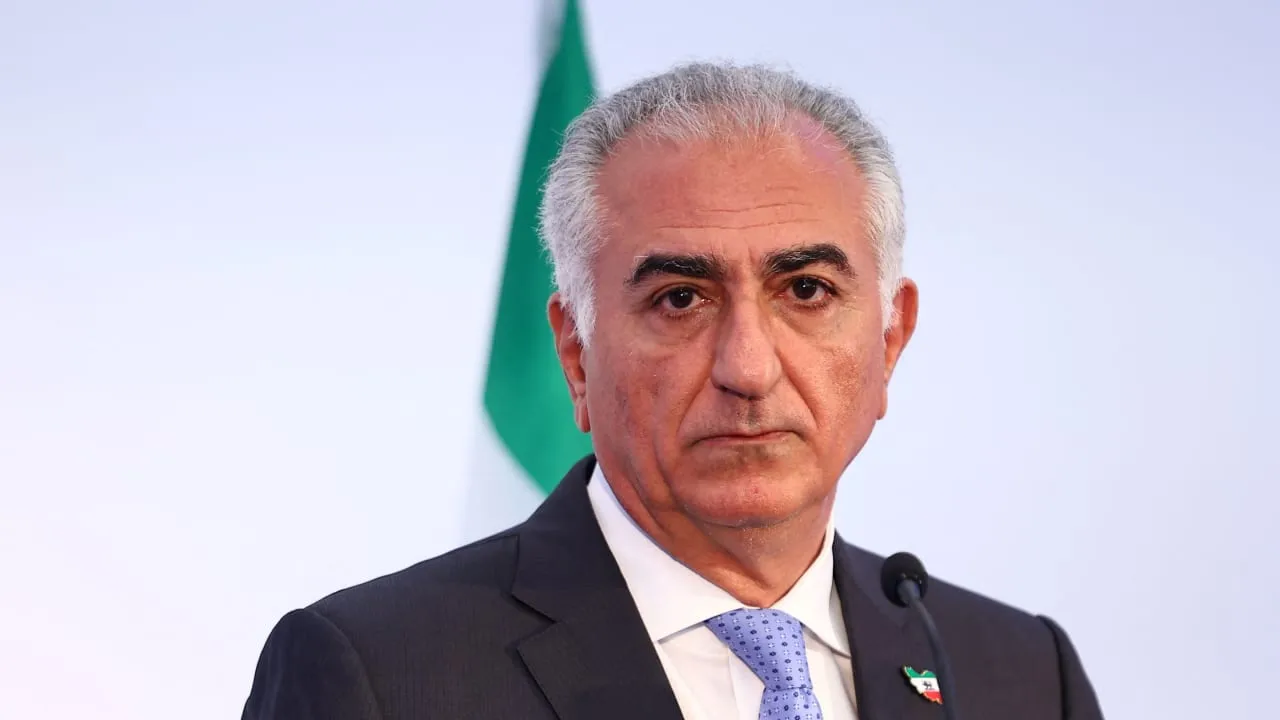
For a superpower with a long record of geopolitical competition over energy corridors and mineral resources, such abundance is never merely geological — it is political.
India’s Perspective
Even as Iran retaliates with whatever resources it has against the direct U.S.–Israel aggression, and as geopolitical and military experts count warplanes, missiles, and bombers, the Indian government appears to have lost much of the moral authority it once enjoyed to condemn either the assassination of Ayatollah Ali Khamenei or the killing of hundreds of civilians including school children in the U.S.–Israel attack on Iranian territory.
Perhaps Trump’s brazenness has demoralised Prime Minister Narendra Modi, instilling fear in his mind. In the run-up to the attack on Iran, Trump kidnapped Venezuela’s president Nicolás Maduro and his wife Cilia Flores — an act that, by force and rhetoric, humiliated governments that sought independent foreign policies.
Trump then made outlandish claims about ‘Operation Sindoor’ against Pakistan and repeatedly belittled Modi by boasting that Pakistan had supposedly downed Indian Rafale warplanes, and that only his intervention prevented a wider India–Pakistan standoff. Trump has since reportedly pressed India into an unequal trade arrangement and dictated that Modi should not buy oil from Russia or Venezuela.
India’s Opposition’s Staller Role
There are parallels between the oppositions in the United States and India. Just as U.S. opposition figures have attacked Trump for reckless actions, Indian opposition leaders have launched blistering critiques of Modi for compromising India’s diplomatic principles.
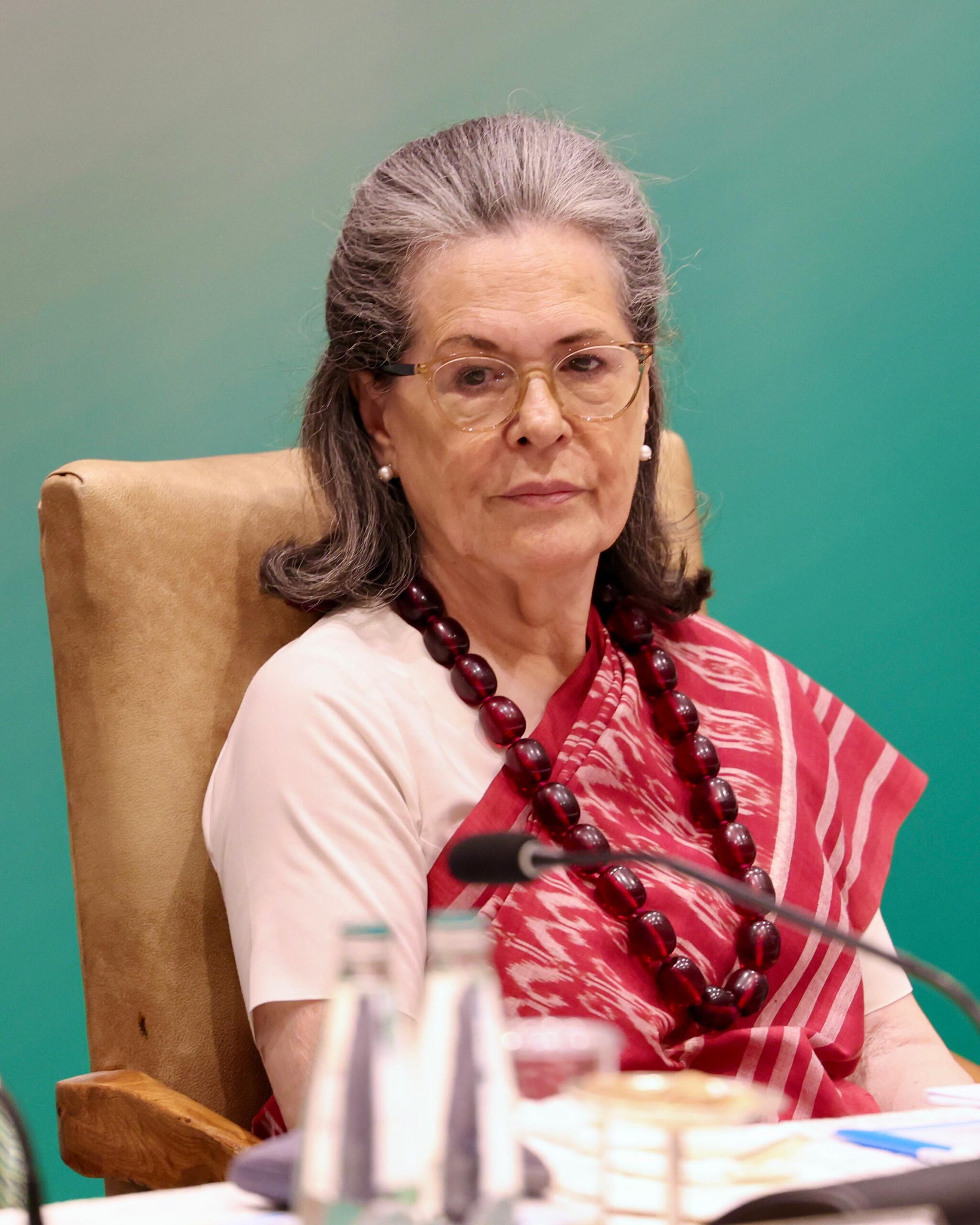
The Congress Parliamentary Party chairperson, Sonia Gandhi, has called the government’s silence on the killing of the Iranian leader “not neutral but abdication” of responsibility — asserting that India’s silence signals tacit endorsement of an unlawful act and raises serious doubts about the direction and credibility of its foreign policy.
The Leader of the Opposition in the Lok Sabha, Rahul Gandhi, has repeatedly dubbed Modi a “compromised” prime minister, questioning whether silence on the assassination of a head of state diminishes India’s standing in the world and calling for India to defend international law and human life.
Samajwadi Party President Akhilesh Yadav, a formidable opposition voice, has — in detailed posts on social media — traced India’s age-old historical, cultural, and economic ties with Iran, and sharply criticised what he calls Modi’s “mimicry” before Trump, whom he described in intemperate terms as a “habitual liar complicit in raping small children and falsely claiming that he rescued India against Pakistan.” He has also attacked the “gang” that is supportive of India’s current dispensation, for celebrating the supreme sacrifice of Khamenei simply because he was a Muslim, while accurately drawing attention to the deep civilisational bonds between India and Iran — from ancient Sufi saints and shared culture to languages and the strategic Chabahar port.

Akhilesh’s voice echoes a larger civilisational sensitivity and values within India, which has witnessed spontaneous public outbursts — particularly among the Shia communities — taking to the streets from Jammu and Kashmir to Delhi and Lucknow, denouncing Trump and Netanyahu and mourning Khamenei’s death. Protests have occurred across scores of locations in India following the killing of Iran’s Supreme Leader, reflecting deep emotion and political mobilisation among the populace.
In this context, Sonia Gandhi, Rahul Gandhi, and Akhilesh Yadav stand among several opposition leaders whom many see as having played a stellar role in defending India’s civilisational values and diplomatic credibility against Trump and Netanyahu — leaders widely criticised here for pushing the world into chaos and disorder through their recklessness.
In many parts of India, particularly among politically conscious communities and minority groups, Trump is increasingly perceived as reckless and morally unrestrained — a leader whose decisions are seen as destabilising and driven by personal impulse rather than global responsibility.
Here is yet another verse that resonates with India’s civilisational values and sensitivity toward martyrs:
“Shahidōn ki chitaon par lagengen har baras mele,
Watan par marne walon ka yahi baaki nishan hoga.”
(Every year, fairs will be held at the pyres of the martyrs;
This alone shall remain as the mark of those who laid down their lives for the motherland.)
Rest in peace, Chacha Khamenei, as you are lovingly called in many parts of this land.








Martyrdom Misplaced: Why Khamenei Is No Abhimanyu
The attempt to equate Ayatollah Khamenei with Abhimanyu is fundamentally flawed. Abhimanyu’s sacrifice in Kurukshetra was not simply about dying in battle; it was about embodying purity of character, courage, and selflessness. True martyrdom requires a life that inspires generations, not merely a death in conflict. To elevate Khamenei to such a stature diminishes the very meaning of martyrdom, for his record does not reflect the qualities that make one a timeless example.
The larger lesson lies in humanity’s collective failure after the Second World War. That was the moment when the world should have rid itself of destructive weapons. Once such arms are created, history shows they will inevitably be used. The tragedy is not only in individual deaths but in our inability to prevent the proliferation of instruments of mass destruction, which continue to haunt global politics today.
The article also portrays Khamenei as a cultural symbol while simultaneously distancing Prime Minister Modi from India, a contrast that reveals a clear double standard. India’s silence in this matter is not weakness but calculation. A wise leader does not confront a raging elephant head‑on; he seeks to minimize damage and safeguard national interest. Silence, in this case, is a strategic choice, not complicity.
Ultimately, the piece loses balance by slipping into anti‑Modi rhetoric. In doing so, it risks becoming partisan rather than offering a thoughtful reflection on global events and historical parallels. By overemphasizing domestic political criticism, the article undermines its own credibility and weakens the larger point it seeks to make.
Thank you for your critique. Criticism always adds value to the story, and, in a way improves it. The most important thing: You read it & expressed your views honesty and freely…