Some lives cross borders; a rarer few dissolve them. Mark Tully’s did the latter. An Englishman by birth, he learned India not as a subject to be explained but as a presence to be heard—patiently, humbly, and without condescension. Over decades of listening, his voice came to carry the cadences of the country itself: its arguments and affections, its tragedies and stubborn hopes. With his passing, India has lost not merely a chronicler, but a listener who belonged, says Arvindar Singh.
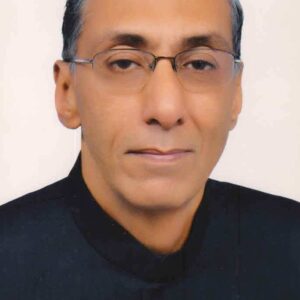
I met Mark Tully about fifteen years ago, and over time we became friends. At my invitation, he visited my hometown of Dehradun, where he addressed a gathering and discussed his then newly published book Non-Stop India. He was a gracious presence—thoughtful, attentive, and generous with his time. I spent many pleasant evenings with him and his long-time partner, the author Gillian Wright, at their home in Delhi. I also met him frequently at the Delhi Gymkhana Club and the India International Centre.

Mark wrote an excellent foreword for my biography of former Prime Minister Morarji Desai and was part of the panel at the book’s launch. His encouragement and intellectual generosity meant a great deal to me. It is with deep sadness that I reflect on his passing.

Sir Mark Tully passed away on 25 January. With his death, the journalistic fraternity in general, and Indian journalism in particular, lost one of its towering pillars. For those of us who knew him personally, the loss is irreparable.
Born in 1935 in Kolkata—then part of British India—Tully spent his early years there, where his father worked as a chartered accountant with Gillanders and Arbuthnot. He had his early schooling in Darjeeling before returning to England to complete his education. He subsequently undertook two years of National Service as a second lieutenant in the cavalry with the First Royal Dragoons and later graduated from Cambridge.

Tully was to remark later that he disliked the rigid class distinctions between officers and other ranks in the Army, a position that did not make him popular with his superiors. Yet he remained deeply nostalgic about his years in olive green.
In 1964, he joined the Personnel Department of the BBC and, in 1965, was selected as Assistant Representative of the BBC in Delhi. His first tenure in India lasted until 1969. Following a controversy over a documentary by Louis Malle that was perceived as anti-Indian, the BBC office in Delhi was closed for some time. When it reopened in 1972, Tully chose to head it. Thus began an odyssey with the subcontinent that continued for the rest of his life.
During the imposition of the infamous Internal Emergency in 1975, Mohammad Yunus—one of Prime Minister Indira Gandhi’s confidants—was baying for Tully’s arrest, alleging that he had reported that some ministers, including Swaran Singh and Jagjivan Ram, were under house arrest. The then Minister for Information and Broadcasting, I. K. Gujral, came to his rescue, as no such arrests had taken place.

Nevertheless, the BBC office was shut down and Tully was asked to leave for London at 24 hours’ notice. He returned when elections were announced in 1977. In the tumultuous years that followed, he reported on many pivotal events in Indian political life. In 1978, he made a documentary on Prime Minister Morarji Desai entitled One Man’s Truth. He later observed that, of all the Indian prime ministers he encountered, Desai was the most “up his street”. He also had a soft corner for Rajiv Gandhi and V. P. Singh.
During the years of militancy in Punjab, Tully reported extensively from the troubled state. His book Amritsar: Mrs Gandhi’s Last Battle, written with Satish Jacob, remains an authoritative account of those turbulent times in the border province. He later expressed surprise that army intelligence had failed to assess the extent to which Bhindranwale had stockpiled lethal weapons within the Golden Temple complex.
After the book’s publication, Tully and Jacob were summoned by the then President, Giani Zail Singh, whom they had criticised at length for his role in building up Bhindranwale in Punjab politics. The President spoke candidly of his grievances, and Tully’s recollection of the encounter was, at moments, gently comic.
Tully was present in Ayodhya in 1992 when the Babri Masjid was demolished. He was almost attacked in the melee but was saved by another group. He felt the assault was not merely on individuals but on the secular fabric of the country itself.
In 1993, Tully delivered the Radio Academy Annual Lecture in Birmingham, where he sharply criticised the functioning of BBC Director General John Birt. This led to an acrimonious exchange between the two and culminated in Tully’s resignation from the Corporation in July 1994. Thereafter, he remained in India, writing books, making documentaries, and sustaining his engagement with the country that had become his home.

Tully lived in Nizamuddin West, Delhi, with Gillian Wright. He was awarded the Padma Shri in 1992 and the Padma Bhushan in 2005, and was knighted in 2002.
His life and work stand as testimony to a rare commitment: that of an outsider who chose to belong, to listen deeply, and to tell India’s stories with integrity, empathy, and courage.