Living Beyond Our Water Means: India in the Age of Global Water Bankruptcy


A civilisation rarely recognises insolvency until the ledger is beyond repair. “Bankruptcy,” after all, is not a bad quarter but an admission that the old arithmetic no longer works. When scientists at the United Nations declared the arrival of global water bankruptcy, they were not forecasting an apocalypse; they were closing the books on an illusion. For India, this is not an abstract planetary diagnosis but an intimate reckoning. Rivers, aquifers, cities, farms—each carries the marks of living on borrowed water. The question before us is no longer how to restore yesterday’s abundance, but how to govern scarcity without surrendering equity, dignity, or reason.
The world has crossed an invisible line. In January 2026, at the UN Headquarters in New York, scientists did not issue yet another distant warning; they announced a change of era. We are no longer heading towards a water crisis; we are already living in what they call global water bankruptcy. For India, the world’s most populous country, this is not a dramatic metaphor or a remote prognosis. It is an uncomfortable mirror held very close to the face.
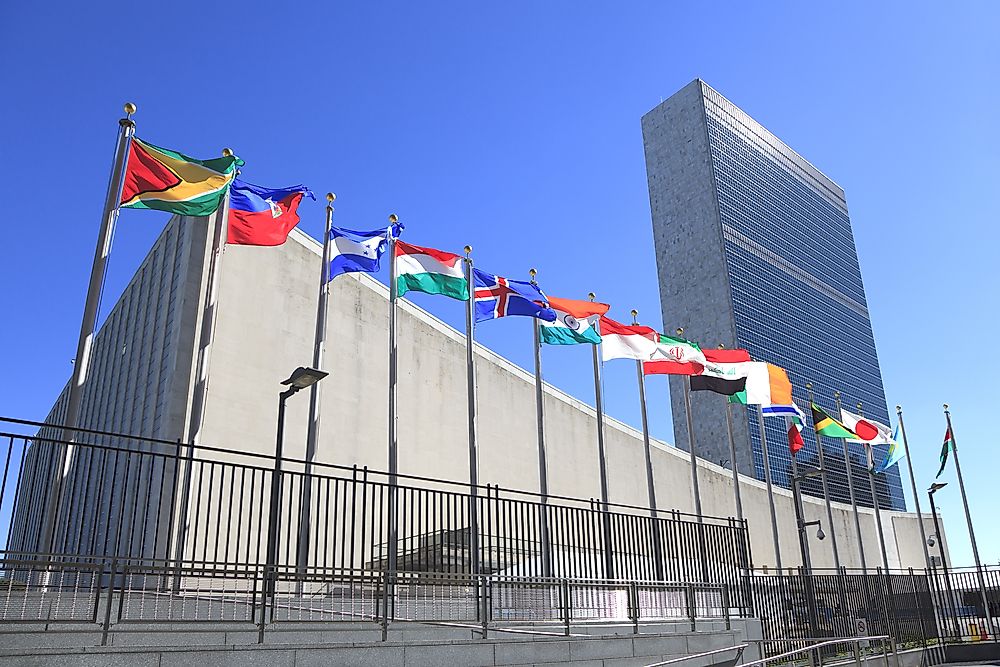
The phrase global water bankruptcy comes from a flagship assessment by the UN University’s Institute for Water, Environment and Health, titled “Global Water Bankruptcy: Living Beyond Our Hydrological Means in the Post‑Crisis Era”. It borrows deliberately from the language of finance. Bankruptcy is not the first missed payment; it is the moment when debts so far exceed assets that the old balance sheet cannot be restored without writing off losses and starting again on new terms. Applied to water, the report describes a condition in which chronic overuse and pollution exceed renewable inflows and safe depletion limits to such an extent that core parts of the hydrological system cannot realistically be brought back to earlier states. The baseline itself has shifted. The question is no longer how to return to normal but how to live in a permanently altered landscape where that normal has become history, not a policy target.
In this light, familiar terms such as water stress and water crisis start to look misleading. Stress suggests a strain that might be eased; crisis implies a temporary spike after which balance returns. The UN team argues that in many river basins and aquifers, the swing‑back moment has already passed. Decades of groundwater mining, over‑allocation of rivers, deforestation, soil degradation, untreated sewage, industrial waste, and rising temperatures have pushed human–water systems into what the authors call a post‑crisis failure state, where historic patterns of flow and recharge cannot simply be restored. The symptoms are visible and varied: rivers that fail to reach the sea, shrinking lakes and wetlands, subsiding cities as water is pumped from beneath them, saline intrusion into coastal aquifers, and an expanding list of “Day Zero” emergencies in which major cities see their piped supply collapse.
The report does not stop at cataloguing these failures. It urges a reset of the global water agenda at the forthcoming UN meetings, including the 2026 and 2028 conferences and the conclusion of the Water Action Decade. The dominant mode so far has been reactive: emergency tankers, short‑term transfers, and new projects justified as ways to recreate a lost hydrological past. In conditions of water bankruptcy, that reflex becomes a form of denial. The authors call instead for a shift towards bankruptcy management: acknowledging new limits, protecting remaining natural storage and ecosystems, and redesigning how water is shared between sectors and social groups.
India enters this story as both emblem and laboratory. The 2026 report is cautious about naming specific states, but the surrounding evidence leaves little doubt about India’s vulnerability. The country holds nearly 18 per cent of the global population, yet only about 4 per cent of the freshwater resources. Per‑capita surface water availability has fallen by roughly three‑quarters since the early 1950s, driven by demographic expansion, economic growth, and the degradation of rivers, tanks, and aquifers. A national assessment by NITI Aayog in 2018 had already warned that around 600 million Indians were living under high to extreme water stress and that by 2030, total demand could be roughly double the available supply. India now appears routinely among the most water‑stressed countries in global indices, not as a one‑off bad year but as a chronic condition.
The structure of India’s water use helps explain why. Irrigation draws the lion’s share, and groundwater underpins both farming and domestic supply. For decades, wells and borewells have served as a quiet buffer against the limits of canals, tanks, and erratic rainfall. Power subsidies, price support, and assured procurement for water‑intensive crops in dry and semi‑arid regions, and permissive pumping regulations, have turned deep aquifers into de facto credit lines. In parts of Punjab, Haryana, Rajasthan, Gujarat, and the hard‑rock regions of peninsular India, farmers have been lowering pumps and deepening borewells for years merely to keep production steady. The much‑celebrated resilience of Indian agriculture during bad monsoons rests, in significant measure, on this slow liquidation of groundwater reserves.
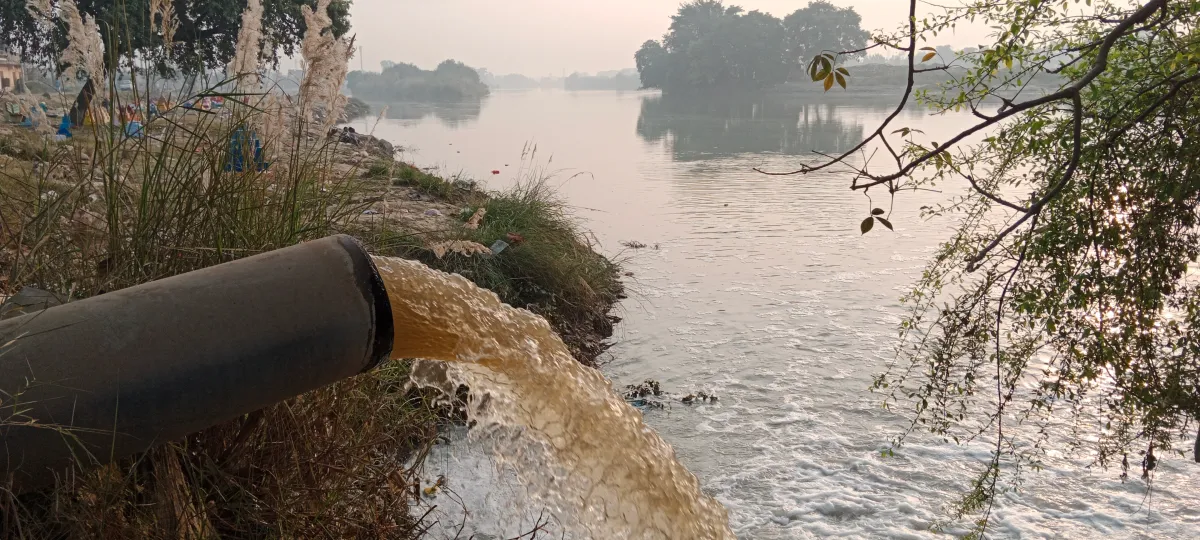
Urbanisation has followed a related but distinct path. In city after city, the land forms that once allowed rainfall to percolate into the ground have been paved over or built upon. Village ponds, temple tanks, stepwells, small lakes, and river floodplains, which together functioned as a dispersed storage and recharge network, have been filled or isolated. Stormwater is channelled into drains and out of the city as quickly as possible, often carrying sewage and solid waste with it. Even in years of adequate rainfall, aquifers are not allowed to recover. At the same time, untreated municipal sewage and industrial effluents contaminate both rivers and shallow groundwater, so that physical availability and water quality deteriorate together.
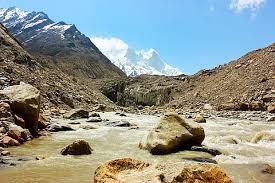
Climate change compounds these pressures. The monsoon is becoming more erratic, with longer dry spells interrupted by intense downpours that tend to produce floods and rapid runoff rather than slow, infiltrating rains. Himalayan glaciers that feed the Indus, Ganga, and Brahmaputra basins are losing volume. In the near term, increased melt can swell rivers and heighten flood risk. Over the longer term, as ice stocks shrink, the reliability of dry‑season flows comes under threat. For the hundreds of millions across northern and eastern India whose agriculture, drinking water, and electricity depend on those rivers, this is not a distant abstraction but a gradual rewriting of the hydrological script.
Urban India has already begun to display the pattern that the UN now treats as emblematic of water bankruptcy: breakdowns that recur despite continued investment in pipes, plants, and reservoirs. Chennai, Bengaluru, and parts of the National Capital Region have, at different times over the past decade, run down reservoir storage and accessible groundwater simultaneously. The standard response has relied on long‑distance pipelines from other basins, a proliferating fleet of private tankers, emergency drilling, and announcements of future desalination capacity. Each of these measures can have a place in a crisis. Taken together as a permanent operating mode, however, they export ecological and social burdens to other regions, lock in expensive and unequal supply systems, and weaken the incentive to address the underlying mismatch between local endowment and demand.
The consequences extend beyond household taps. Agriculture accounts for well over two‑thirds of global freshwater withdrawals, and the UN assessment warns that water bankruptcy will reshape food systems as decisively as prices or trade. In India, where farming follows this pattern and still employs a large share of the workforce, declining groundwater and unstable surface storage translate into both gradual erosion of irrigated area and sudden shocks to yields. Increased pumping costs combine with climate volatility to squeeze rural incomes. The social safety valves are visible in rising rural‑to‑urban migration, the shift to precarious non‑farm work, and local disputes over canal water, tanks, and wells.
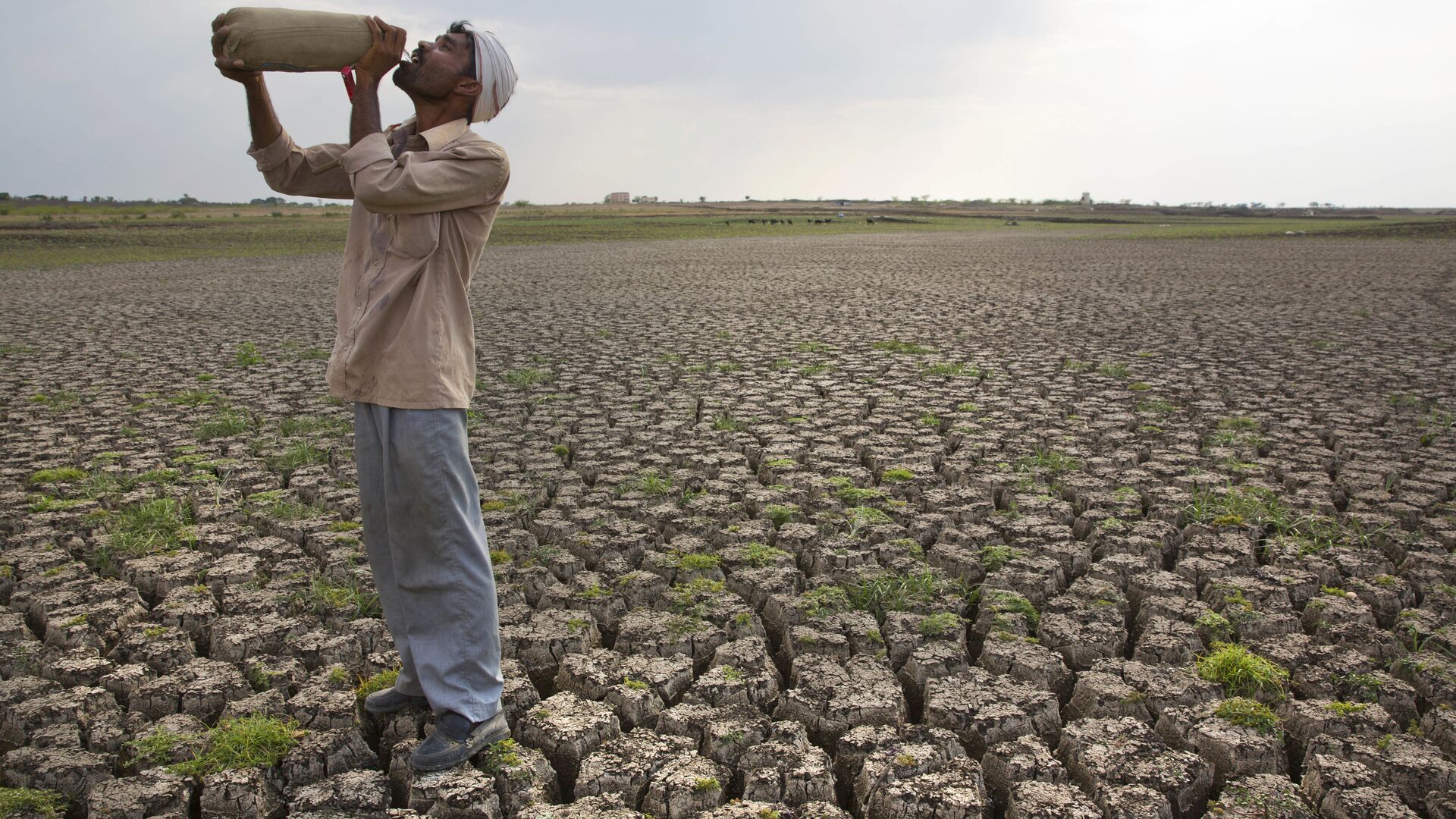
Underlying all these trends is a question of fairness. The report insists that water bankruptcy is not only an ecological and economic problem, but also an issue of justice. In basin after basin, it is seldom the largest users or polluters who first lose secure access. It is smallholders at the tail end of canals, pastoralists, women who fetch water from more distant or degraded sources, and informal settlements outside formal supply networks. As the most reliable sources are captured by powerful agricultural, industrial, or urban interests, unequal access ceases to be a by‑product and becomes a defining feature of the system. In that context, the promise of safe water and sanitation for all becomes not just a target but a measure of the gap between policy language and material reality.
For India, taking the notion of water bankruptcy seriously would mean, first, abandoning the comforting fiction that every river can be returned to its former flow, every lake restored, every aquifer refilled to historic levels. In some places, ambitious restoration is both possible and necessary; in others, the baseline has shifted too far. Distinguishing between the two is politically uncomfortable, but unavoidable. From there, an agenda takes shape that is less about marginal efficiency gains and more about structural change: enforceable limits on groundwater extraction in stressed aquifers; a deliberate move away from the most water‑intensive crops in the driest and most depleted regions; systematic restoration of wetlands, tanks, floodplains and forested catchments as living infrastructure; and a serious clean‑up of heavily polluted rivers and aquifers so that existing water can be used without poisoning people and soils.
Equally, it would require confronting who decides and who bears the cost of transition. Rewriting India’s water balance will mean rethinking long‑standing incentives in agriculture, revisiting the politics of free or near‑free power for pumping, and aligning urban growth with the limits of local basins rather than with the assumption that water can always be imported from somewhere else. It will demand stronger basin‑level and local institutions capable of mediating between competing claims, enforcing limits, and amplifying the voices of those most at risk of being left out.
The new UN report does not claim that catastrophe is inevitable. Its argument is sharper: the comfortable middle ground has already been left behind. The choice now is not between crisis and a return to normal, but between a managed transition into a harsher hydrological reality and an unmanaged slide into a future in which chronic scarcity, contamination, and entrenched inequality become routine. In such a world, the expectation that the tap will run whenever it is turned ceases to be a given and becomes a hard‑won achievement that must be rebuilt within the limits of the water that actually exists.