
Master of the Loud, Criminal Silences – part 2

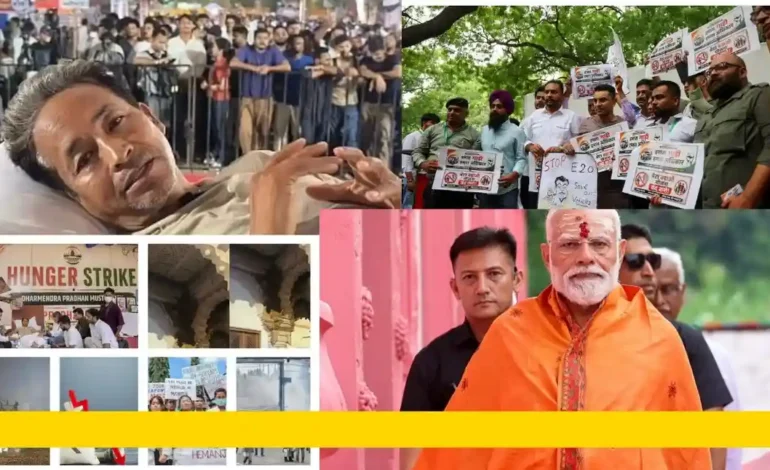
As Parliament prepares to meet, the Opposition is expected to demand answers on an expanding list of controversies that cut across the economy, governance and democratic accountability. From the ethanol policy and allegations surrounding the Ram Mandir Trust to the weakening rupee, mounting public debt and the Prime Minister’s continued refusal to face an open press conference, the questions are no longer isolated—they form a pattern.
In the concluding part of this essay, DR Dubey argues that the defining feature of the Modi years is not merely political messaging, but a sustained silence on issues that demand public accountability.
India’s E20 ethanol blending programme, which mandates the mixing of 20 per cent ethanol with petrol, was presented as a landmark achievement in energy security and environmental policy. By July 2025, the government announced that it had achieved its E20 target five years ahead of schedule.
Within weeks, however, vehicle owners across the country began posting videos of damaged engines, corroded fuel pipes and sharply reduced fuel efficiency. A used-car dealer in Pune documented a 35 per cent drop in mileage in a Maruti Suzuki Dzire that had never been certified for E20 fuel. Bajaj Auto issued advisories on how owners could “minimise ethanol impact.” Mechanics in Lucknow, Delhi and Pune reported a noticeable increase in fuel system failures linked to the new blend.
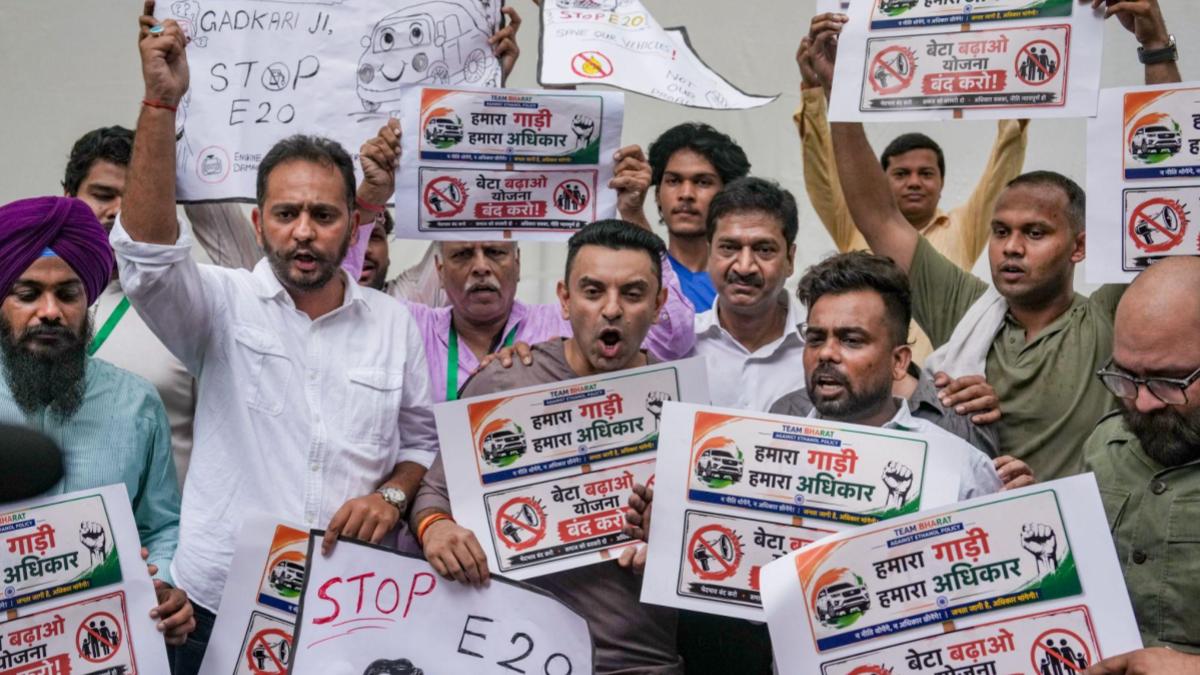
Public anger was widespread and sustained. Consumer groups argued that motorists had been sold E20 fuel without informed consent, that manufacturers’ manuals explicitly discouraged its use in many existing vehicles, and that warranties had effectively been rendered meaningless.
The environmental case also began to unravel.
A policy brief by the Centre for Study of Science, Technology and Policy warned that expanding maize-based ethanol production could require an additional eight million hectares of agricultural land, posing serious risks to food security. Researchers at IIT Delhi concluded that the programme’s actual carbon dioxide savings were less than half the official estimate once fertiliser use, transportation and land-use changes were taken into account.
The Supreme Court dismissed a Public Interest Litigation challenging the policy.
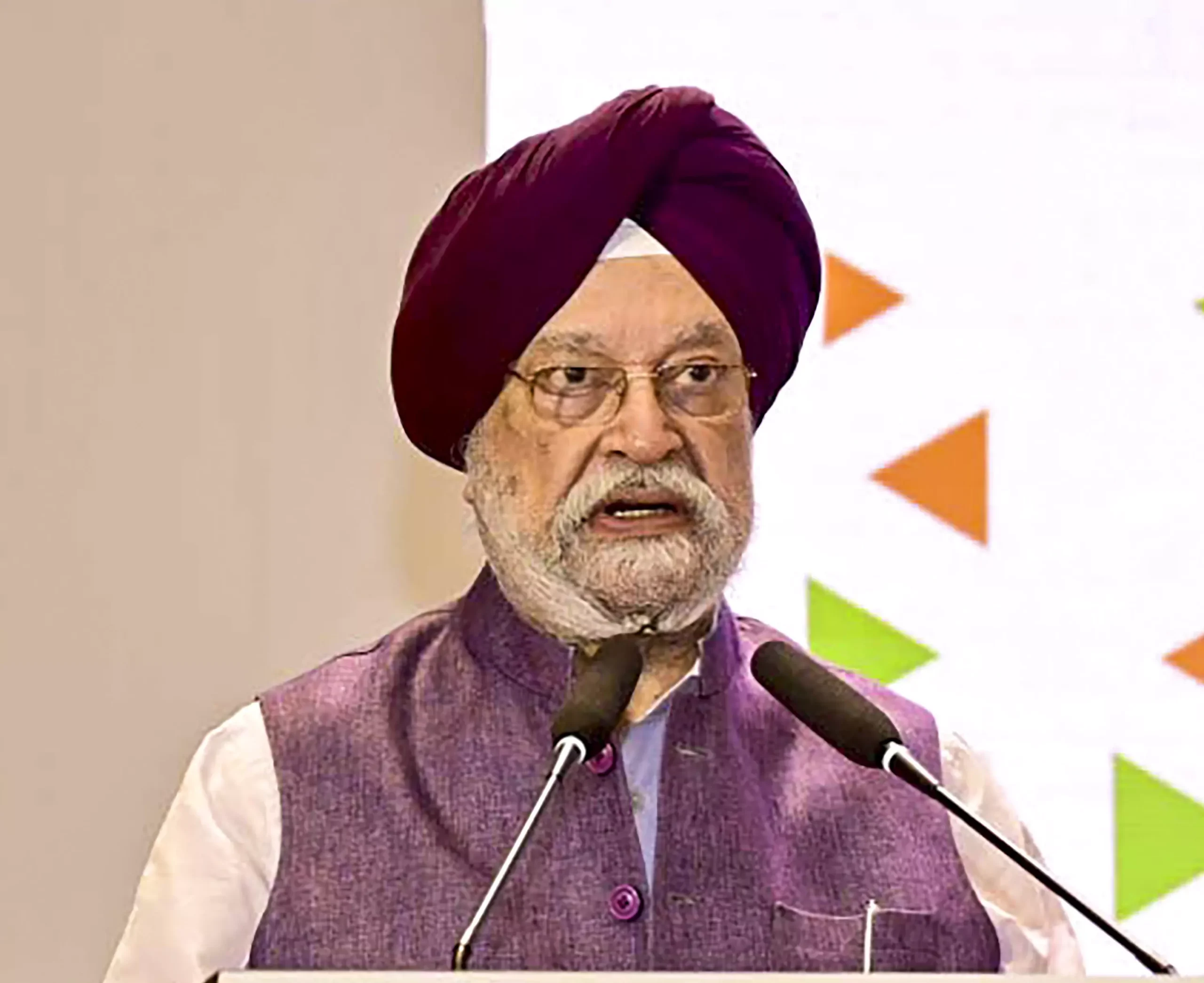
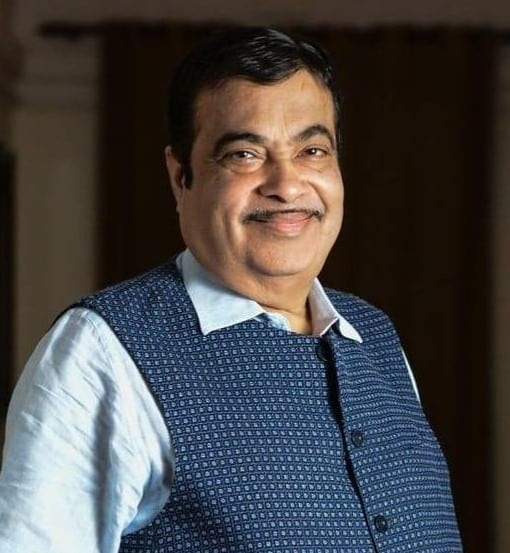
The Petroleum Ministry responded with a social media clarification that was challenged point by point by critics. Petroleum Minister Hardeep Singh Puri defended the programme. Nitin Gadkari defended it.
The Prime Minister said nothing about damaged engines, reduced mileage, the ecological concerns, or the growing evidence that the principal beneficiaries of the programme were politically connected sugar mills and distilleries that had received more than ₹1.29 lakh crore through ethanol procurement.
Ram Mandir: The Sacred and the Sordid
The consecration of the Ram Mandir in Ayodhya on 22 January 2024 was perhaps the defining political spectacle of Narendra Modi’s premiership—a decades-old ideological promise fulfilled before a captive national audience, with the Prime Minister himself performing the central religious rituals.
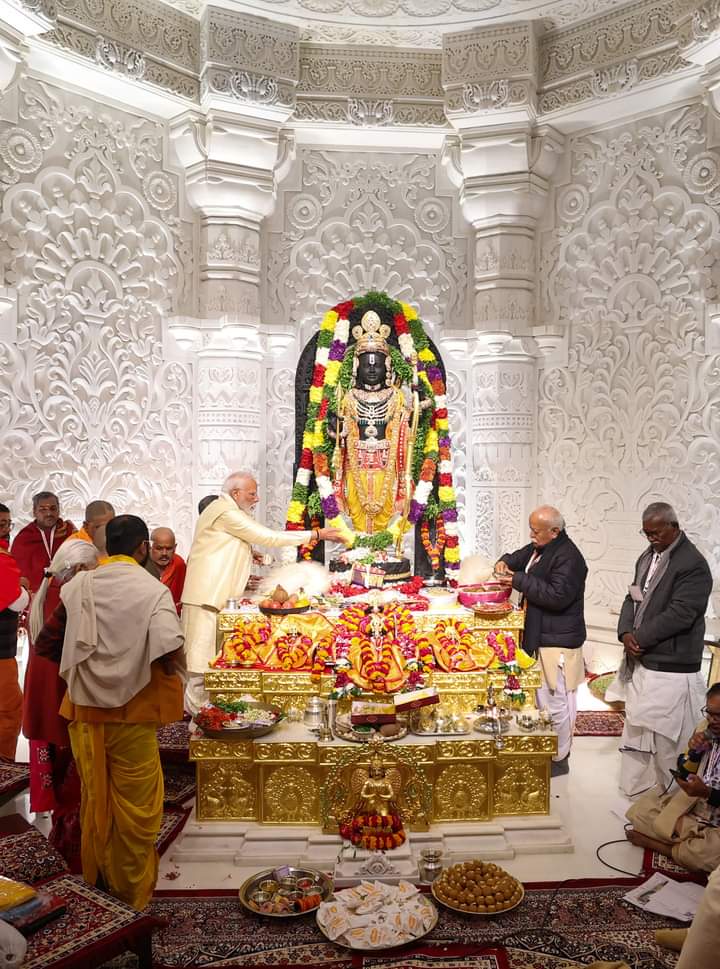
By June 2026, however, the Trust responsible for constructing and managing the temple had come under investigation by a Special Investigation Team.
Allegations surfaced of large-scale embezzlement involving cash and valuables donated by devotees. Eight people involved in counting donations were arrested. Trust General Secretary Champat Rai and Trustee Anil Mishra resigned as the scandal deepened.
A preliminary SIT report reportedly identified “lapses in the counting, handling and management” of donations, reviving concerns first raised during a 2020 audit, which had pointed to weaknesses in financial reporting, record-keeping and internal controls.
The temple’s CCTV footage is retained for only 45 days before being automatically erased—a limitation that has significantly hampered the investigation.
Nor was this an isolated controversy.
Earlier inquiries had found that a 0.645-hectare parcel of nazul land—government land that cannot legally be sold—had nevertheless been transferred to the Trust for ₹23.61 crore. In 2021, another parcel was purchased by two individuals for ₹2 crore and sold to the Trust just minutes later for ₹18.5 crore, prompting opposition parties to demand investigations by both the CBI and the Enforcement Directorate.
This is a temple built with donations from millions of ordinary devotees who gave in good faith.
Yet the bulldozer that has become one of the government’s most potent symbols of swift justice has not been directed at anyone of political significance connected with these allegations.
No major accountability.
No significant political consequences.
No statement from the Prime Minister.
The Rupee, the Debt, the Deficit, and the Economy of Silence
Taken together, the numbers paint an economic picture that the government has shown little inclination to present honestly to the public.
When Narendra Modi assumed office in May 2014, the Union government’s total debt stood at approximately ₹53.11 lakh crore. By March 2025, it had risen to ₹181.68 lakh crore. By the end of FY 2025–26, it had climbed further to approximately ₹197.18 lakh crore, with projections for FY 2026–27 placing it at ₹214.82 lakh crore.
In little over a decade, India’s public debt has increased almost fourfold.
In the current financial year alone, the government plans to borrow approximately ₹16.96 lakh crore. The debt-to-GDP ratio now stands at around 56 per cent, well above the long-established fiscal prudence benchmark of 40 per cent.
India’s external debt has also continued to rise, reaching US$762.8 billion by the end of March 2026, an increase of US$26.3 billion in a single year, according to Reserve Bank of India data.
The rupee has followed a similarly troubling trajectory.
From around ₹65 to the US dollar when Modi first took office, it crossed ₹96 in May 2026, its weakest nominal level on record, making it Asia’s worst-performing major currency across both 2025 and 2026. During the first five months of 2026 alone, it depreciated by 7.04 per cent, its steepest decline since 2022.
The RBI was compelled to intervene through state-owned banks, selling substantial quantities of dollars to stem the slide. Since January 2025, Foreign Portfolio Investors have withdrawn more than ₹1.48 lakh crore from Indian markets.
The merchandise trade deficit for FY 2025–26 reached US$333 billion, sharply higher than the US$283.5 billion recorded the previous year. In October 2025, the monthly goods trade deficit touched a record US$41.7 billion, almost double the average monthly level. By June 2026, it had widened by another 59 per cent year on year, with imports continuing to grow at nearly twice the pace of exports.
Inflation has added yet another layer of pressure.
According to figures released just days ago, retail inflation rose to 4.38 per cent in June 2026, a 17-month high, exceeding the Reserve Bank of India’s median target of 4 per cent for the first time in nearly a year and a half. Food inflation climbed to 5.32 per cent, driven by extraordinary increases in the prices of ginger and tomatoes. Rural households have borne the greatest burden, with rural food inflation reaching 5.45 per cent.
Both ICRA and CRISIL expect inflation to remain elevated, projecting average CPI inflation of around 5.1–5.2 per cent for the financial year. Even the RBI has revised its own inflation forecast for 2026–27 upwards, from 4.6 per cent to 5.1 per cent.
Every decline in the rupee’s value makes crude oil, fertilisers, edible oils and consumer electronics more expensive. The widening gap between headline claims of robust GDP growth and the lived economic reality of ordinary Indian households has become one of the defining contradictions of the Modi years.
The Prime Minister has meaningfully addressed the rupee’s decline only once—by urging Indians to be “a little bit more conservative” about foreign travel and gold purchases.
For a crisis of this magnitude, that has been the sum total of his public economic leadership.
The Journalist’s Question That Exposed Everything

In May 2026, during Narendra Modi’s visit to Norway, Norwegian journalist Helle Lyng asked a question that would reverberate far beyond the press room: why does the Prime Minister of India not hold open press conferences?
The response did not come from Modi. Instead, Lyng became the target of an orchestrated campaign of online abuse by supporters of the government. Television anchors on channels such as NDTV and India Today reportedly denounced her on air, turning a legitimate question about democratic accountability into a controversy about the questioner herself.
Two months later, during Modi’s visit to New Zealand, a local journalist raised essentially the same question at a Ministry of External Affairs briefing.
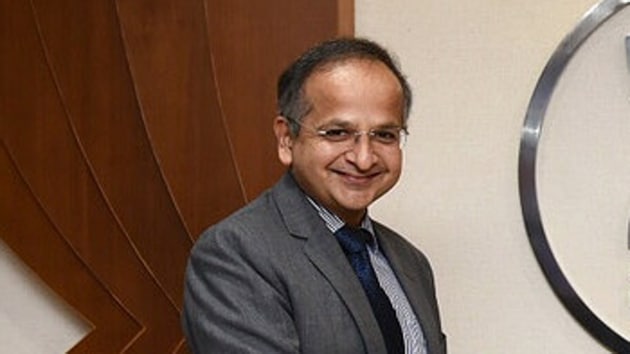
MEA Secretary (East) Rudrendra Tandon responded with a smile, remarking that he was experiencing “déjà vu”. His explanation quickly drew international attention.
According to Tandon, Modi is “a quintessential Indian politician” who prefers “direct contact with his electorate.” Indian voters, he argued, are “predominantly rural folk” who “don’t want to be spoken down to” and “don’t like being spoken to through intermediaries.” Modi, he concluded, had “perfected the art” of communicating directly with them.
The implication was difficult to ignore. The Prime Minister of the world’s largest democracy does not subject himself to questioning by the free press because his voters are rural. Rural citizens, apparently, neither require nor deserve a head of government who answers difficult questions through independent media.
The explanation only reinforced the original question.
An Australian journalist covering Modi’s visit alongside Prime Minister Anthony Albanese remarked during a live television broadcast:
“This is about as close as we will get to Narendra Modi on his trip.”
Across Norway, the Netherlands, New Zealand and Australia—countries that consistently rank among the world’s strongest democracies on press freedom—the same question resurfaced, and the same avoidance followed.
Reflecting on the episode, Helle Lyng observed that being “screamed at by an NDTV reporter and an India Today host” now seemed worthwhile, given that journalists in New Zealand and Australia had subsequently asked exactly the same question.
Narendra Modi has not held a single open press conference in more than twelve years as Prime Minister.
He grants interviews to carefully selected and generally sympathetic interlocutors. He addresses election rallies. He speaks at diaspora events where applause is assured.
He does not answer questions from India’s independent press.
He did not answer when Manipur burned.
He did not answer when the NEET examinations were compromised.
He did not answer when allegations surfaced over donations to the Ram Mandir.
He did not answer when the rupee crossed ₹96 to the dollar.
He did not answer when Pakistan’s Army Chief was elevated to the rank of Field Marshal after the conflict in which Indian Rafales were reportedly shot down.
The Reckoning
I would make the ending less rhetorical and more cumulative. The article is strongest when it lets the evidence speak for itself. Instead of ending with a question, it should end with a conclusion that flows naturally from everything the reader has just encountered.
Taken together, these episodes do not depict strong or decisive leadership. They reveal something more troubling: the institutionalisation of unaccountability—a style of governance in which the control of narrative increasingly substitutes for the exercise of responsibility.
Sonam Wangchuk undertook a hunger strike demanding accountability and was detained.
Dharmendra Pradhan continues to head an Education Ministry that has presided over 94,000 government school closures and repeated examination scandals.
The Ram Mandir Trust faces allegations of financial irregularities while the Prime Minister who announced it from the floor of Parliament has remained silent.
The ethanol programme has raised questions about damaged vehicles, food security and public policy without an independent public accounting.
Children in Manipur continue to grow up in relief camps.
India’s public debt has almost quadrupled in little more than a decade.
The merchandise trade deficit has reached record levels.
The rupee has crossed ₹96 to the US dollar.
Food inflation continues to squeeze household budgets.
The ceasefire following Operation Sindoor was announced not by India’s Prime Minister but by the President of the United States.
Individually, each of these developments deserves public explanation. Collectively, they point to something larger: a pattern in which major national crises are followed not by open scrutiny but by carefully managed communication, selective appearances and official silence.
In a parliamentary democracy, elections confer power. They do not extinguish accountability. Governments are expected not merely to govern, but to explain, defend and answer for their decisions before Parliament, before the press and, ultimately, before the people.
That expectation lies at the heart of constitutional democracy. When it is steadily weakened, institutions become less transparent, public trust begins to erode and silence itself acquires political meaning.
For more than twelve years, Narendra Modi has avoided the one democratic exercise that every mature democracy takes for granted: answering unscripted questions from an independent press.
The issue, therefore, is no longer whether the Prime Minister chooses to remain silent.
The issue is whether the world’s largest democracy can continue to treat silence as an acceptable substitute for accountability.
For the full context, check out Part 1.







A powerful continuation by DR Dubey. When accountability is replaced by spectacle and silence becomes a political strategy, democracy itself is weakened. Thought-provoking, well-argued, and essential reading