

Salimkumar – The Unsung Dalit Intellectual Whose Theories Are Bound to Change Kerala


An attempt to document K M Salimkumar’s life serves as a route map to the intellectual trajectories that the dalit movement has meandered through in Kerala. From shades of extreme red in his youth with the Naxalite movement, to a year and a half in a grey prison cell, he moved to the vibrant blue of Ambedkarism following his release from prison. The palimpsest of blue imprinting itself on red is a repeated narrative in most dalit intellectual lives in South India. A man of deep convictions, fierce words and unflinching integrity, we must remember him not only for burning the Manusmriti in 1989 at Vaikom, but for his many theoretical and analytical contributions to knowledge production.
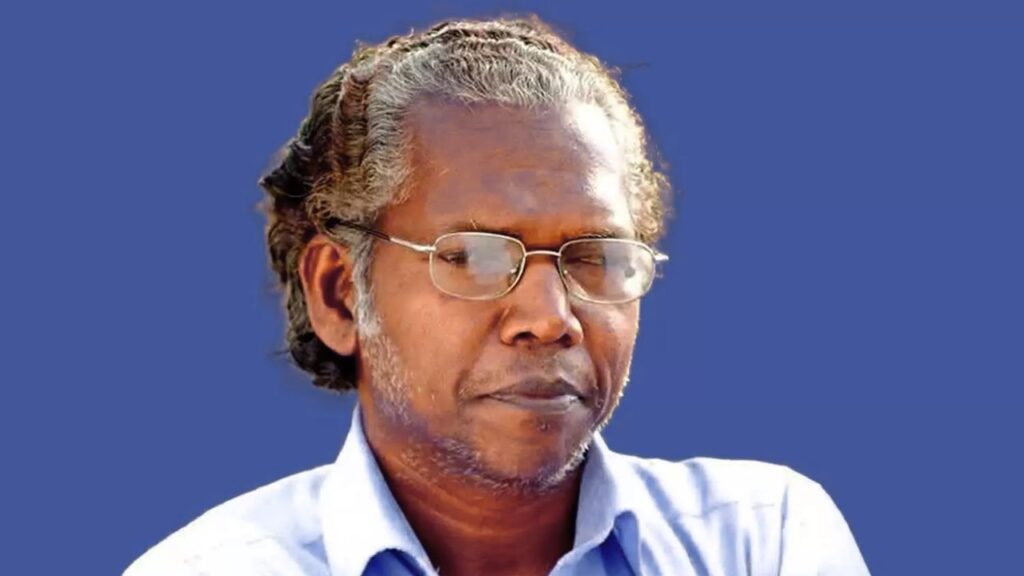
K M Salimkumar (1949-2025) was born in Idukki to Kunnathu Manikyan and Kotha and his upbringing made him sensitive to oppressions and subaltern history. He joined Maharaja’s College in the 1970s when Naxalism was at its heyday in Kerala. The movement had a profound impact on the angry young men of the era and Salim Kumar’s sharp intellect and desire for social change attracted him to the movement’s promises of liberation. He became a prominent figure in the naxal circles in Ernakulam and Vaipin.He was imprisoned for 17 months during the Emergency.
Dr. AK Vasu, scholar and social critique, argues that Naxalism with its emphasis on class war could not understand or analyse the caste question in India and this led many of the dalit intellectuals who were initially part of the Naxal movement like K.K Kochu, K.K.Manmadhan, K.M Salimkumar and K.K.S.Das to look for alternative discourses of emancipation. The alternate stream that they found was Ambedkarism. K K Baburaj, social intellectual and activist, adds that “by the time Salim Kumar left Naxalism, and joined dalit political movements in Kerala, there was already a strong dalit politico-intellectual-literary movement which was underway in the state. His writing and activism sometimes diverged and sometimes converged with the dalit movement. On most matters of significance including reservation, Adivasi issues and anti-Hindutva politics, he was in great agreement with other dalit leaders. Some of his metaphors and literary usages such his analogy of dalits to dead fish also led to considerable dissent within subaltern literary-political circles.” His contribution to bringing dalit discourses into the mainstream makes him one of the most pertinent dalit leaders, adds K K Baburaj.

Dr. Rekha Raj, social activist and intellectual argues that Salim Kumar should not be understood as just another unsung dalit hero, but should be commemorated for his apt interventions and analytical insights into the problems of caste and for bringing caste questions into mainstream discourse, particularly the Left discourse.He was also one of the first intellectuals from Kerala to theorise on the intersections of caste and landlessness. M.R.Renukumar, poet and activist says that K.M. Salimkumar was one of the key figures from the first generation of organic intellectuals who made fundamental contributions to the Dalit discourses that emerged in Kerala in the 1990s. Renukumar says “Salim Kumar’s contributions to the independent/critical thinking and Dalit consciousness achieved by Dalits in the fields of socio-political-cultural-literary criticism are unparalleled.
Above all, his role in further democratising post-modern Kerala through his all-round social interventions is also crucial.” Political scientist and social activist Dr. K Santhosh Kumar argues that K M Salimkumar need not be seen as a lone voice or a voice of dissent, rather his thoughts ought to be located in the long stand continuity of dalit theory-building exercises in Kerala. In his Negritude, Salim Kumar propounds that within the socio-political movements of Kerala, when non-dalit groups underwent a process of community formation, dalits were subjected to caste-fication. His observations regarding the need for internal solidarity among dalits and solidarity with Adivasis is of foremost importance in contemporary times. Community formation needed to be politically forged among the dalits for them to gain representation in political power. Dr.K. Santhoshkumar also notes that Salimkumar,like Ambedkar, did not consider dalits as a racial group, but as a political- humane -intellectual category. Salim Kumar would theorise that the dalit identity is not one premised on the memory of a racial past or one which is the center for the reproduction of inter-tribal revenge; if it is beyond the realm of equality and fraternity, then this identity itself needs to be abandoned. Dalithood should become a social and collective identity by abandoning tribal and caste-based tendencies. His theorisation thus located dalithood as complete humanity, embedded in equal human relations. The duty of dalit identity is to free humans from human-made barriers of discrimination.
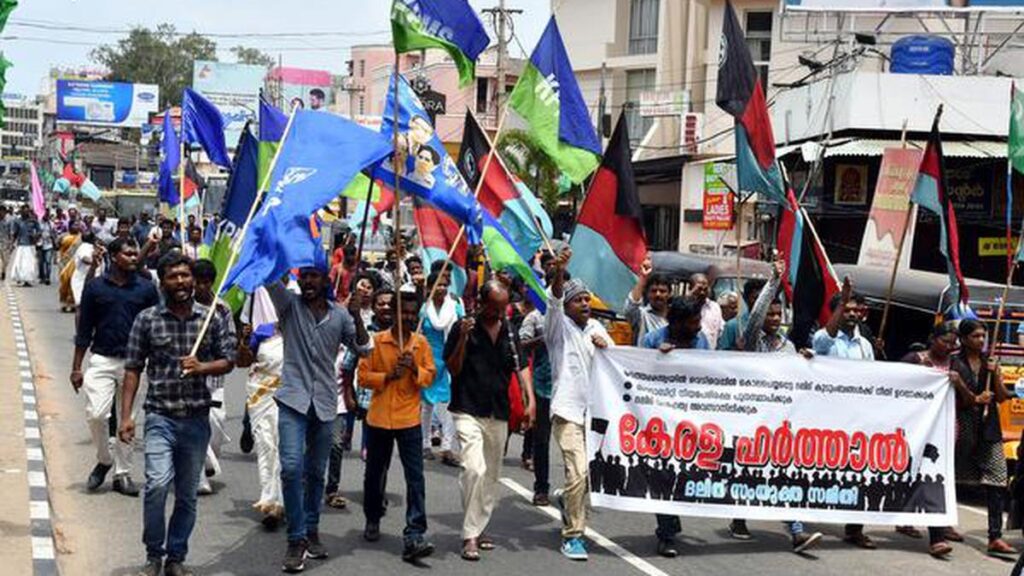
Dalit intellectuals often had the triple task of theorising, mobilising and advancing activism simultaneously. One can see the same in the lives of organic intellectuals like K M Salim Kumar and K K Kochu. Editor of publications like Raktapataka and Dalit Aikyashabdam, Dalit Adivasi Ekopana Samiti with C K Janu and state convenor of multiple dalit organisations such as Dalit Aikya Samiti, Underprivileged Renaissance Front and Kerala Dalit Mahasabha, Salim Kumar’s life was nothing short of inspiring even as he excelled in all the roles he took up. His published works include Dalit Ideology and Communalisation (2008), Dalit Democratic Thought (2018), Reservation in a Dalit Perspective (2018), and The Subtleties of Casteism (2021). In all of them, one can see the development of a profound dalit critique of many aspects of Kerala which are superficially progressive. Mrudula Devi, editor of Padabedham and lyricist opines that even when Salim Kumar was using class critique in his early works, he would point out the unique nature of dalit poverty which was nothing like the poverty experienced by other groups. His collection of columns which he wrote for Mathrubhoomi weekly was later published under the title Negritude and in it one could feel the intensity of his Ambedkarite thoughts. He often fiercely critiqued the whitewashing of several Adivasi and dalit problems and found parallels to dalit-adivasi life in black American/African experiences especially from critical race theory.

Many scholars like Rekha Raj, K Santhosh Kumar and Mrudula Devi also remember his zeal in writing and in attending Ambekarite sessions and events even while he was suffering from the illness which eventually claimed him. While we can debate on why Salimkumar’s texts have not reached the kind of audience it ought to have, what is even more relevant for us today is to engage with his writings and reclaim the discursive terrain that he and other subaltern scholars were trying to build in Kerala.










True… Dalits are on the rise..but still long way to go…anti hindutva too are not fully encouraging their development..so need to bring them too..then only goal can be achieved in lesser period of time