

TCS Layoffs: A Sign of Troubles Brewing in the Indian IT Sector


As an IT professional with over three decades experience, I have noticed, of late, an interesting trend in relation to the sector. Several of my friends who have had successful IT careers discourage their children from pursuing similar careers, unless they show a genuine aptitude for AI and related fields. The recent announcement of massive layoffs by Tata Consultancy Services (TCS), India’s leading IT services provider, has also become a factor reinforcing their conviction.
The layoffs have shocked the Indian IT workforce and job seekers alike, sparking speculation that other companies will follow suit. It is, in fact, symptomatic of a deeper crisis that goes beyond the career choices of a few youngsters.
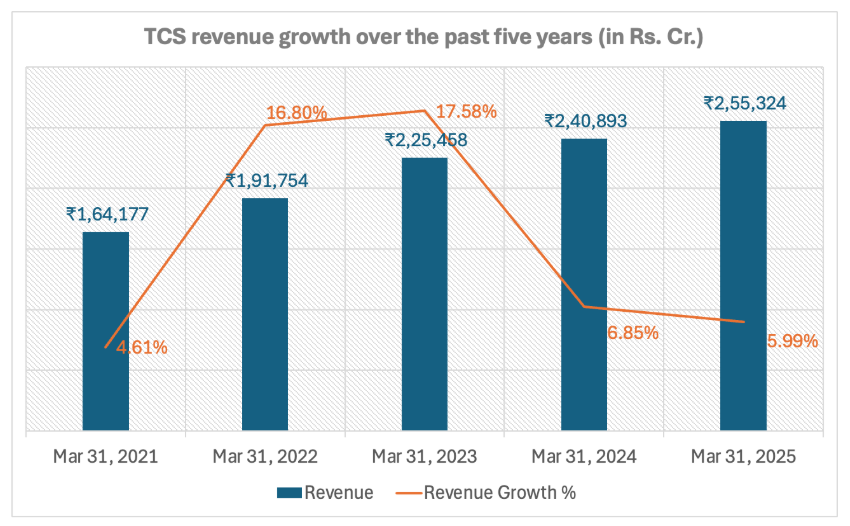
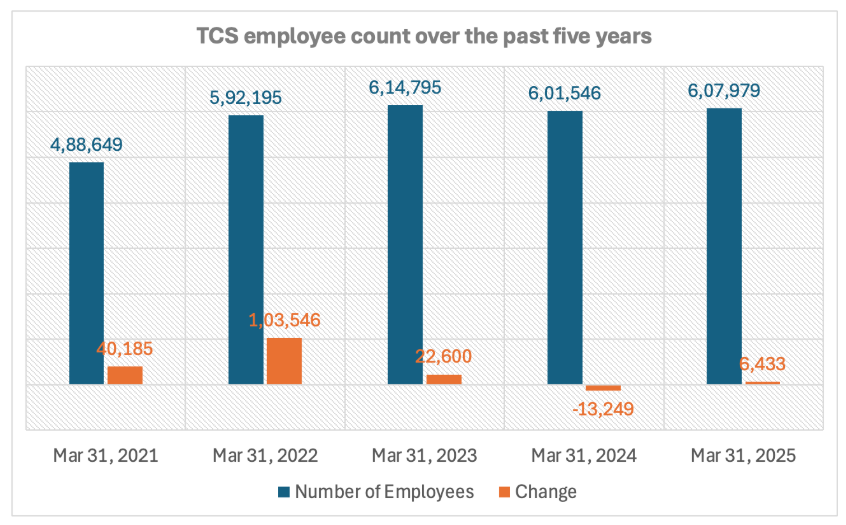
TCS has stated that it will reduce its global workforce by 2% this fiscal year. With a current global headcount of more than 600,000, the reduction will affect approximately 12,000 employees. This is one of the company’s largest workforce reductions to date. It indicates broader shifts in the IT industry, such as macroeconomic uncertainty, cautious client spending, and the adoption of AI and automation.
TCS’s revenue growth has slowed in recent years, particularly in the last few quarters. In response to the challenging demand environment, it has attempted to cut costs and improve operational efficiency. The recent layoffs need to be seen as a continuation of this trend. In an interview with Moneycontrol, TCS CEO and MD K. Krithivasan has largely attributed the layoffs to a “skill mismatch” and a lack of “deployment feasibility” for certain roles, rather than direct AI displacement. He said that the current round of layoffs is primarily targeting mid-level and senior employees.
However, there is no denying that AI’s advancements in day-to-day business are undoubtedly a contributing factor. Krithivasan stated that new technologies, particularly AI, are changing operating models. Clients are increasingly seeking product-aligned models and greater agility. TCS is expanding into new markets and launching AI-scale deep learning partnerships for clients.
Fear of a wider impact
The Indian IT industry has been a phenomenal success story, contributing significantly to the expansion of India’s middle class. It has evolved from humble beginnings in the late sixties, when TCS launched India’s IT services sector, to a global powerhouse. It generated high-paying jobs, increased disposable income, and promoted entrepreneurship. According to IBEF, the sector directly employed approximately 5.4 million people in March 2023, generating US$ 245 billion in revenue. This figure represents a substantial portion of India’s formal workforce.
This data explains why news of layoffs in the IT industry sparks heated debate. The economic impact of these job cuts goes beyond this sector. Discretionary spending by the very large employee base of this sector has contributed significantly to the growth of India’s consumer market, which is expected to become the world’s second largest by 2030. Similarly, the IT sector has a significant impact on housing demand, particularly in major cities’ mid- and premium segments. Huge layoffs can have a significant impact on the real estate industry, lowering demand and stressing mortgages. The food service, transportation, and retail industries, all of which rely on IT workers and businesses, will suffer as the sector shrinks.
There are also serious consequences for the workers’ social and psychological well-being. In India, the stigma associated with unemployment makes financial hardship, stress, and emotional distress even worse. The rapid advancement of automation and artificial intelligence is causing a shift in the job market. Employees, particularly seniors, who struggle to adapt to new workplace demands risk losing their jobs and feeling out of date. IT jobs have long been seen as a means of achieving upward mobility. However, their perceived stability has diminished significantly. This has led to widespread concern and uncertainty among current and prospective IT professionals.
So, it is not surprising that TCS layoffs caused strong reactions from different sections of society given the grave consequences. The Ministry of Electronics and Information Technology is reportedly “closely monitoring” the situation. Karnataka Labour Minister Santosh Lad expressed concern and sought an explanation from the company. In a tweet, Congress party General Secretary Jairam Ramesh referred to it as an “economic earthquake.” The Karnataka State IT/ITeS Employees Union (KITU) condemned it and urged the company to reinstate the employees. Another union, the Nascent Information Technology Employees Senate (NITES), filed a complaint against TCS with the Ministry of Labour and Employment, calling the layoff “outright illegal.”
Global Headwinds
Indian IT companies are currently experiencing substantial growth challenges, creating a more difficult environment than in the past. It shows in revenue figures and hiring trends. Infosys was the only major company among its peers to report constant currency revenue growth in the first quarter of FY26. Global economic headwinds, as well as the shift toward AI and automation, are contributing to this loss of momentum.
The widespread workforce reductions globally in the tech industry indicate a fundamental restructuring. Many big technology firms, including Microsoft, Meta, IBM, Google, and Amazon, have cut their workforces this year. The widespread downsizing, which began in 2022, continues unabated.
AI’s pervasive influence is central to this seismic shift now. It has become a strategic imperative, reshaping business priorities. AI creates a demand for new skills. But given its rapid progress toward replacing human roles, new AI-created opportunities may be insufficient to compensate for lost jobs. Consider these examples: According to Satya Nadella, 20-30% of code in Microsoft code repositories is written by software. Chegg, an education technology company, laid off 22% of its employees because students are increasingly using free generative AI tools. IBM has laid off around 8,000 employees, primarily from the HR team, as part of a strategic reorganization presumably driven by the rise of AI. And Amazon’s CEO is expecting to reduce its corporate workforce over time “as we get efficiency gains from using AI extensively across the company.”
The AI revolution is not the only reason for the IT sector’s slowdown. The global economic downturn, rising geopolitical tensions, and general market uncertainty have made businesses more cautious about IT spending. Some of these issues are more fundamental, with the potential to destabilize the current global economic order and business environment. The dynamics of economic powers are shifting. China’s growing influence in global trade and technology is putting the US and Europe’s long-held economic dominance to the test. Such tensions are causing economic decoupling, with countries reducing their reliance on competitors for critical goods and services, resulting in the deliberate separation of supply chains, investment, and technological standards. The ensuing trade and tariff wars are pushing the global economy into uncharted waters.
Businesses are restructuring to boost efficiency due to economic caution and competition. This entails reassessing strategic priorities, divesting from less profitable ventures, and focusing resources on high-potential areas such as AI. This also is leading to job losses.
Transformed Workplace and its Discontents
These global disruptions are bad news for India’s IT industry. It has traditionally relied on the export of labor-intensive IT and IT-enabled services. This aided Indian companies’ rapid expansion. They soon realized that boosting sales needed to happen without adding more staff costs. The current tectonic shifts in the technological landscape make this even more pressing. On the one hand, businesses are attempting to move up the value chain of services, where fewer highly skilled professionals can generate higher profits. On the other hand, they are attempting to maximize worker utilization. All of this manifests itself in a variety of ways, including extended working hours, “involuntary attrition” based on “performance,” large-scale layoffs, and so on.
Senior employees are often disproportionately affected by these rejigs. As technology advances, it becomes easier to carry out IT tasks with less experienced and cheaper workers. This makes it difficult to find project roles that align with senior employees’ experience and pay. Companies also flatten their organizational structures to make them more agile and responsive to changing business environments. This eliminates many intermediate management positions.
There is one more reason why seniors are becoming unwanted. No company, especially labor-intensive ones, wants to become top-heavy, as this affects their cost structures. They work to maintain a ‘healthy’ senior-to-junior ratio, which is euphemistically known as employee pyramid improvement efforts.
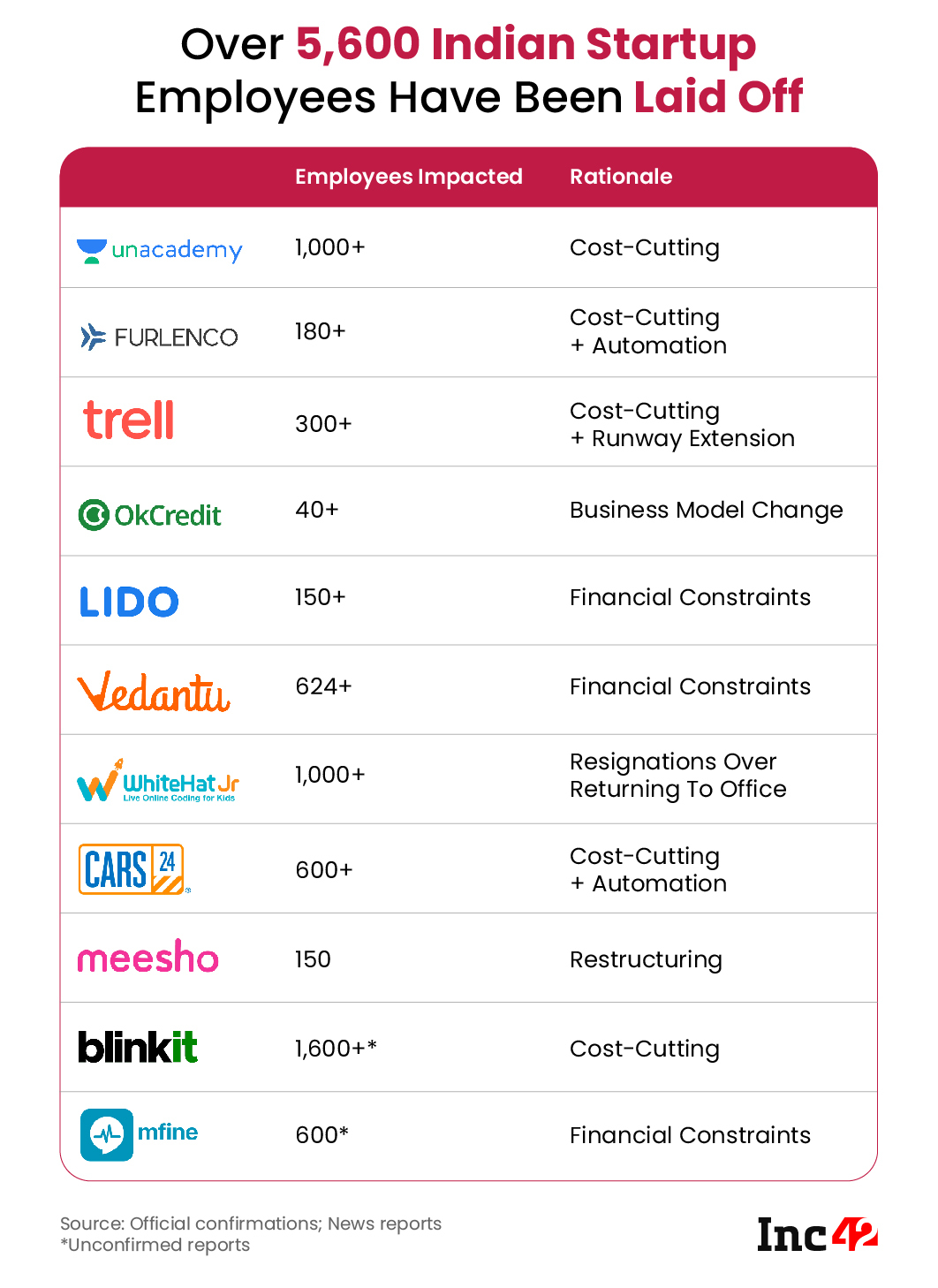
Bloodletting is not limited to senior executives, though. While ‘low-performing’ seniors are frequently the first to go, companies may also eliminate entire operations that are redundant or unprofitable. And performance is sometimes used to justify eliminating junior positions as the business environment evolves. Earlier this year, Infosys laid off approximately 800 trainees at its Mysuru campus, citing internal assessment failure during a period of low demand.
Along with these changes, the employer-employee relationship also is undergoing transformation. For instance, according to some reports, a revised internal TCS policy limits an employee’s “bench” period (time without a project) to 35 business days per year and requires at least 225 billable days. Failure to meet this may affect compensation, career advancement, and retention. The policy says that it is the “primary responsibility” of the bench employee to find work. This effectively turns a permanent employee into a contract worker with no job security.
Unlike in the past, discontent among IT workers is increasingly manifesting as class actions. Unions like KITU and NITES are protesting longer working hours and illegal layoffs. Despite their relatively low membership, these unions’ actions have begun to attract public attention. This certainly helps to protect the workers’ legal rights. However, history shows that working-class actions cannot reverse the transformations of work caused by major shifts in production forces, particularly technology.
The way globalised capitalism organizes workforces complicates matters further. For example, relatively cheap skilled labor has prompted companies in the developed world to outsource IT jobs to countries such as India. Any change in that situation may result in the relocation of jobs to other suitable locations. As a result, localized class actions will have little impact unless there is a strong local economy and a political establishment that prioritizes workers’ interests.
Today, financial capital dominates business enterprises. It’s speculative, solely interested in the venture’s market capitalization growth based on future profitability. So corporate leadership’s primary commitment is to do everything possible to maximize the company’s valuation for such investors. Other stakeholders’ interests, including those of workers, are considered incidental.
There is nothing new in companies discussing things like staff cuts in monetary terms only. But as a recent Wall Street Journal article pointed out, “What is different is how more corporate bosses are recasting the headcount reductions as accomplishments.” This really captures the ethos of the changing times. After all, as Karl Marx and Friedrich Engels wrote nearly two centuries ago, workers are “a commodity, like every other article of commerce, and are consequently exposed to all the vicissitudes of competition, to all the fluctuations of the market”.










Scary but very informative and useful article
The person in the picture is Ex CEO Rajesh Gopinathan, not Keerthivasan
Thank you for pointing out . Removed the pic