

The Ghost of Civil Death: Why Excommunication Cannot Survive a Dignitarian Constitution

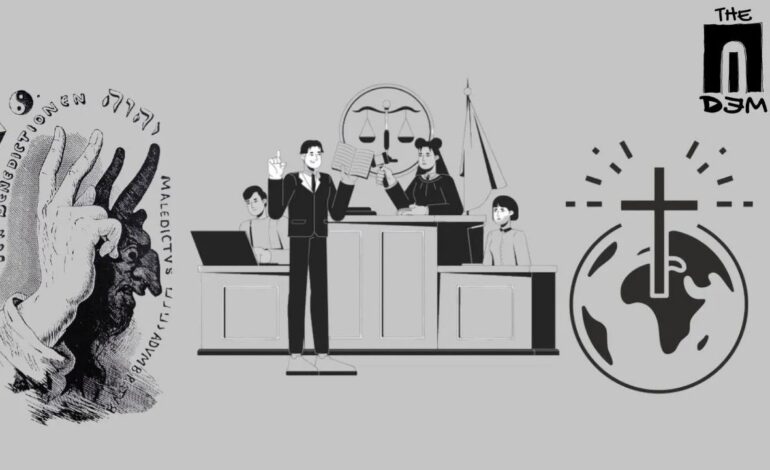
Excommunication, a medieval relic of “civil death,” clashes with India’s “Dignitarian Constitution.” Drawing on Ambedkar’s Navayana pragmatism, Hawthorne’s The Scarlet Letter, and the catastrophic excommunication of the whole nation of England by Pope Innocent III in 1208, this essay argues that individual dignity and fraternity must override scriptural justifications to prevent the social annihilation of dissenting citizens.
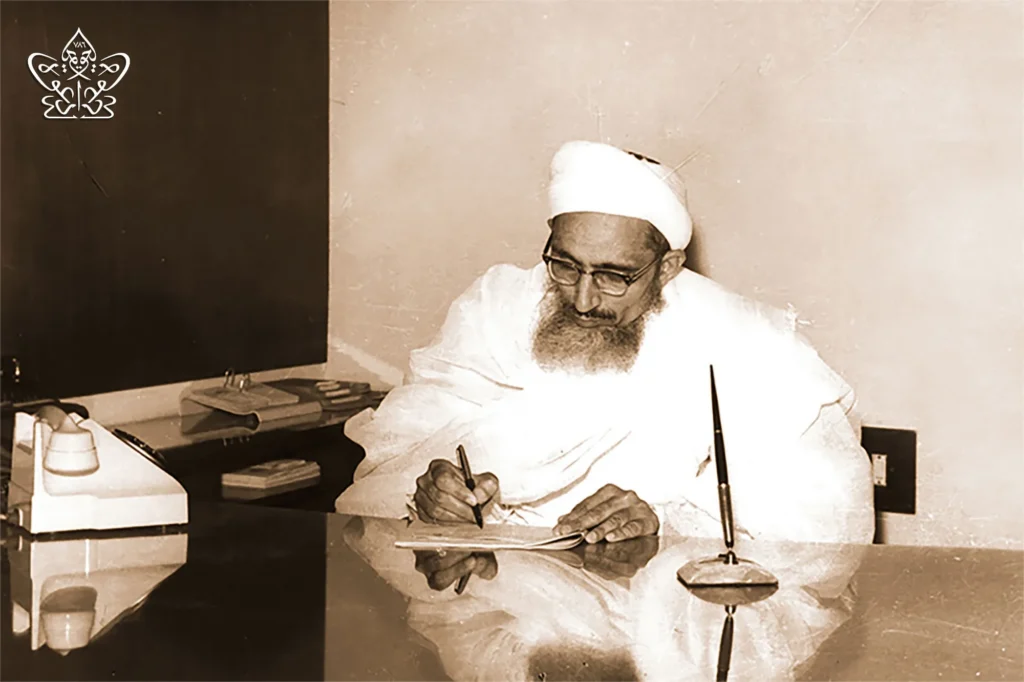
In the hallowed halls of the Supreme Court of India, a ghost from the medieval past has recently reappeared. As a nine-judge Bench grapples with the maintainability of challenges to the Dawoodi Bohra community’s power of excommunication, the judiciary finds itself at a crossroads between two competing centuries. On one side stands the 1962 precedent of Sardar Syedna Taher Saifuddin v. State of Bombay, which anchored the power of religious heads in the autonomy of the denomination. On the other stands the contemporary “Dignitarian Constitution”—a living document that views the individual, not the group, as the ultimate unit of sovereignty.
The recent observations by Justice B.V. Nagarathna, questioning whether a sixty-judge Constitution Bench judgement can be upended via Public Interest Litigation (PIL), highlights a procedural anxiety. However, beneath the “hard, rigid discipline” of court protocol lies a deeper, existential question for the Indian Republic: Can a private religious entity be permitted to impose “civil death” upon a citizen in a society committed to social democracy and the rule of law?
The Anatomy of Civil Death
To understand why excommunication is an affront to our constitutional order, we must first distinguish it from simple expulsion. When a social club or a political party expels a member, the relationship ends at the gates of the association. Excommunication, however, is a totalising penal strike. It does not merely terminate membership; it mandates a social blockade.

This “totalising” nature finds its most poignant expression in Nathaniel Hawthorne’s classic, The Scarlet Letter: A Romance. Though set in the 17th-century Massachusetts Bay Colony, the novel provides a visceral demonstration of excommunication as a weapon of dehumanisation. When Hester Prynne is forced to wear the scarlet “A,” she is not merely being punished; she is being socially entombed. She becomes a living ghost—physically present in the town but severed from its “fraternity.”
In the Dawoodi Bohra context, as historically documented, excommunication involves a “social boycott” that severs familial ties, denies access to communal mosques, and—most hauntingly—bars the dead from consecrated burial grounds. Like Hester Prynne, the excommunicated member is forced to wear a metaphorical scarlet letter that commands their own family to treat them as an invisible pariah.
The Medieval Precedent
This is the essence of “civil death”—a concept that reached its terrifying zenith in the 13th century during the reign of King John of England. When Pope Innocent III placed England under a “Great Interdict” in 1208 and subsequently excommunicated the King, the disaster was not merely spiritual; it was a complete suspension of the social and legal fabric of the kingdom.

For five long years, a “spiritual blackout” descended. Church doors were locked with thorns, and bells fell silent. Marriages were barred, and most devastatingly, the dead were denied Christian burial in consecrated ground, forced instead into ditches “like dogs.” This historical catastrophe demonstrates the absolute power of excommunication to paralyse a society, stripping an entire nation of its collective dignity and communal rites. It transformed the monarchy into a legal pariah and the citizenry into a population of the “spiritually entombed.”
In a modern democracy, such power creates a “state within a state,” where a religious head exercises a sovereign-like authority to strip a person of their social identity, mimicking the very “civil death” that once brought empires to their knees.
The ‘New Untouchability’
The most provocative, yet legally sound, argument against excommunication lies in its functional equivalence to untouchability. Chief Justice B.P. Sinha, in his 1962 dissent, pioneered this “Dignitarian” logic. He argued that the constitutional abolition of untouchability under Article 17 was not merely a historical remedy for caste-based wrongs, but a transformative mandate to abolish any practise that treats a human being as a pariah.
Hester Prynne’s experience and the Interdict of 1208 are literary and historical precursors to this argument. When a religious decree in 2026 commands a community to shun an individual and deny them the dignity of a funeral, it resurrects the very logic of “purity and pollution” that Article 17 sought to entomb.
The “Living Law” of the Indian Republic—to borrow from the sociological jurisprudence of Eugen Ehrlich—has evolved. Ehrlich argued that the centre of gravity of legal development lies not in legislation, but in society itself. If our social democracy recognises the inherent dignity of the individual, then a “Living Law” of a religious association that enforces social ostracisation is a pathology that the State is duty-bound to cure. The Maharashtra Protection of People from Social Boycott Act (2016) is a legislative recognition of this fact: that social boycott is the “untouchability” of the 21st century.
The Conflict of Conscience
The legal defence of excommunication typically rests on Article 26(b), which grants religious denominations the right to “manage their own affairs in matters of religion.” The 1962 majority view held that the bond of a religious community is its common faith, and the power to expel dissidents is essential to maintain that “purity.”
However, this “Group Supremacy” model is increasingly incompatible with the “Ambedkarite Override” that defines our modern jurisprudence. Dr. B.R. Ambedkar’s Navayana pragmatism teaches us that religion must be a matter of principles, not commands. In his view, the individual is the end-object of all social organisation. When a denomination’s “right to manage” its affairs crushes the individual’s “freedom of conscience” under Article 25, the Constitution must intervene.
In The Scarlet Letter, the character of Arthur Dimmesdale suffers a “private excommunication” of the soul, illustrating the devastating psychological toll of a religious order that demands complete conformity at the cost of personal truth.
A religious association cannot claim a right that destroys the fundamental dignity or the mental health of its members. The “freedom of conscience” is illusory if the price of dissent is the loss of one’s family and the right to a dignified burial. As the Supreme Court noted in the Sabarimala judgement, religious autonomy must be read as being “subject to” the overarching values of Part III, specifically the right to life and dignity under Article 21.
Judicial Statesmanship
The current Bench’s concern regarding “judicial statesmanship” and the maintainability of PILs against settled precedents is a valid concern for the stability of law. Justice Nagarathna’s warning about “means being as good as the ends” reflects the court’s commitment to stare decisis. However, Article 13 of the Constitution provides the necessary “surgical” tool to bridge this gap. It mandates that any “custom or usage” having the force of law, insofar as it is inconsistent with fundamental rights, is void.
If excommunication is a custom that violates the dignity of the individual, it “died” the moment the Constitution was adopted in 1950. A sixty-year-old precedent that protects a “void” custom is not a fortress; it is an anomaly. The “hard, rigid discipline” of the Court must eventually yield to the “Progressive Realisation of Rights.” Law is not a static museum of medieval relics; it is a dynamic instrument of social justice.
Referencing Hester Prynne’s plight and King John’s humiliation reminds us that the law’s delay in correcting social exclusion is measured in human suffering. Judicial statesmanship today requires the courage to recognize that the “Living Law” of a democratic nation must eventually override the stagnant “Norms of Decision” of a theocratic past.
Fraternity as a Constitutional Imperative
Ultimately, the battle over excommunication is a battle for the soul of “Social Democracy.” Ambedkar defined social democracy as a way of life that recognises liberty, equality, and fraternity as the principles of life. Excommunication is the antithesis of fraternity. It builds walls where the Constitution seeks to build bridges. It replaces “social endosmosis”—the free flow of human association—with a rigid, fearful hierarchy.
The Supreme Court now has the opportunity to complete the “Social Revolution” envisioned by the founding fathers. By adopting the dignitarian lens of the Sinha dissent, the Court can affirm that in the Indian Republic, no person can be made a pariah in the name of God.
The ghost of King John’s England, where a spiritual decree could paralyse a citizen’s civil life, has no place under a Diginitarian Constitution. We must choose between the “Living Law” of a closed association and the “Living Law” of a democratic nation. To protect the denomination’s right to destroy the individual is to abandon the very promise of the Constitution. It is time to recognise that human dignity is the “essential spiritual practise” of the Indian Republic, and it must override all scriptural justifications for exclusion.
As the nine-judge Bench deliberates, they are not just deciding a matter of “maintainability.” They are deciding whether the Constitution of India is strong enough to protect its citizens from the “civil death” of excommunication. Judicial statesmanship today requires the courage to say that while a community may have the right to define its boundaries, it has no right to entomb the human spirit. The scarlet letter of social boycott must be erased from the Indian legal landscape, ensuring that every citizen can live with the dignity guaranteed by the “Supreme Codex” of our land.






“The Ghost Of Civil Death” is a deeply thought-provoking and courageous piece by Faisal CK that exposes how social exclusion and excommunication continue to haunt democratic societies despite the promise of dignity and constitutional equality. The article powerfully reminds us that constitutional morality cannot survive merely on paper while people are still pushed into invisible prisons of humiliation, silence, and social boycott. Sharp, humane, and intellectually compelling writing.
Extremely well researched and delineated, bringing forth forcefully the nuances, tracing it to history and contemporary relevance.
C.K.Faisal’s article is beautifully written and uplifting. It underlines the paramountcy of human dignity. Social exclusion negates the notion of fraternity.