

The Great Betrayal: How India’s Judiciary Mastered “Judicial Evasion” During Modi Regime and Created “Homo Sacers”

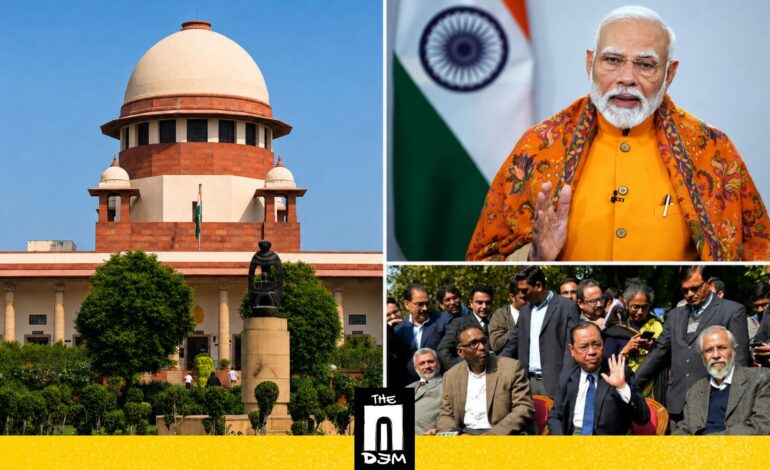
Since Modi took over as Prime Minister, every Chief Justice who assumed office has failed the judiciary. One after another, they compromised hundreds of cases under Modi’s influence. Today, the judiciary is the single biggest reason for the collapse of the rule of law in India.
— Dushyant Dave
Dushyant Dave was not being rhetorical. He was shedding light on a darker side. When the Senior Advocate stated that every Chief Justice since 2014 has “failed the judiciary” and “compromised hundreds of cases under Modi’s influence,” he was revealing a crime. The Supreme Court is no longer an institutional buffer. It has become a master of judicial evasion, a sophisticated machinery for delaying, silencing, and legitimising majoritarian overreach.
To understand this collapse, we must distinguish between “judicial restraint” and “judicial evasion” — a crucial distinction. Judicial restraint is a constitutional virtue; judicial evasion is a betrayal of the oath. Restraint declines to interfere where the legislature has spoken clearly. Evasion refuses to act when the Constitution demands urgency. What we have witnessed since 2014 is not restraint. It is systematic abdication, cloaked in legal robes.
The Doctrine of Judicial Evasion:
Silence as Consent
The greatest betrayal is often not the bad verdict, but the refusal to hear at all.
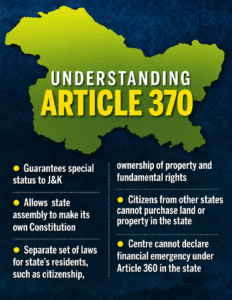
Consider the Article 370 case: the petitioners waited years for a hearing while Jammu & Kashmir remained under a communication blackout and Governor’s Rule morphed into permanent annexation. Consider Electoral Bonds: the Court delayed hearings until the scheme had funnelled thousands of crores from anonymous corporate donors into the ruling party’s coffers, then declared it “unconstitutional” after the damage was done. Consider the Citizenship Amendment Act (CAA): despite pleas for a stay, the Court refused to act; by the time hearings progressed, citizenship had been granted, deportations had begun, and the “new normal” had settled. This strategic lethargy allows the state to advance its agenda, achieve a fait accompli, and render the case infructuous.
In a constitutional democracy, a delay in reviewing executive overreach is not neutrality; it is tacit validation. Every day the Court refuses to list a sensitive matter, it tells the government: Go ahead. We will catch up later, if at all. By then, the political fact on the ground becomes irreversible.
The “Sealed Cover” Jurisprudence: Institutionalising Opacity
If evasion is the tactic, the sealed cover doctrine is the weapon. Under Supreme Court rules (derived from colonial-era procedures), the government can submit evidence in a sealed envelope that neither the accused nor their counsel may see.
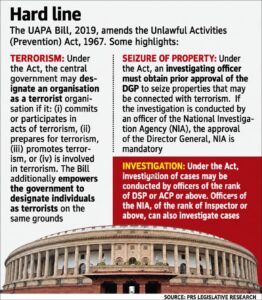
In the Rafale deal case, the BCCI reforms case, the Bhima Koregaon case, the NRC case, the Umar Khalid case, and multiple UAPA matters, the government routinely filed “status reports” in sealed covers, citing national security. The defence is left arguing against shadows. The Court, in turn, relies on these secret inputs to deny bail, citing “prima facie true” charges without revealing the material.
The Supreme Court has allowed the executive to whisper in its ear while the accused stands blindfolded. This is not a trial; it is a confession of the Court’s subordination to the state’s intelligence apparatus.
Sealed cover jurisprudence has no place in an open, democratic republic, except as a mechanism to bypass cross-examination, due process, and natural justice.
When the Court accepts secret evidence without testing it, it ceases to be an adjudicator and becomes a collaborator. The sealed cover doctrine is not merely a procedural irregularity. It is the legal embodiment of spectator democracy, a system where citizens are invited to watch the theatre of justice while being systematically excluded from its substance.
Sealed cover jurisprudence produces two categories of people. First, the homo sacer: the accused, judged on evidence they cannot see, challenge, or defend against. (Homo sacer, the “sacred man” of ancient Roman law, could be killed without it being considered murder, yet he could not be sacrificed in a ritual. He was outside the protection of both divine and human law.) They are abandoned by the law’s most basic promise: that justice must be seen to be done. Second, the spectator citizen, the public that watches the courtroom drama on news channels, reads about “sensitive matters” and “national security,” and is told that justice has been served. But the citizen-spectator, like the accused, never sees the sealed cover. They applaud the performance, but the script remains classified.
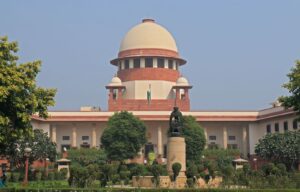
The Supreme Court has transformed democratic citizenship into spectatorship, where the public watches legal proceedings that have already been decided in sealed envelopes.
Master of the Roster – Administrative Authoritarianism
Dushyant Dave’s accusation that the Chief Justices “failed” is incomplete without an understanding of the internal mechanism. The CJI, as Master of the Roster, holds absolute authority to assign cases to specific benches. This administrative tool, meant for efficient case management, has become a political filter.
Sensitive matters, including the Hindenburg-Adani petitions, the Umar Khalid bail pleas, and the Pegasus snooping case, are not randomly assigned. They are directed to judges whose judicial philosophy is predictably executive-friendly. When a pro-dissent bench takes shape, the roster is quietly altered. When a judge delivers an uncomfortable ruling, they are reassigned away from constitutional benches.
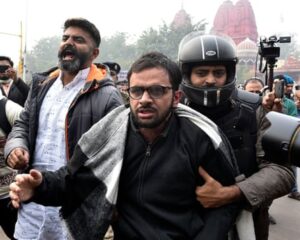
The rot is not merely in judgments; it is in the assignment of cases. The Master of the Roster power has transformed the Chief Justice from a primus inter pares into a gatekeeper of judicial servitude. By routing sensitive cases to “reliable” benches, the Court ensures that no structural challenge to the government ever reaches a genuinely independent forum.
This is administrative authoritarianism: legal on its face, tyrannical in effect.
Ayodhya – the Standard of Proof
The 2019 Ayodhya judgment is not a legal solution; it is a testament to how the Court can reshape facts to fit political outcomes.
The Supreme Court awarded the disputed land for a Ram Temple, despite acknowledging that the Babri Masjid was demolished in a criminal act on December 6, 1992. How? By applying the preponderance of probabilities, a civil standard, to what was essentially a title dispute arising from a crime. The Court admitted there was no direct evidence that a temple was demolished to build the mosque. Yet it concluded that Hindus “had faith” that the site was Lord Ram’s birthplace, and that this massive faith outweighed legal title.
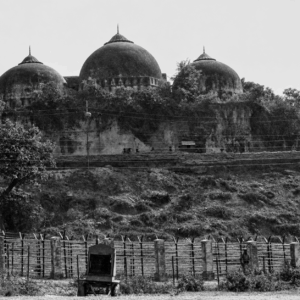
The 2019 judgment transformed a criminal demolition into a site-clearing operation for a title award, effectively ruling that might and faith make right. The five-acre plot offered to Muslims was not justice; it was a condescending footnote. And by failing to invoke Article 142 to protect other disputed sites, the Court opened the floodgates for future claims on the Gyanvapi, Shahi Eidgah, and Krishna Janmabhoomi. One demolition was rewarded; many more are now legally possible.
The Ayodhya judgment did not merely err in its facts. It performed a biopolitical operation, assigning different weights to lives based on religious identity.
For Hindus, faith became legally sufficient evidence. The Court accepted that centuries of belief, unsupported by direct archaeological proof, could establish title. For Muslims, the same Court demanded strict forensic evidence: a demolished mosque, standing for over four centuries, was treated as a removable inconvenience, compensable by five acres of land elsewhere, as if Muslim sacred space were fungible real estate.
Electoral Rolls: The SIR and the Deletion of Democracy
The Special Intensive Revision (SIR) of electoral rolls in 2025–26 is the most direct assault on the franchise since the Emergency. Over 6.5 crore voters, nearly the population of France, were deleted or marked “doubtful” in a single year. The burden of proof was shifted: citizens had to prove they belonged, not the state to prove they did not. This is the structure of abandonment: the law still speaks (“voting is a right”), but it provides no mechanism to enforce that right against bureaucratic erasure.
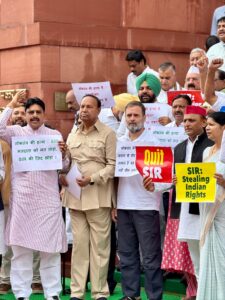
The D-Voter category: citizens marked “doubtful” have not been convicted of any crime. They are not foreigners, at least not by any established evidence. They exist in a legal purgatory, neither confirmed citizens nor expelled aliens. They can be detained, denied rations, and denied jobs, yet cannot be deported because no country will accept them. This is homo sacer in flesh: killable (in the sense of civil death) without murder, excluded without expulsion.
The Supreme Court observed a “trust deficit” between the Election Commission and state governments. Then it did nothing. No structural injunction. No revival of voters. Just observation.

This is the Assam NRC model nationalised. In Assam, the Court oversaw a process that left nearly two million stateless, largely Bengali Muslims. Now the same logic applies nationwide. The judiciary provided no safety net for those caught in bureaucratic “D-Voter” traps.
The sovereign’s greatest power is not to kill but to abandon; to place a body within the law’s reach yet outside its protection.
The 6.5 crore erased voters are India’s homo sacers. They are not declared foreigners; they are simply rendered doubtful. The law still applies to them, but in a manner that excludes rather than protects. By refusing to intervene, the Supreme Court has not only failed in its role as a guardian. It has acted as the perfect Agambenian sovereign: it has enforced the procedure of abandonment and called it restraint.
UAPA and Umar Khalid: “Delay Cannot Be a Trump Card”
The January 2026 Supreme Court order denying bail to Umar Khalid, after five years of pre-trial detention, is the epitome of judicial evasion concealed in legal language.
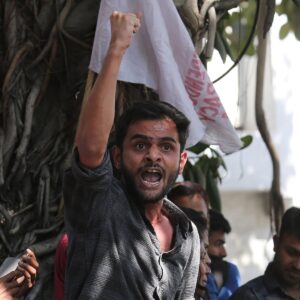
The Court ruled that “delay cannot be used as a trump card” against the stringent conditions under UAPA Section 43D(5). This effectively nullified the K.A. Najeeb precedent (2021), in which a Constitution Bench held that prolonged incarceration overrides UAPA restrictions.
The Court has engaged in legal sleight of hand. Under Najeeb, if the trial is not concluded within a reasonable time, bail must be granted even under UAPA. Under the 2026 order, five years of pre-trial detention is not “unreasonable.” By this logic, indefinite detention without trial becomes constitutionally permissible, provided the state cites national security.
When a democracy’s highest court tells a citizen, “We will keep you in jail until the trial concludes, no matter how many years it takes,” it has abandoned habeas corpus and embraced preventive detention as routine.
Agamben wrote that the camp, not the prison, is the nomos of the modern state. The prison requires a conviction; the camp requires only sovereign suspicion. India’s UAPA detention centres — for that is what jails become when bail is impossible — are Agambenian camps. The law has not been suspended; it has been weaponised. The Supreme Court’s sealed cover jurisprudence ensures that the accused argues against shadows. This is not a failure of due process. It is the design of a system in which the sovereign speaks, the judge listens, and the homo sacer waits — indefinitely, invisibly, legally abandoned.
From a Republic of Rights to a Republic of Procedures
We are witnessing a quiet constitutional transmutation, a metamorphosis from a Republic of Rights, where the individual is the fundamental unit of justice, to a Republic of Procedures, where the process itself is the punishment. We are transitioning to an Empire of Bare Life and Spectacle, where citizenship is a revocable privilege, where dissent is a permanent crime, and where the Supreme Court has traded its role as guardian for the role of gatekeeper.
The sealed cover is the procedure. The roster manipulation is the procedure. The delay in listing is the procedure. The Supreme Court no longer asks: Is this law just? It asks: Has the government followed the prescribed steps, no matter how tyrannical the outcome?

Giorgio Agamben argued that the fundamental biopolitical divide is not between friend and enemy, but between those protected by law and those abandoned by it. In Modi’s India, the Supreme Court has become the sovereign that produces this abandonment. The erased voter under SIR, the indefinitely detained accused under UAPA, and the Muslim given five acres of consolation at Ayodhya are all abandoned. The law still speaks their names, but only to punish, never to protect. Dushyant Dave said every Chief Justice has failed. Still, they have succeeded in creating a juridical order in which bare life is the only life the state recognises, and in which the Court is not a buffer but the sovereign’s most elegant weapon. When the Court prioritises the smooth running of administration over the sanctity of the individual, it ceases to be a Court of Justice.
Dushyant Dave is not just right. He is an understatement. Every Chief Justice since 2014 has failed the judiciary. The Supreme Court has failed the Constitution. And history will record this era not as a triumph of democracy, but as the period when the guardians of the rule of law abandoned their post and called it restraint.
This article is a work of constitutional critique based on publicly available documents , including judgments, court orders, and statements by senior advocates. The distinction drawn between “judicial restraint” and “judicial evasion” is a legal-philosophical argument intended to invite debate, not to impugn individual judges’ motives. The failure, as Dave notes, is systemic, not personal.








A chilling and deeply provocative critique of how “judicial evasion” can normalize constitutional silence while reducing vulnerable citizens to what Giorgio Agamben called “bare life.” The phrase “Homo Sacers” powerfully captures the fear of people being pushed outside the effective protection of law and citizenship. The title alone feels like an indictment not just of institutions, but of democratic conscience itself.
Solomon Mubash appears to frame the judiciary not merely as passive, but as actively enabling authoritarian legality through delay, selective intervention, and constitutional avoidance. It’s a disturbing but important debate about the relationship between democracy, executive power, and the courts in contemporary India.
Exactly
Judicial Evasion Is Not a Modi-Era Invention
It Is an Old Disease of Indian Democracy
To argue that the Supreme Court of India Supreme Court of India “collapsed” only after 2014 is historically selective and intellectually dishonest.
Judicial deference to executive power is not a Modi-era innovation. It is a recurring feature of Indian constitutional history—from Indira Gandhi to Manmohan Singh to Narendra Modi.
The real problem is not one leader. It is the constitutional architecture itself: vague emergency powers, preventive detention laws, sealed intelligence inputs, judicial appointments dependent on executive goodwill, and a political culture where courts often choose stability over liberty.
The judiciary did not suddenly become vulnerable in 2014. It has always been vulnerable.
⸻
Example 1: ADM Jabalpur – The Original Judicial Surrender
Emergency Era (1975)
The Emergency
In the infamous ADM Jabalpur case (1976), the Supreme Court ruled that during Emergency, even the right to life and personal liberty could be suspended.
Citizens could be jailed without remedy.
No habeas corpus.
No judicial protection.
This was not Modi’s India.
This was Congress rule under Indira Gandhi.
If one wants to discuss judicial betrayal, this remains the gold standard of constitutional surrender.
Even later judges admitted this was one of the darkest moments in Indian judicial history.
⸻
Example 2: Shah Bano Reversal – Judiciary Overruled for Vote Bank Politics
Rajiv Gandhi Era (1986)
Shah Bano case
The Supreme Court granted maintenance rights to Shah Bano, a divorced Muslim woman.
The government of Rajiv Gandhi overturned the judgment through legislation to appease conservative political pressure.
The Court did not protect constitutional morality.
The executive overrode it.
Judicial independence collapsed before majoritarian politics became fashionable.
⸻
Example 3: Anti-Terror Laws Before UAPA Politics
TADA and POTA
Before UAPA became the symbol of state excess, India had:
* Terrorist and Disruptive Activities (Prevention) Act (TADA)
* Prevention of Terrorism Act (POTA)
Both were widely abused.
Thousands detained.
Confessions to police accepted.
Bail nearly impossible.
Minorities disproportionately targeted.
This happened under Congress and coalition governments long before present UAPA criticism.
Preventive detention is not new. Only the acronym changes.
⸻
Example 4: Sealed Cover Before Modi
The use of confidential intelligence inputs and opaque state privilege predates 2014.
Even during UPA-era national security litigation:
* terror cases
* intelligence operations
* insurgency matters
* national security cases
courts often deferred to “state privilege” without full adversarial testing.
Sealed cover culture did not emerge from nowhere.
It evolved from colonial legal habits and post-independence security-state thinking.
⸻
Example 5: 2G, Coal, and Selective Judicial Timing
UPA Era Governance Litigation
2G spectrum case
Coal allocation scam
These became symbols of judicial activism.
But critics also argued courts entered governance selectively and politically.
Timing of intervention, media influence, and institutional pressure shaped outcomes.
Judicial neutrality was contested then too.
The Court was accused of political engineering long before 2014.
⸻
Example 6: Encounter Killings and Preventive Detention
Whether under Congress governments, regional parties, or BJP states:
* AFSPA litigation
* encounter killings
* preventive detention
* custodial violence
show repeated judicial reluctance to confront executive security power.
This is systemic state behavior, not party-specific behavior.
⸻
Example 7: Electoral Manipulation Is Older Than BJP
Booth capturing, voter suppression, misuse of governors, selective use of CBI/ED equivalents, misuse of Article 356—
these were political tools long before 2014.
Congress perfected many of these instruments.
Today’s criticism often forgets yesterday’s architecture.
⸻
Global Comparison
This is not uniquely Indian.
In the United States United States:
* Patriot Act after 9/11
* Guantanamo detentions
* FISA surveillance
* classified evidence
In the United Kingdom United Kingdom:
* anti-terror detention laws
* extraordinary rendition cases
In France France:
* prolonged emergency powers after terror attacks
In Israel Israel:
* security-state judicial deference
Democracies routinely bend constitutional morality in the name of stability.
India is not exceptional.
⸻
The Real Question
The question is not:
“Did Modi corrupt the judiciary?”
The real question is:
“Why was the judiciary always designed to be vulnerable to executive power?”
That is the harder and more honest conversation.
Agree to certain extent. But what becomes very specific now is the transition of judiciary as a weapon of the Sovereign. At least the emergency was proclaimed then . It was an exception. But now this exception became the rule.
To blame only Modi is convenient.
It absolves everyone before him.
It turns a constitutional disease into a partisan slogan.
The judiciary was fragile before 2014.
It bent during Emergency.
It bent during Shah Bano.
It bent during TADA.
It bent during AFSPA.
It bent during UPA.
It bends today.
The names change.
The weakness remains.
That is the truth history demands.