

The Mysteries of Indian GDP: Rank Changed Overnight, Poverty Didn’t

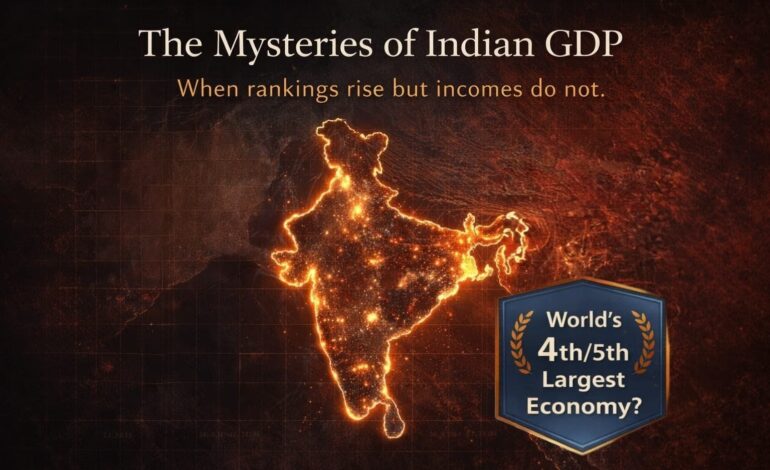
How India celebrated a GDP title it never quite held and why the number that matters most never makes it into a speech.
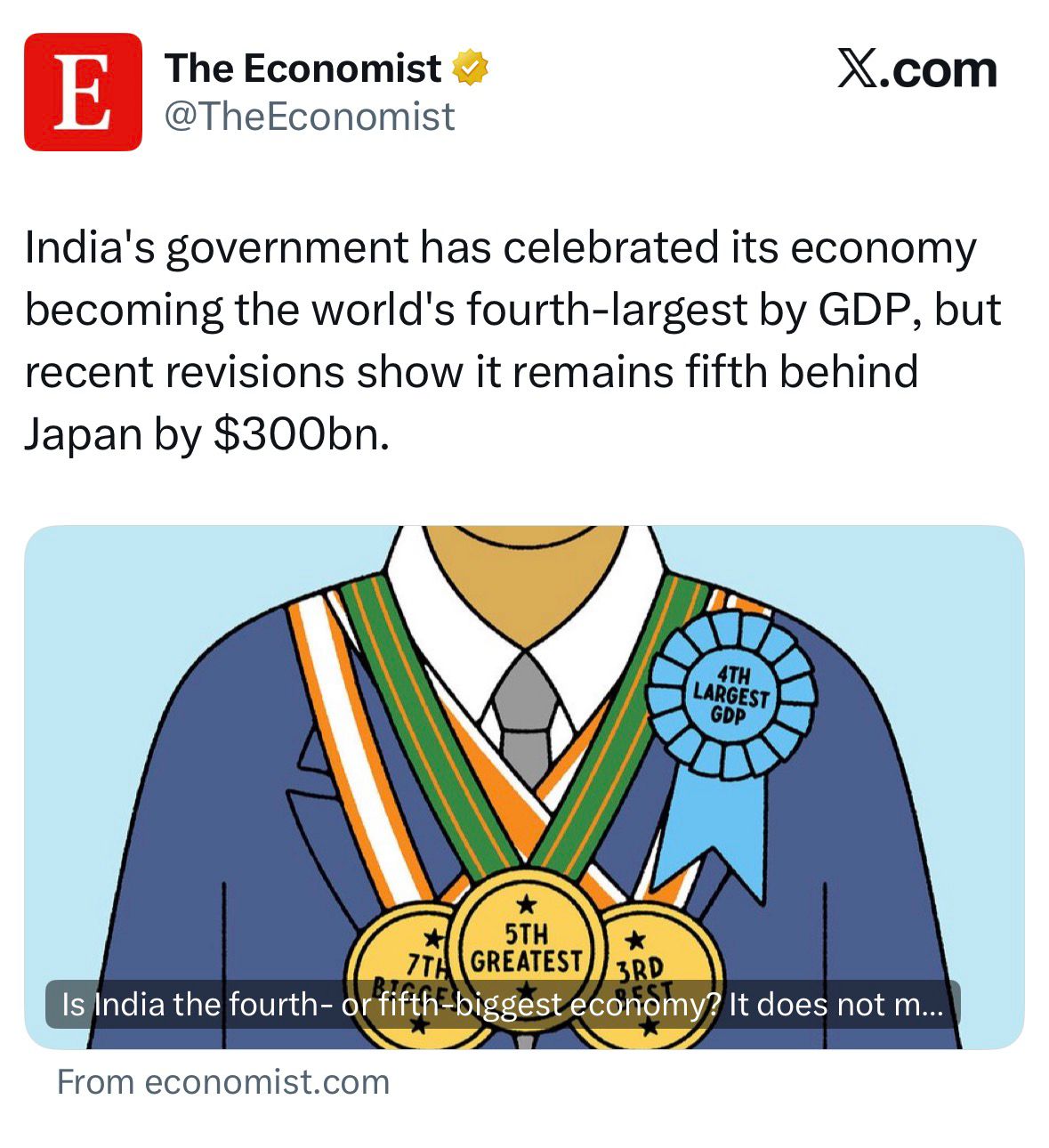
When ‘The Economist’ asked on March 8, 2026, “Is India the fourth- or fifth-biggest economy? It does not matter,” it was not being dismissive of India’s progress. It was pointing at something far more uncomfortable: the ranking India celebrated so loudly had quietly collapsed within sixty days of the announcement, and almost no one noticed.
The Claim That Unravelled
In May 2025, NITI Aayog CEO BVR Subrahmanyam stood before the media and declared: “We are the fourth-largest economy in the world.” By December 2025, the government’s own Year-End Economic Review doubled down on the claim, putting India’s GDP at $4.18 trillion and Japan firmly in the rearview mirror. Headlines were written, speeches were delivered, and social media erupted in celebration.
Then, on February 27, 2026, the Ministry of Statistics and Programme Implementation quietly introduced a new base year (2022–23) for GDP calculations. The revised figures told a different story. India’s GDP fell to ₹345.47 lakh crore from the earlier estimate of ₹357.14 lakh crore. Converted to dollars, that is approximately $4 trillion, while Japan’s GDP stands at $4.2 to $4.4 trillion. The gap is $300 to $400 billion. HDFC Bank economist Sakshi Gupta was unambiguous: “India may not overtake Japan this year, or even next year.”
The reason was not a slowdown in India’s economy. The rupee had weakened against the dollar by nearly 5% over the past year, while the yen strengthened. The ranking had not changed because of any real shift in economic power. A currency movement had done it. That is the fragility on which the celebration was built.
The Number No One Mentions
Measuring a nation’s economic size by total GDP alone is like measuring a family’s prosperity by the total earnings of all its members while ignoring that fourteen of them go to bed hungry every night.
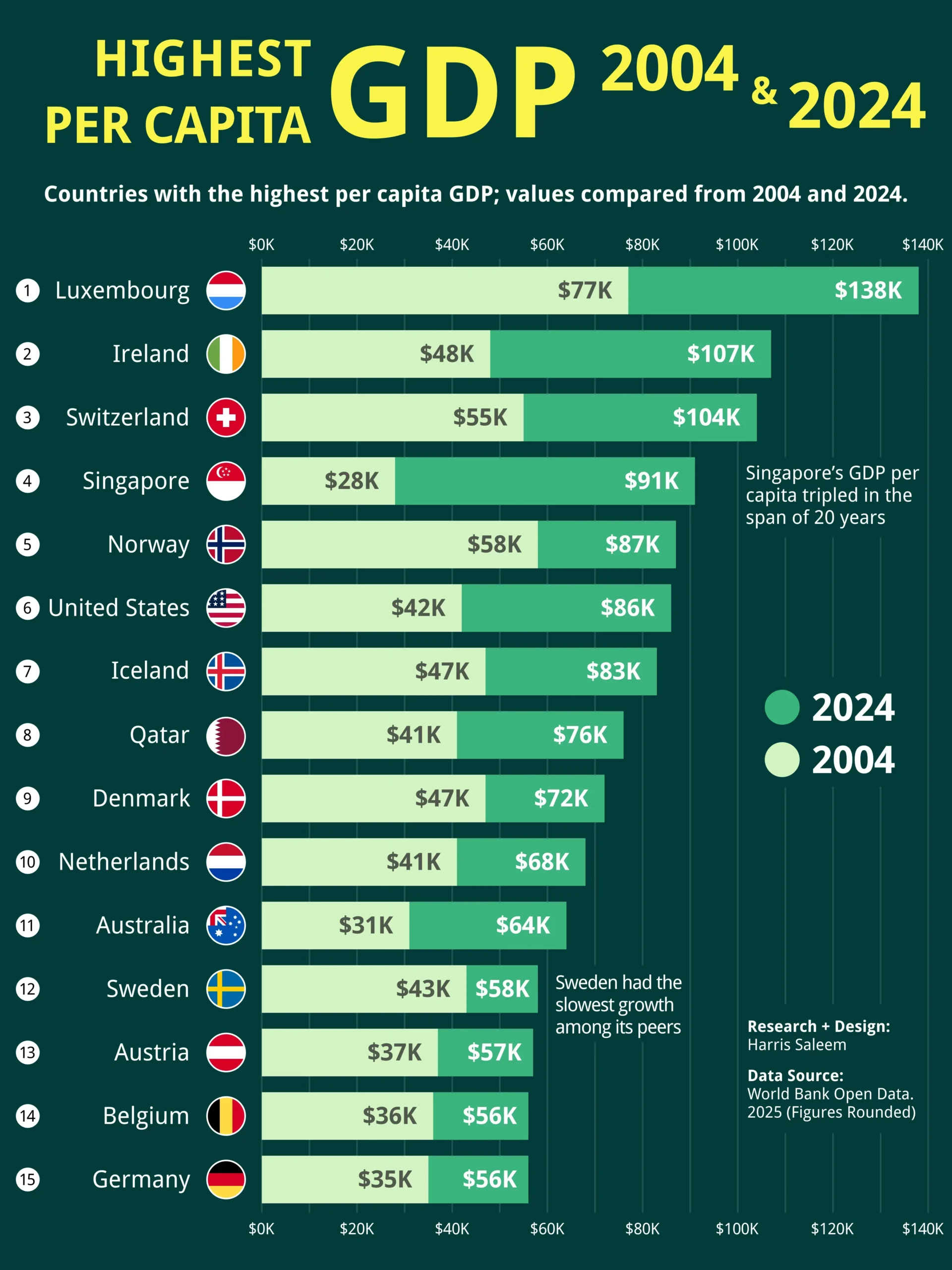
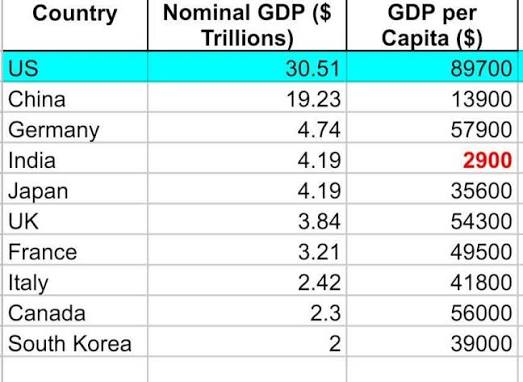
The contrast across major economies lays it bare. The United States sits at the top with a GDP of $30.5 trillion and a per capita income of $89,105. Germany, ranked third at $4.7 trillion, offers its average citizen $55,911 annually. Japan, the country India claims to have surpassed, has a per capita income of $33,955 to $36,390. India, with a GDP of approximately $4 trillion, gives its average citizen just $2,934 to $3,051 per year. That is 12 times less than Japan and 30 times less than the United States.
In the global per capita income ranking, India sits in 144th place among nearly 200 nations. That means the average citizen of 143 countries earns more than the average Indian. This is the number that never makes it into a prime-time speech.
One Country, Two Worlds
Even that per capita average conceals more than it reveals, because inequality within India is staggering. According to Oxfam’s 2025 report, the wealthiest 1% of Indians hold 40.1% of the country’s total wealth. The bottom 50% share just 3% of it. Of India’s 1.4 billion people, 603 million—nearly half the population—still live on less than ₹300 a day.
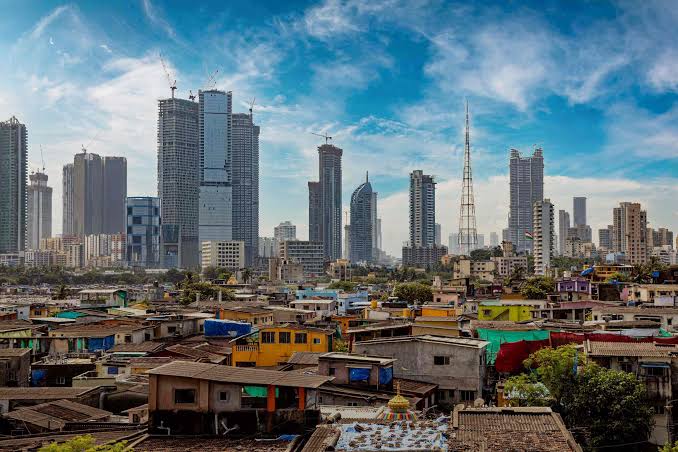
The urban–rural divide adds another layer. Urban per capita income is approximately 2.5 times higher than rural per capita income. Mumbai and Bengaluru represent one India; the villages of Bihar and Uttar Pradesh represent another. Both are counted in the same GDP. Both do not live in the same country.
Growing Fast, But Towards What?
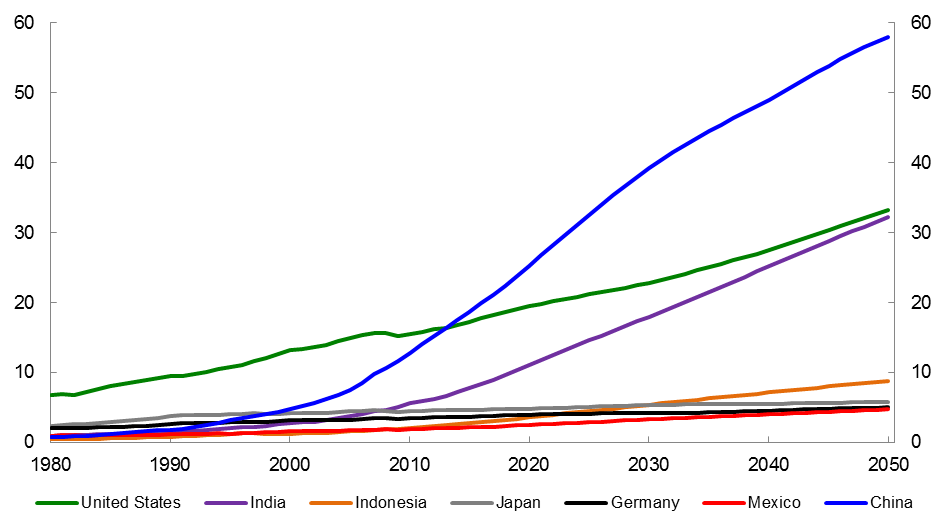
India’s growth rate is real, and it is significant. Real GDP growth for FY2025–26 is projected at 7.6%, the fastest among major economies. In 2015, India’s GDP was $2.1 trillion. It has nearly doubled in a decade. The IMF projects that by 2028, India’s GDP will reach $5.5 trillion, potentially overtaking Germany to become the world’s third-largest economy.
But growth rate and destination are two different things. Morgan Stanley has warned that India needs to sustain 12.2% annual growth to escape the Middle-Income Trap—the point at which a developing country stalls at a limited income level and fails to graduate into a developed economy. India is currently growing at 7.6%. South Korea and Taiwan broke out of this trap through decades of disciplined investment in manufacturing, education, and exports. India has not yet found that discipline.
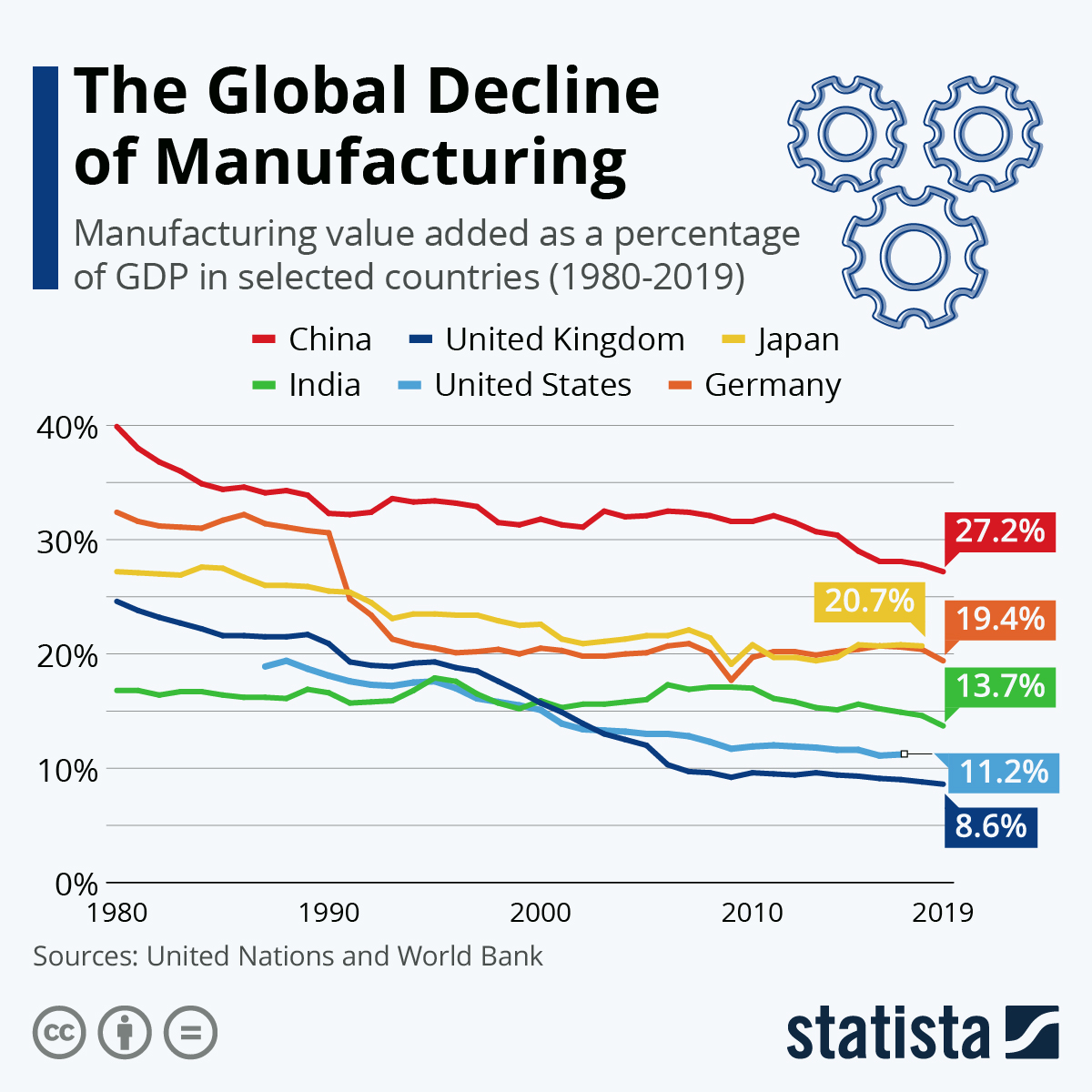
The manufacturing data is particularly worrying. In FY2023–24, manufacturing growth was 12.3%. In FY2024–25, it fell to 4.5%. Manufacturing’s share of GDP, once at 16–17%, has now slipped to 15.7%, and some estimates put it as low as 14%. In 2011, the government set a target of raising this to 25%. Fifteen years later, the number is moving in the opposite direction.
The Politician’s Trap
When leaders repeatedly celebrate rankings built on volatile exchange rates and revised datasets, they are setting a trap—not just for themselves, but for the people who believe them. Expectations are raised. The promise of prosperity feels imminent. And then the same inflation, the same unemployment, and the same inequality greet people the next morning. The disappointment is proportional to the height of the claim.
The Economist makes this point with clinical precision: a ranking that can be reversed overnight by a currency shift or a statistical revision is not a foundation for political capital. It is a liability waiting to be called in.
The Real Scorecard
The question is not whether India is ranked fourth or fifth. That snapshot changes with every quarterly data release and every movement in the currency markets. The real scorecard asks harder questions: Has manufacturing grown from 14% to 25% of GDP? Has the export basket shifted towards high-value goods? Have good jobs been created in adequate numbers? Has the gap between urban and rural India narrowed? Have the 603 million Indians living on ₹300 a day seen their lives change?
Japan’s GDP may be $4.4 trillion, but every Japanese citizen earns 12 times more than the average Indian, and not a single person in Japan survives on ₹300 a day.
A ranking measures the size of an economy. It says nothing about the lives of its citizens. And until those lives change, whether India is fourth or fifth matters only in the speech, not on the street.
Sources: MoSPI, IMF, World Bank, Oxfam 2025, HDFC Bank, Morgan Stanley, The Economist (March 8, 2026)









“A sharp reminder that rising GDP rankings don’t automatically end poverty.”