



“All that is solid melts into air,” Marx once wrote of capitalism’s restless churn. Today, the process runs in reverse. The market is busy selling the past back to us: vinyl, Polaroids, flip phones, packaged as refuge from the very excess it produced. Nostalgia, once a memory, now arrives shrink-wrapped and priced.
People are buying things to escape buying things. That is the strange logic of nostalgia today.
A girl walked past this morning carrying a Polaroid camera. The camera slung over her shoulder the way a previous generation might have carried a cassette player: casually, as if it had always been there. She was born into a world of smartphones. She had chosen film. Walk into a certain kind of urban flat and you will find objects that should have disappeared decades ago. A vinyl record player, often still half-unpacked. A film camera purchased by someone born well after film had already died. A reissued flip phone sitting on a desk beside the smartphone it is meant to replace.
None of these objects is there by accident.
The person who bought the record player is almost certainly not unaware of the contradiction. They know their phone streams more music than any record collection ever could. They know the Polaroid photograph costs ten times what a digital image costs to produce. They know, on some level, that opting out of consumer culture through a purchase is a strange kind of opt-out.
And yet the purchase happens. Because the feeling it promises is real, even if the escape it offers is not.
Who Gets to Step Back
Before anything else, consider who is actually having this conversation. A decent turntable starts at around twenty thousand rupees. A working Polaroid camera and its proprietary film will cost several times that to run over a year. The reissued Nokia flip phone, marketed as a cure for screen fatigue, is not the battered handset from 2002. It is a lifestyle product aimed at salaried professionals in air-conditioned offices who find their smartphones exhausting.
The contractual worker packing orders in a logistics warehouse outside the city does not have the disposable income to curate an analogue life. The delivery rider whose labour makes same-day vinyl purchases possible is not browsing record fairs on Sunday morning. The aesthetic of withdrawal from consumerism is, in practice, available only to the people who can afford to perform it.
This is the first thing the nostalgia market does not want examined too closely: it sells the appearance of rejecting excess to people who have enough excess to afford the rejection. Capital has manufactured the sentiment. Now it is supplying the object.
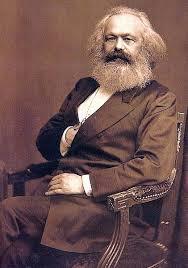
There is a name for what happens when an identity becomes a purchase. Marx called it commodity fetishism: the process by which real relationships between people get expressed instead as relationships between things. The flip phone does not just make calls. It signals something about its owner: digital minimalist, conscious consumer, someone who has seen through the noise. The record player does not just play music. It communicates taste, seriousness, a particular relationship to time. Each object becomes a sign, and each sign carries a price of entry that most people cannot meet.
Researchers at Taiwan’s Cheng Kung University found something that sharpens this further. For older buyers who actually used these technologies the first time around, nostalgia connects to lived memory. For younger buyers, the memory came from films, television, cultural atmosphere. They are not nostalgic for something they experienced. They are nostalgic for something they were sold. The sentiment was manufactured first. The object followed.

How the Loop Was Built
To understand why the market absorbed this so easily, it helps to understand what the market actually needs in order to keep running.
Marx and Engels wrote in The Communist Manifesto that capitalism cannot exist without constantly revolutionising what it produces. Not because better things are always being made, but because the system requires perpetual novelty to generate perpetual desire. A contented consumer is a market that has stopped growing. Satisfaction, in this system, is a problem to be engineered away.
For a long time, this dynamic produced genuine improvements. The shift from record players to cassettes to CDs to streaming made music more portable, more durable, more affordable. Between 1979 and 2025, the number of hours the average worker needed to labour to afford household goods fell by between 52 and 96 percent, as economist Marian Tupy has documented. Innovation, for a period, actually served the people it claimed to serve.

Then the relationship inverted. Economist Tim Jackson has written that consumer society runs on discontentment as its primary fuel. Products must promise more than they deliver, because a product that fully satisfies creates no reason to buy the next one. The point of the system is not resolution. The point is the loop: buy, feel briefly whole, feel the gap return, buy again.
Historian Wendy Woloson traces this to nineteenth-century American street traders who deliberately cultivated what she describes as a complex stream of perpetual distraction. The mechanism has not changed in two centuries. Only the scale has. Today, platforms like Temu, the Chinese e-commerce giant whose sales have exploded since 2022, mean the churn for new goods is relentless and global. The manufacture of wanting has been fully industrialised.
The Sentiment They Learned to Sell
Nostalgia turns out to be commercially useful in a very specific way. Research from the Society for Personality and Social Psychology found that nostalgia does two contradictory things simultaneously: it makes people more sceptical of new technology, and it makes them feel more connected to others. It can increase and decrease enthusiasm for innovation at the same time.
This is not just interesting psychology. It is a gap in the market. Someone sceptical of new technology but hungry for connection is exactly the person to whom a turntable, a film camera, a handwritten letter kit can be sold. The product promises to resolve both feelings at once. It will not. But by the time that becomes clear, there will be something else ready.
Some companies have formalised this into a strategy that researchers call outnovation: deliberately removing features from products to emphasise simplicity, authenticity, and sustainability. At first glance, this sounds principled. Look closer, and simplicity carries a premium price tag. Authenticity is a brand attribute. The aesthetic of anti-consumerism has been absorbed into the machinery of consumption, and has made that machinery more profitable, not less.
The Object That Was Never for Sale
There is something worth taking seriously in the instinct that draws people toward vinyl and film and analogue objects. This is not a critique of foolishness.
Rutgers University Chancellor Antonio D. Tillis wrote about his grandmother’s cast-iron skillet. The skillet endured. It accumulated meaning across decades. It connected generations of the same family without ever being purchased as a lifestyle statement. It was used, repaired, and passed on. The relationship it represented was not a product. It was not marketed. It could not be consumed.

That is exactly the thing people are reaching for when they buy a record player. Not the object itself. The kind of relationship to objects, to time, to attention, that the object promises to restore.
The problem is that capitalism has learned to sell the reaching while leaving the loss entirely intact. The desire for durability, for genuine ownership, for connection not mediated by an algorithm optimised for engagement: these are rational responses to real damage the system has inflicted. Goods that once lasted are now engineered to fail within years. Music libraries built on streaming platforms can be altered or removed when the service changes its terms. The community that once existed around physical spaces and shared rituals has been replaced by content. The longing is legitimate. The product being sold in its name is not its answer. The desire for things that last is a rational response to a system that turned impermanence into a profit model.
Beyond the Record Shop
No individual purchasing decision, however thoughtful, changes the conditions that made the decision feel necessary. The contractual worker cannot buy her way to job security. The renter cannot purchase his way to genuine ownership of anything. The person streaming music on a platform they do not control cannot acquire, through any subscription, the relationship with music that a physical collection once made possible.
Marx’s argument was not that capitalism fails to produce things. It produces extraordinary things. His argument was that it produces them for the wrong reasons, under conditions that damage the people doing the producing, and distributes them according to who can pay rather than who needs them. The working class does not lack the skill or ingenuity to make goods that last. It lacks control over what gets made, for whom, and on what terms.
When people express frustration with planned obsolescence, with digital dispossession, with the creeping feeling that nothing they own is genuinely theirs, they are articulating something real about how the system is structured. They are doing it in the only language the market has left available: the language of purchase. But underneath that language is a desire that no purchase can satisfy.
The best things have never been products. The relationships, the rituals, the objects passed between generations without a transaction: none of these were bought, none marketed, none consumed. The question is not whether it is possible to find the right thing to buy.
The question is whether we are willing to build an economy in which that is no longer the only question on offer.
That is a political question. It always has been.









Wow – what a brilliant piece Arya !! We are all in this trap , but need to force our way out