

The Numbers Game: Why India Is Paying A Heavy Premium for American Gas


A geopolitical deal signed under Washington’s pressure is squeezing India’s city gas distributors and consumers. The economics were always unfavourable. Now they are becoming painful.
The Deal and Its Context
India’s state-run refiners — Indian Oil Corporation, HPCL, and BPCL — each signed LNG supply deals of 400,000 tonnes per year linked to the US Henry Hub benchmark price. These supplies have already been arriving at Indian ports through 2025, intended for consumption at their own refineries. State-owned Gujarat State Petroleum and private firm Deepak Fertiliser began receiving their Henry Hub-linked supplies in 2026. India’s two largest city gas distributors, Indraprastha Gas (IGL) and Mumbai-based Mahanagar Gas, also switched part of their portfolios to Henry Hub indexation, with IGL carrying close to 20 percent of its total gas portfolio in Henry Hub-linked contracts and Mahanagar Gas carrying close to 30 percent.
The deals were signed in late 2024 and early 2025, when Henry Hub-linked contracts were considered a stabilising anchor to reduce dependency on volatile crude-linked contracts and spot prices. IGL said at the time: “Unless Henry Hub goes way beyond our target, it should remain competitive.” That confidence has since collided with reality.
The Transportation Gap
The freight disadvantage of sourcing from the US is fundamental and measurable. It takes around 45 days for LNG shipments to reach India from the United States, against an average of just 7 to 8 days from West Asia. This extended voyage means significantly higher shipping costs built into every cargo, making freight a proportionately larger component of the final landed price than in any Middle East supply arrangement.
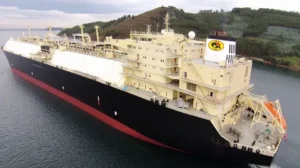
For the LPG deal signed separately in November 2025, under which India will import 2.2 million tonnes per year from the US, Crisil Intelligence confirmed that while the strategic advantages of diversification are real, “landed cost sensitivities linked to freight could shape the economics of oil marketing companies in the near term.”
The Price Gap: Verified Figures
The delivered price of LNG under Henry Hub-linked contracts in 2026 for city gas firms is expected to average $13.40 per million BTU, based on Argus forward curves for the US benchmark. State-controlled gas distributor GAIL’s Henry Hub-linked import price is around $12.80 per million BTU.
These figures sit in a sharply unfavourable position relative to alternatives, according to oil ministry data and Argus assessments:
| Gas Source | Price per MMBtu |
| Domestic gas, conventional fields | $6.55 |
| Imported LNG, crude-linked contracts (Qatar etc.) | $8.80 |
| Domestic gas, high-pressure fields | $9.72 |
| Spot LNG, west India delivery average (2025) | $11.90 |
| GAIL’s Henry Hub-linked US LNG | $12.80 |
| City gas firms’ Henry Hub-linked US LNG | $13.40 |
City gas firms pay GAIL a fixed premium of $6 per million BTU on top of 119 percent of Henry Hub prices, while GAIL’s own import formula from state-owned QatarEnergy is 115 percent of Henry Hub plus a fixed $5.66 per million BTU, a structure intended to reduce price risks for GAIL. The total volume at risk of being pricier than alternatives amounts to 2.95 million tonnes of LNG supply deals, making up 12 percent of India’s total LNG import volumes of approximately 25 million tonnes per year.
What Went Wrong
Three factors converged to turn a seemingly prudent hedging decision into a costly one.
First, Nymex futures for delivery at Henry Hub rose because of stronger US domestic and export demand, coupled with lower oil prices reducing the outlook for associated gas production. Second, the Indian rupee depreciated to an all-time low of 90 rupees against the dollar, amplifying the dollar-denominated import cost in rupee terms for every cargo. Third, the government slashed the allocation of cheaper domestic gas to city gas distributors in October 2024, removing the cushion that had previously allowed distributors to blend expensive US imports with affordable domestic gas.

The result: IGL and Mahanagar Gas both warned publicly that their margins are under pressure because of higher procurement costs under their US contracts.
The Geopolitical Dimension
The deals were not signed purely on commercial logic. India faced sustained pressure from the Trump administration to increase US energy purchases as part of broader trade negotiations aimed at reducing the bilateral trade deficit. Buying American LNG and LPG provided India with a diplomatic tool — a visible and quantifiable commitment to US exports — in exchange for goodwill on tariff negotiations.
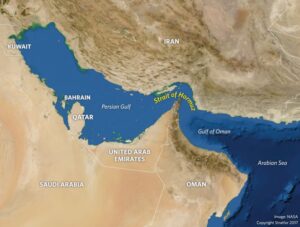
A further structural argument existed at the time of signing: India’s LNG imports through the Middle East pass predominantly through the Strait of Hormuz, a chokepoint that carries roughly 20 percent of globally traded LNG. The US-Israel conflict with Iran, which began in late February 2026, has since effectively halted tanker movements through Hormuz, with about 25 percent of globally traded crude volumes and 20 percent of LNG supply currently unable to leave the Mideast Gulf. In that context, the diversification rationale for US supply has been validated in ways its architects could not have fully anticipated when the contracts were signed.
The Strategic Contradiction
India now faces a dilemma it cannot easily resolve. Qatar and the UAE offer LNG at $8.80 per million BTU through Hormuz, roughly one-third cheaper in delivered cost than US supply. But Hormuz is now a war zone. The US offers supply security and geopolitical alignment, but at a price that is structurally uncompetitive and that squeezes the domestic gas distribution sector.
As Business Standard observed in December 2025, cheap oil-linked LNG supply to India consistently trumps US gas on pure economics even amid ongoing trade talks. The economics favour the Middle East; the geopolitics and supply security argument increasingly favour the United States. India’s energy policymakers are caught between the two, and ordinary consumers in cities served by IGL and Mahanagar Gas are paying the margin for that tension at their CNG pumps and kitchen stoves.
Note: All price data sourced directly from Argus Media (December 2025); freight and cost data from Crisil Intelligence via Business Standard (November 2025); deal structures from Argus Media and Reuters (February 2026); Hormuz crisis data from Argus Media (March 2026).









सकते हैं:
“An insightful piece highlighting the economic challenges behind India’s costly gas imports.”