

Wärtsilä’s Hydrogen Leap: A Potential Game-Changer for Energy , Industry and Global Economy

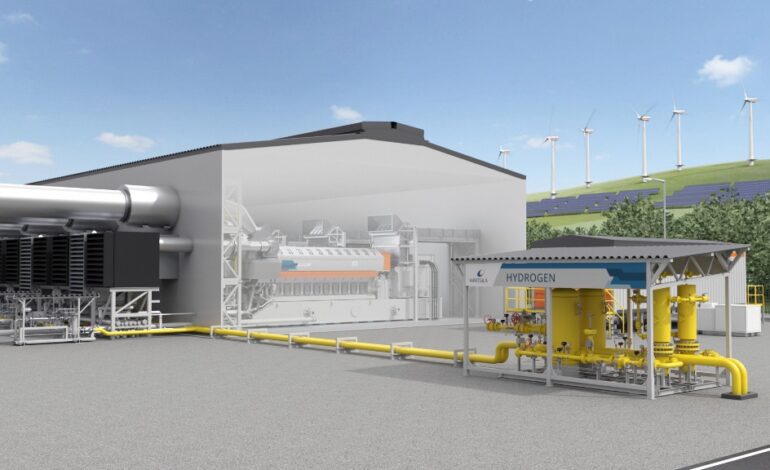
Wärtsilä Fires World’s First Large-Scale 100% Hydrogen Engine into Spain’s Power Grid
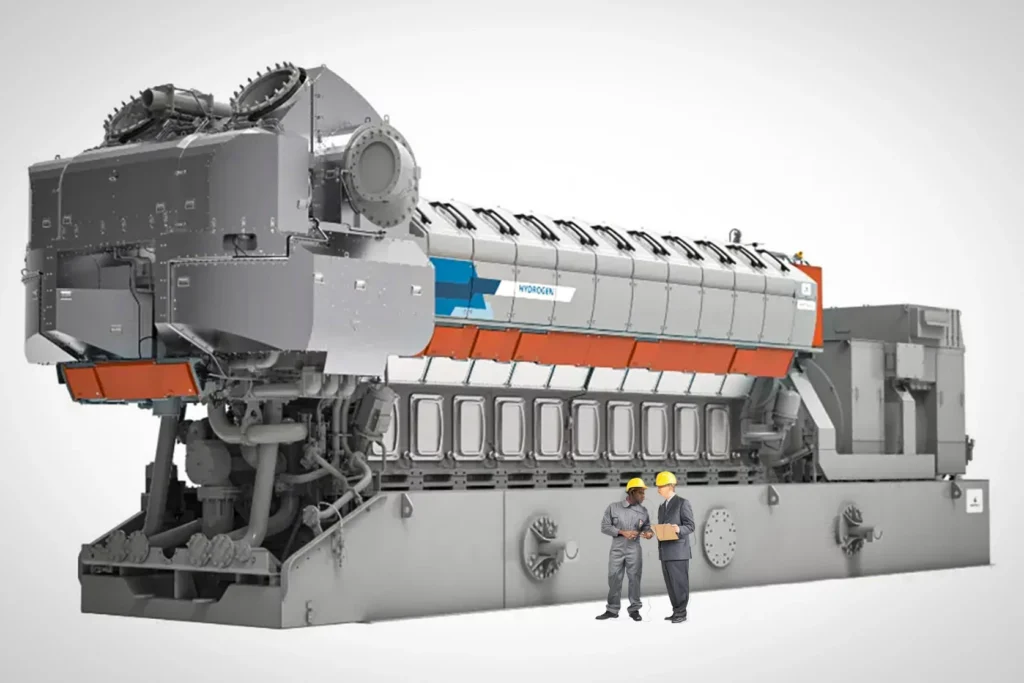
The Wärtsilä 31H2 has become the first large internal-combustion engine to run entirely on pure hydrogen under real grid conditions. The breakthrough proves that the hardware works, but the harder challenges of affordable green hydrogen and the infrastructure required to deliver it remain unresolved.
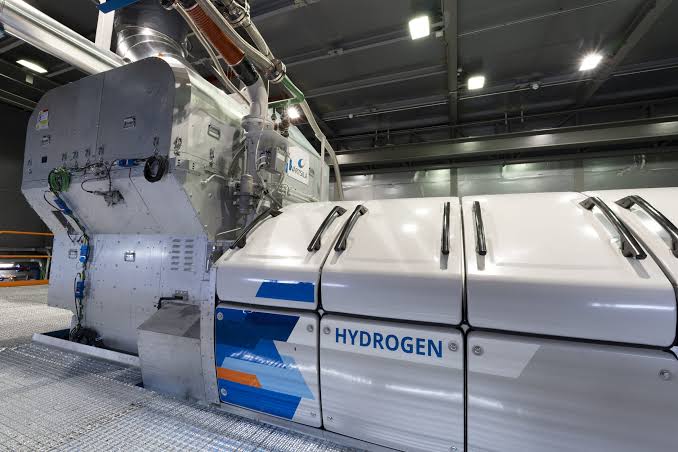
Bermeo, Spain — A 13-cylinder engine the size of a shipping container spent several days this month running on nothing but pure hydrogen, feeding electricity directly into Spain’s national grid. Finnish technology group Wärtsilä says it is the first time an engine of this scale has operated entirely on 100% hydrogen under real-world grid conditions — a milestone the company is calling proof that hydrogen-fired power generation has moved beyond theory.
The trial, conducted at Wärtsilä’s testing laboratory in the Basque coastal town of Bermeo, used the new Wärtsilä 31H2, a variant of the company’s Wärtsilä 31 platform, which it markets as one of the world’s most efficient multi-fuel four-stroke engine designs. Wärtsilä announced the result on June 11 and said customers from around the world travelled to Bermeo in June to watch the engine run as part of its commercial validation process.
A Step Beyond “Hydrogen-Ready”
Wärtsilä has spent several years building towards this point, first testing engines on blends of hydrogen and natural gas, then validating single-cylinder testbeds to prove the combustion and safety technology a pure-hydrogen engine would require. The Bermeo trial is the company’s first demonstration of a large engine running on 100% hydrogen rather than a blend, and it follows Wärtsilä’s earlier rollout of what it described as the world’s first large-scale, hydrogen-ready engine power plant — a plant built to run on hydrogen eventually, but not yet doing so.
That distinction matters. Hydrogen burns differently from natural gas or diesel: it has a faster flame speed and a much wider flammability range, which makes uncontrolled combustion and engine knock a real risk unless injection systems, ignition timing and even the metallurgy of the engine itself are redesigned. Hydrogen is also notorious for embrittling certain metals over time. Wärtsilä’s engineers have spent the development programme adapting the 31 platform’s hardware to handle those properties, and the Bermeo run is the first time those adaptations have been proven at full engine scale rather than in a laboratory test cell.
Built for a Grid Under Strain
Wärtsilä is positioning the technology as an answer to a specific, fast-growing problem: keeping the lights on as power grids fill up with wind and solar. The company points to projections that global renewable generation capacity will grow by close to 4,600 gigawatts by 2030, and argues that grids increasingly need fast, dispatchable backup power for the hours when wind and sun fall short, or when demand spikes — including from the data centres now being built to train and run artificial intelligence systems.
Rasmus Teir, Wärtsilä’s director of technology strategy and decarbonisation, described the Bermeo run as a test for where renewable power generation is headed, framing it as a response to the central challenge utilities face: keeping supply reliable as wind and solar take over a larger share of the grid.
Spain, which has pushed aggressively to cut its reliance on imported fossil fuels, was chosen partly because its grid already leans heavily on renewables, making it a realistic stand-in for the conditions a commercial hydrogen plant would face.
Wärtsilä says the same engine platform is also intended for industrial sites, manufacturing plants and off-grid locations that need constant, high-demand power but cannot easily plug into a renewable-heavy grid.
“This is a trial for the future of renewable power.” — Rasmus Teir, Director of Technology Strategy & Decarbonisation, Wärtsilä Energy
Burning Clean Doesn’t Mean It Arrived Clean
Hydrogen combustion itself releases no carbon dioxide, and it can also produce far lower nitrogen oxide emissions than diesel or heavy fuel oil if the combustion process and after-treatment systems are tuned correctly — engineering work Wärtsilä says it is continuing alongside the engine hardware.
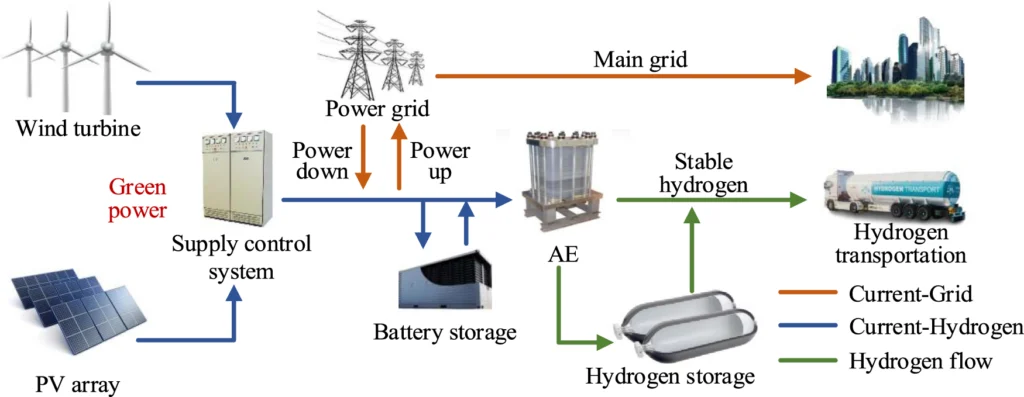
But none of that addresses where the hydrogen comes from. The climate case for the technology depends entirely on “green” hydrogen, made by splitting water with electricity from renewable sources. Most of the hydrogen produced today instead comes from natural gas, a process that carries substantial emissions of its own unless paired with carbon capture, which is not yet widely deployed.
Even setting aside how the hydrogen is made, the economics are unforgiving. Producing hydrogen through electrolysis consumes large amounts of energy, and converting electricity into hydrogen and back into power again loses a significant share of that energy along the way — losses that do not exist if the electricity is simply stored in a battery and used directly.
That calculation means hydrogen engines are likely to make economic sense mainly in situations where direct electrification is not realistic, such as long-duration backup power, heavy industry or shipping, rather than as a general substitute for batteries or grid-scale storage.
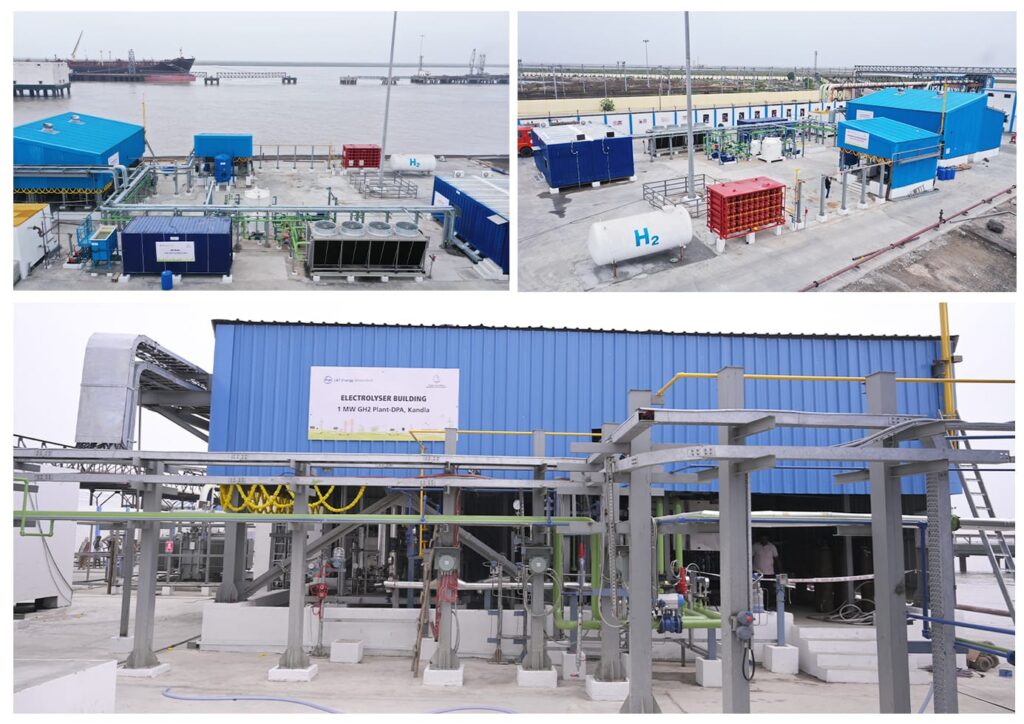
Then there is the question of getting the fuel to the engine at all. Hydrogen is difficult to store and move at scale, requiring high-pressure compression, cryogenic cooling or chemical carrier molecules, along with new pipelines, safety codes and a trained workforce — almost none of which exists yet outside pilot projects.
Where It’s Likely to Show Up First
- Islands and isolated grids that currently burn diesel for power, where local renewable generation and electrolyser capacity can be built alongside the engines.
- Ports and short-sea shipping routes, where hydrogen bunkering infrastructure can be concentrated in a small number of locations rather than spread across an entire fuel network.
- Industrial sites, data centres and peaking power plants that need reliable, zero-carbon backup and can secure a dedicated hydrogen supply rather than relying on an open market.
What Comes Next
Wärtsilä’s own framing is notably restrained for a company announcing a world first: the Bermeo trial, it says, opens “a clear pathway” towards fully renewable power systems rather than completing one.

Commercial deployment will depend on several things happening in parallel — continued engineering work to cut NOx emissions and improve durability, a build-out of electrolyser manufacturing and renewable generation capacity, pilot projects that pair hydrogen production directly with engine customers, and regulatory frameworks that make hydrogen handling safe and routine rather than experimental.
None of that happens on the timeline of a single engine test. But Wärtsilä has now shown that the engine itself is no longer the obstacle — which shifts the pressure onto everyone else in the hydrogen supply chain to catch up.










This article highlights why hydrogen is increasingly being seen as a crucial piece of the clean-energy puzzle. Wärtsilä’s successful demonstration shows that the challenge is no longer just technological feasibility, but scaling infrastructure, investment, and policy support. If renewable energy needs reliable backup power, breakthroughs like this could play a transformative role in accelerating the global energy transition