

Freedom Beyond the Nation-State: Why Rojava’s Radical Experiment Still Matters

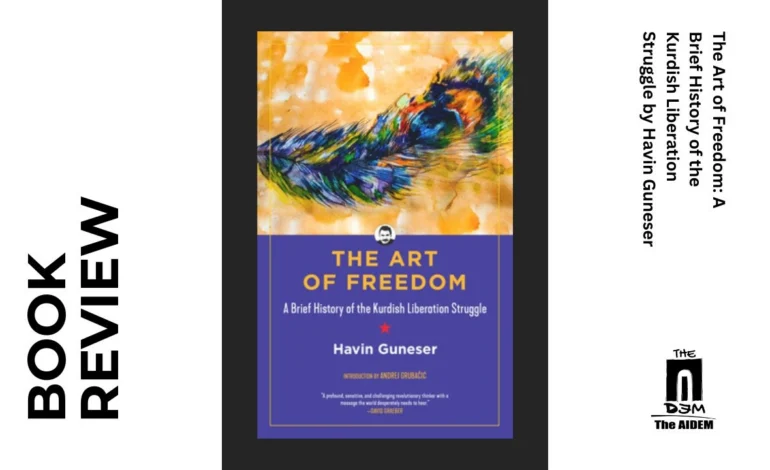
In a world increasingly defined by authoritarianism, ethnic nationalism, religious extremism and deepening social inequalities, the search for new democratic possibilities has become an urgent political question. Havin Guneser’s The Art of Freedom: A Brief History of the Kurdish Liberation Struggle demands renewed attention in this context . The book is not merely a history of a people’s resistance; it is an exploration of an alternative vision of society built around grassroots democracy, women’s liberation and ecological consciousness.
The global resonance of “Jin, Jiyan, Azadi” (Woman, Life, Freedom) has drawn attention to the Kurdish movement’s radical democratic experiment in Rojava. As West Asia faces continuing crises, this brief but powerful work raises urgent questions about freedom, self-determination and the possibility of building societies beyond traditional structures of power.
—
The world has not forgotten Jina Amini!
Jina Amini (Mahsa Amin), a 22-year-old Kurdish woman, was brutally beaten to death by Iran’s morality police for “improperly wearing the hijab.” In September 2022, she was arrested in Tehran while travelling from her hometown of Saqqez in Iran’s Kurdistan province. Three days later, she died in custody due to severe head injuries sustained from the assault. At her funeral and in the massive protests that followed, the Kurdish slogan “Jin, Jiyan, Azadi” (“Woman, Life, Freedom”) rang out powerfully. The protests grew into a major uprising, during which many women publicly removed their hijabs or cut their hair in defiance. By the end of November, Iranian human rights organisations reported that security forces had killed at least 307 protesters. The Kurdish slogan “Jin, Jiyan, Azadi”, raised during these demonstrations, gained global attention.

The roots of this powerful slogan lie in the Kurdish freedom movement, which has long placed the central role of women in building a free and democratic society at the heart of its struggle.
Havin Guneser’s book The Art of Freedom: A Brief History of the Kurdish Liberation Struggle (2021) offers a clear and concise introduction to the history of the Kurdish freedom movement, with its strong emphasis on democracy, women’s equality, and ecological awareness. Based on three lectures delivered by Guneser in 2018 at the California Institute of Integral Studies in San Francisco, the book provides a comprehensive overview of the historical background, theoretical evolution, and practical experiments of the Kurdish struggle.
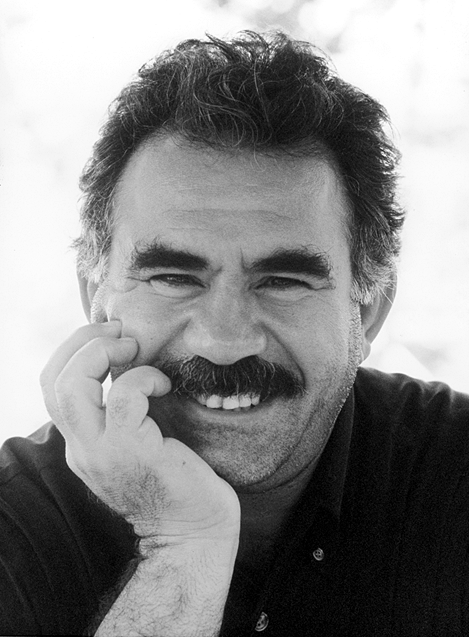
Havin Guneser is a prominent spokesperson for the Kurdish movement and a leading translator of the writings of Abdullah Öcalan — the leader of the Kurdistan Workers’ Party (PKK) and one of the most influential voices for Kurdish self-determination. In this book, she explains in detail the concepts of Democratic Confederalism and Jineology (the science of women), both during the lectures and in the engaging question-and-answer sessions that follow.
During the Syrian civil war in 2011–12, a significant political uprising and social experiment emerged in north-eastern Syria. Havin Guneser speaks in detail about the social and political history of Kurdistan that led to the Rojava movement, as well as the broader global context that shaped it. The intense political and cultural repression, combined with severe economic hardships faced by Kurds living under nationalist and highly centralized states, eventually led to the formation of the PKK (Kurdistan Workers’ Party) in the late 1970s — both as an armed organisation and a broad popular movement. The Turkish state adopted a policy of complete denial of Kurdish existence. As a result, Kurds — who make up roughly 20% of Turkey’s population — became an ethnic group subjected to systemic discrimination. The words “Kurdish” and “Kurdistan” had already been banned since the early 1920s. Furthermore, the use of the Kurdish language and any public expression of Kurdish identity remained criminal offences until the early 1990s.
Under the leadership of Abdullah Öcalan, the central mission of the revolutionary socialist national liberation movement was the “decolonisation of Kurdistan.” By placing women at the heart of the struggle, the movement adopted the slogan: “A country cannot be free unless its women are free.” From the 1990s onward, this approach actively promoted women’s revolutionary participation. The increasing presence of women in the armed forces began to transform patriarchal social structures and collective perceptions of gender relations in Kurdistan. Following Öcalan’s arrest in 1999, the liberation movement shifted its focus away from establishing an independent nation-state. Instead, it developed an alternative system of governance based on the principle of Democratic Confederalism.
Democratic Confederalism, developed by Abdullah Öcalan in 2005 from his prison cell, forms the main ideological foundation of the Kurdish freedom movement. It is a political alternative — an alternative to the state itself. Its goal is to move beyond the traditional nation-state model and build a stateless democracy rooted in direct, bottom-up democratic participation.
Democratic Confederalism is a bottom-up democratic system. It rejects the centralised power of the state. Its core components include decentralised self-governance, direct democracy, Jineology (the science of women), self-defence, a cooperative economy, and political ecology. The Kurdish freedom movement does not aim to create a separate, independent Kurdish nation-state. Instead, it seeks to establish democratic federal structures within the existing borders of the four countries — Turkey, Syria, Iraq, and Iran. This idea was implemented on the largest scale in Rojava, in northern Syria, during the Syrian civil war. Alongside the military struggle against ISIS, efforts were made to build an alternative society through communes, women’s organisations, and a multi-ethnic administration.
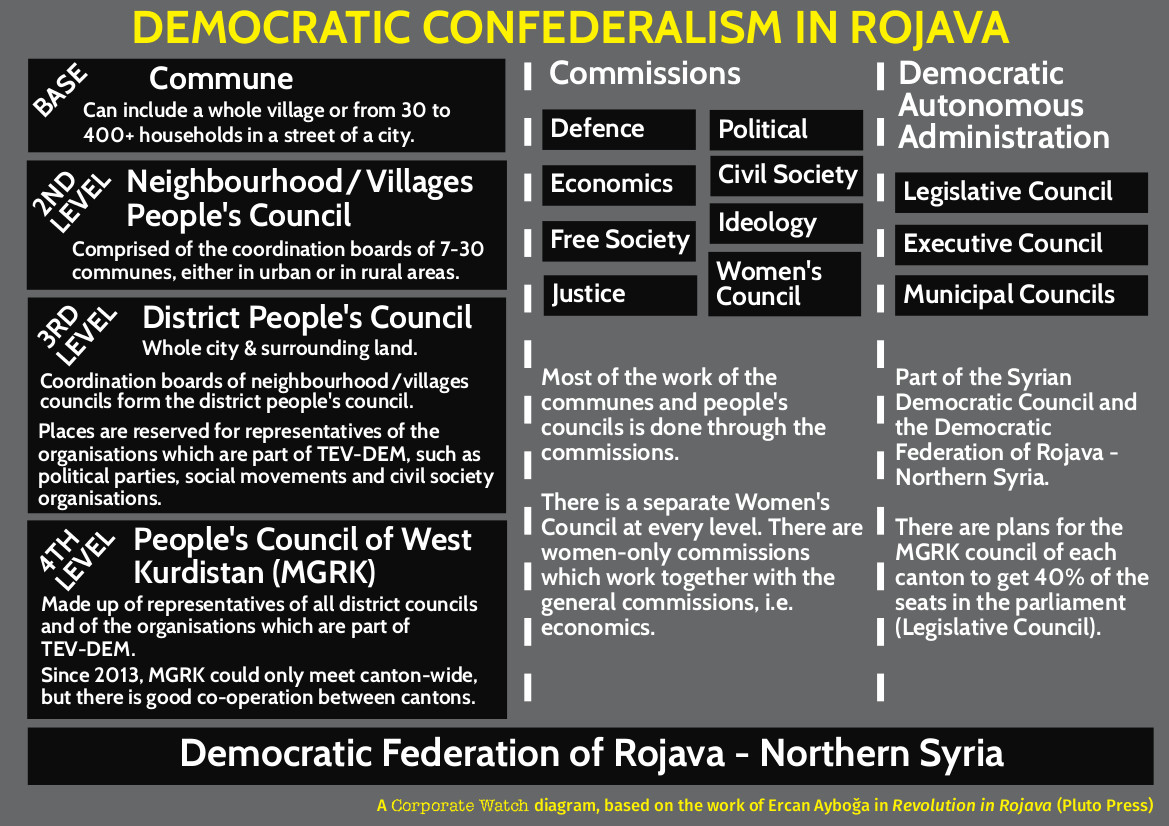
Democratic Confederalism is increasingly viewed as an alternative model to nationalism, religious extremism, patriarchy, and capitalism in the Middle East. The concept has also inspired various radical democratic and eco-feminist movements around the world.
Havin Guneser links patriarchy — a system nearly 5,000 years old — directly to the emergence of state civilisation. She explains how the gradual development of male dominance led to class domination, racism, and colonialism, all of which legitimised this male-centred system. Drawing on Abdullah Öcalan’s observations, she discusses how the state and men established dominance over women.
Overcoming early matriarchal systems was a strategically crucial moment in history. Without it, neither patriarchy nor state power could have triumphed. A patriarchal society requires a hierarchical and authoritarian structure. The establishment of patriarchal structures was a foundational step toward class division and the formation of the state.
Öcalan observes that modern capitalist society represents the continuation and culmination of all previous exploitative societies. In simple terms, capitalism, the nation-state, and the dominant, exploitative male are one and the same. Capitalist modernity cannot survive through political and military repression alone — it also requires ideological domination. While capitalism uses religion to control society’s knowledge, it uses nationalism to control classes and citizens. The purpose of gender discrimination, Öcalan argues, is to deny women any hope of change.
More specifically, according to Öcalan, woman was the first colony. All other forms of domination — including colonialism and capitalism — are extensions of this original relationship of domination. Women’s enslavement was achieved through ideological subjugation, physical force, and economic appropriation. He emphasises that women must organise themselves to resist this. This is why the Rojava movement actively works to give women central importance in all spheres of society and places them in leadership positions.
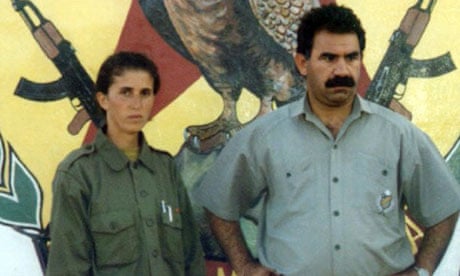
The fundamental idea of Jineology — “the science of women” — is the deep connection between woman and free life. Abdullah Öcalan played a major role in the development and application of Jineology, alongside prominent women fighters such as Sakine Cansız, who played a major role in the movement. Despite resistance and negative reactions from some male members within the organisation, Öcalan strongly supported opening political, social, cultural, ideological, and organisational spaces for women.
The women’s organisations also went through several phases of reorganisation. Key milestones include the founding of the Free Women’s Association of Kurdistan (YAJK) in 1995, the Kurdistan Women’s Workers’ Party (PJKK) in 1998, the Free Women’s Party (PJA) in 2000, and the High Women’s Council (KJB) in 2005. These organisations often moved beyond traditional leftist thinking and conventional party structures to adopt broader and more comprehensive democratic forms.
Because sexuality has historically played a central role in colonisation and the exercise and maintenance of power, the women’s freedom movement has embraced the concept of “Eternal Divorce” — meaning a liberated sexuality free from domination and enslavement. Öcalan believes it is essential to question not only women’s freedom but also men’s freedom. This is why the Kurdish freedom movement has made “Killing the Hegemonic Man” a core principle of its democratic socialism. The movement has worked to convince both Kurdish society and male revolutionaries that the enslavement of women does not only affect women — it also robs men of their own freedom.
At just 192 pages, this book offers a powerful discussion on revolutionary feminist politics, strong democratic ideals, and the possibilities of alternative models in the Middle East. Given that the Kurdish issue remains at the heart of conflicts in the region, the book is highly relevant to the ongoing Middle East crises.
The democratic confederalist experiment in Rojava continues to face severe attacks. The current Syrian interim government, backed by Islamist militias, has launched large-scale offensives against the autonomous region. Turkey regularly carries out airstrikes and other human rights violations, branding the Rojava administration and its armed forces as “terrorists.” Despite this, armed resistance and other forms of defiance continue in Rojava. The movement also strongly demands the release of Abdullah Öcalan, who has been imprisoned for the past 27 years.
The book invites readers to consider important questions: How can we guarantee autonomy, sovereignty, and self-determination? How should we engage with existing nation-state structures? The Kurdish liberation struggle offers practical examples in the search for answers. As Havin Guneser powerfully concludes, “Neither surrender nor hopelessness are an option.” This book on The Art of Freedom presents us with inspiring alternatives worth thinking about.
(Note: In Kurdish, the word “Heval” means “Comrade.”)
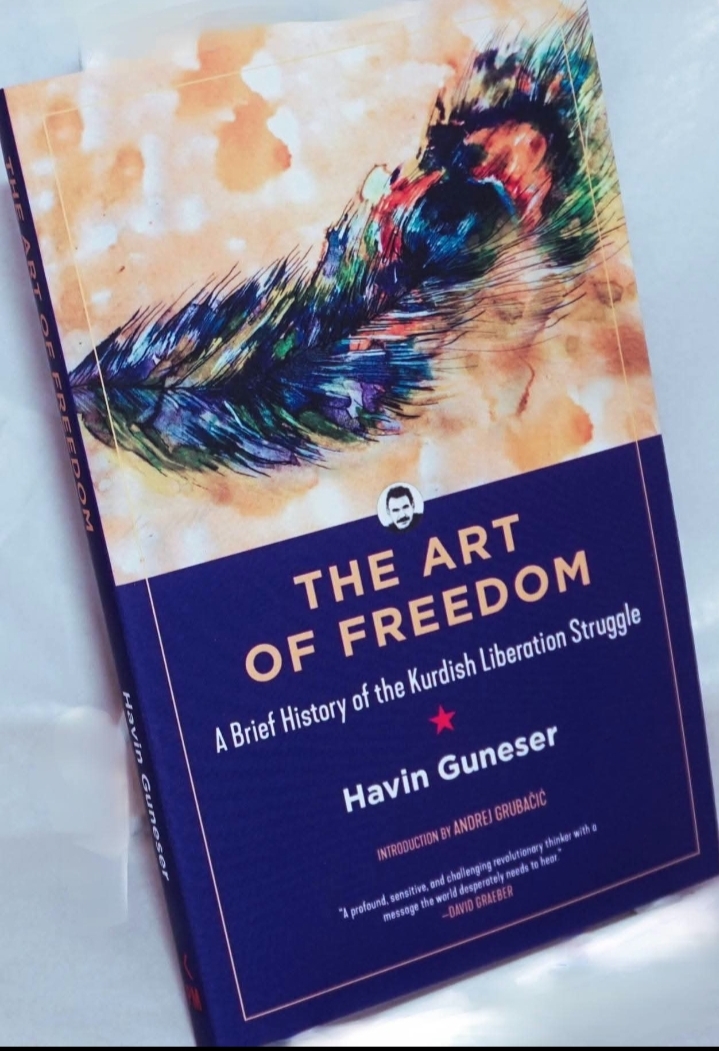
The Art of Freedom: A Brief History of the Kurdish Liberation Struggle
Author: Havin Guneser
Publisher: PM Press, 2021
Pages: 192









“Rojava’s story challenges the assumption that freedom must always be tied to the traditional nation-state. The experiment’s commitment to community-led governance, coexistence, and women’s leadership makes it one of the most intriguing political projects of our time, despite the immense challenges it faces