

What Makes a Good MLA?

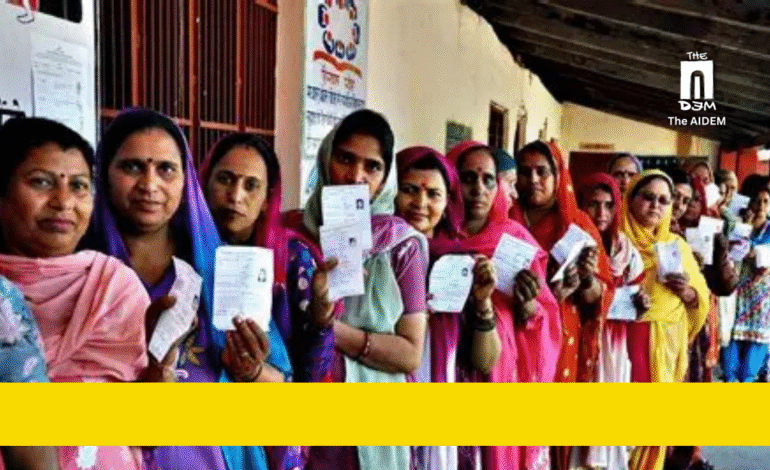
What qualities make a legislator truly effective — and how should voters judge them? Political analyst Gaurav Tiwari examines this question of immense contemporary relevance with methodical precision.
“What will you do if you become an MLA of your constituency?” I asked Rajhans, a young voter from Siwan district in Bihar.
Rajhans, a bright young political scientist recently awarded a PhD from Banaras Hindu University, started ambitiously — by proposing to set up a degree college in the constituency. Then he paused, revised his answer, and revised it again, steadily realising how little of it an elected legislator can actually deliver within a five-year term.
The conversation soon arrived at the real question: what can an MLA actually do? And, crucially, what qualities make one effective at doing it?
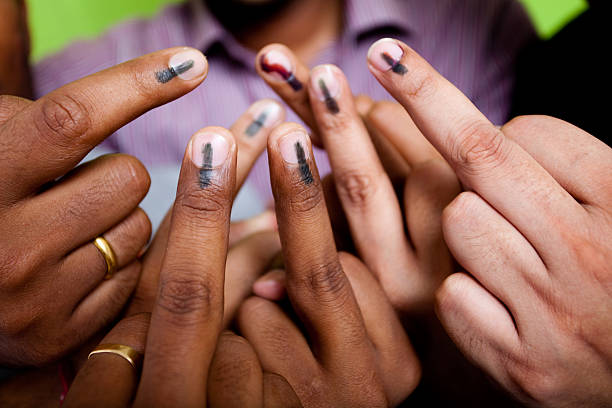
Most voters, shaped by newspaper headlines and street-level politics, see their MLA as a provider of civic amenities — roads, water, electricity, hospital access, and government housing schemes. Yet many of these fall squarely under the district administration, not the legislature. An MLA’s constitutional mandate is something quite different.
What the Constitution Imagined
“The Government of India Act, 1935, was replicated in the Indian Constitution, following the Westminster model,” explains Sanjay Hegde. “Members of Parliament or a legislative assembly were supposed to legislate and deliberate — not direct or control the executive.”
Formally, an MLA’s job is to introduce or amend laws, vote on legislation introduced by others, and question ministers about their schemes or issues affecting the constituency.
In practice, however, a parallel and quite different role has taken root. Through organic demand rather than constitutional design, MLAs have increasingly assumed direct or indirect authority over government officials.
“Demand for planned resources, which were scarce, perhaps led to this development,” Hegde notes.
The shift away from legislative work as the primary role hastened with the introduction of the MPLAD scheme by the P.V. Narasimha Rao government in 1993. Initially announced for Members of Parliament, with states soon rolling out their own versions for MLAs, the scheme brought MLAs into direct collaboration with the local bureaucracy on development spending. “The MPLAD scheme changed the nature of an MLA’s responsibility and relationship with the local bureaucracy, shifting it from oversight to collaboration,” says Rajni Ranjan Jha, retired Professor of Political Science at Banaras Hindu University.
One further constraint narrows legislative independence: the Tenth Schedule, introduced by the 52nd Constitutional Amendment in 1985, requires MLAs to follow the party whip. Vote against a Bill introduced by your own ministers, and you risk losing your seat.
“MLAs can’t go against the party whip,” Hegde says simply, “unless they want to lose their membership.”
The MLA as a Bridge
Nitin R. Gokarn, a retired IAS officer from the Uttar Pradesh cadre, maps the terrain plainly:
“Law-making is the formal responsibility. Informal responsibilities — from which an MLA derives real power — include resolving local issues such as roads, schools, health access, or trouble with the police.”
For matters beyond local jurisdiction — state highways, higher education, or large infrastructure projects — the MLA’s role shifts to that of an intermediary.
“An MLA is a link between constituency members and the government,” says Sunita Aron, senior journalist and former Executive Editor of the Hindustan Times in Uttar Pradesh.
This bridging role also makes MLAs effective watchdogs.
“A good MLA can be an effective auditor of government schemes because they are more connected to the grassroots,” Gokarn says. “They can check errant officers and corruption at the grassroots level by highlighting these issues through the Assembly or the media.”
A natural concern is whether an opposition MLA receives the same hearing from bureaucrats as one from the ruling party.
Gokarn is measured: “Usually, all MLAs get access and, barring issues of political significance to the ruling government, their concerns regarding routine schemes and policies are fairly considered.”
The informal leverage is real, even if constitutionally unrecognised.
“There is no constitutional provision that places the executive under an MLA’s direction,” Hegde is careful to add.
“Whether you are the head of a family or an MLA, the role is the same,” reflects Gokarn. “You are a custodian of public confidence, and you provide direction to your constituency.”
Four Qualities That Matter
1. Integrity
Gokarn recalls a telling episode.
An MLA once approached him — when he was Principal Secretary of the Public Works Department — to flag corruption in a road-laying project and demand a technical audit. The following week, the same MLA returned and asked for the audit to be deferred, claiming he was now satisfied. Gokarn refused.
The audit revealed shoddy work, and departmental action followed.
“But the MLA lost my respect,” Gokarn says.
“An MLA should be honest with officers if you want their cooperation.” — Satyanarayan Sharma, seven-term MLA, Chhattisgarh
Aron adds the media dimension:
“An MLA’s integrity builds the confidence of the press. If an MLA is repeatedly found to be correct in the information they provide, trust improves.”
Credibility, once lost, is nearly impossible to rebuild.
2. Accessibility
“One quality I have seen in all MLAs who repeatedly win elections is their availability and accessibility to ordinary people,” says Aron.
The mechanism is straightforward: consistent contact with constituents creates a feedback loop.
“If you regularly remain in touch with your constituents, they keep you informed about developments in the constituency,” says Satyanarayan Sharma, a veteran Chhattisgarh politician who served seven terms as an MLA and twice as a minister in undivided Madhya Pradesh.
“Their feedback helped me in legislative work by showing me the right issues to raise in the Assembly.”
3. Listening
“One should be a patient listener,” Sharma insists.
“If someone makes the effort to come and speak to you, you should give them time.”
Hegde frames it as a professional necessity:
“Good listening is essential because effective legislative work requires engagement with multiple stakeholders.”
A legislator who does not listen cannot truly represent.
4. Administrative Knowledge
“You can’t ring up a minister to get a choked drain cleaned, even if he is your friend.”
— Sanjay Hegde, Senior Advocate, Supreme Court of India
Knowing the right lever — which department, which official, and which level of escalation — is what separates MLAs who deliver from those who merely promise.
“An MLA must know the administrative set-up well to get work done quickly without wasting precious administrative time,” Hegde adds.
Gokarn agrees:
“Knowledge of the right levers helps in the quick disposal of work. If an MLA understands how the system works, she can conduct effective follow-ups that facilitate the speedy resolution of complaints.”
A Voter’s Checklist
These qualities translate into four concrete markers that citizens can use when evaluating candidates:
- Educated — Research shows that when educated leaders and their constituents share aligned priorities, those leaders are more likely to attract investment and drive reform.
- Honest track record — Evidence links the election of candidates with criminal backgrounds to higher household poverty and lower literacy levels in their constituencies.
- Administrative know-how — Understanding how the system works ensures that problems are solved, not merely heard.
- Approachable — Especially for women and marginalised groups, an MLA who is accessible and free from the shadow of criminal antecedents is far more likely to be genuinely useful.
Ultimately, in a democracy, the quality of our lives depends on the quality of the people we elect. Without a clear framework for evaluating candidates, we cannot choose the right representatives.
The same framework is equally useful for aspiring politicians: it shows them not only what voters want, but also what they themselves need to become.
The next time a candidate comes to your door or takes the stage at a rally, ask yourself: Does she listen? Does she understand the system? Does she stand by her word?
That is what makes a good MLA.









**“This article offers a thoughtful and timely reflection on what truly makes a good MLA. Beyond electoral success, it highlights the importance of accountability, accessibility, empathy, and a genuine commitment to public service. A valuable reminder that effective representation is measured not by promises made, but by the trust earned and the lives improved.”**