From mithun to Jersey and desi breeds, the Bharatiya Janata Party’s shifting theology of the cow has one enduring constant: the animal is a prop, while the real sacrifice is truth, consistency, and minority rights.
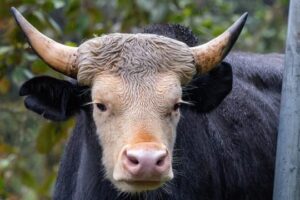
Sudhanshu Trivedi’s televised theology of cattle has handed India a bizarre catechism. A desi cow is gau mata. A Jersey cow is merely a milk machine. A mithun in the North East is “not a cow” at all—and therefore fair game for the slaughterhouse. The political utility of this taxonomy is obvious. If the definition of “cow” can be altered mid-sentence, no one in the ruling party ever has to answer the question that haunts India’s abattoirs, tanneries, and farms: exactly which animals may be killed, and on what moral basis?
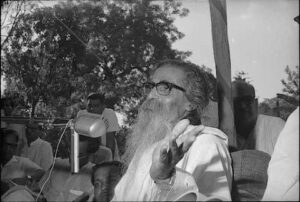
Behind this slippery language stands the blunt candour of M.S. Golwalkar, the Rashtriya Swayamsevak Sangh chief whose cow-protection agitation in the 1960s foreshadowed today’s politics. In accounts by Verghese Kurien and by scientists who served with him on a government committee, Golwalkar openly admitted that the nationwide campaign for a cow-slaughter ban was launched “actually just politics”—a tactic to corner the government and to use the cow as a marker of Indianness, not as an exercise in ethics or economics. The blueprint was clear: weaponise sentiment, ignore complexity, and let someone else count the carcasses.
Today, Sudhanshu Trivedi recycles that script for prime-time television. When confronted with the simple fact that large parts of the North East ritually sacrifice and eat bovines, he does not address the contradiction between a supposedly “national” cow taboo and regional autonomy. He merely renames the animal. That cow, he insists, is not gau mata but mithun—as though a change of label can erase blood, history, and culture. When the dominance of Jersey and cross-bred cattle in India’s milk economy is raised, the response is not honestly about dependence on “foreign” breeds, but a retreat into mysticism about the supposedly unique virtues of “Indian” cows.
A serious politics of animal ethics would begin with clear categories and uncomfortable truths. It would admit that most of India’s exported “beef” is buffalo meat; that countless unproductive cattle are quietly sold into clandestine slaughter networks by farmers who cannot afford to keep them; and that the dirtiest work with dead animals has historically been dumped on Dalit and Muslim communities, who are then vilified as “cow killers”. It would also acknowledge that scripture and history are untidy—that cow sacrifice and beef eating existed in multiple Indian religious traditions—and that science recognises no metaphysical distinction between the flesh of a mithun, a buffalo, and a desi cow.
Instead, the Bharatiya Janata Party offers a theology of convenience. When violence against Muslims and Dalits must be justified, the “cow” expands to include every bovine hide that can be draped over a corpse. When farmers and exporters need an escape route, the “cow” contracts, and suddenly buffaloes, Jerseys, and mithuns become something else—mere livestock, not mothers. The borders of sacredness shift neatly with the borders of electoral calculation.
In this light, a hard question must be posed—not in a television shouting match, but on the national record.
If mithun is “not a cow”, will the Bharatiya Janata Party state clearly, in law and in its manifestos, that its slaughter is acceptable—and on what grounds: zoological, scriptural, or purely political? If Jersey and cross-bred cows are not gau mata, are they exempt from the party’s claimed moral red lines on bovine killing, or will they be quietly sacrificed while speeches continue to sanctify the desi cow? If M.S. Golwalkar himself could confess that the earlier agitation was “just politics”, what evidence is there that today’s campaigns, lynch mobs, and legislative bans are anything more than an updated version of the same cynical strategy?
More fundamentally, how does a party that claims to defend all living beings justify a hierarchy in which one set of animals is elevated to divinity while others, equally sentient, are consigned to the knife—and entire human communities are criminalised for performing the dirty labour that sustains the cattle economy? If the Bharatiya Janata Party truly believes in compassion, why does its outrage evaporate at the edge of a breed, a border, or a ballot box?
Until Sudhanshu Trivedi and his party can answer, in plain language, three simple questions—which bovines may be killed, which must be protected, and why exactly those and not others—every invocation of gau mata will remain what M.S. Golwalkar once acknowledged the cow to be: not a principle, but a political weapon, turned not against slaughterhouses, but against citizens.