
Why Ladakh Deserves the Sixth Schedule: Debunking the Myths


In the wake of the tragic violence that erupted in Leh on September 24, 2025—where protests demanding statehood and constitutional safeguards under the Sixth Schedule for Ladakh turned deadly, claiming four lives and injuring dozens amid clashes with security forces—Ladakh today stands at a profound constitutional crossroads, presenting a grave and unprecedented challenge to the very foundations of India’s federal democratic framework
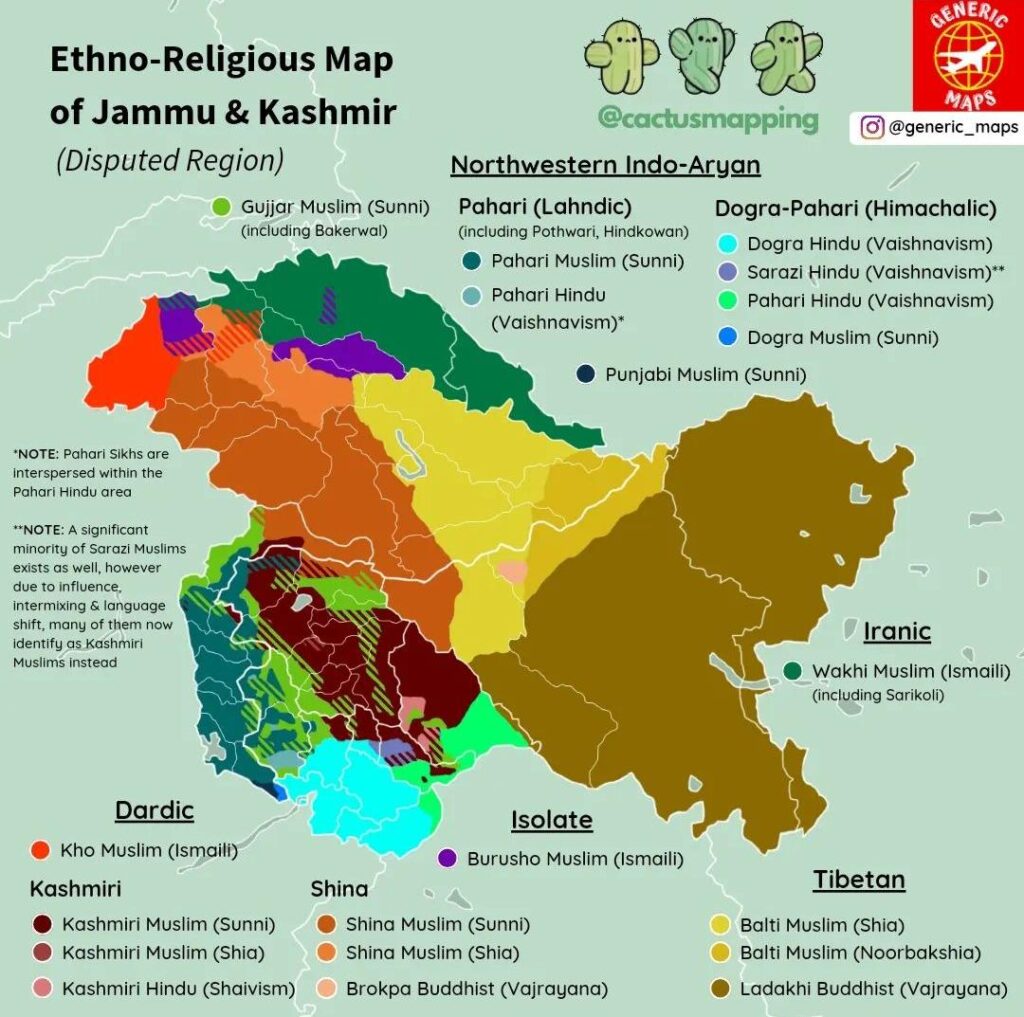
With more than 97% of its population belonging to Scheduled Tribes—a demographic concentration without parallel anywhere else in the country—Ladakh urgently requires inclusion under the Sixth Schedule of the Constitution through a dedicated constitutional amendment, thereby securing the substantial degree of autonomy that this Schedule uniquely guarantees to tribal regions.
The removal of constitutional safeguards following Ladakh’s reorganisation as a Union Territory without legislature in 2019 has rendered the region acutely vulnerable not only to political marginalisation but also to escalating threats of ecological degradation, cultural erosion, and demographic transformation, given its overwhelmingly indigenous character. Extending Sixth Schedule protections to Ladakh is therefore not merely a political demand; it is an inescapable constitutional imperative that alone can safeguard the identity, land rights, cultural heritage, and self-governing traditions of its indigenous inhabitants.
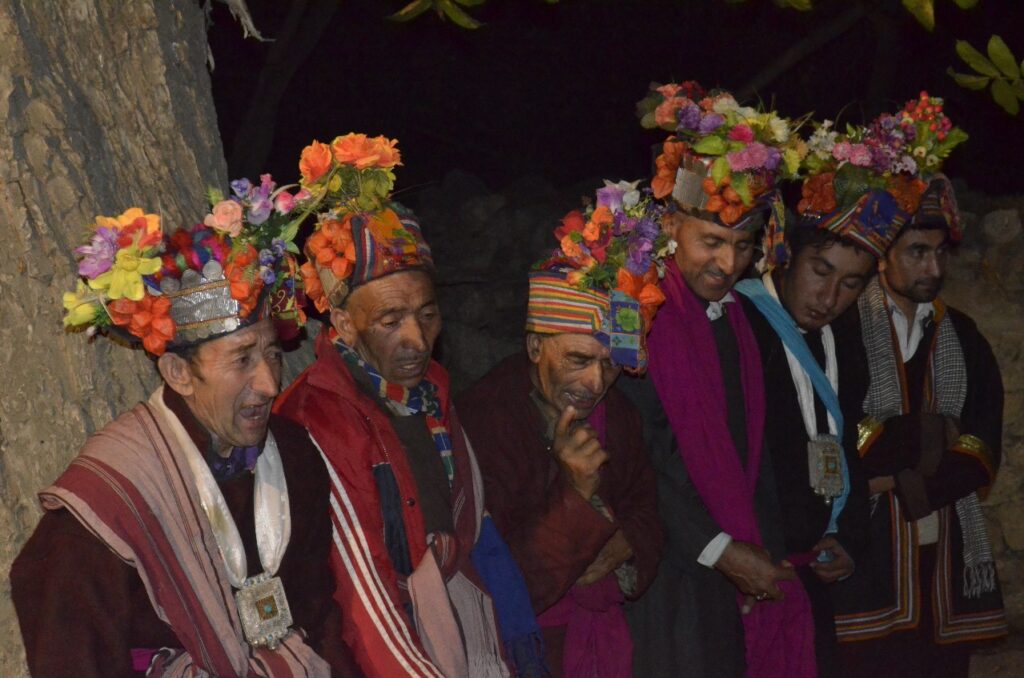
The indigenous communities of Ladakh—the Balti, Beda, Brokpa, Bot (including Changpa), Purigpa, and others—depend for their survival and flourishing upon delicately balanced ecological, economic, and socio-cultural systems. These systems can be meaningfully preserved and strengthened only through the robust autonomy provided by the Sixth Schedule. Notably, the Brokpa community, settled in the Aryan Valley of Ladakh, constitutes one of the largest autochthonous tribal groups in the region and is widely regarded as direct descendants of ancient Indo-Aryan tribes, carrying immense historical, anthropological, and civilisational significance. Although the Sixth Schedule, as enshrined in Article 244(2) read with Articles 275(1) of the Constitution, was originally designed to protect the distinct rights, customs, and ways of life of tribal populations in parts of Northeast India—principally Assam, Meghalaya, Tripura, and Mizoram—its underlying constitutional philosophy and protective architecture are eminently applicable to Ladakh.
By empowering Autonomous District Councils with quasi-legislative, executive, judicial, and financial powers, the Sixth Schedule enables tribal communities to govern themselves in accordance with their customary laws and local priorities. This mechanism was explicitly crafted to ensure that tribal land, forests, water resources, and cultural institutions remain under effective local control, insulated from external political domination or predatory commercial exploitation. Ladakh’s present circumstances align seamlessly with this constitutional vision.
Under the Sixth Schedule, District Councils would acquire the authority to legislate on crucial subjects such as land allotment and usage, management of forests and water bodies, regulation of village and community administration, inheritance and marriage under customary law, and the control of money-lending and trading by non-tribals—powers that are indispensable for protecting fragile high-altitude ecosystems and traditional livelihoods. The Councils also possess judicial powers to adjudicate civil and criminal matters through District Council Courts and Village Councils applying tribal customary laws, thereby ensuring justice that is culturally rooted and socially legitimate.
Apex Court Ruling
The Supreme Court of India, in its landmark judgment in T. Cajee v. U. Jormanik Syiem (1961) case, authoritatively recognized that District Councils under the Sixth Schedule constitute genuine organs of tribal self-government endowed with inherent administrative authority. Crucially, neither Parliament nor any state legislature can unilaterally override or dilute laws pertaining to Scheduled Areas without the concurrence or recommendation of the concerned Autonomous District Council and, where necessary, the Governor. This constitutional design guarantees authentic tribal self-rule while preserving the delicate ecological and cultural fabric of the region.
Prior to the historic reorganisation of Jammu & Kashmir in August 2019, Ladakh benefited from robust constitutional protections under Article 370 and Article 35A, which acted as impregnable legal shields safeguarding land ownership, permanent residency rights, employment, and cultural preservation for its people. The abrogation of these provisions stripped Ladakh of its special status, leaving its overwhelmingly tribal population in a state of constitutional limbo and heightened vulnerability. Today, governance is exercised through the Ladakh Autonomous Hill Development Councils (LAHDC) of Leh and Kargil. Yet these bodies, despite their commendable efforts, remain creatures of ordinary legislation, bereft of constitutional status and endowed only with delegated administrative functions rather than substantive legislative or judicial authority. This has created a glaring democratic deficit and a palpable governance vacuum.
Land Alienation
In the absence of Sixth Schedule safeguards, local communities exercise only nominal control over their ancestral lands, natural resources, and cultural institutions. The ever-present fear of large-scale land alienation to non-tribals and corporate entities now looms larger than ever, posing an existential threat to the fragile high-altitude cold desert ecosystem and to the traditional pastoral livelihoods of communities such as the Changpa.
Unregulated tourism, unchecked infrastructure projects, and commercial development have already begun to strain precious water resources, degrade pastures, disturb wildlife corridors, and disrupt the region’s ecological equilibrium. The massive protests and complete shutdowns witnessed across Ladakh in September 2025, jointly led by the Leh Apex Body (LAB) and the Kargil Democratic Alliance (KDA), powerfully underscored deep-seated apprehensions about irreversible demographic change, cultural dilution, and ecological collapse resulting from the absence of constitutional protections.
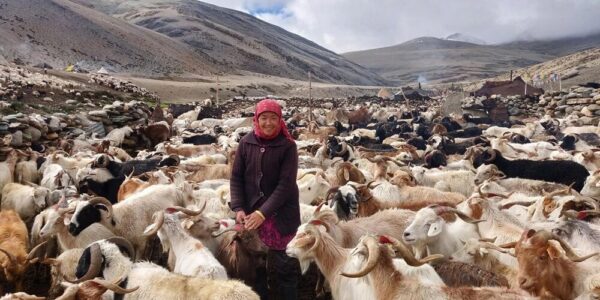
For the people of Ladakh, inclusion under the Sixth Schedule represents the only path to permanent, constitutionally guaranteed self-governance that can secure their linguistic diversity, cultural heritage, land rights, and environmentally sustainable future. Without such inclusion, the promise of genuine self-rule in India’s only tribal-majority Union Territory will remain an elusive mirage, forever beyond reach. Culturally, the indigenous communities of Ladakh confront accelerated erosion of their languages, oral traditions, and customary practices in the absence of iron-clad legal safeguards.
Communities such as the Balti, Brokpa, and Purigpa, in particular, fear that without Sixth Schedule protections, their centuries-old identities, traditional educational systems, and unique ways of life will be rapidly overwhelmed. The sustained agitation spearheaded by apex civil society organisations including the Leh Apex Body and the Kargil Democratic Alliance reflects a profound and widespread anxiety among Ladakh’s people over the potential permanent loss of ancestral rights, democratic voice, and the right to shape their own sustainable
future. The demand for the Sixth Schedule is therefore not just a regional aspiration—it is a national constitutional obligation waiting to be honoured.
Why Sixth Schedule for Ladakh
Some critics say that the Sixth Schedule has always been only for the Northeast, and that bringing it to Ladakh will slow down roads, army projects, and economic growth in this sensitive border area. But this fear is not supported by facts or constitutional history. The Indian Constitution has always been flexible and has created different solutions for different tribal regions. For example:
- Nagaland has a 99% tribal population but is not under the Sixth Schedule. Instead, it has special protection under Article 371A – no law about tribal land, customs or ownership can apply there unless the Nagaland Assembly agrees.
- Arunachal Pradesh also does not come under the Sixth Schedule, but it has the Inner Line Permit (ILP) system that strictly controls entry and land purchase by outsiders.
These examples clearly show that the Constitution can be adapted to protect tribal communities outside the Northeast as well. There is no fixed rule that the Sixth Schedule can never be extended. In fact, Ladakh’s location on the border makes local autonomy even more important for national security. When people feel they truly own and govern their land, they become the strongest guardians of the border. Empowered local communities protect both the environment and the nation better than any outside administration can. Real self-rule is therefore a powerful defence and security asset, not a hindrance. Yes, bringing Ladakh under the Sixth Schedule will need a constitutional amendment, and that is a serious political process. But India has amended the Constitution many times before to protect tribal rights and regional identity. It is not something new or impossible. Once included, the Autonomous District Councils in Ladakh will be able to:
- make their own laws on land, forests, water, inheritance and village administration,
- stop outsiders from buying tribal land without local permission,
- run their own courts based on local customs,
- collect taxes, start local development projects, and get a share of mineral revenue.
This will give Ladakh real financial power along with political power, and all development will happen in a way that respects the fragile high-altitude environment. To reject Ladakh’s demand just because it is “politically difficult” ignores the serious constitutional crisis the region is facing today. Without the Sixth Schedule, Ladakh remains defenceless against land grabbing, cultural loss, and ecological destruction.
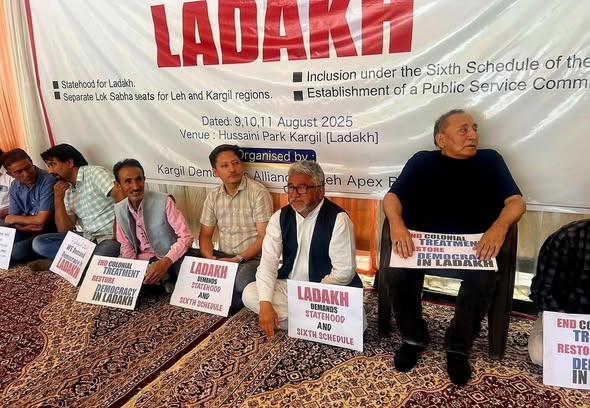
The Sixth Schedule is not just a legal tool – it is the best way to ensure sustainable development, lasting democracy, cultural survival, and environmental protection, all written permanently into the Constitution itself. For more than 97% of Ladakh’s people, who are tribal, this is the only way to get genuine, permanent self-rule. It means their children will grow up on their ancestral land, speaking their own languages, following their own traditions, and living in balance with their unique cold-desert ecosystem – under laws made by their own elected Councils. Ladakh’s demand is therefore a loud and clear call to keep the Constitution’s promise of tribal autonomy and true federalism alive. Policymakers today have a simple choice: give Ladakh constitutionally protected self-governance and make India’s democracy stronger and its borders safer, or continue with the present system and allow the democratic gap, cultural erosion, and ecological damage to grow worse day by day.
The right path is clear: extend the Sixth Schedule to Ladakh without further delay.