Zohran Mamdani’s Triumph: A Blow to The Zionist Lobby and Establishment Politics


In a city that has long mirrored America’s political establishment, New York just did something extraordinary. Zohran Mamdani—a 34-year-old democratic socialist, the son of Ugandan-Indian immigrants, and an unapologetic critic of Israeli policies—has been elected mayor of the United States’ largest and most symbolically powerful city.
His victory over former governor Andrew Cuomo and Republican candidate Curtis Sliwa wasn’t merely an electoral upset; it was a political reckoning. Mamdani won despite an onslaught of opposition from powerful Zionist lobbies, Wall Street donors, and political heavyweights like Donald Trump and Elon Musk, all of whom painted him as “radical” and “anti-Israel.”
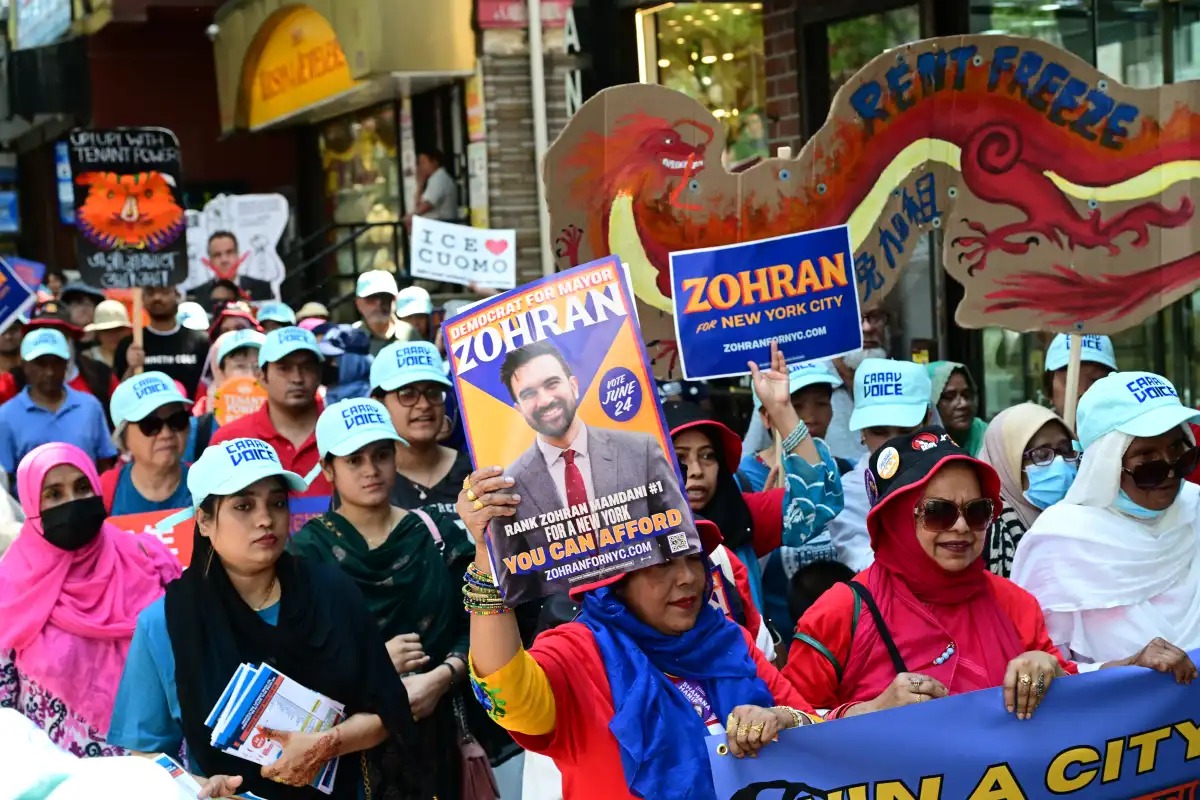
Yet their efforts backfired. What they framed as extremism, many New Yorkers saw as integrity. Mamdani’s insistence on speaking out against the siege of Gaza and his calls for justice and equality resonated deeply with a city increasingly uneasy about U.S. complicity in Israel’s ongoing violence. His campaign turned resistance into momentum, fueled by a coalition of young progressives, working-class voters, Muslims, South Asians, Africans, and even a growing number of Jewish New Yorkers who are disillusioned with the status quo.
At its core, Mamdani’s win represents a shift in the moral landscape of American urban politics. For decades, pro-Israel lobbies have exerted enormous influence over campaign finance and foreign-policy narratives, enforcing a narrow consensus through money, media, and fear. Mamdani’s ascent—achieved without the blessing of corporate donors or Zionist political committees—breaks that pattern. It demonstrates that in an age of political fatigue and digital mobilization, grassroots conviction can still outmaneuver establishment control.
But victory is only the beginning. Mamdani now faces the steep challenge of turning ideals into policy: ensuring affordable housing, reforming policing, tackling inequality—all while navigating the same entrenched power structures that tried to keep him out of office. His success will depend on whether he can transform protest energy into practical governance without diluting the principles that brought him here.
Still, this moment is bigger than one man or one city. In electing Zohran Mamdani, New York has declared that the old playbook of fear and financial influence no longer guarantees power. It’s a message that echoes far beyond the Hudson: moral courage, long dismissed as naïve in politics, might just be making a comeback.