

Kalpakkam Fast Breeder Reactor: An ‘Akshayapatra’ or a Sand Castle?

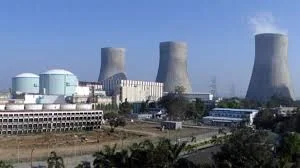
Nuclear Reactor (PFBR) at Kalpakkam Power Plant in Tamil Nadu
On 6 April 2026, India’s first prototype fast breeder reactor (PFBR) attained criticality at the Kalpakkam Nuclear Power Plant in Tamil Nadu. The ‘BHAVINI’ project, implemented under the Department of Atomic Energy, has been completed after more than a quarter of a century of sustained effort. The distinctive feature of this reactor design, which uses uranium-plutonium mixed oxide as fuel, is its ability to convert the non-fissile uranium-238 (U-238) present in the fuel into fissile plutonium-239 (Pu-239). With this development, as per the official claim, India’s long-standing nuclear fuel shortage is expected to be addressed. However, a senior official at the Indira Gandhi Centre for Atomic Research has described breeder reactors as “akshayapatra”, a claim that requires careful scrutiny.
The 500 MW prototype fast breeder reactor that has now become operational at Kalpakkam represents the second stage of the three-stage nuclear power programme originally envisioned by the late Dr. Homi J. Bhabha, widely regarded as the father of India’s nuclear technology. The scientific team responsible for the successful commissioning of this project deserves commendation.
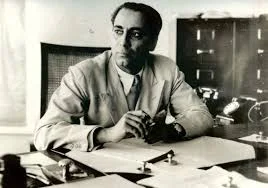
Homi Bhaba
With India’s first commercial-scale breeder reactor achieving ‘criticality’, meaning a sustained and stable nuclear chain reaction has been established, the country’s nuclear establishment has made ambitious claims regarding the potential contribution of nuclear power to India’s energy security. Chief among these is the assertion that, through the adoption of advanced technologies, nuclear power can meet the nation’s energy requirements for the next 600 to 700 years. It is essential to examine these claims in the context of global developments in nuclear technology, particularly given the well-documented challenges associated with fast breeder reactors, including safety concerns, high financial costs, radioactive waste management, and the risk of nuclear proliferation.
The Indian government has announced its intention to achieve 100 gigawatts of nuclear power capacity by 2047. In support of this goal, it has introduced significant policy changes, including the allocation of 20,000 crore in the Union Budget for nuclear research and development, the opening of the nuclear power generation sector to private companies, and special emphasis on small modular reactors. These measures represent a radical shift in India’s nuclear energy policy and practice within a remarkably short period.
While we congratulate Indian scientists on successfully bringing the 500 MW fast breeder reactor at Kalpakkam into operation, it is important to critically assess the exaggerated and often unrealistic claims being made about its long-term implications. A thorough understanding of the global operational history of breeder reactors, along with their safety record and economic performance, is equally necessary.
Although the Department of Atomic Energy continues to regard fast breeder reactors as a cornerstone of India’s three-stage nuclear programme, the international experience with this technology has been largely disappointing. Global evidence indicates that the inherent technical characteristics of fast breeder reactors result in low operational efficiency. Moreover, while all nuclear reactor technologies present significant safety challenges compared with other power generation systems, fast breeder reactors have consistently demonstrated more severe safety and operational difficulties.
International experience strongly suggests that fast breeder reactors are not yet ready for reliable commercial deployment. France, a global leader in nuclear technology, operated its flagship Superphénix breeder reactor for only about 11 years before permanent shutdown in 1996. The plant suffered repeated interruptions due to sodium coolant leaks and issues with the fuel handling system. The decommissioning process, which began in 2003, continues to this day.
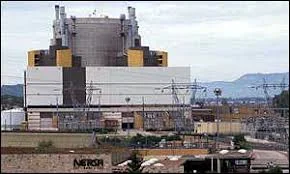
France’s Nuclear Reactor (shutdown in 1996)
Similarly, Japan’s Monju fast breeder reactor was shut down in 1995 following a major fire caused by a sodium coolant leak and has never been restarted. China and Russia remain the only countries actively pursuing fast breeder technology. However, China has yet to achieve sustained operation of a commercial-scale breeder reactor. In Russia, the BN-600 fast reactor has experienced repeated sodium leaks and fires.
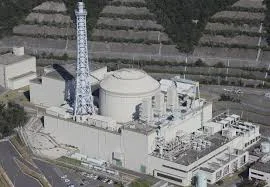
Japan’s Monju Reactor (Shutdown in 1995)
The fuel reprocessing required in fast breeder reactors increases the reactivity and energy density of the core. Nuclear experts have expressed concern that this could lead to potential rupture of the reactor vessel and the uncontrolled release of large quantities of radioactive material.
In a detailed analysis published in the Bulletin of the Atomic Scientists, Dr. M.V. Ramana has highlighted the persistent technical problems associated with this reactor design: “Many of these reactors also have what is called a “positive coolant void coefficient,” which means that if the coolant in the central part of the core were to heat up and form bubbles of sodium vapor, the reactivity–a measure of the neutron balance within the core, which determines the reactor’s tendency to change its power level (if it is positive, the power level rises)–would increase; therefore core melting could accelerate during an accident. (A positive coolant void coefficient, though not involving sodium, contributed to the runaway reaction increase during the April 1986 Chernobyl reactor accident.) In contrast, conventional light water reactors typically have a “negative coolant void coefficient” so that a loss of coolant reduces the core’s reactivity. The existing Indian fast breeder test reactor, with its much smaller core, doesn’t have a positive coolant void coefficient. Thus, the DAE doesn’t have real-world experience in handling the safety challenges that a large prototype reactor will pose.” (The safety inadequacies of India’s fast breeder reactor, By Ashwin Kumar, M.V. Ramana | Opinion | Bulletin of the Atomic Scientists, July 21, 2009).

M.V Ramana
It is important to recognise that sodium leaks and resulting fires in breeder reactors are not isolated incidents. Such events have been documented in nearly all fast breeder reactors worldwide, particularly in the steam generators. Because sodium reacts violently with water and air, leaks frequently escalate into fires. These accidents stem not from construction defects but from fundamental design characteristics inherent to breeder reactors, and they have recurred across different countries and reactor models.
Another significant issue is the corrosion of structural materials. The chemical interaction between steel alloys and carbon in molten sodium—known as “metal dusting”—progressively weakens the containment structures and increases the likelihood of leaks.
The ‘Defence-in-Depth’ policy lacks sufficient depth
Indian nuclear authorities have consistently emphasised that safety in the country’s nuclear power sector is ensured through a policy of “defence-in-depth.” Nevertheless, serious concerns have been raised about the robustness of safety measures at Indian nuclear facilities. It remains unclear to what extent the recommendations of the Dr. V.S. Prasad Committee (constituted in the 1980s) regarding nuclear plant safety have been implemented. Former Chairman of the Atomic Energy Regulatory Board, Dr. A. Gopalakrishnan, has also voiced strong criticisms concerning safety lapses at Indian installations.
Dr. Ramana has pointed out that an examination of the safety features of the Kalpakkam prototype fast breeder reactor reveals significant shortcomings. The primary goal of a ‘defence-in-depth’ approach should be to design a system capable of withstanding even the most severe credible accident. A critical weakness in this regard is the reactor’s containment building—the most visible external structure of any nuclear power plant. Compared with most other breeder reactors and light water reactors, the containment structure at Kalpakkam is relatively weak and may not be able to withstand an accident involving the sudden release of large amounts of energy. This limitation is not due to any lack of technical capability; other containment structures built by the Department of Atomic Energy in India are notably stronger and more robust (Breeder Reactors: A possible connection between metal corrosion and sodium leaks, S.Pillai, M.V.Ramana, Bulletin of the Atomic Scientists, April 17, 2014).
The prolonged construction period of the Kalpakkam Fast Breeder Reactor—22 years from the start of construction in 2004—reflects the inherent safety and technical challenges of the design. This delay cannot be attributed solely to shortcomings on the part of Indian scientists or engineers. Like the extended construction timeline, costs have escalated dramatically. According to a report by the Parliamentary Standing Committee, the project, originally estimated at 3,500 crore in 2003–04, is now expected to cost 8,181 crore upon completion in 2026, more than double the initial estimate.
Beyond the massive increase in capital costs, the operational and power generation costs of breeder reactors are substantially higher than those of conventional pressurised heavy water reactors. This includes the additional expenses associated with plutonium reprocessing. Independent estimates suggest that the cost of electricity generated from breeder reactors is approximately 80 per cent higher than that from conventional nuclear plants.
One proposed solution to mitigate material damage is to operate the reactor at lower temperatures. However, this reduces thermodynamic efficiency and power output, resulting in even higher capital costs per kilowatt and rendering breeder reactors economically uncompetitive. The poor performance of France’s Phénix and Superphénix reactors provides clear evidence: both plants generated far less electricity over their lifetimes than originally designed.
The Kalpakkam breeder reactor, which authorities have hailed as a major milestone in India’s nuclear energy programme, has commenced operations at a time when global petroleum supply chains are under strain due to conflicts in West Asia. In an era of increasing geopolitical tensions, energy self-reliance is undoubtedly a national priority. As Dr. Homi J. Bhabha observed nearly seven decades ago, “No power is as costly as no power.”
Nevertheless, it is noteworthy that India is placing greater emphasis on nuclear energy at a time when the global share of nuclear power in electricity generation has been declining. In 1996, nuclear energy accounted for 17.5 per cent of global electricity production; by 2024, this figure had fallen to approximately 9 per cent. The sector continues to grapple with challenges related to safety, long construction periods, high costs, and the management of radioactive waste. Meanwhile, renewable energy sources, particularly solar and wind, have experienced rapid growth worldwide, including in India. The extent to which a major push for nuclear power may impede the expansion of renewables remains an important question.
Only time will tell whether the prototype fast breeder reactor at Kalpakkam will prove to be the “Akshayapatra” of unlimited energy that its proponents claim, or merely a fragile “sand castle” built on unrealistic expectations.









“An insightful critique of the Kalpakkam Fast Breeder Reactor, raising important questions about long-term sustainability, safety, and the gap between ambitious promises and practical realities.”
“Thought-provoking analysis that challenges the optimistic narrative around the Kalpakkam Fast Breeder Reactor, highlighting concerns about feasibility, safety, and long-term viability.”