“I Share My Ignorance and Perplexity, not Wisdom”

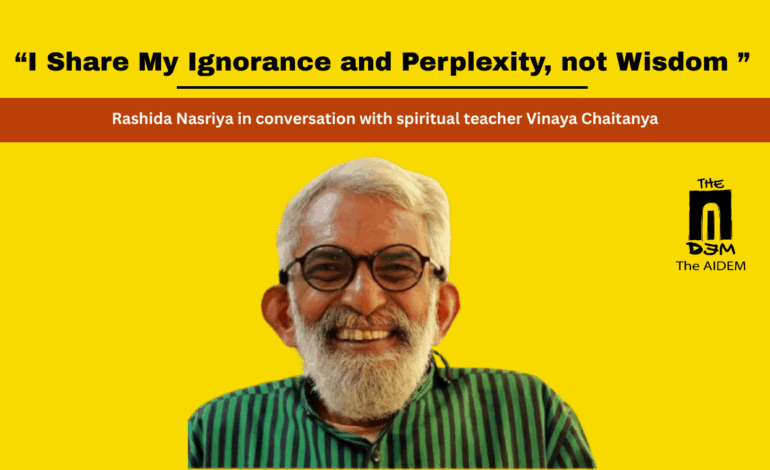
Rashida Nasriya in conversation with spiritual teacher Vinaya Chaitanya
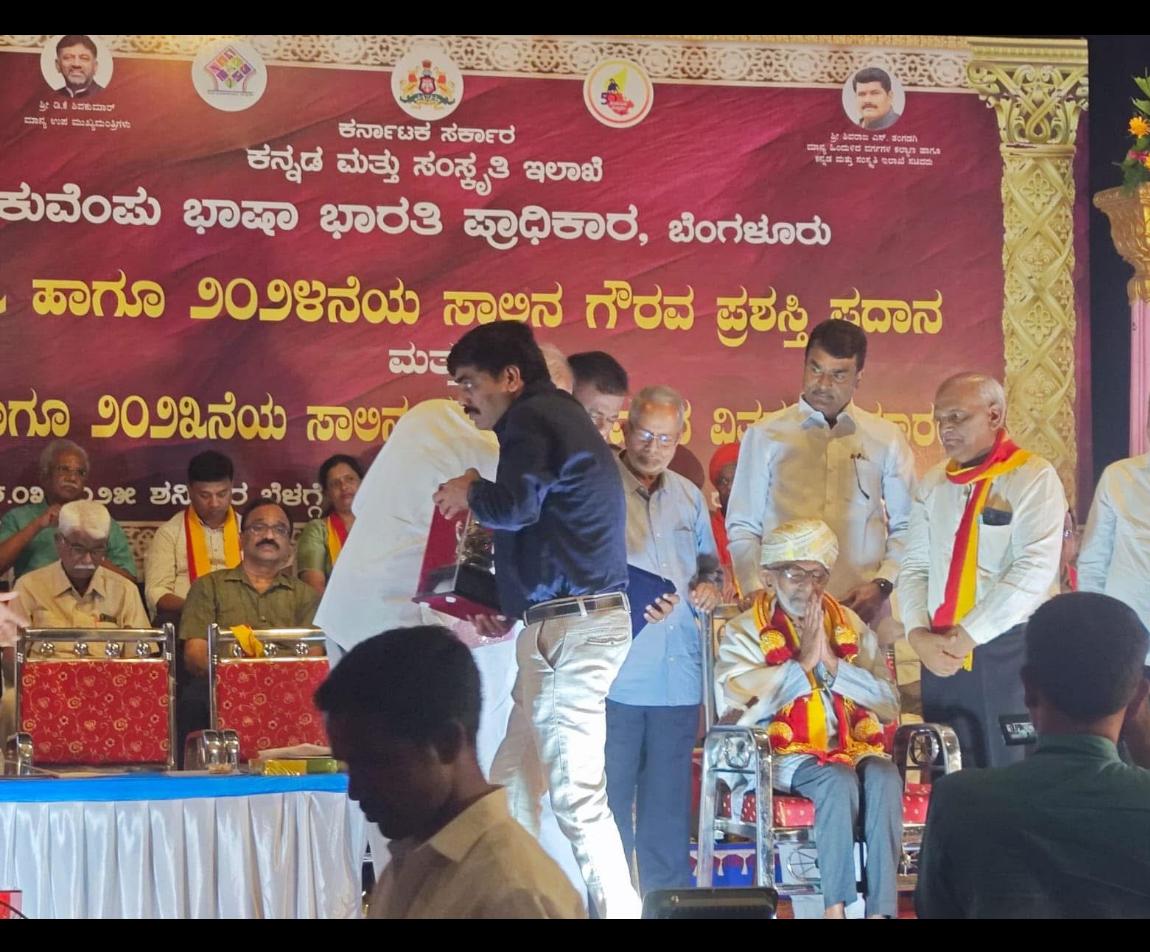
In March 2025, author, translator, and spiritual teacher Sri Vinaya Chaitanya was honored with the prestigious Koovemp Bhasha Bharati Pradhikara Award by the Karnataka Government. As a disciple of Nataraja Guru, Vinaya Chaitanya spent 38 years in Bangalore, residing at the Gurukula, where he was deeply influenced by Kannada literature. He has dedicated himself to translating the works of revered authors into English and Malayalam, making their wisdom accessible to a broader audience.

Some of his notable works include the English translation of Akka Mahadevi’s “Songs for Shiva” and the translation of Narayana Guru’s complete works into Kannada. Excerpts from the interview:
Rashida Nasriya: What sparked your spiritual journey, and how did it shape your perspective on life?
Vinaya Chaitanya: I met Nataraja Guru in November 1971 quite by chance, which sparked a profound realisation about the need for purpose in life. This encounter marked a significant turning point, prompting a deeper exploration of life’s meaning. However, I don’t believe that this journey is about distinguishing between the spiritual and material realms. In my view, the soul and materiality are intertwined, with the soul infusing life into the physical world. Therefore, it’s not about separating the spiritual from the material, but rather about finding meaning and significance in life as a whole. Ultimately, what matters is that life has a purpose, and it’s this pursuit of meaning that guides my path.
RN: What was your life like before meeting Nataraja Guru?.
VC: Before I came into contact with Nataraja Guru, my life was marked by a deep-seated sensitivity. As a child, I was prone to fleeing from situations that felt overwhelming, a tendency that manifested as early as age 10. This escapism was a coping mechanism, a way to distance myself from the challenges of my environment. According to my mother, this pattern of behavior was evident even in my early interactions with her, where I’d leave home after disagreements. It seems that this inclination to escape or withdraw has been a part of my life since childhood, reflecting a deeper struggle to navigate my surroundings and relationships.
RN: How did your encounter with Nataraja Guru impact your life?
VC: My experience with Nataraja Guru taught me valuable lessons that have stayed with me. He instilled in me the importance of living authentically, based on what I know to be true. He also encouraged me to envision a unified world, free from divisions. Moreover, he nurtured my compassion for all living beings, particularly animals like cows, cats, and dogs. What’s interesting is that Nataraja Guru didn’t so much teach me new things as he did encourage the innate desires and values I already possessed. His approach was unique in that he didn’t compromise on his principles, and he discouraged blind imitation. Many disciples tend to mimic their guru’s external attributes, from their mannerisms to their speech patterns. Nataraja Guru, however, emphasized the importance of individual growth and authenticity, urging his followers to forge their own paths rather than replicate his.
RN: You spent 38 years at the Bangalore Gurukula. What were some of the most significant experiences or lessons you gained during that time?
VC: My journey from Nataraja Guru to Fernhill was a gradual one. I first met Nataraja Guru at Ezhimala, where he would rotate his stay among various Gurukulas. I would visit him at different locations, including Varkala and Bangalore. In 1973, just two months before his Samadhi, he arranged for my marriage and instructed me to relocate to the Bangalore Gurukula. I spent 36 years there, taking charge of the Gurukul’s operations. During this period, I had the opportunity to visit Fernhill in Ooty at the request of Guru Nitya Chaitanya Yati, his successor. Whenever Guru Nitya traveled abroad, he would often ask me to stay at Fernhill, which eventually became a regular part of my journey. Through these visits and stays, I developed a strong connection with Fernhill, and it became an integral part of my life.
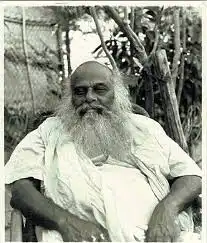
RN: What insights can be gained from Nataraja Guru’s vision of a one-world concept and global citizenship, as reflected in his association with Gary Davis, a pioneering advocate for world citizenship?
VC: Nataraja Guru emphasized Narayana Guru’s profound philosophy of ‘One Caste, One Religion, One God, promoting unity and inclusivity. This concept transcends narrow boundaries, advocating for a world where every individual recognizes their shared humanity and responsibilities. The notion of being citizens of the world, rather than just citizens of a nation, underscores the importance of global unity and cooperation.
An inspiring example of this vision is Gary Davis, a self-proclaimed citizen of the world and a disciple of Nataraja Guru. Davis, a former American bomber pilot during World War II, became disillusioned with the devastation of war and renounced his American citizenship. Seeking refuge at the UN Headquarters in France, he was eventually deported to the United States. Notably, Nataraja Guru was on the same ship, and their chance meeting led to a profound conversation. When Davis described himself as “crazy” for believing in one world, Nataraja Guru responded, “If you are crazy, then my guru, and all my gurus were also crazy.”

Inspired by this encounter, Davis went on to establish the World Service Authority, issuing world passports to refugees who had lost their nationality due to conflict. He even presented a world passport to Jawaharlal Nehru, the then Prime Minister of India, who acknowledged the potential of this vision for the future. Though this dream of a unified world remains aspirational, especially in today’s complex global landscape, it reflects the ideals of Nataraja Guru, Narayana Guru, and all those who strive for a more harmonious and interconnected world. Ultimately, the vision is clear: we are one family living in one world.
RN: What was your experience like after leaving Narayana Gurukulam, and how did you decide on the path of wandering that followed?
VC: After leaving Narayana Gurukulam, I embarked on a period of wandering. My first step was Thiruvannamalai, where I hoped to find a cave to meditate in solitude. However, my plans were altered when, while climbing the hill, I was approached by a young man with a beard and long hair who emerged from the bushes. He introduced himself as someone who had briefly stayed at the Gurukulam and warned me about the local sentiment towards swamis in the area. He shared that some swamis had been chased away by locals and advised me against seeking solitude in the caves. Instead, he took me to his makeshift abode, where living conditions were austere, and even building a stove was not feasible due to the risk of attracting forest officials.
Following this encounter, I spent a couple of days at a local ashram before moving on to various places in Kerala, staying with friends in their homes and apartments. Eventually, I received an invitation from a friend to visit Goa, and I decided to make it my new home. Goa has been a liberating experience for me, offering a sense of freedom that I hadn’t found elsewhere. Unlike in other places, no one has ever inquired about my religion or caste, allowing me to live life on my own terms.
RN: About the translations of Akka Mahadevi’s writings and Narayana Guru’s selected works?
VC: My journey into translation began with a lifelong passion for writing and reading. I penned my first poem at the tender age of seven or eight, and this creative pursuit remained a constant companion throughout my childhood. Upon joining the Gurukula, I was introduced to a structured study plan that further nurtured my love for literature. It was here that I developed an interest in translation, which eventually led to my translating the works of revered figures like Akka Mahadevi and Narayana Guru.
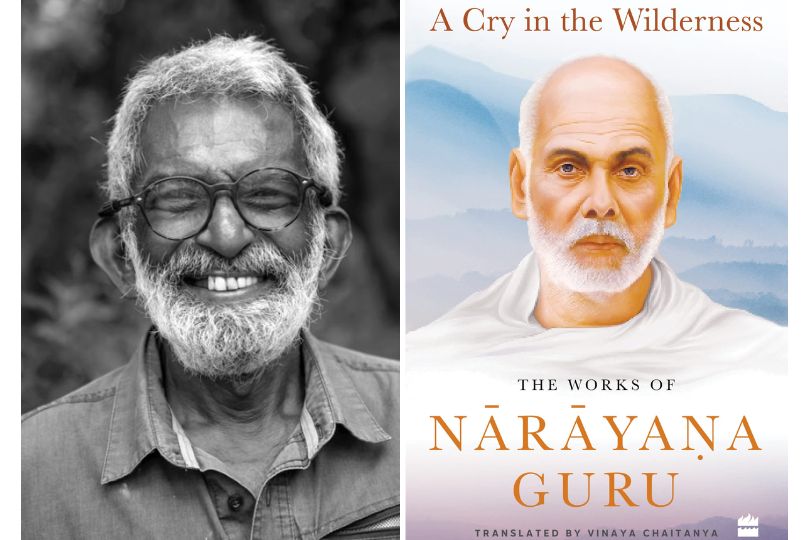
Today, I have had the privilege of publishing 13 books in English, Kannada, and Malayalam. One of my notable works includes a Malayalam book titled “An Introduction to Aatmopadesha Shatakam.” Through these publications, I have been able to share the wisdom and insights of these great authors with a wider audience, and I am grateful for the opportunity to contribute to the literary world in this way.
RN: You’re recognized as an author and translator of Narayana Guru’s works, but not as a spiritual teacher like your colleague Guru Nitya Chaitanya Yati. Was this a deliberate choice, and did you intentionally avoid taking on a spiritual leadership role?
VC: The spiritual leadership role was never offered to me, as it was designated for Nitya Chaitanya Yati, who was the Guru’s official successor. As a married man, I was content with building a life with my wife and children. I’m proud that my four children grew up without any notion of caste or religion, embracing the humanity that unites us. When someone asked my child about her caste, she simply replied, ‘We’re all human beings.’ It warms my heart to see them embody this inclusive perspective. Personally, I don’t feel the need for spiritual leadership, as it can sometimes be about power dynamics. Instead, I believe in the value of friendship and guidance, where relationships are built on mutual respect and understanding.
RN: You have gathered a large number of people around you from different parts of the world, as well as people from different backgrounds and ages, from young college students to elderly scholars. Do you have a future vision for those who follow you?
VC: I don’t have followers, but rather a global community of friends who share a common vision. We see ourselves as citizens of one world, and the sooner we realize this interconnectedness, the stronger our community will become. I’m not a source of wisdom; instead, I’m on the same journey as everyone else. I have no wisdom to share; I would share my ignorance and perplexity. I don’t have advice to offer, but rather a willingness to walk alongside others on this shared path. We’re all fellow pilgrims, navigating life’s complexities together, and it’s in this spirit of companionship that we can find meaning and support.