Salt, one of the most basic and universally consumed elements of human nutrition, has had an outsized influence on India’s social, economic, and political history. While its role as a dietary necessity is obvious, salt has also carried a weight far beyond the kitchen. Throughout Indian history, it has symbolized moral authority, state legitimacy, and the principles of economic justice. The British colonial administration recognized this dual importance and used the salt monopoly not merely as a revenue-generating measure but as a potent tool of control over the population. By the early twentieth century, salt taxation had become a site of intense tension between authority and justice, setting the stage for one of India’s most iconic episodes of mass civil disobedience. The 1930 Salt March, led by Mahatma Gandhi was a moral statement carried out via a political protest. By choosing such a common, essential commodity as the center of his campaign, Gandhi highlighted how everyday objects could embody broader issues of fairness and human dignity. This choice transformed salt from a household necessity into a symbol of resistance, enabling millions to connect their daily lives with the struggle for national self-determination.
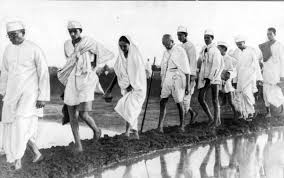
Salt March, 1930
Salt as a Political Tool
The politicization of salt was a long-simmering contestation, rooted in the critiques of early reformers. Nearly a century before Gandhi’s march, Raja Ram Mohan Roy, widely regarded as the Father of Modern Indian social reform, laid the philosophical groundwork for later resistance. At the core of Roy’s philosophy was the belief that government exists to serve the welfare of its people, not merely to extract revenue. Through meticulous petitions and appeals to the East India Company, Roy highlighted how fiscal measures often exacerbated poverty and injustice. Though he did not specifically campaign against the salt tax, his meticulous appeals, grounded in a commitment to reason, ethics, and empirical observation, established the tax as a primary symbol of colonial economic injustice and foreshadowed the later debates over the oppressive impact of the salt levy on the poor.
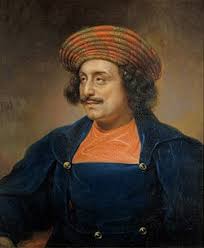
Raja Ram Mohan Roy
The critique gained internal traction in 1878 when Sir George Campbell, a British Official, condemned the levy as “unjust” and “a very heavy tax on the poor,” highlighting its regressive nature. Formal political opposition escalated as the Indian National Congress (INC) passed resolutions against the tax’s enhancement between 1885 and 1892, solidifying it as a major political grievance. This critique was intellectualized by Dadabhai Naoroji in 1894, who framed the levy as “exaction, oppression… and a survival of the general exploitation of India’s poverty,” linking it directly to his “Drain of Wealth” theory. Even after minor administrative reductions, British Parliamentarian Sir Charles Wentworth Dilke denounced it in 1902 as “the most oppressive tax levied in India,” calling it a burden on “the prime necessary of life.”

Dadabhai Naoroji
Adding a physical dimension to this opposition was the Great Hedge of India, formally known as the Inland Customs Line (ICL). This colossal, living barrier was constructed by the British to strictly enforce their highly profitable salt monopoly. Active primarily between the 1840s and 1870s, this incredible barrier stretched up to 2,500 miles (4,000 kilometers) across central India. Composed of dense, thorny vegetation and manned by over 12,000 customs officers, its sole purpose was to separate the salt-producing coastal areas from the inland territories where expensive, British-taxed salt was sold. The Great Hedge stood as an extreme physical manifestation of a regressive colonial economic policy, symbolizing the ruthless prioritization of fiscal revenue over the basic welfare of the Indian poor.
Morality with Action
Mahatma Gandhi built his movement on this legacy of ethical and economic critique, transforming abstract dissent into concrete, mass action. His engagement with moral and political questions surrounding taxation predates his leadership in India; during his South Africa years (1893–1914), he witnessed firsthand how discriminatory taxation on essentials, such as the taxation of salt, harmed the poor, fueling his conviction that justice and governance must prioritize the welfare of the vulnerable. As early as 1905, he described the salt tax as a “levy upon the very lifeblood of the people.”
The decision to launch the Civil Disobedience Movement was, fundamentally, the execution of the Purna Swaraj mandate, cemented by the Lahore Resolution of December 1929. The government’s absolute refusal to meet the minimum demands in Gandhi’s ‘Eleven Points’ Ultimatum gave him the political ground to transition to confrontation. Once the mandate was secured, Gandhi needed a universally accessible and morally undeniable issue. Salt became the perfect catalyst, driven by two factors: Moral Justification and Strategic Intelligence. In his final letter to Viceroy Lord Irwin on March 2, 1930, Gandhi passionately articulated the moral wrong, stating: “I regard this tax to be the most iniquitous of all from the poor man’s standpoint.” He further declared, “Next to air and water, salt is perhaps the greatest necessity of life,” and denounced it as “the most inhuman poll tax that ingenuity of man can devise.” This moral clarity was fused with strategy through the insider intelligence provided by Faujdar Ali, a former Superintendent of the Salt Department, who detailed the geographical vulnerability of the British salt monopoly along the unpoliceable Gujarat coastline, making mass illegal production feasible.
The Dandi March, commencing on 12 March 1930, saw Gandhi and his followers walk 240 miles from Sabarmati Ashram to Dandi. Despite the pre-march arrest of key organizer Sardar Vallabhbhai Patel, villagers along the route joined progressively, swelling the numbers to thousands. Upon reaching Dandi on 6 April 1930, Gandhi collected salt from the seashore, openly violating the Salt Act. This single act catalyzed nationwide civil disobedience, leading to over 60,000 arrests and drawing extensive international attention. The march successfully demonstrated the power of disciplined, non-violent protest, transforming an ordinary commodity into a profound symbol of resistance and civic responsibility.

Gandhi openly violating the Salt Act
Contemporary Relevance
Following independence, the salt tax underwent a complex transformation. While the Gandhi–Irwin Pact of March 1931 allowed Indians to collect salt for personal use, the British formally abolished the duty only in 1946. However, the financial demands of a new nation led to its partial reinstatement through the Salt Cess Acts of 1947 and 1953, which imposed a nominal levy for maintaining salt works. These acts sparked parliamentary debate over their moral and regressive impact, keeping Gandhi’s core principle alive in the new nation. The financial significance of the levy declined over time, and its final trace was erased with the Salt Cess (Abolition) Act of 2006, formally repealed in 2016. Today, under the GST regime, salt is taxed at 0%, reflecting a clear, contemporary recognition of its essential nature and reaffirming Gandhi’s principle that taxation on basic necessities must never compromise survival or human dignity.
The history of salt in India—from Roy’s reformist critique to Gandhi’s transformative March illustrates the profound interplay of morality, law, and economic justice. It awakened people to the value of their rights and their agency in challenging unjust laws. The story of ‘salt led activism’ in Indian history offers a universal lesson that even the simplest commodity can acquire profound symbolic power. It can transform ethical principles into concrete mass action and serve as an enduring reminder that justice must be tangible, accessible and lived by all.