PART I — The “Clean-Up” That Doesn’t Clean
This is not just about electoral procedure — it is about the quiet reshaping of Indian democracy. Across history, moments of democratic backsliding have rarely arrived with tanks on the streets; they have come draped in administrative language, procedural necessity, and the promise of reform. What appears technical often masks something transformative. Today, India stands at such a moment where the vocabulary of “correction” and “purification” surrounds one of the most foundational pillars of the Republic: the right to vote.
This is the first part of the full transcript of Dr. Parakala Prabhakar’s CGS Memorial Discourse at Thrissur on 21.01.2026

Respected Mirabai; my friend Venkitesh Ramakrishnan; Dr. Joshi; Dr. Balakrishnan; Kasima; Advocate Raju; Balachandran; and Rajan, who gave us that wonderful geetham — my dear friends, I am privileged to be here to deliver the CGS Memorial Discourse.
This is a deeply humbling experience. I did not have the opportunity to know Sivashankaran Master personally, but I have long heard about the remarkable work he initiated and carried forward throughout his life. Those of us in Andhra Pradesh heard a great deal about the Kerala Shastra Sahitya Parishad. In fact, we had an organisation in Andhra Pradesh, Jana Vigyan Kendra, which was modelled after the Shastra Sahitya Parishad. You know, if ever there are times when one misses people like Sivashankaran Master, it is in moments like these — when anti-science attitudes and hostility to scientific temper are all around us. From the highest political office in the country to sections of the judiciary, and among many practicing doctors, advocates, and professionals, superstition and anti-scientific beliefs are increasingly finding acceptance.
It is precisely in times like these that we need people like Sivashankaran Master.
I am equally humbled to stand before you — such wonderful luminaries committed to upholding our democratic values, our secular values, and the principles enshrined in our Constitution: justice, liberty, equality, fraternity, secularism. These values are in danger. And today, I want to spend some time speaking about the nature of the threat to our democracy — a threat that takes the form of an attack on universal adult franchise, which is a unique feature of India.
As far as I know, no other country adopted universal adult franchise from day one. Even the so-called mature and developed democracies took their time to extend the vote to women, to those without formal education, to those who did not pay taxes, and to people of different races and skin colours. Many countries went through prolonged struggles before achieving that. But we chose universal adult franchise from the very beginning. That commitment is today in peril. I will speak for about 45 to 50 minutes. After that, I would like us to have a discussion.
Because I do not believe in Man ki Baat — speaking and walking away. No. I want interaction. I stand here to speak, but I am prepared to submit every word, every letter, every data point I present today to your most merciless scrutiny. I am ready to be challenged. Whatever I say, I say with utmost responsibility. I am not speaking casually or out of thin air. Everything I say here is backed by careful research and fact-checking.
So yes, after this discourse, we must engage.
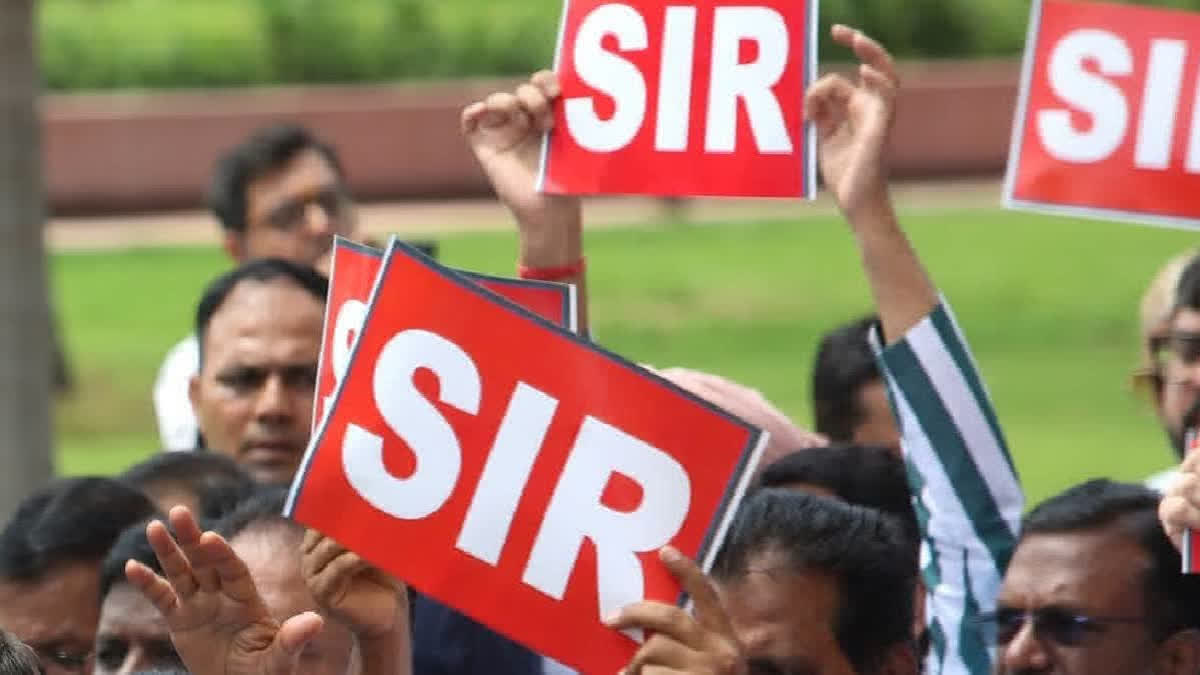
Today, a process called the Special Intensive Revision — SIR — is underway in the country. It began in Bihar. It has now extended to nine states and nine Union Territories. What is SIR? I have been speaking about this in different places, and each time new questions arise, new dimensions emerge, new degrees of concern surface. Let us try to understand how and why something so serious is being marketed almost like a sacrament. I use that word deliberately, and I submit it to your scrutiny.
It is being marketed — but how? It is being marketed as a cleaning up of the electoral rolls. Of course we want clean electoral rolls. Who doesn’t want that? I want it. Sri Balakrishnan wants it. Dr. Joshi wants it. Everybody wants it. My friend Venkitesh wants it. You want it. Everyone wants clean rolls. I do not want someone who is not a voter to be on the list. I do not want someone who has passed away to remain on the list. I do not want someone who has permanently shifted away to stay on the list. I do not want one name appearing multiple times as a duplicate. No, I do not want that. I want a clean electoral roll. But the question is: is that what is actually happening?
SIR is presented as an exercise to clean up the voters’ list. And we all agree that the list should be clean if there are genuine discrepancies. I have no objection to that in principle. But we must remember something: when something deeply questionable is being done, it is almost always marketed as something honest and desirable.
Let me give you an example. Some time ago, the United States had a Strategic Air Command within its Air Force. It operated heavy bombers and participated in devastating bombing campaigns, including bombings of civilian populations and civilian targets. Every organisation has a motto. Do you know what the motto of the Strategic Air Command was? “Peace is our mission.”
That was the motto of the Strategic Air Command.
Do we take that at face value? No. That is marketing. The reality was something else.
In the same way, this is not about cleaning up the electoral roll. Something else is underway. Let us see what that is.
You know very well that before every election, a routine exercise called the Special Summary Revision — SSR — takes place. It is standard procedure. It normally happens between October and January. After the 2024 Lok Sabha elections, SSR was conducted between roughly October and January.
It concluded. It was over.
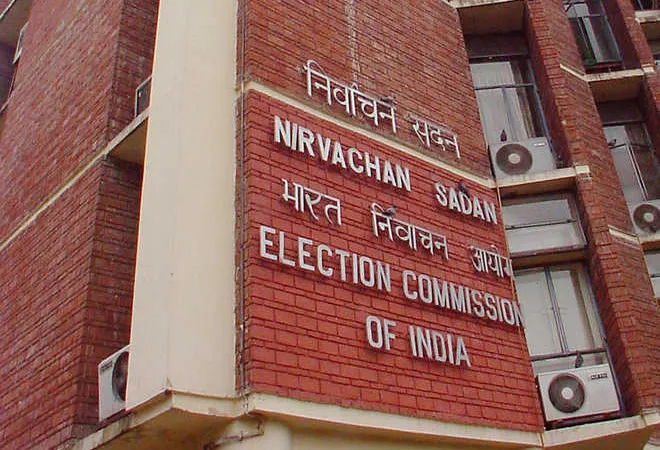
After it was over, the Election Commission announced SIR — Special Intensive Revision. The Election Commission of India said it had commissioned a study by some organisation. That study, we were told, found that the SSR exercise had been unsatisfactory, that electoral rolls across the country were still not sufficiently clean, and that further cleaning was necessary. Therefore, the Commission said, it had initiated SIR, starting with Bihar, and would then extend it across the country.
Fair enough.
People like us asked: Which organisation conducted this study? What did the report say? Can we have a copy? What recommendations did it make?
To this day, the Election Commission has not disclosed which organisation conducted the study, what the report contains, or what its recommendations were.
Then, about 15 to 20 days ago, an RTI activist named Anjali Bharadwaj sought information from the Election Commission. In any government department, before a major decision is taken, there are file notings — internal discussions, recommendations, observations, and recorded deliberations. She asked, under the RTI Act, for access to those file notings: What discussions took place within the Election Commission? What decisions were recorded? What recommendations were made? What was the internal reasoning?
The Principal Secretary to the Election Commission of India replied in writing that the Election Commission of India had not taken a formal decision to conduct Special Intensive Revision.
Now the obvious question is: if the Election Commission did not decide it, then who did?
That remains a mystery. And this is not speculation — this is in writing from the Commission’s own Principal Secretary.
Now let us come to Bihar.
Before SIR, the total number of voters in Bihar stood at 7.79 crore. Even that number falls short of what we would expect in a system of universal adult franchise.
I will tell you why.
Ours is a system of universal adult franchise. Every citizen aged 18 and above is entitled to vote. Although the census has not been conducted since 2011, various demographic surveys allow us to estimate the adult population in each state and across the country. Based on those estimates, Bihar’s adult population is around 8.22 crore. Perhaps it could be slightly lower — 8.2 crore, 8.21 crore — a difference of a few lakhs here or there.
But what was the number of electors in Bihar even before SIR? As I said, it was 7.79 crore.
After SIR, that number came down to 7.42 crore.
It should have been around 8.22 crore — or at least it should not have fallen below the existing 7.79 crore. But after SIR, it dropped to 7.42 crore. That means there is now a gap of roughly 80 lakh voters.
Please follow this carefully. Who were the people removed?
Normally, the adult population consists of men and women, and the voter rolls reflect that classification. But the total number of women voters deleted was only 16 lakh, which is far below their proportion in the population.
Then what happened? Another section that saw significant deletion was Muslims. Muslims constitute roughly 17% of Bihar’s population. The contraction in Muslim voters was about 25% initially. After further scrutiny, revisions, deletions, and additions, the net contraction rose to about 33%.
Then there are also figures relating to Adivasis, to various marginalised occupational groups, to sections less likely to vote for the ruling party, and so on.
So we arrive at a deficit of around 80 lakh voters.
After the election results were declared, some people told me the opposition had performed very poorly. They said it had won only around 23 or 25 seats. I said, no — that is not a poor performance. If the government believed that among the remaining 7.42 crore voters, an overwhelming majority were “their” people, and if those unlikely to vote for them had been systematically removed, then even winning a single seat would be remarkable.
So understand what has happened. For decades, we have lived in a system where voters decided who should form the government. That has been the norm everywhere, and certainly in India for over seventy years. But today, after SIR, we are moving towards a system where the government is deciding who should be a voter.
The tables are turning.
Now the message appears to be: Yes, you may be a voter. No, you may not. You can remain. You cannot remain. You qualify. You do not qualify.
That is what is happening.