Why BJP Is Undermining Democratic Traditions


For the Bharatiya Janata Party, which is in its third term in office and which is going from strength to strength by winning a streak of elections over the last few months, insecurity is the least one can expect.
Yet the government led by the party at the Centre had been taking a small-hearted approach while dealing with opposition in general and top leaders of opposition in particular.
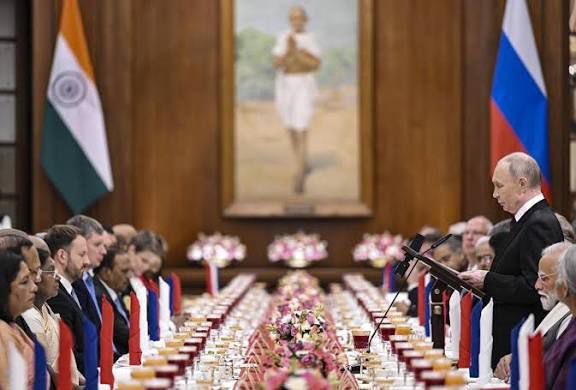
The denial of an invitation for an official dinner in the honour of the Russian president Vladimir Putin by his Indian counterpart at Rashtrapati Bhawan is a case in point.
Neither the Leader of Opposition in Lok Sabha Rahul Gandhi nor the Leader of Opposition in Rajya Sabha Mallikarjun Kharge were invited for the official dinner.
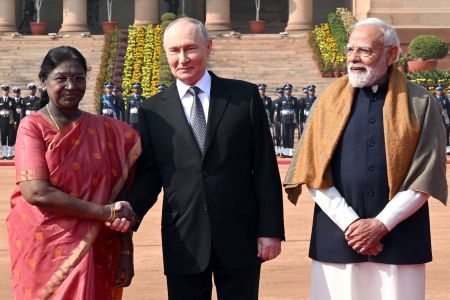
It has been a tradition that leaders across the spectrum, but certainly the Leader of Opposition in the two Houses, are invited to the high table at such official banquets. The gesture reflects the strength of Indian democracy.
Ironically, but in a heartening manner, such ethos was witnessed during the event to mark the Constitution Day. It was good to see the President, the Vice President, the Prime Minister, Speaker of Lok Sabha and leaders of opposition in Lok Sabha and Rajya Sabha sharing the stage to read the Preamble.
It had also been a long tradition that the visiting heads of states meet the top opposition leaders during their official visits. The absence of such a meeting during Putin’s visit is ascribed to the argument that it’s for the visiting delegation to fix appointments and itinerary of the visit. However the itinerary for such visits is decided after mutual consultations.
Growing Political Polarisation Weakens India’s Democratic Culture
Unfortunately, despite the pole position of the BJP in politics of the country over the last more than a decade, there is unprecedented bitterness between its leaders and the opposition.
Calling out names, attempting to humiliate political opponents, levelling wild charges and making fun of each other has become the norms rather than an exception.
While Congress leaders such as Rahul Gandhi had been coming out with slogans like “chowkidar chor hai” or “vote chori” which is finding little resonance with the voters, the BJP lead by prime minister Narendra Modi have been calling him “Pappu” in a derogatory manner and generally denigrating opposition leaders.
There are several other instances in which both sides had crossed limits of decency while attacking each other. However these personal attacks must not come under consideration during official national events or causes.
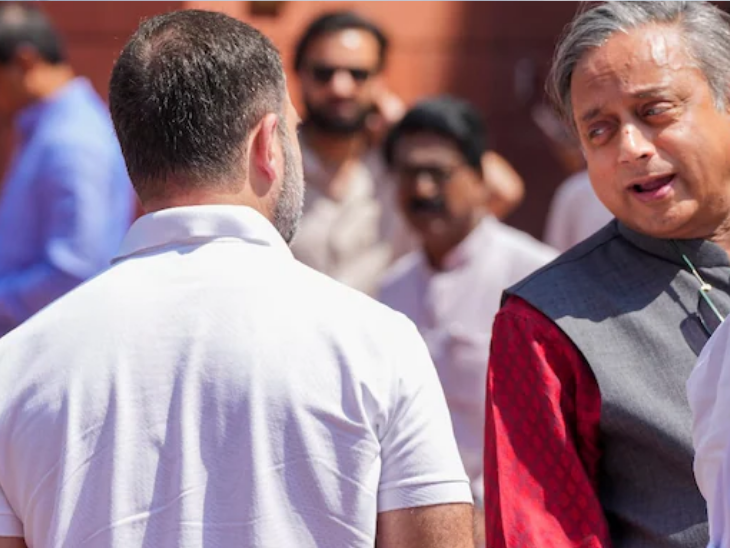
The Rashtrapati Bhawna’s denial of invitation to Leaders of Opposition while inviting one of the Congress leaders Shashi Tharoor, who heads the Parliamentary Committee on Foreign Affairs but who is currently in the crosshairs of top Congress leadership, should have been avoided.
It was all the more undesirable because only recently had the Modi government approached leaders of opposition to present India’s view on Operation Sindoor to the world.
All party delegations had gone to various countries to brief their leaders about the stand of the country. It was appreciable both on the part of the government and the opposition to take a united stand for national interests.
There have been several instances in the past when government had taken along and even asked opposition leaders to represent the country.
Former prime minister Narasimha Rao sending the then leader of opposition Atal Behari Vajpayee to represent the country before the United Nations, is an outstanding example of the mutual respectful relationships being enjoyed by lessees across the spectrum in the past.
Indeed there have been instances in which opposition leaders had been thrown behind bars, as was done during the emergency, but such instances have been rare in the country except during the recent years.
Given the pre-eminent position of the BJP led NDA in Lok Sabha, it is also expected that the ruling alliance give more time and space to the opposition to air its views.
Declining Parliamentary Debate Under BJP Rule Raises Institutional Concerns
However, as was witnessed this week, it chose to give a full day to debate on a non issue like Vandematram basically to bash Jawaharlal Nehru and other leaders rather than heed to the opposition demand for discussion.
On relevant issues such as unemployment, inflation, indigo crisis and the controversial Special Intensive Revision of voters list.
Since 2014 massive decline in the number of adjournments motions, short duration discussions and calling attention motions accepted in the two Houses of Parliament.
While nine short direction discussions were allowed in Lok Sabha in 2014 and six in Rajya Sabha in 2014, this year none has been allowed so far.
Similarly while nine calling attention motions had been accepted in Lok Sabha in 2014 and four in Rajya Sabha, so far only one such motion has been accepted in Rajya Sabha and none in Lok Sabha.
The government must uphold the healthy traditions of democracy and give adequate time to the opposition to make its point.
This article was also published on Punjab Today News and can be read here.