

H-1B, Tariffs, and Tarnished Ties: The Unmasking of India’s Foreign Policy

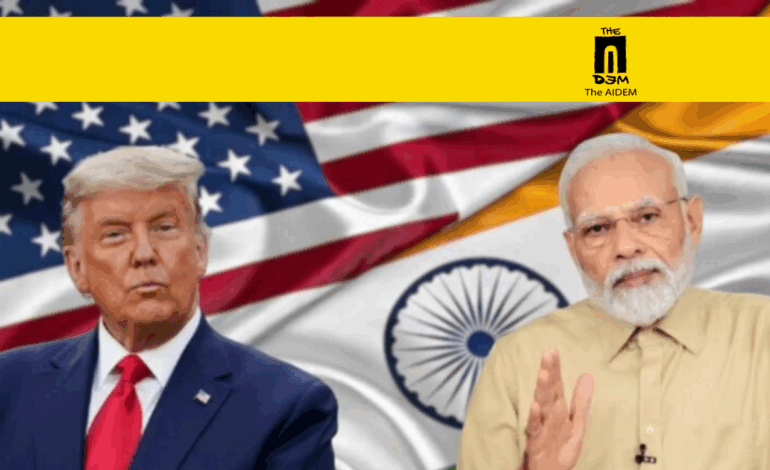
Donald Trump’s latest assault on the H-1B visa system—proposing a $100,000 annual fee per visa holder—is more than just a policy tweak. It is an attack on the livelihoods of Indians abroad, the remittances that sustain millions of families, and the fragile foundations of India’s foreign policy.
The Numbers That Matter
For decades, Indians dominated the H-1B program. The US fiscal data from October 2022 to September 2023 shows that 72.3% of all H-1B visas went to Indian nationals. Most were tech professionals earning an average of $120,000 annually.
These incomes didn’t just change individual lives—they powered India’s economy. Remittances from the diaspora form a cornerstone of India’s $125 billion annual inflow, sustaining families and enabling upward mobility.
Within India, states like Telangana and Andhra Pradesh became deeply tied to this migration economy. Hyderabad alone holds the world’s largest concentration of H-1B visa holders. These earnings flow back as NRI deposits and transformed entire local economies.
Now, that ladder of mobility has been pulled away.
Washington Acts, New Delhi Watches
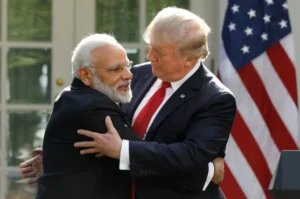
Let’s be clear: the blame does not lie in Washington. Trump has acted in what he believes to be America’s interest. The real question is: what did India gain from Howdy Modi in Houston or Namaste Trump in Ahmedabad?
What was achieved by stadium spectacles and birthday greetings? Certainly not leverage. When the US can casually strike at the livelihoods of Indians while still calling us “strategic partners,” it proves that New Delhi carries little weight in Washington’s calculations.

A Larger Pattern of Pressure
The H-1B crackdown is not an isolated event. It is part of a wider pattern:
- Steep tariffs on Indian exports.
- A Pakistan–US trade deal, reopening economic corridors.
- A Pakistan–Saudi pact, unlikely without US blessings.
- And now, the US officially tagging India among the world’s “major illicit drug producing or transit countries.”
- Each move chips away at India’s image, bargaining power, and credibility.
Missed Opportunities & Limited Responses
India has signed de-dollarisation agreements with 18+ countries, including Qatar and ASEAN states, to enable trade in rupees. That is a step forward. But far more is needed.
- Where is the plan to protect Indian professionals abroad?
- Where is the diversification of overseas opportunities?
- Where is the diplomatic leverage to safeguard India’s long-term interests?
Instead of strategy, India got slogans, photo-ops, and pageantry.
The Real Cost
Behind the numbers lie real lives:
- Tens of thousands of tech workers who built careers in the US now face sudden uncertainty.
- Families depending on remittances risk devastating income shocks.
- States like Andhra and Telangana, deeply reliant on NRI inflows, face stagnation.
This is not an abstract policy debate. It is a direct assault on people’s futures.
The Lost Decade
India’s foreign policy over the past decade has been a series of gimmicks. Stadium rallies in Houston, roadshows in New York, photo-ops in Ahmedabad—none of these prevented Washington from undercutting India’s interests.
The truth is simple: Modi’s foreign policy has been a disaster for India. It has sacrificed substance for spectacle. It has traded negotiation for narcissism.
It has left India more isolated, more vulnerable, and less respected on the global stage. 2014–2024 will not be remembered as a decade of global rise. It will be remembered as India’s lost decade, authored by the arrogance and short-sightedness of Modi’s foreign policy.










Very effective article by Aftab Ahmad on the H1B issue. I have not read a more communicative article in recent memory, using tight prose and data. Most newspapers yesterday morning had voluminous articles which did not make much sense. But Ahmad’s article is precise, concise and comprehensive— a difficult mix that eludes most writers. Thank you for publishing the article.
Thank you very much, Sir, for your generous appreciation. It is truly encouraging to know that my effort to present the H1B issue with clarity and focus resonated with you. Coming from someone with your vast experience, your words carry immense value for me and motivate me to continue striving for precision and depth in my writing.