



The Supreme Court’s interim relief on the Waqf (Amendment) Act 2025 offers temporary respite, but exposes deeper leadership failures and structural challenges, points out socio-political observer Asad Mirza.
In a much-anticipated decision on the contentious Waqf (Amendment) Act 2025, the Supreme Court, treading on very sensitive ground, granted relief to the Muslim petitioners on three provisions of the new Act. The Muslim petitioners, back-slapping each other, have described it as their ‘victory’.
The Waqf (Amendment) Act 2025, passed by Parliament in April this year, came as a God-sent opportunity for Muslim leaders and organisations to heave a sigh of relief for their resurrection. Earlier, the same government had dealt them a blow on the Triple Talaq issue by bringing in the Muslim Women (Protection of Rights on Marriage) Act, 2019.
Since then, Muslim leadership and organisations had lost credibility and even the will and stamina to counter any offensive by the current right-wing government against the Muslim community.
The reason for this lethargy and complacency was their continued endorsement of flawed religious interpretations or assumptions, simply to avoid alienating the wider Muslim community.

Instead—just as in the Triple Talaq case—had they offered a sincere alternative to the proposed Waqf Act, it could have won them broader support and restored their credibility. But no: until the government delivered a sharp rap on their knuckles, they stuck to their rigid stand on Triple Talaq in 2019, based on only one school of Islamic Fiqh (law), i.e. Hanafi.
If, in 2025 or earlier, they had presented a blueprint for better management of Waqf properties nationwide and pledged before a court to abide by it, no government could have pushed through such anti-Muslim legislation. Muslim leaders knew these issues all along, yet took no proactive action and continued with reactive, knee-jerk responses.
But because they were standing on shaky ground, and did not want followers to realise they had misled them on Triple Talaq, they chose to stay silent.
In the present case, many of these leaders and bodies themselves occupy Waqf properties across the country, making it impossible for them to convincingly assure the government or the courts of their sincerity.
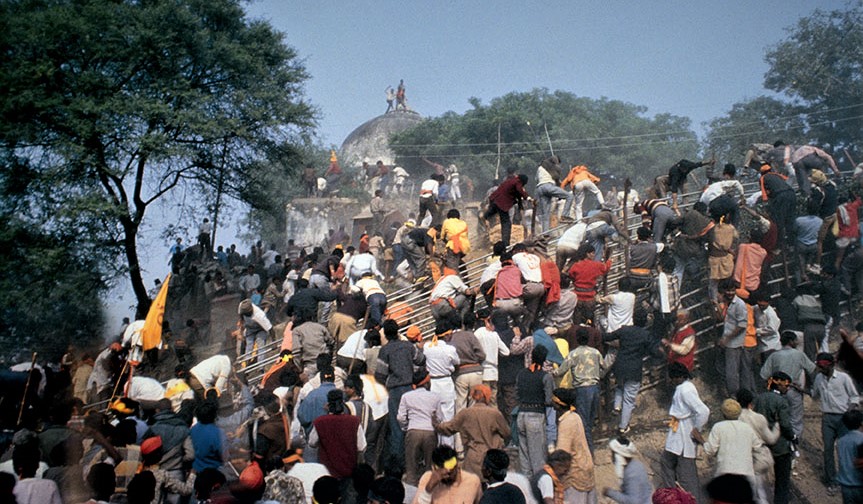
What followed was a repeat of earlier failures: in 2019 on Triple Talaq, between 1950 and 2019 on the Babri Masjid case, and in 1985 on Shah Bano.
Leaders and organisations continued collecting donations from poor Muslims in the name of saving their religion, properties, monuments, and laws—by fighting legal cases rather than admitting that, in several cases apart from Babri Masjid, they promoted a one-dimensional interpretation of Islamic law or Shariah.
Now let’s examine why these leaders are jubilant about the concessions granted by the Court.
The first observation by the Supreme Court relates to Section 3(r) of the Act, which requires anyone creating a Waqf to prove they have been practising Islam for at least five years. The section itself seemed mischievous, as it cast doubt on the very foundation of a Muslim forming a Waqf.
Moreover, the government currently has no mechanism to ascertain a person’s religion except self-declaration. Even the most efficient government or bureaucracy would fail to devise such a system.
The second observation concerns Section 3C, which empowered district collectors to determine whether properties claimed as Waqf belong to the government or Muslims. The court stayed the provision that would strip properties of Waqf status even before the collector’s inquiry was complete, calling it “prima facie arbitrary.”
This observation can indeed be seen as a victory for the Muslim petitioners, as it curtailed bureaucratic powers and checked any future government plan to take over Waqf properties.
In its third observation, the Court rightly balanced the decision-making power of the Central Waqf Council and 11 state boards by capping the number of non-Muslim members to a minority.
On the other hand, the court upheld the deletion of the “waqf by user” provision, which had allowed properties to be declared Waqf based on longstanding religious use without formal documentation. This goes squarely against the petitioners.
In India, numerous properties lack legal documents of ownership or use, and in such cases, the occupier is often deemed the owner.
Under Shariah too, a property is not considered Waqf until its use and transfer of ownership are established under either state law or Islamic law. Thus, the retention of this provision raises questions about the Act’s future.
Lastly, the Court declined to interfere with provisions voiding Waqf status for properties that are protected monuments or belong to Scheduled Tribes.
On monuments, it noted that the Ancient Monuments Acts already permit continued religious observances, suggesting no real curtailment of freedom.
On tribal lands, it stressed the constitutional obligation to protect “one of the most marginalised and vulnerable sections” of society, finding the restriction justified despite its selective application to Muslim dedications.

However, if an impartial survey of Waqf properties taken over by the Archaeological Survey of India (ASI) under the Ancient Monuments Preservation Act, 1904, or the Ancient Monuments and Archaeological Sites and Remains Act, 1958, were carried out, it would show that apart from the three major national monuments—Taj Mahal, Red Fort, and Qutub Minar—most others are decaying or neglected.
Many mosques are closed to worshippers, and where access is allowed, it is often only on Fridays and after paying an entrance fee (e.g., Firoz Shah Mosque, ITO, Delhi).
Furthermore, the revenue generated in crores is not spent on the upkeep of these protected Waqf monuments. Reportedly, the Taj Mahal generated approximately ₹98.7 crore in ticket sales in 2023–24, according to the Union Ministry of Culture.
The Red Fort followed with ₹41.3 crore, and Qutub Minar with ₹30.6 crore. Both are UNESCO World Heritage sites.
The battle is not over yet; the Supreme Court’s freeze will remain until all of the nearly 65 petitions against the Act are conclusively decided.
In this backdrop, it is crucial for Muslim leaders and organisations to take a united stand, adopt a common strategy, and fight with a true Niyah (intention) for victory.
Intentions always affect results, and what the Muslim community needs today is not petty individuals representing themselves, but a united leadership genuinely concerned with the welfare and upliftment of the community.
This article is also published in Punjab News Today and can be read here.









The criticism of so-called Muslim leadership is fine but in the matter of Waqf the author of this article himself appears ignorant of ground realities when he makes statment like this:
“If, in 2025 or earlier, they had presented a blueprint for better management of Waqf properties nationwide and pledged before a court to abide by it, no government could have pushed through such anti-Muslim legislation. Muslim leaders knew these issues all along, yet took no proactive action and continued with reactive, knee-jerk responses.”
Unlike Triple Talaq, Waqf is a codified law. Therefore, there was no reason for Muslim leadership to prepare any blueprint for better management. They had said whatever they had to say, before the JPC and the Waqf (Amendment) of 2013 was carried out by the parliament. Unaware of all this the author doesn’t understand the real reason for mismanagement, if any, in Auqaf. The real reason is the failure of the government in implementation of the Waqf Act, 1995. I had written this in the Memorandum sent through AI Muslim Majlis e Mushawarat and had presented all the statistics in three podcasts of Danishjuyan.
However, the Muslim leadership has failed to understand the ground on which the Act of 2025 should be challenged.
The problem is that the orthodox leadership consider themselves wisdom personified. They want help with subservience which no educated person would agree to. There is no democratic platform to fight.
I have my reservation about the premises on which Act, 2025 has been challenged.
Qaiser Shamim
۔
۔
The criticism of so-called Muslim leadership is fine but in the matter of Waqf the author of this article himself appears ignorant of ground realities when he makes statment like this:
“If, in 2025 or earlier, they had presented a blueprint for better management of Waqf properties nationwide and pledged before a court to abide by it, no government could have pushed through such anti-Muslim legislation. Muslim leaders knew these issues all along, yet took no proactive action and continued with reactive, knee-jerk responses.”
Unlike Triple Talaq, Waqf is a codified law. Therefore, there was no reason for Muslim leadership to prepare any blueprint for better management. They had said whatever they had to say, before the JPC and the Waqf (Amendment) of 2013 was carried out by the parliament. Unaware of all this the author doesn’t understand the real reason for mismanagement, if any, in Auqaf. The real reason is the failure of the government in implementation of the Waqf Act, 1995. I had written this in the Memorandum sent through AI Muslim Majlis e Mushawarat and had presented all the statistics in three podcasts of Danishjuyan.
However, the Muslim leadership has failed to understand the ground on which the Act of 2025 should be challenged.
The problem is that the orthodox leadership consider themselves wisdom personified. They want help with subservience which no educated person would agree to. There is no democratic platform to fight.
I have my reservation about the premises on which Act, 2025 has been challenged.
Qaiser Shamim