
War hero beats BJP’s ‘VIP road’: Supreme Court orders Haryana to rebuild Karnal green belt


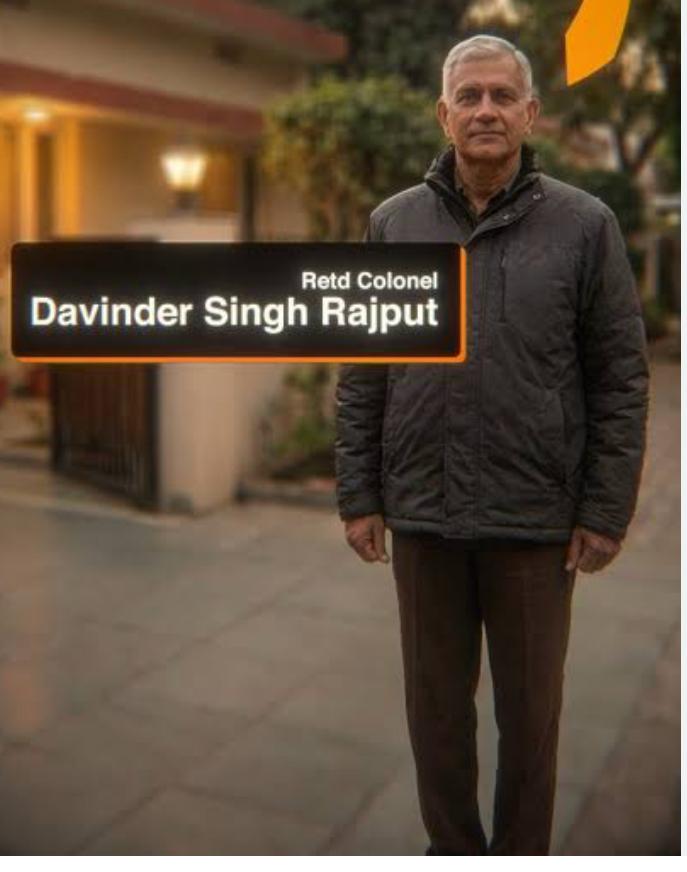
Long after he left the Army, a decorated war hero from Karnal found himself in a battle he calls “harder than a war” — not against an enemy nation, but against a road built to serve a ruling party’s office at the cost of a neighbourhood’s trees and planning laws. This is the story of Colonel Davinder Singh Rajput (Retd), a 79-year-old Vir Chakra awardee from the 1971 Indo-Pak war, and his lone, methodical fight that ended with the Supreme Court of India ordering Haryana to undo a politically convenient road and restore a lost green belt.
From Battlefield To By-lane
In 1971, then Captain Davinder Singh Rajput was wounded in combat and honoured with the Vir Chakra for gallantry. After taking premature retirement in 1992, he bought a 1,000-square-yard plot in Sector 9, Karnal, paying extra for a promised green belt in front of his home — a strip of trees and open space sold to residents as a permanent buffer in a planned residential area.
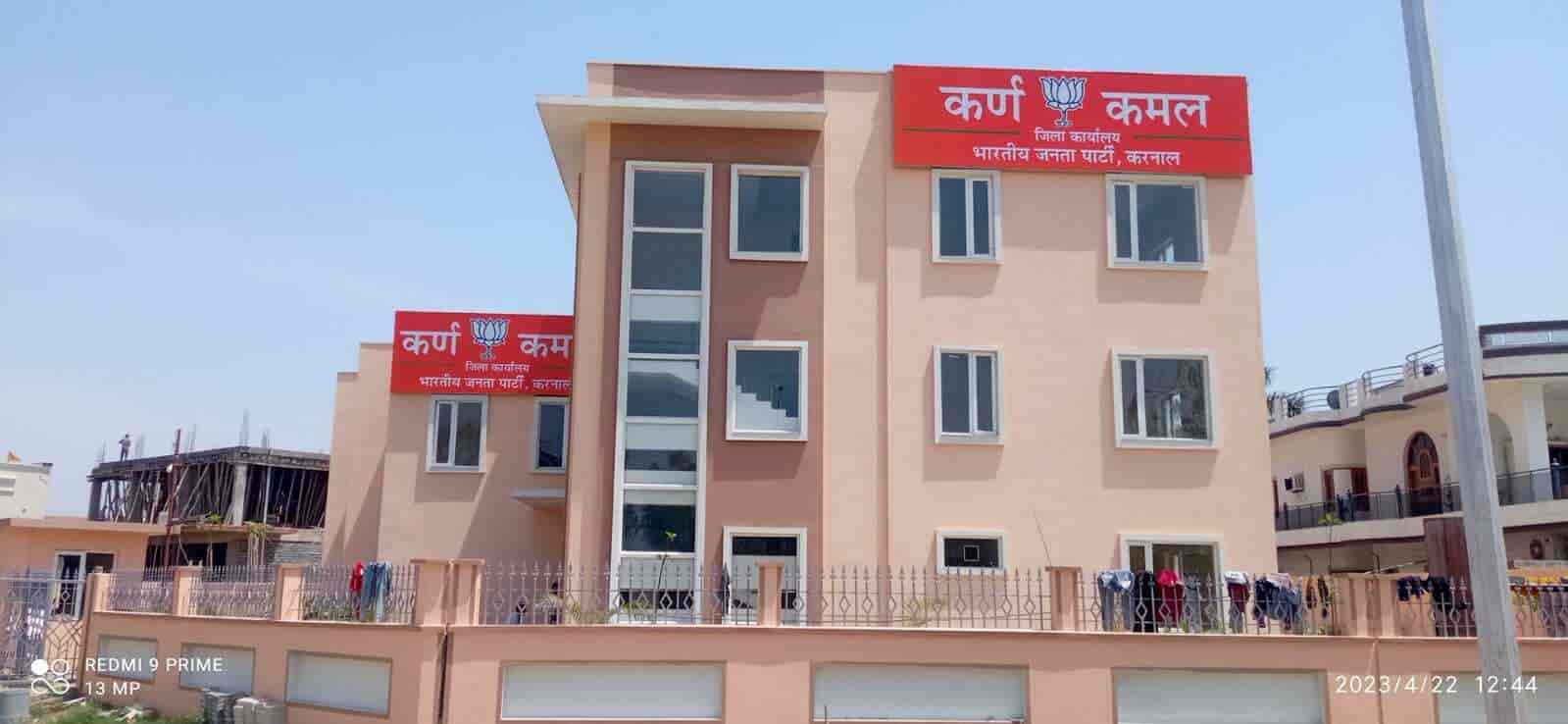
That protection quietly eroded over time. In November 2018, the Haryana urban authority allotted the same green belt land, on a freehold basis, to the Bharatiya Janata Party for its new district office, “Karan Kamal”, despite local residents having applied earlier to develop it as a public park. What had been marketed as common ecological space for citizens was reassigned, on paper, to become the front yard of the ruling party.
How a green belt was turned into a VIP shortcut
The conflict erupted in 2023, when residents noticed stacks of cement tiles dumped on the green belt — a clear sign that the area was about to be converted into a paved approach road. The plan was to carve a 10-metre-wide, roughly 100-metre-long road across the green strip to give the BJP office a direct connection to National Highway-44, even though another usable approach road to the highway already existed barely 100 yards
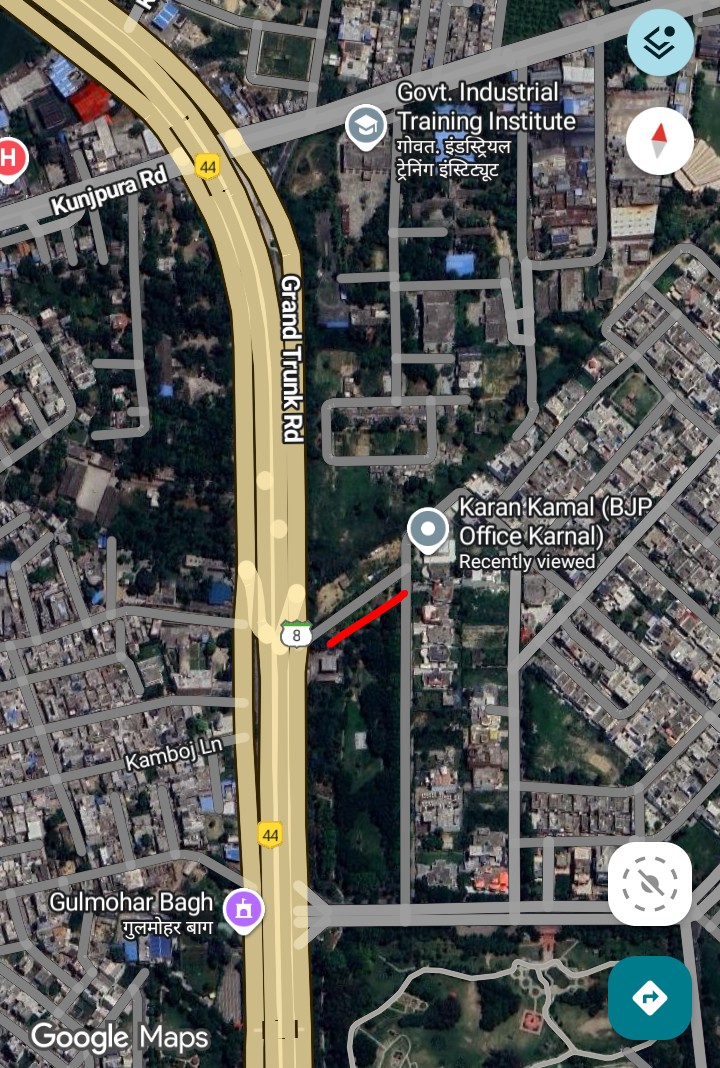
When residents, led by Colonel Rajput, objected and raised the issue, officials briefly removed the tiles, but the larger design remained untouched. Local BJP functionaries pushed for the road, arguing that frequent vehicle movement and VIP cavalcades to the party office required a straighter, faster link — effectively prioritising political convenience over the neighbourhood’s safety and environment.
The Night The Trees Fell
On October 5, 2023, the state’s intentions became undeniable. In a short, brutal operation, about 40 fully grown trees on the green belt — many planted decades ago — were felled by a 15–20-member team, transforming a leafy buffer into a raw construction corridor. Residents warned that funnelling high-speed traffic through a sharp turn in a residential lane was dangerous, especially when an alternative road existed, but those concerns were brushed aside along with the cut trunks.
Two days later, Colonel Rajput approached the Punjab and Haryana High Court, seeking a judicial inquiry, cancellation of the BJP office allotment, and restoration of the green belt. On October 10, the court admitted his plea and listed it for October 20. On the ground, however, the Haryana Shahari Vikas Pradhikaran and local bodies moved faster than the judiciary.
‘Harder Than War’: Racing The State
According to the colonel’s pleadings and contemporaneous accounts, on October 11 the administration unleashed full-scale construction: excavators, bulldozers, dumpers of sand and concrete, and 100–150 workers were deployed round the clock to finish the road before any effective court order could stop it. By the time the High Court ordered status quo on October 16, roughly 95 per cent of the access road to the BJP office was already complete, rendering judicial “restraint” largely symbolic.
“In war, you know the enemy in front of you,” he later said, describing this phase as more draining than his time at the front. Here, he was fighting a system that claimed to act in “public interest” while fast-tracking a road that benefited a party office at the direct cost of residents’ rights and the city’s own layout plan.
High Court Setback, Then A Turn In Delhi
The High Court ultimately dismissed his petition on May 3, 2025, making remarks about “elite” litigants that stung residents who had, in fact, paid a premium for the very green belt now serving a party office. With the road complete and his case thrown out, many would have stopped. Instead, the 1971 veteran turned to the Supreme Court, challenging both the road and the High Court’s order.
By late 2025, the matter reached a bench of Justices J. B. Pardiwala and K. V. Viswanathan. At a hearing on November 26, the judges sharply criticised the uprooting of 40 mature trees to give the BJP’s Karnal office a special access road, calling the state’s actions “pathetic” and warning that Haryana and its urban authority could be “taken to task” for the manner in which they had proceeded. The court questioned why development for a political office began by wiping out a designated green belt in a residential area.
Supreme Court tears into Haryana
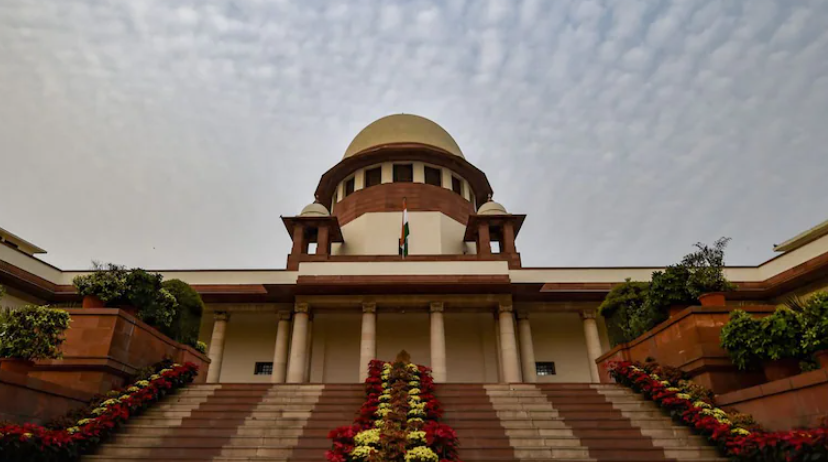
On December 10, 2025, the Supreme Court delivered a decisive order that cut through the state’s defence. Directing Haryana to restore the green land to its original state within three months, the bench rejected the urban authority’s explanation as “not only an eyewash but rather an attempt to mislead the Court”, and made it clear that the access road built through the green belt could not be allowed to stand.
The court instructed the Haryana Shahari Vikas Pradhikaran and the Karnal Municipal Corporation to:
- Stop using the green belt as a thoroughfare to the BJP office.
- Physically restore the green area, including replanting, within a fixed timeline.
- Respect the original land-use designation, rather than retrofitting the law to justify the road after cutting the trees.
The ruling amounted to a direct indictment of the state’s decision-making and, by extension, of the political appetite that drove the project, sending a clear message that party offices cannot override urban-planning norms and environmental safeguards.
BJP’s Defence, Residents’ Anger
BJP leaders involved in the project claimed the road was for “public convenience”, citing smoother traffic and easier access for all users of the area, not just party workers. They maintained that the office allotment followed due process and promised to comply with the Supreme Court’s directions — without acknowledging that an alternative access route already existed and had been ignored.
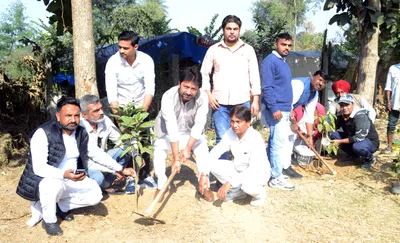
For residents and the retired colonel, these justifications never addressed the core facts: a legally designated green belt, for which they had paid extra, was handed to a political party; around 40 trees were cut in a single operation; and a hurried construction drive nearly outpaced judicial oversight. To them, the Karnal road became a symbol of how state power can bend planning and environmental norms to suit partisan interests.
A small strip, a larger warning
Even after his Supreme Court victory, Colonel Rajput has avoided framing the outcome as a personal triumph. He points instead to the months of silence from ministries, tribunals, and state authorities after he wrote desperate letters following the felling of trees, and to his own sense of helplessness despite being a decorated veteran with some resources and visibility.
If someone like him can be sidelined until the country’s top court intervenes, he asks, what chance does an ordinary citizen have when development is defined by those in power and executed in their favour? In forcing Haryana to undo a “VIP road” to a ruling party office and restore a damaged green belt, the Supreme Court has turned one retired soldier’s lonely fight into a pointed reminder: public land, trees, and planning rules are not political property, and governments — regardless of party — will be called out when they behave as if they are.