

New Japanese Material Dissolves in Seawater, Offering Hope Against Microplastics

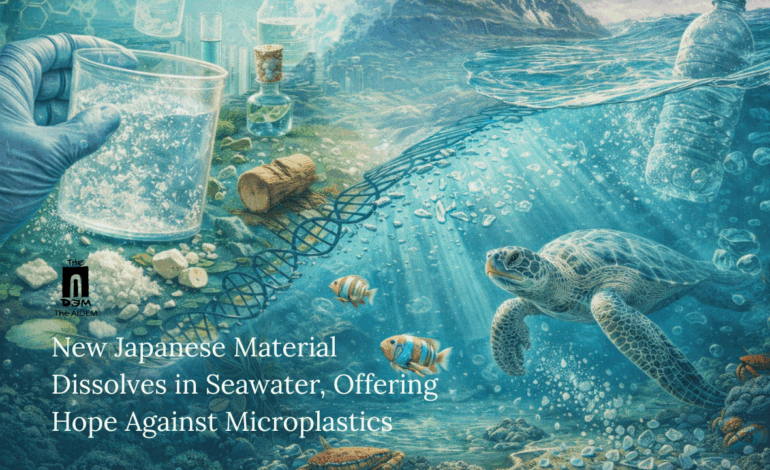
A breakthrough plant-based plastic developed by Japanese researchers retains everyday strength but breaks down in seawater within hours, offering a promising solution to the growing microplastics crisis.
The Growing Global Threat of Microplastics
MICROPLASTICS REPRESENT an escalating global challenge. According to the United Nations Environment Programme, an estimated 2.7 million tons were released into the environment in 2020 alone, with projections suggesting that figure could double by 2040. These microscopic particles are now virtually everywhere.

Despite being used in many reusable containers—as well as disposable items like water bottles—plastic as a material is among the worst offenders for environmental damage.
In fact, the world is facing a longstanding oceanic plastic crisis, with pollution continuing to worsen globally. Entire floating islands of garbage have even made headlines, notably in 2017.
Plastic has become so prevalent in our lives that some researchers now claim we ingest tiny fragments of plastic with every meal—a claim gaining traction amid growing concerns about alarming levels of microplastics being found in the human brain. Thankfully, scientists may have created a new plant-based plastic that is completely biodegradable.
Why Traditional Plastics Are So Hard to Break Down
One of the primary reasons plastic has become so widely relied upon is its low production cost, durability, and versatility. However, that durability comes at a significant cost. Scientists estimate that plastic can take anywhere from 20 to 500 years to decompose, depending on the item.
Plastic is difficult to break down because it is not truly natural. While it is made from natural components, the chemical bonds that give plastic its properties are the result of scientific processes.
Although researchers have experimented with breaking down plastic using air and moisture, new research takes the concept further by creating plastic that is biodegradable from the outset.
It is important to note that this is not the first attempt to develop new types of plastic. In 2024, researchers introduced a plastic capable of “eating itself,” allowing it to biodegrade slowly in landfills.
A New Plant-Based Plastic That Dissolves in Seawater
This latest development, however, approaches the problem differently. Instead of relying on bacteria to break down plastic, Japanese researchers started with wood, injecting it with salt to create a plant-based plastic that rapidly degrades when exposed to saltwater.
Researchers at the RIKEN Center for Emergent Matter Science and the University of Tokyo have created a new plastic made from plant cellulose that retains its strength during everyday use but breaks apart in seawater within a few hours. In laboratory tests, a small piece of the material disappeared in saltwater after about an hour of stirring.
The research team, led by Takuzo Aida, published their findings in the Journal of the American Chemical Society. For transparency, the researchers emphasised that plastics labelled as “biodegradable” are not new, nor is their development entirely novel.
Cellulose-based plastics have existed for some time but are often combined with additives that only break down under specific industrial conditions, such as high heat or composting facilities. The cellulose used in this research was derived from wood pulp.
Scalable, Safe, and Free from Microplastics
This allowed the team to utilise an ingredient that is both FDA-approved and biodegradable. The cellulose was combined with an agent derived from polyethylene-imine guanidinium ions. When mixed with water, the oppositely charged ions attracted each other, forming a strong network of cross-linked bonds.
While these bonds created structural strength, the resulting material was initially brittle and glass-like. Researchers improved its flexibility and durability by adding choline chloride—a food-safe additive commonly used in animal feed and human supplements for its anti-inflammatory properties.

The material also includes a protective coating that prevents accidental breakdown if it comes into contact with saltwater before its intended use.
Although cellulose is abundant—nature produces an estimated 100 billion tons annually—the true promise of this material lies in its adaptability. Instead of adding hard-to-degrade components for strength, researchers can simply adjust the amount of choline chloride to produce different types of plant-based plastic.
Because it does not rely on conventional plastic components, there is no risk of microplastics remaining after degradation. Additionally, given the abundance of cellulose and the widespread availability of the strengthening additives, the researchers believe this plastic can be easily scaled for mass production.
Takuzo Aida stated at a press conference that the team has “created a flexible yet tough plastic material that safely decomposes in the ocean. This technology will help protect Earth from plastic pollution.”

While the researchers acknowledge that this material will not replace all plastics overnight, they believe it represents a significant step forward—without requiring major lifestyle compromises.
Further refinement and testing will be needed before widespread adoption. Nevertheless, this innovation offers a promising path toward addressing the microplastics crisis.
Let’s hope it really does.
Originally published in Punjab Today News and can be read here










Perhaps humans are beginning to care for the planet
A timely and thought-provoking piece that raises important questions.”