


The IT industry’s SaaSpocalyptic moment
A new dread has descended upon the technology sector: the “SaaSpocalypse.”
This term describes the existential threat that autonomous AI agents pose to the traditional Software-as-a-Service (SaaS) model, which resulted in a stock sell-off that spread from Wall Street to Indian markets. It is arguably the most significant disruption to the IT services landscape since the pandemic.
The SaaS model underpins everything from routine document management to customer and resource management in today’s businesses. For many years, the SaaS industry has thrived on a rent-per-user model. It used specialized tools and high switching costs to effectively lock customers into lucrative per-seat subscriptions. However, this business model is collapsing. As AI evolves from passive chatbots to active agents capable of executing complex workflows, the need for human-centric software licenses diminishes. When an autonomous agent performs such tasks, the recurring revenue generated by multiple human users disappears. Companies can now avoid the need for multiple software licenses and many employees.
This current market panic was triggered by Claude Cowork plugins released by the AI startup Anthropic on January 30. Cowork is an AI agent that automates file, data, and software tasks for non-technical users. By successfully automating complex administrative and legal tasks ranging from contract reviews to research synthesis, this update demonstrated that general-purpose AI can now perform professional work autonomously.
The industry was blindsided by a brutal realization: a single AI tool can effectively obsolete specialized software worth billions of dollars, signaling a direct intrusion into the domain of traditional IT and other professional services. This spooked the market. Its response was immediate and harsh: investors fled from companies vulnerable to AI disruption. The result was an unprecedented sell-off that destroyed $300 billion in market value in less than a week.
Concerns about AI replacing engineers and other professionals have spread to India’s headcount-intensive IT sector too. In the week ending February 13, Tata Consultancy Services saw its market cap fall below ₹10 lakh crore as its stock hit a 52-week low. Simultaneously, the Nifty IT index dropped 8.2%, marking its worst weekly performance since April 2025. Total losses for the sector have reached approximately ₹4.7 trillion in market capitalization this year.
While many are panicked, some analysts remain optimistic. JPMorgan, for instance, argues that Indian IT firms will survive by acting as critical “plumbers” who integrate enterprise software into specific business contexts. Nevertheless, the threat of revenue compression persists as traditional business models become increasingly obsolete.

AI agents, catalysts of the disruption
The current wave of generative AI traces its roots back to 2017, when Google Research published the seminal paper, “Attention Is All You Need.” By introducing a new deep learning architecture called Transformer, these researchers enabled AI to process data sequences efficiently, laying the groundwork for large language models. However, the true turning point in the generative AI story occurred in late 2022, with the launch of OpenAI’s ChatGPT. Since then, AI has rapidly mastered text, video, and professional-grade coding, propelling us into the current era of autonomous, agentic AI.
The Claude Cowork plugins that triggered the industry-wide panic weren’t a ‘black swan’ event. They were just a wake-up call to the new reality: cost-effective AI is now ready to replace human-intensive services. Survival of the tech sector, especially the services part of it, now depends on its ability to outlast the very automation it helped create.
Matt Shumer, CEO of HyperWrite, recently triggered a viral conversation with his essay, “Something Big Is Happening.” In it, he warns that AI development is moving much faster than the public—or even the majority of the tech industry—realizes. Shumer argues that this wave of automation is unique: “AI isn’t replacing one specific skill. It’s a general substitute for cognitive work. It gets better at everything simultaneously.” He is not alone in his assessment. A growing number of industry insiders believe that, while everything appears normal on the surface, the underlying capabilities for mass disruption are already present. Some of them believe that in many industries, the transition from a useful tool to total job replacement will occur soon rather than in decades.
While the timing and scale of potential job losses remain uncertain, one thing is clear: if agentic AI delivers on its promise, the business world will change forever. Instead of software being a destination where work happens, it becomes a utility—a commodity that AI agents use behind the scenes. As agents take over the workplace, many existing white-collar jobs also will disappear.
This shift doesn’t necessarily destroy value; it simply relocates it. Profits are shifting away from the traditional application layer and toward foundational AI models and applications. In this new landscape, all except AI providers lose.

If it is not a SaaSpocalypse, it’s a bust
AI’s potential to disrupt business models and replace human labor creates one set of anxieties. However, a different fear is gripping the tech industry in parallel: the possibility that AI’s promises won’t be realized in time to justify their cost. This concern stems from a staggering surge in AI investment, fuelled by massive infrastructure spending from Big Tech and a historic influx of venture capital into startups.
In 2025 alone, US tech titans such as Microsoft, Alphabet, Amazon, and Meta invested approximately $400 billion in AI initiatives and infrastructure, a 70% increase over the previous year. The startup scene is equally frenetic. According to Crunchbase, AI-related startups captured nearly half of all global venture funding in 2025, reaching an all-time high of $212 billion. This concentration of capital is unprecedented; just five companies—OpenAI, Scale AI, Anthropic, Project Prometheus, and xAI—raised 20% of the world’s venture capital across all industries. OpenAI, in particular, shattered records as it sought to fund the massive computing costs required for its frontier models.
At the same time, a glaring gap exists between these investments and actual returns. AI firms currently bring in about $50 billion a year in revenue. Yet, according to The Economist, global investment in the data centers required to run them is expected to hit $2.9 trillion by 2028.
Beyond the sheer scale of spending, analysts are wary of “circular” investments, where tech giants fund startups that then turn around and buy the giants’ hardware and services. Nvidia, for example, is a major investor in OpenAI, which is a primary buyer of Nvidia’s specialized chips. These deals create a complex web where growth is essentially subsidized by the companies themselves rather than organic external demand.
All these make markets nervous about the bust of the AI bubble. If promised productivity gains do not materialize quickly enough to pay this trillion-dollar bill, the market could face a violent correction. Investors are already showing signs of fatigue. In January 2025, the launch of the efficient Chinese chatbot DeepSeek triggered a massive sell-off of US AI stocks, causing Nvidia’s shares to drop 17% in a single day as investors questioned the necessity of high-cost American hardware.
Even when tech giants report growth, the market remains on edge. In late 2025, Alphabet and Microsoft saw their shares fall after reporting earnings. Investors were spooked by the escalating costs of the AI arms race. By February 2026, the Nasdaq plunged as investors aggressively rotated out of AI-linked stocks and into safer cyclical sectors like industrials and financials. Large tech companies dominate major stock market indices. So, if confidence in these few AI leaders wavers, the broader market and the entire financial system could feel the shock.
A potential AI bubble bust would affect more than just speculative investors, threatening the global economy’s stability. In a recent article for The Economist, Gita Gopinath—a Harvard professor and former Chief Economist for the IMF—argued that the current landscape is far more dangerous than the dot-com bust of 2000. According to her analysis, a correction on the scale of the dot-com era could wipe out $20 trillion in American household wealth alone. Such a loss would be equivalent to approximately 70% of US GDP, reducing domestic consumption by 3.5 percentage points. Given the interconnectedness of modern markets, Gopinath predicted that the global consequences would be equally devastating.

A baffling paradox
As we have seen, the technology market is currently defined by a perplexing central paradox: two competing, existential fears that cannot both be true. This tension is the driving force behind today’s extreme market volatility. On one side is the fear of a bursting AI bubble, while on the other is the terror of a “SaaSpocalypse” that renders traditional software and workplaces obsolete.
If the SaaSpocalypse occurs, it will demonstrate that generative AI is a disruptive force capable of automating complex human tasks. This outcome would justify the trillions of dollars spent on chips and data centers. While individual SaaS firms with “per-seat” models may perish, the AI era will have truly arrived.
Conversely, if the AI bubble pops, it will prove the technology was overhyped and unable to deliver on its transformative promises. In this world, the “SaaSpocalypse” is cancelled. Traditional software remains indispensable because AI lacks the capability to replace it. As the status quo holds, investors will likely flee the wreckage of the AI trade, returning to the safety of predictable, recurring revenue from traditional models.
Such a market crash would not mean the end of AI forever; rather, it may simply be a case of “too much, too soon.” History provides a clear precedent in the dot-com collapse of 2000. While that crash seemed to signal the end of the internet era, a few companies like Google, Facebook, and Amazon eventually rose from the rubble to fulfill its original promises, fundamentally reshaping global capitalism. If AI follows this trajectory, a post-crash recovery could lead to a far more potent and disruptive “SaaSpocalypse” than the one the market currently fears, a harsher form of digital capitalism.
Anyways, as of now, the market is struggling to price both outcomes simultaneously. Ultimately, one will win and the other lose. Its success will depend on identifying the winners at the earliest and paring the losses. But this is just the perspective of the financial markets. Unfortunately, regardless of which side wins the market battle, the real economy will struggle to survive these tremors.
That is bad news for the ordinary people who inhabit only the real economy.

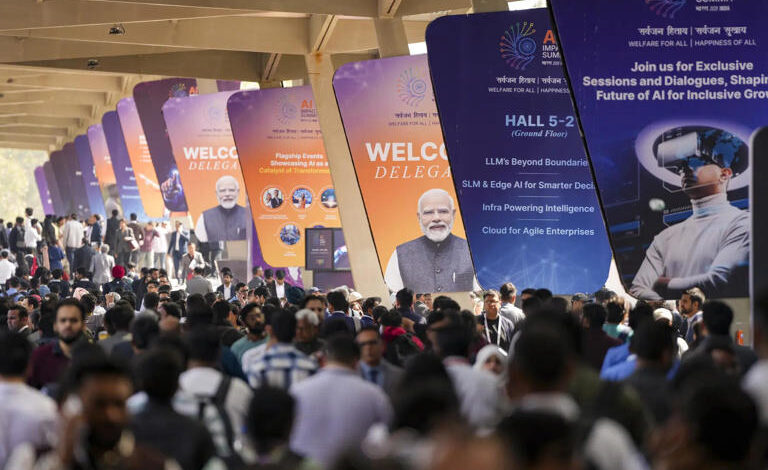








This piece rightly shows that “disruption” is not neutral. Whether Alparadox wins or loses, such platforms are already reshaping power, labour, and decision-making. The real issue is accountability: who controls these systems, who bears the risks, and who benefits from the disruption?