


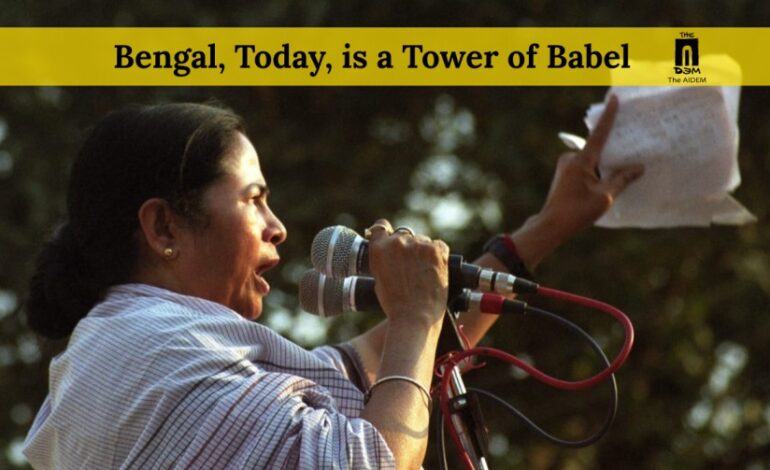
“They did not storm the gates; they altered the ledger.” In Bengal today, power does not merely compete — it recalibrates who gets to exist within the democratic frame. What disappears is not just names, but presence, memory, and the quiet assurance of belonging. Beneath the spectacle of rallies and rhetoric, something colder is at work: an administrative silence that redraws the boundaries of participation without ever declaring it. This is not the drama of ballots cast, but of voices pre-emptively erased — where democracy survives in form, even as its substance is steadily negotiated in shadows.
If anyone were to think of convening a gathering of disenfranchised voters, they would find no ground large enough in Bengal right now. The precise count of how many names have been struck off remains, as of this writing, unreachable from the Election Commission’s website — every attempt runs into a Captcha wall. But the opposition leader, BJP’s Suvendu Adhikari, said the other day that 7.9 million people have been cut from the rolls.
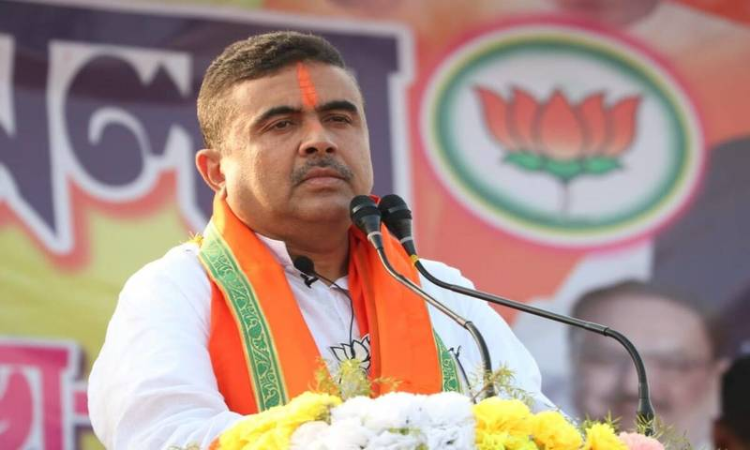
Calcutta has been my Karmabhoomi for nearly 27 years. I first stepped off the train at Howrah during the Left’s long unbroken rule. I have seen other parties struggling to vote in Left bastions and watched it happen firsthand. I have lived alongside Mahasweta Devi in Nandigram — this was after fourteen farmers had been shot dead by police, and Nandigram was fighting CPM in the open. Today’s BJP leader, Suvendu Adhikari, was then a formidable Trinamool commander. On either bank of the small canal where the Nandigram firing happened, the people had split clean down the middle.
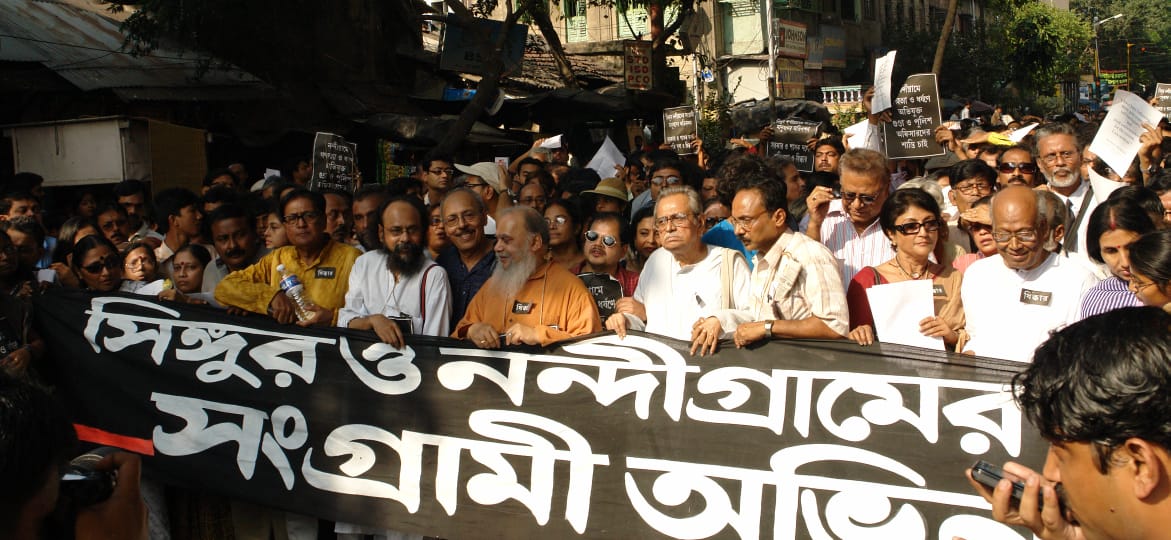
I was walking alone, hunting for visuals, and found myself at that bridge. Children who had shaken off the fear of the shooting were playing along the canal bank — I was filming them. Someone called out sharply. I didn’t lower the camera. I kept the lens trained on those unselfconscious faces. A local leader walked over and ordered me to stop. By then, the shadow of fear had already crept back into the children’s eyes. They scattered. I talked my way out of it — said I was from Kerala, an Achuthanandan man — but the next day they ran into me again, walking with Mahasweta Devi. Eyebrows went up first. Then, slowly, they came down.
Since 2011, Mamata Banerjee has been ruling Bengal. Fifteen years, and Trinamool Congress has not loosened its hand on the wheel. The CPM today cannot muster even a single MLA. At the last assembly election, the BJP threw everything at the state, every trick in the book. Mamata held up a piece of fried fish and asked Bengal: do you want something home-grown, or will you take a stranger’s hand? This time around, the BJP candidate from Howrah is campaigning while literally carrying a large fish, which tells you something about Mamata’s staying power, her ability to set the terms even for her opponents.
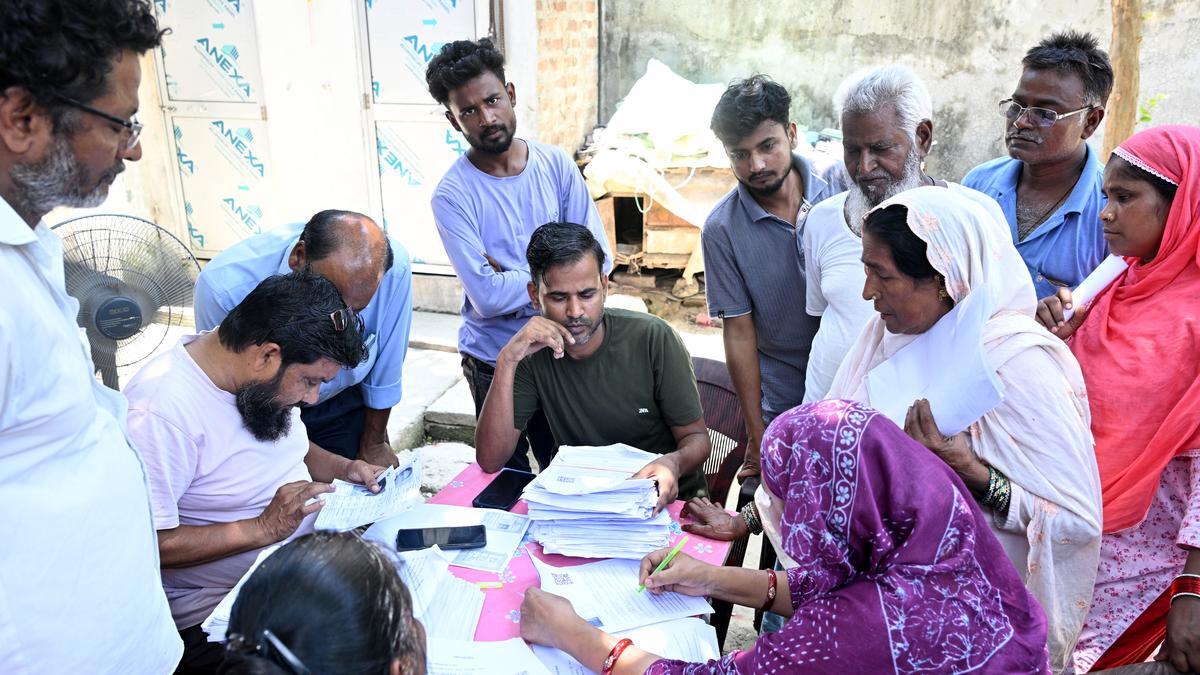
But in 2026, the BJP is playing a longer game, going after the very foundations. Trinamool won the last election by a margin of roughly 6.5 million votes. This time, nearly twice that number of voters have been erased. That Mamata succeeded in driving the implications of this Special Intensive Revision (SIR) process into the heart of the Bengali electorate is her first victory in this cycle. Even as anti-incumbency simmers among the middle class, her ability to make survival the central question is no small thing. Her welfare schemes for women are the centrepiece of her campaign. Of the 291 Trinamool candidates fielded, 52 are women, 95 are from Scheduled Castes and Tribes, and 47 are from minority communities. The candidate list has become the manifesto.
Suvendu Adhikari, for his part, parades his numbers before the cameras like a man who has already won. Let me offer two glimpses from the Supreme Court hearings on SIR — the Election Commission’s voter-list cleansing drive — just to get a sense of the absurdity at its core. Names from the 2002 voter rolls, written in Bengali script, were run through an AI system in 2026. A spelling mismatch was enough for a red light. Minorities were swept out wholesale. And surnames like Roy, Ray, Chatterjee, Banerjee, Mitra, Dutta, Dasbhaumik — all struck off at a stroke. How casually the court sat through arguments about a guillotine falling on the voting rights of 6.5 million people! When the Election Commission was pressed, it grudgingly acknowledged complaints had been raised — but its senior counsel argued, with a straight face, that none of these complaints came from ordinary voters; they all came from political voters.
Even CPM sympathisers will tell you privately what the party’s old guard secretly wishes: that even this kind of scorched-earth purge might at least be enough to finally uproot Trinamool. A party that, fifteen years ago, was raising funds by sub-contracting BJP’s wall-painting campaigns now finds itself, this election, without enough people to paint walls. A sorry state of affairs.
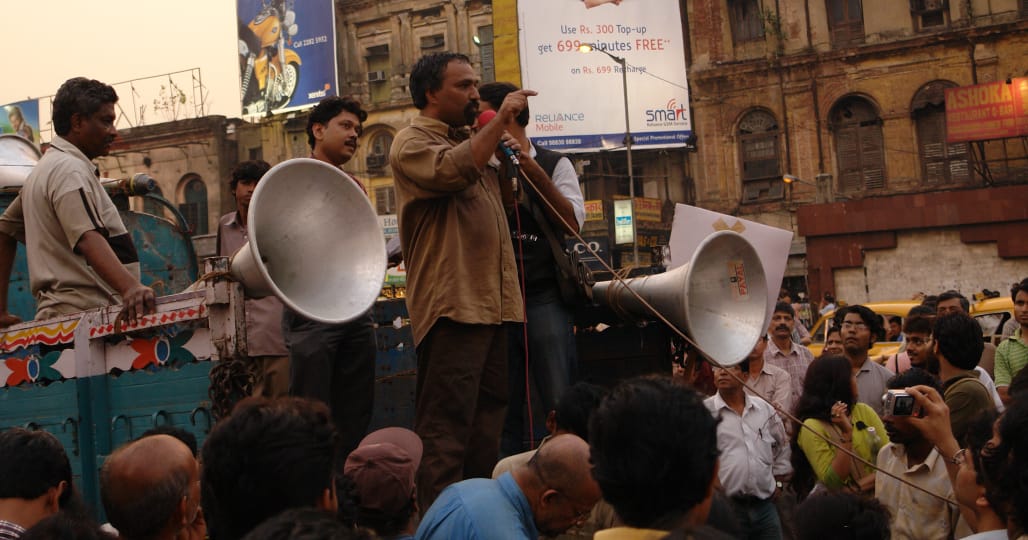
Let me circle back to Nandigram, this time through the lens of folklore. The story of Nandigram is woven into how 34 years of unbroken Left rule finally came undone. When Mamata contested from two seats last time, she lost Nandigram to Suvendu Adhikari. This time, Suvendu has picked Bhabanipur — Mamata’s own backyard — as his second seat. And it is from her constituency alone that more than 47,000 voters have been struck off through SIR.
What I witnessed on the Nandigram canal bank was a shift from innocence to fear. But what I sense now is something more complicated moving inside the Bengali mind — a hesitation, a self-argument: the people who embraced Mamata in 2011, wanting to teach a wayward CPM a lesson, cannot quite bring themselves to acknowledge that it was BJP which rushed in to fill the vacuum the party left behind. They are caught between knowledge and denial.
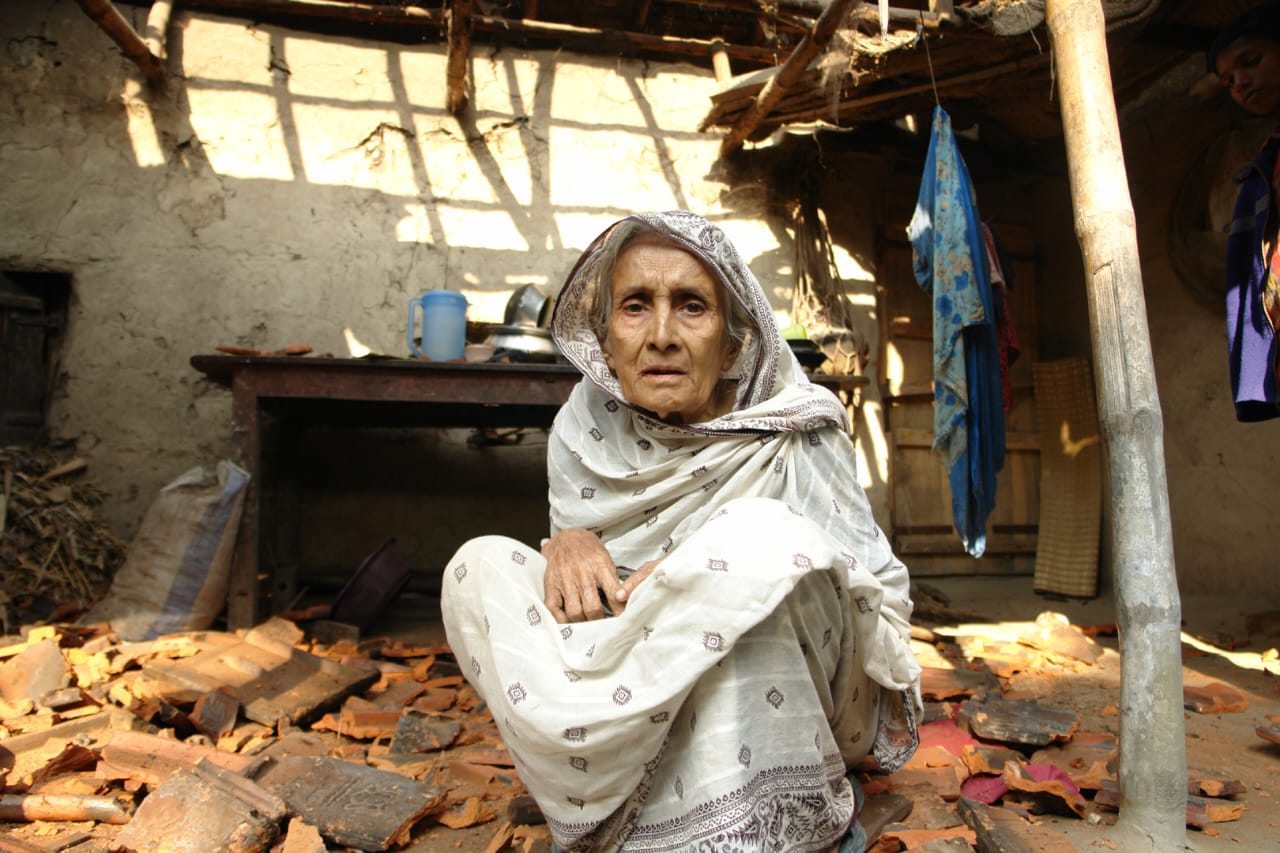
And so, when they reach the polling booth, they hold their nose and vote for Mamata — the lesser of two evils.
The fortress walls around the 2026 polling booth are built from Virtual Reality. The SIR process itself was run without a paper trail; no machine-readable voter list was provided. That opacity, and Bengal’s unresolved internal contradictions, stand face to face inside the booth. Only a rollercoaster cinematic language could hope to capture what happens here.
Bengal, today, is the Tower of Babel.






So evocative . The impressions of a visual narrator delving into society and politics . Thank you for this Dear Joshy sir
“This article sharply captures the growing complexities and contradictions in Bengal today. It reflects how diverse voices, when unheard, can turn into confusion rather than dialogue.”