

Thinking Aloud on the Very Existence of the Global Working Class on This May Day

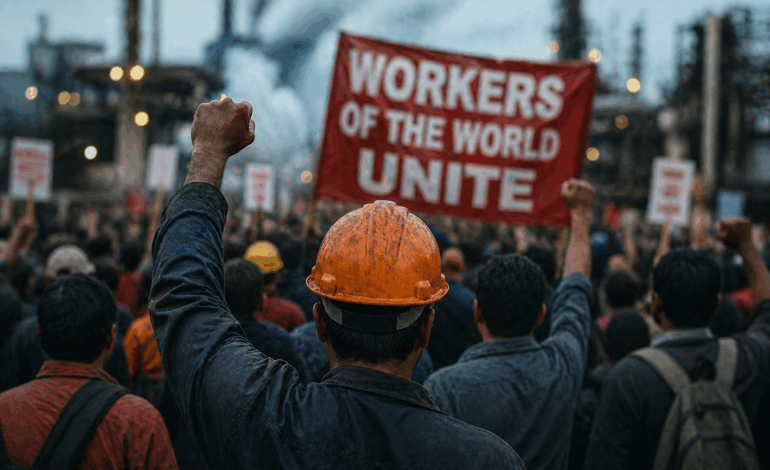
“Workers of the World, Unite!
You have nothing to lose but your chains!”
This clarion call, issued a century and a half ago to the international working class, remains profoundly relevant today. It requires only a small but vital amendment. For what the working class now stands to lose is not merely its chains, but the very soil, water, and air upon which its survival—and indeed all human existence—depends.
The blood shed on the streets of Chicago in the struggle for an eight-hour workday continues to inspire and energise labour movements across the globe. The fight for workers’ rights persists unabated. As a result of industrial growth, labour movements remain the largest organised force in society today. Organised labour has gained the strength and capacity to play an active role in shaping the course of world history.

Yet, at this critical juncture in industrial development, one must ask: Are labour organisations truly fulfilling their historical responsibilities? Do their leaders fully grasp the imperatives of our time? Why have labour movements been slow to recognise and confront the challenges of this new era? Why do they often limit themselves to narrow bargaining roles instead of responding boldly to broader social realities? Why are they reluctant to intervene on behalf of marginalised communities who are becoming the primary victims of modern development, large-scale construction, and resource depletion? Why do they struggle to assimilate the hard-won realisations of the new age? And who bears responsibility for the fact that, in India, organised labour movements frequently find themselves on the opposing side of environmental struggles?
Labour organisations in India must rise to these urgent questions. As humanity confronts the bitter consequences of over-industrialisation, and as people in developing countries face increasing exploitation under new economic policies and globalisation, organised labour cannot afford to remain confined to its immediate concerns. Recognising that environmental destruction and resource depletion ultimately threaten the very survival of humankind, labour movements must prepare for more effective, environmentally conscious intervention. The working class is better positioned than any other social group to shoulder these historic tasks, for it is the class that has always known suffering and struggle most intimately.
The Twilight of the Industrial Age
The Industrial Revolution delivered two major achievements to human life: a dramatic rise in material standards of living and a powerful sense of unity among working people. Both have compelled humanity to envision a future beyond conventional existence. Industrial development also redefined human relationships. Its most far-reaching consequence, however, was the transformation of nature’s resources—once used sustainably for livelihood—into mere ‘raw materials’. Looking back over a century and a half of industrial history, we must critically examine whether this transformation truly represented qualitative progress.
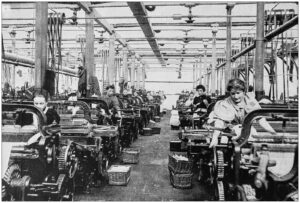
The discovery of oil, the invention of the steam engine, and the mechanisation of production dramatically accelerated the exploitation of natural resources. In just two centuries, a culture shaped over tens of thousands of years was fundamentally altered. Distances between continents vanished, yet the natural resources consumed during this period may well equal the total resources humanity had drawn upon since it first inhabited the Earth. We must begin our analysis from this sobering realisation.
Overexploitation has now pushed the industrialisation process itself into crisis. The scarcity of traditional energy sources threatens to disrupt global economic and production systems. Accepting this reality and reorganising work and the working class accordingly is a historic task that today’s labour movements must embrace.
Climate Change and Global Warming
The crisis born of excessive industrialisation has breached all limits and now looms large before humanity. There is a growing consensus that soil, water, and air have been polluted beyond easy repair. This crisis manifests most clearly in climate change and global warming. If carbon emissions—commonly known as greenhouse gases—continue at the current pace, all prospects for future recovery may be closed off. Compounding the danger is the risk that global warming will accelerate its own pace through feedback loops.

While some experts believe the crisis has already peaked, others warn it will become catastrophic in 20 to 30 years. In any case, few doubt that it stands at our doorstep. Climate disruption is already causing significant declines in agricultural production. Rising temperatures bring alternating droughts and floods. We must heed the clear warnings embedded in the increasing frequency of natural disasters.
Reducing Carbon Emissions
Significantly reducing carbon emissions is no longer a policy preference—it is a matter of humanity’s very existence. Cutting the use of coal, one of the largest contributors to these emissions, is among our most pressing duties. Yet for a developing country like India, can such a transition be afforded? This question understandably troubles many, especially those in the labour sector and labour movements, who fear massive unemployment in coal-dependent industries. But can we not find ways to overcome this challenge?

Consider a concrete example: Coal-based thermal power plants continue to dominate India’s electricity generation, accounting for roughly 70–73% of total power output in 2025, even as their share of installed capacity has declined to around 43%. In 2025, coal-fired power generation actually fell by nearly 3%, contributing to a 3.8% drop in power-sector CO₂ emissions—the slowest annual growth in India’s overall emissions in over two decades. However, a significant contradiction persists in official policy. While India has committed to ambitious renewable energy targets and its Nationally Determined Contributions (NDCs), the government continues to pursue substantial additions in coal capacity. Plans include bringing online around 35 GW of coal plants currently under construction, with further proposals for new capacity in the coming years. The National Electricity Plan projects total installed power capacity to reach approximately 870–900 GW by 2031–32, with coal still playing a central role in ensuring baseload power. Such inconsistencies between declared climate goals and ongoing expansion of fossil fuel infrastructure continue to raise questions about the coherence and urgency of India’s energy transition.
The solution lies not in denial but in a determined shift towards environmentally friendly, low-carbon, and decentralised energy sources. A quarter-century ago, this might have been dismissed as utopian. Today, however, alternative energy sources are already making substantial contributions to our energy mix. The working class, together with other progressive social forces, must exert strong pressure on governments to adopt genuinely sustainable energy policies.
Organised Labour Movements in India
In India, organised (unionised) labour constitutes only about 6–7% of the total workforce, amounting to roughly 35–40 million workers. Despite this limited numerical strength, these movements have made decisive contributions to the nation’s progress and to the making of its history. From the freedom struggle to the present day, labour organisations have intervened effectively on critical issues. They have waged—and often won—significant battles for decent wages and improved working conditions.
In post-independence India, trade unions have launched intense struggles that raised broader political questions, many of which deserve a prominent place in the nation’s history. Yet today, organised labour faces multiple crises. The labour codes enacted by the Narendra Modi government are a clear example of this regressive shift. By reducing hundreds of labour laws into four new codes, the legislation has effectively curtailed workers’ fundamental right to organise and engage in collective bargaining. Doubts persist about whether labour movements are effectively resisting these regressive measures. This is evident in special economic zones and the information technology sector, where workers are largely prevented from organising and often lack even basic job security.
A key factor behind this weakness is the outdated ideological stance of many labour organisations and their political leadership towards the new economic order. Even self-proclaimed revolutionary forces have clung to conventional notions of industrial development and progress. While organised labour grapples with these challenges, the vast unorganised workforce faces even greater threats to its livelihood.
Unorganised Workers
It is ironic that, even in this era of globalisation and rapid economic growth, a vast majority of workers in traditional and informal sectors remain largely unorganised. According to recent estimates, the informal or unorganised sector continues to account for around 85–90% of India’s total workforce, encompassing approximately 500–550 million workers.
Although labour movements are aware of job losses in the organised sector, they rarely consider how industrial policies affect the far larger unorganised workforce. When natural resources are diverted to industries at subsidised rates, labour organisations have a responsibility to examine the impact on the tens of thousands of traditional workers who depend on those same resources for their livelihood.
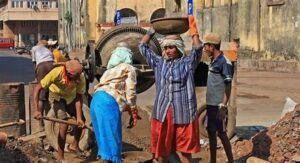
Take, for instance, workers in the reed and bamboo sector. Reed and bamboo are vital raw materials for paper and rayon production. Governments supply these materials to large factories at nominal prices, while the lakhs of traditional workers who depend on them receive meagre returns and face severe shortages. A single company often consumes twice as much reed or bamboo in a year as tens of thousands of traditional workers use in a single day. When supply gaps emerged, governments prioritised industrial needs through policies such as the social forestry programme of the mid-1980s, which focused on supplying raw materials to industry. Decades later, the same government began uprooting acacia and eucalyptus plantations, citing their damage to water resources—precisely the environmental concerns raised by protests in the late 1980s, which were then dismissed as ‘anti-development.’
The reed and bamboo sector is only one example. Traditional occupations in pottery, garments, leather, ironwork, and many others have been devastated by the negative consequences of industrialisation. Tragically, the loss of these ecologically sustainable livelihoods elicits little concern from either the public or organised labour movements.
Where Labour Stands on the Environment
The majority of labour movements in India have adopted the view that environmental struggles run counter to workers’ interests. Consequently, trade unions are frequently found opposing protests against environmental pollution—an extremely unfortunate situation.
In this modern era, labour leaders should recognise that workers are often the first victims of industrialisation and chemical-intensive agriculture. Polluted air, contaminated water, degraded soil, and hazardous working conditions directly undermine the health of the working class. Organisations that ought to champion efforts for proper waste management and eco-friendly industrial alternatives too often align themselves with the opposing side.
At the same time, environmental movements in India must also reflect on their own shortcomings. They have often failed to engage labour organisations meaningfully or include workers in their struggles. In many cases, workers themselves have become the immediate adversaries. When livelihoods are threatened, workers naturally resist. Environmental groups should therefore consult with labour representatives in affected industries, pressuring company owners to implement waste treatment systems and other safeguards. Where continued operation of a polluting facility poses clear threats to public health and the environment, ensuring the rehabilitation of affected workers must become a shared societal responsibility. This would remove major obstacles to labour participation in environmental struggles.
A significant part of the problem lies in the fact that many environmental groups lack clear political grounding and are often urban-centric NGOs whose approach alienates workers and ordinary people. We did have at least one visionary labour leader who understood that environmental awareness must be integral to labour organising. He recognised that environmental protection is not a passing concern of the urban middle class but a vital issue demanding the constant vigilance of the working class. This conviction ultimately cost him his life 22 years ago. His name was Shankar Guha Niyogi.
The Legacy of Niyogi: Bridging Labour and Ecology
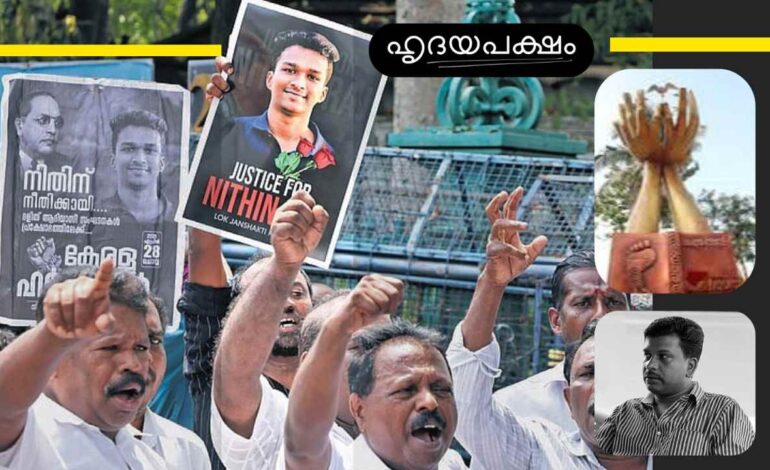
Shankar Guha Niyogi was once a role model for the Indian working class. He organised tens of thousands of workers in the coal mines of Chhattisgarh and was assassinated by goons linked to the mining and liquor mafia on 28 September 1991. His uncompromising fight against the exploitation of miners made him a thorn in the side of the ruling classes. The BJP-led government in undivided Madhya Pradesh (of which Chhattisgarh was then a part) was widely believed to have been complicit in his murder.

Niyogi’s work threatened industrial interests in two profound ways. First, through his militant struggle against routine labour exploitation. Second, by introducing an issue previously absent from the labour agenda: the recognition that uncontrolled exploitation of nature would ultimately endanger the workers’ own existence.
In Chhattisgarh, water sources were drying up and rivers were becoming severely polluted. Niyogi worked to integrate environmental awareness and tree-planting into trade union activities. He was among the rare labour leaders who understood the catastrophic consequences of environmental destruction and that workers would be its first victims. The realisation that the prevailing model of development had a dark side—one that created unemployment and drove people into urban slums—prompted him to seek genuine alternatives.
Niyogi began working in the coal mining areas of Chhattisgarh in 1977 and was a founder of the Chhattisgarh Mukti Morcha. The historic Dalli Rajhara strike led by the Chhattisgarh Shramik Sanghatan (CMSS) for healthy working conditions and decent wages became one of the most intense labour struggles in independent India. Yet what truly distinguished Niyogi was his insistence that workers must recognise their broader social responsibilities.
He actively promoted women’s participation in union work. The women-led anti-liquor campaign by the Chhattisgarh Shramik Sangh was unprecedented in its effectiveness against the liquor mafia. Most revolutionary of all, Niyogi sought to develop an environmental policy for his organisation. The pamphlet Our Environment, prepared when the environmental movement in India was still in its infancy, is a testament to his foresight. It addressed issues such as ozone layer depletion due to industrial pollution and the disappearance of birdlife in mining areas.
Rather than stopping at concern, Niyogi and his organisation pursued practical action plans rooted in the practical spirit of workers. He advocated countering destruction with creative construction. He emphasised that the first victims of deforestation are those who live in and depend on the forests, and popularised the slogan “Understand Our Forests.” Above all, Niyogi sought to articulate a vision in which humans and nature are not seen as separate.
With his assassination, the labour movement lost a leader of rare foresight and integrity—qualities that may well have sealed his fate at the hands of powerful capital interests. The present moment urgently calls for new leaders in the mould of Shankar Guha Niyogi.
Reimagining the Role of Trade Unions: Duties for Survival
The first duty of labour movements today is to recognise that the era of unlimited industrialisation has reached its limits and that natural resources are finite. Trade unions must evolve from being mere instruments for wage increases into a driving force for necessary systemic change.
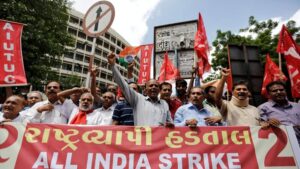
Global warming, climate change, and environmental destruction must feature prominently on their agendas. They must prepare to respond to rapidly changing labour conditions and production relations. Possessing organised strength, they have both the capacity and the responsibility to act.
As a starting point for discussion, here are some key issues labour organisations should address:
- Accept that the era of centralised, large-scale production systems is drawing to a close.
- Assess the impact of declining oil and fossil fuel availability on future industries and production.
- Work to protect traditional livelihoods and organise workers in the unorganised sector.
- When polluting industries are phased out, unions should collectively assume responsibility for retraining and relocating workers into environmentally sustainable sectors.
- Promote workers’ cooperatives that can directly engage in ecologically sound production.
- Develop action plans enabling strong local-level associations to participate effectively in production and distribution.
- Facilitate direct trade networks connecting farmers and artisans with markets.
The historic words written a century and a half ago can now be updated with a small but profound modification. The time has come for the entire working class of the world to stand united—not only against exploitation, but against a model of development that poisons the soil, water, and air, and against the profiteers who endanger humanity’s very existence.
Workers of the world, Unite! Protect!
What you have to lose is your very existence!!








An important reminder on May Day !! Should be circulated far and wide in multiple languages . Please work on that Team Aidem
“This piece offers a thoughtful reflection on the relevance and reality of the global working class in today’s world. On International Workers’ Day, it raises important questions about solidarity, inequality, and the evolving nature of labor across borders—making it both timely and necessary.