

India : A country in Constant Strikes

One hundred and forty years ago on May 1, a workers’ protest for an eight-hour workday held in Chicago’s Haymarket Square ended in a deadly clash with Chicago police. In 1889, the Second International, an international coalition of socialist and labour parties, chose May 1 as International Workers’ Day.
For the working people, May Day is not just a mere commemoration of a historical event. It represents an ongoing struggle against labour exploitation—the very foundation of capitalist profit, as Karl Marx argued. For Marx, the working class was not a passive victim of history but its agent of transformation. He called it the “gravedigger” of capitalism itself. Yet the resilience capitalism has shown in the past two centuries, combined with the fragmentation of labour, has led many to question this vision. The industrial proletariat, it is often argued, has given way to a more diffuse precariat, a class defined by chronic economic insecurity and the erosion of labour rights rather than collective revolutionary power.
Yet, this perception is not entirely correct. The working class might have weakened in form, but their growing precarity is now fuelling active resistance. This is particularly visible in emerging economies like India. As the country approaches another May Day, this contradiction defines the present moment.
Three decades of neoliberal reform have undoubtedly reshaped the Indian economy, positioning it as a major global player. But the promised “trickle-down” has failed to materialise. Despite high growth, India continues to lag in per capita income and key human development indicators. Nearly 90% of the workforce remains in the informal sector, engaged in insecure, unregulated work without legal protection. Growth, in other words, has not translated into stable livelihoods for most of the people.
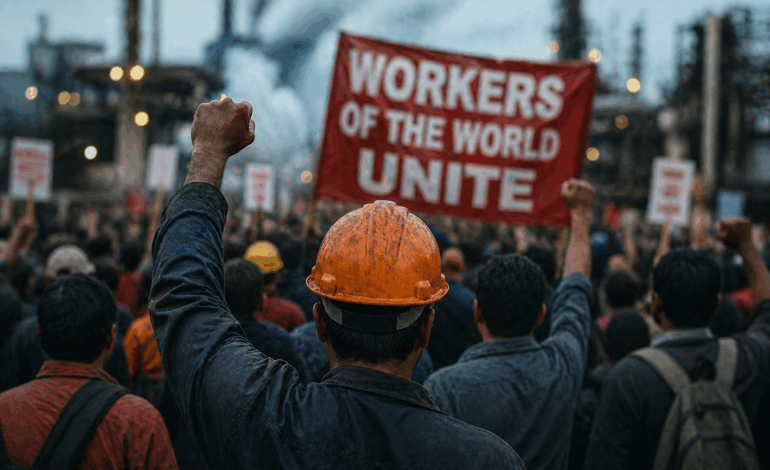
So, naturally, labour unrest is rising. On February 12, millions of workers and farmers participated in a nationwide general strike. It was one of the largest coordinated actions in recent years. In April alone, over 80 factories across the NCR belt witnessed industrial strikes, many short-lived but intense. Unrest is not limited to smaller factories. Many major protests occurred at units owned by Adani, Reliance, Tata, Jindal, Aditya Birla, Larsen & Toubro, Vedanta, and several PSUs this year. Also, around 38,000 striking transport workers in Telangana brought public transport to a halt. Meanwhile, rural workers’ protests to restore the employment guarantee scheme have spread across states.
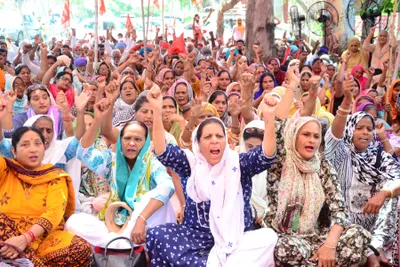
Both the landscape and the nature of these protests are significant. Labour unrest is no longer confined to regions with strong unions or established industrial bases. It is spreading across sectors and geographies. Alongside large, organised strikes aimed at strategic disruption, there is a proliferation of shorter, fragmented actions—flash strikes, plant-level stoppages, and localised protests. This shift reflects a deeper transformation in class composition. The core of relatively secure, permanent, unionised workers continue to shrink. In its place, a vast and growing workforce of contract, informal, and precarious labour has emerged alongside a sizeable “reserve army of labour”. Under such conditions, resistance is bound to be faster, more dispersed, and less predictable.
On the eve of this year’s May Day, one thing becomes clear: India has become a country in constant strikes.
A gathering storm
The labour unrest gripping India this year did not emerge overnight. It had been building quietly before erupting into view.
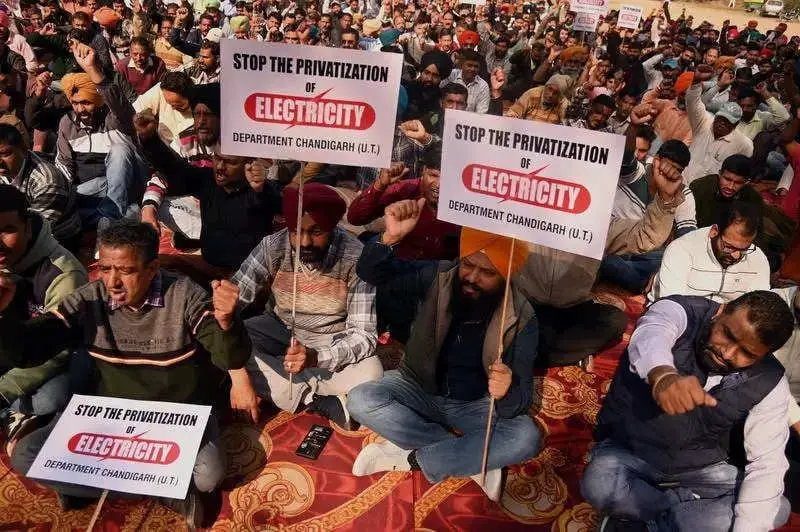
Part of this momentum draws from the trajectory of farmers’ struggles, which have come to symbolise a deepening rural crisis. Longstanding demands around prices, debt, and minimum support have intensified, while recent mobilisations have expanded to include opposition to policy changes such as the proposed Seed Bill 2025 and the Electricity (Amendment) Bill 2025.
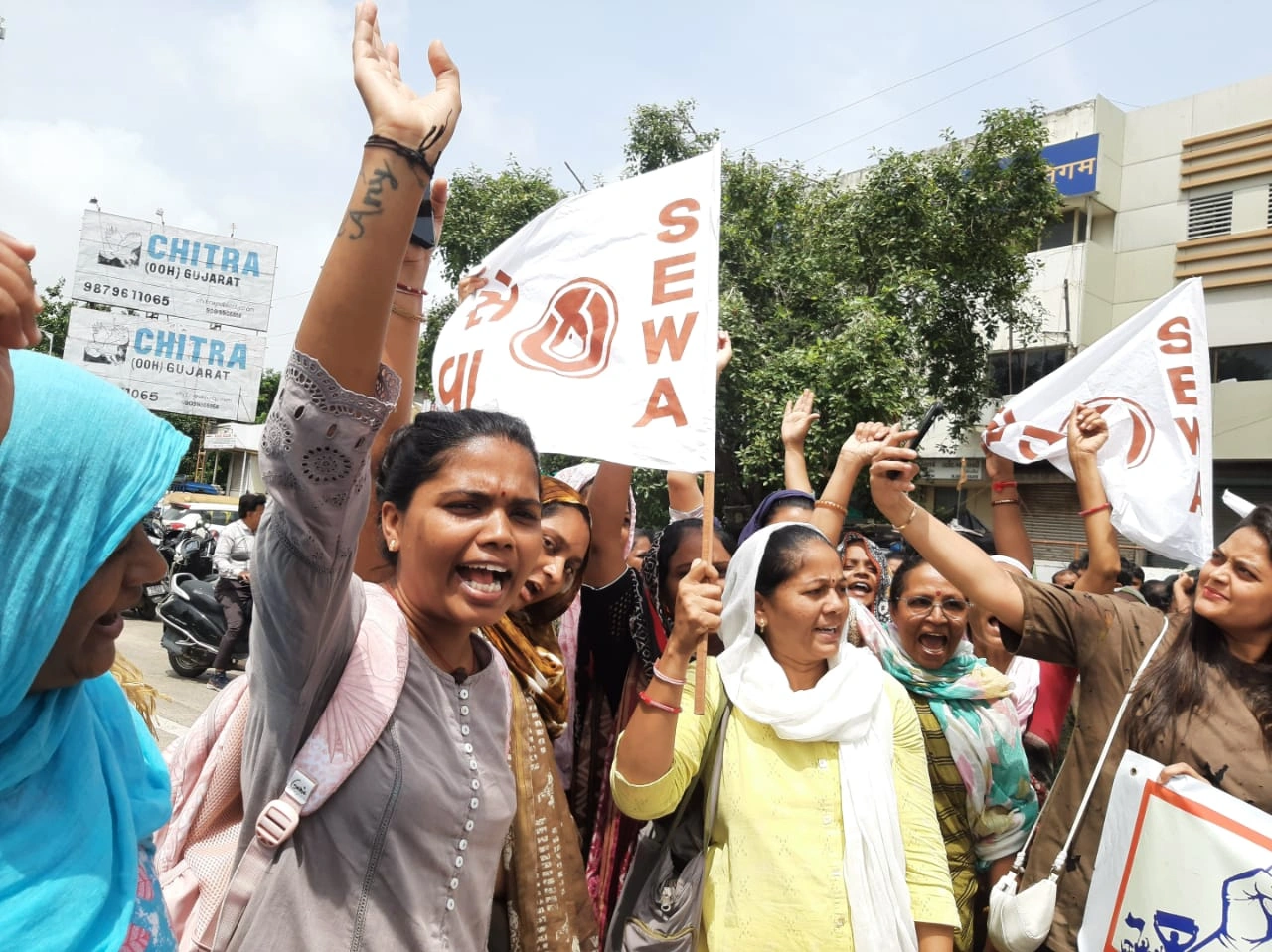
At the same time, less visible forms of labour unrest have gathered force. Across states, Anganwadi and ASHA workers have sustained prolonged protests for fair wages and recognition, driven less by immediate gains than by necessity. In many cities, sanitation workers have resisted delayed wages, unsafe conditions, the outsourcing of public services and the deeply embedded caste prejudices. Even in the IT sector—long resistant to collective action—workers have begun organising against layoffs and intensifying workloads.
The strike by delivery workers in late 2025 can be viewed as a turning point. Coordinated by the Indian Federation of App-Based Transport Workers, thousands of gig workers logged off during peak holiday demand, challenging opaque pay structures, arbitrary platform controls, and the “10-minute delivery” model promoted by firms like Zepto and Blinkit. In the wake of these protests, after a meeting with union labour minister Mansukh Mandaviya, these e-commerce platforms decided to stop “10-minute delivery” services.

The agitation exposed the widening gap between the soaring valuations of platform companies and the precarious lives of those who sustain them. It helped to move the conversation beyond simple wage disputes to a broader demand for dignity, social security, and the legal recognition of gig workers as employees rather than just “slaves of the algorithm”.
Protests: informal and formal
Under capitalism, the informalisation of labour is not merely about reducing costs; it also weakens collective power. Yet the recent unrest across the NCR—particularly in Noida and Manesar—shows that even fragmented workforces can mobilise.
These protests were triggered by a regional wage disparity following hikes in parts of Haryana, but their roots ran deeper. Workers faced rising inflation, 12-hour shifts, unpaid overtime, and widespread contractualisation. The agitations were largely spontaneous, driven by non-unionised contract workers, though left parties and unions later extended support to them. Many of the active participants were migrant labourers working in small factories. At some stage, even domestic workers joined in, while social media amplified mobilisation.
The state response revealed the fault lines of India’s growth model. Authorities resorted to arrests, raids, and detentions, framing the protests as externally influenced, even invoking “Naxal” links. While an interim wage hike was eventually conceded, the underlying issues remained unresolved.
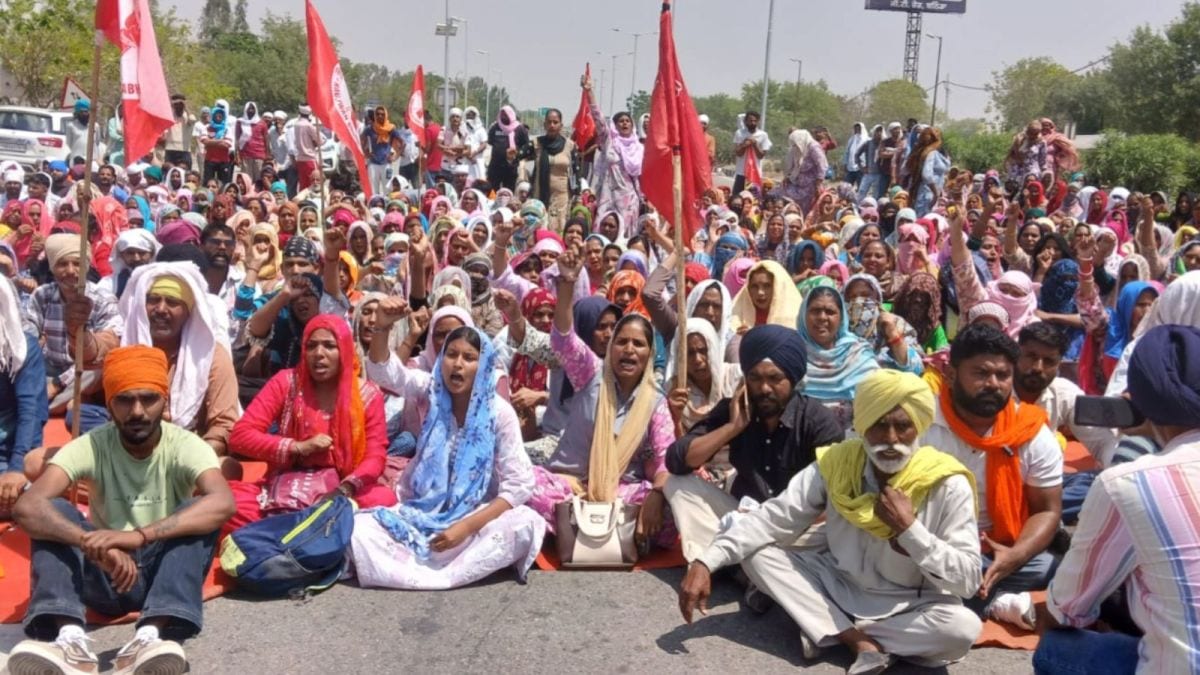
These dispersed struggles stand in contrast to more organised actions like the February 12 general strike. Called by central trade unions and supported by farmers’ groups, it brought together a wide spectrum of workers across the country. The demands were structural: repeal of new labour codes, opposition to privatisation, restoration of employment guarantees, and expansion of social security. With participation running into the hundreds of millions (as estimated by unions), it represented a rare moment of convergence.
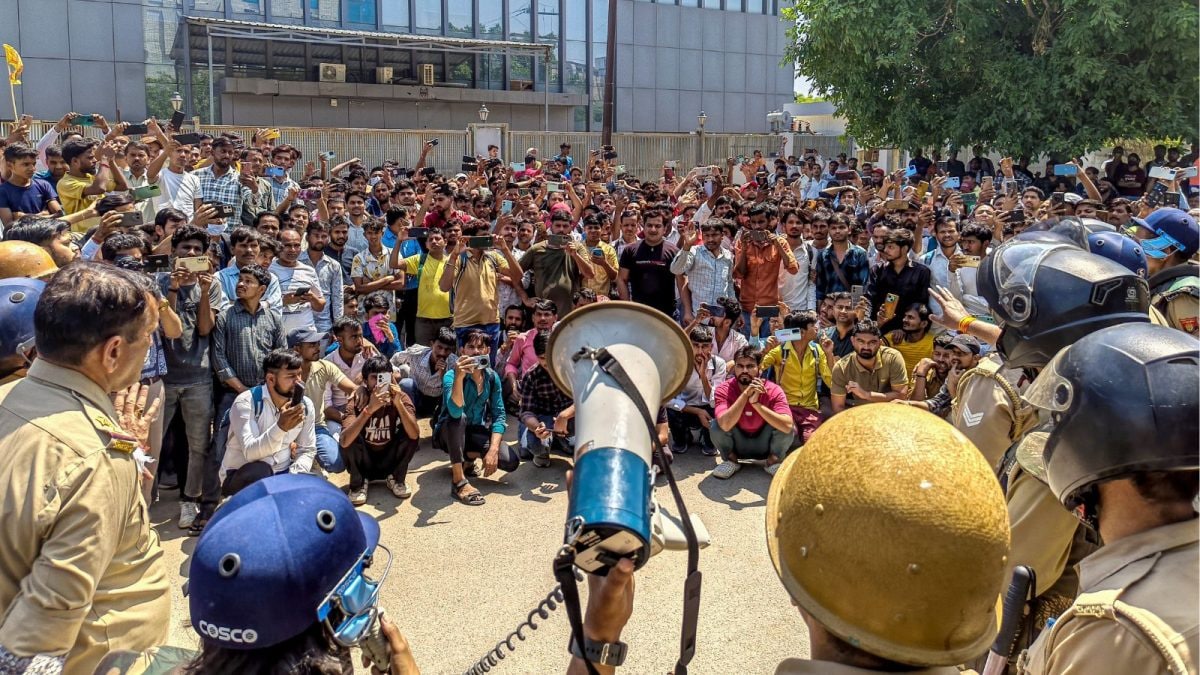
Yet the contrast is instructive. The general strike followed an older script: centralised, coordinated, and symbolic of unified labour power. The NCR protests, by contrast, were localised and rooted in immediate workplace grievances. Where one demonstrated the possibility of unity, the other revealed the persistence of fragmentation.
Taken together, they reflect the changing composition of the working class. Large-scale actions happens but are increasingly episodic and ritualistic. And those are often limited to organised sectors. The fastest-growing segments of the workforce, particularly informal and gig workers, remain only partially integrated into such mobilisations. Their struggles are continuous, dispersed, and grounded in everyday precarity.
One is not a negation of the other. Instead, these are two aspects of the same reality that needed reconciliation.
Rural precarity
Unease is rising in rural India as well. Protests have spread across states against the proposed Viksit Bharat – Guarantee for Rozgar and Ajeevika Mission (Gramin) Act (VB-GRAM-G), which signals a significant shift from the earlier Mahatma Gandhi National Rural Employment Guarantee Act (MGNREGA).
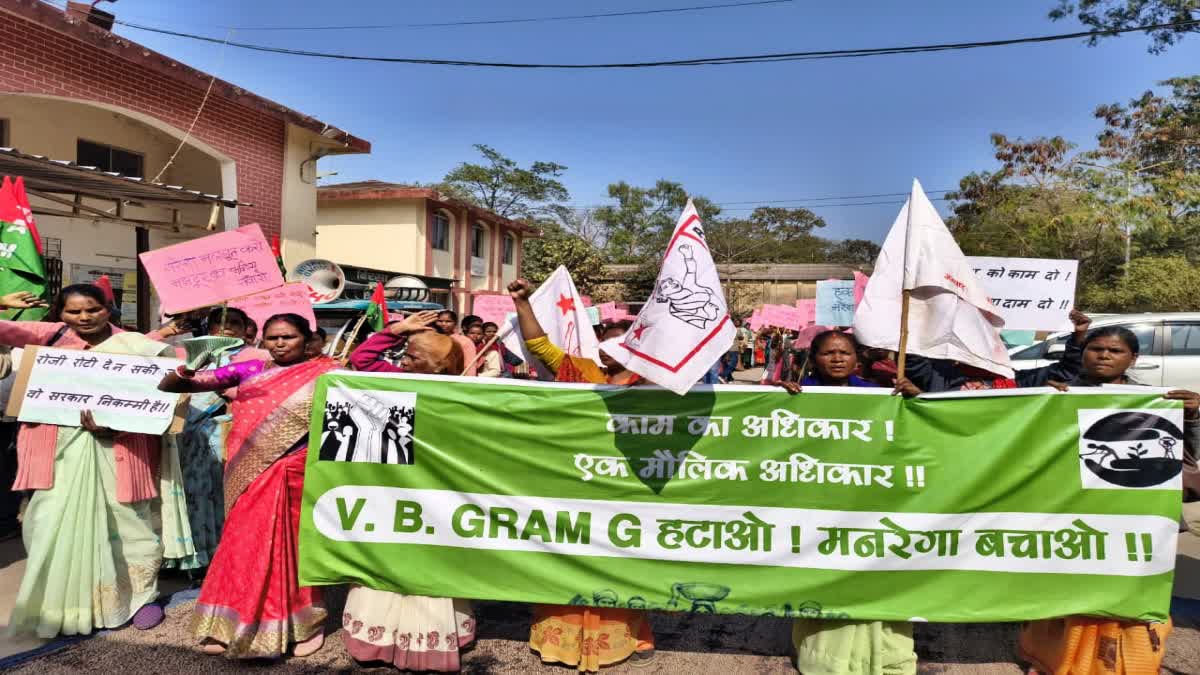
Under MGNREGA, employment was a legal entitlement: workers could demand work and hold the state accountable. VB-GRAM-G marks a departure, recasting employment as part of a broader, programme-based “livelihood support” system. Work is no longer guaranteed but mediated by budgets, administrative priorities, and project design, effectively transforming a right into a conditional provision.
For marginalised groups—women, landless labourers, and historically disadvantaged communities—this shift is critical. The earlier guarantee provided not just income, but bargaining power, setting a wage floor and reducing dependence on exploitative labour markets. Its dilution risks pushing workers back into precarious employment or distress migration.
The implications extend beyond individual livelihoods. The employment guarantee has long functioned as a stabilising force in rural economies, particularly during agrarian crises. Its weakening erodes that buffer, reshaping labour-capital relations and expanding the pool of vulnerable workers. This shift also reflects a broader transformation in welfare policy from rights-based programmes grounded in collective claims to targeted delivery shaped by fiscal and administrative priorities. In this framework, employment is no longer a guaranteed right but one among competing policy objectives.
Seen in this light, the current wave of rural protests is not simply about a policy change. It is about the meaning of work itself—whether it remains a right that can be collectively asserted or becomes an uncertain opportunity in an increasingly precarious economy.
A structural crisis
Labour precarity in India is not cyclical; it is structural. The labour market tells a story at odds with the language of growth and opportunity. Beneath improving headline employment figures lies a far more fragile reality. Nearly nine out of ten workers remain in the informal sector, with little job security, social protection, or legal safeguards. A significant portion are self-employed or engaged in unpaid family work, reminding us that “employment” in India often means survival rather than stability.
Even where work exists, it is poorly paid and insecure. Well over half of workers earn below acceptable minimum wage levels, and many depend on casual, short-term arrangements. According to the Periodic Labour Force Survey, average monthly earnings stand at ₹21,285 for salaried workers, ₹12,144 for the self-employed, and ₹11,550 for casual labourers. These figures underscore the fragility of livelihoods across categories. What is increasingly striking is that this precarity is no longer confined to the traditionally vulnerable. The State of Working India 2026 report by Azim Premji University highlights the spread of insecurity into the ranks of the educated. Despite rising enrolment in higher education, young graduates face persistent unemployment and limited access to stable, salaried work. A growing cohort now cycles between underemployment, informal jobs, and joblessness, pointing to a deeper structural failure: an economy unable to generate work that offers dignity, stability, or a reliable income.
This is an inevitable outcome of India’s neoliberal development trajectory, which views labour as a mere input cost. As a recent editorial in Economic & Political Weekly described, “it is a race to the bottom, achieved by artificially deflating wages and making labour precarity a necessary condition for productive growth.” The same attitude is visible in the government’s withdrawal from rights-based approaches to employment, which essentially throws millions of rural workers into the pool of “reserve army of labour“.
This is the backdrop against which recent labour struggles must be understood. One way to read the present moment is through a classic distinction Marxists often make: between a working class that exists in objective terms (“class in itself”) and one that acts with collective purpose (“class for itself”). By almost any measure, India’s working population today shares a common condition: precarious employment, stagnant wages, rising costs, and diminishing protections. In that sense, the working class has expanded and deepened. But its ability to act as a unified political force remains uneven. As a result, even though the resistance is frequent, it is tactical rather than consolidated.
For informal workers, this tension is even sharper. Their uprisings—whether in industrial clusters, urban informal sectors, or rural labour markets—demonstrate a latent class consciousness. Workers recognise injustice, mobilise collectively, and sometimes coordinate across units. But the very conditions that define informal labour—instability, high turnover, lack of legal recognition, dispersed workplaces, and dependence on contractors—make sustained organisation difficult. They are constantly pulled back from becoming a stable class for itself, even as their lived experience pushes them toward it.
And yet, these small forward steps matter. Each strike, protest, and act of refusal carries promise.








“This article sharply captures the persistent undercurrent of strikes and protests in India, reflecting deeper socio-economic tensions. It invites readers to look beyond the surface and understand the structural issues driving collective resistance in a rapidly changing nation.”