


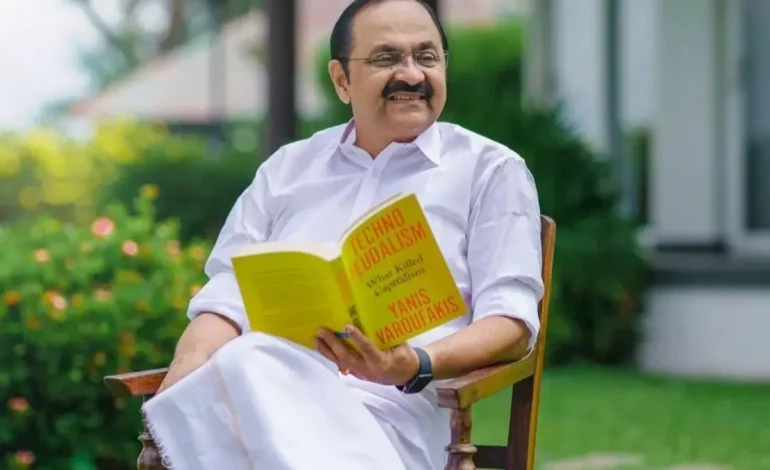
It is increasingly difficult in contemporary Keralam politics for a liberal democratic leader to become genuinely popular among the masses, especially while consistently adhering to a seemingly secular political rhetoric without surrendering to the pressures of communal balancing and caste-based social mobilisation. In a political atmosphere where major social organisations and sectional interests frequently exert influence over party structures, it is rare for a leader to openly distance himself from the pressures of formations such as the NSS and SNDP while simultaneously reaffirming faith in the Indian Union Muslim League as a legitimate secular political force within Keralam’s historical democratic framework. Yet that is precisely the political trajectory that enabled V. D. Satheesan to emerge as a remarkably popular figure during the recent political transition in Keralam.
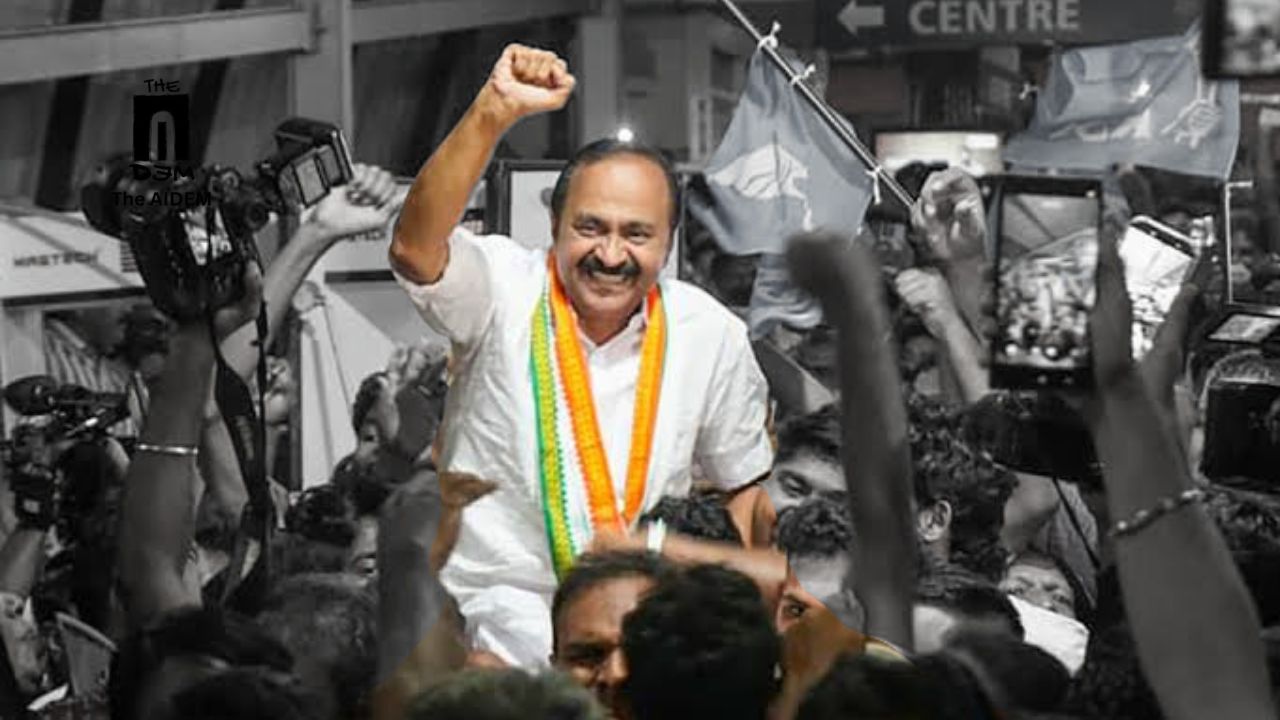
The extraordinary public support that poured out in his favour at a time when widespread speculation suggested that the Congress high command might consider alternative candidates for the Chief Ministership revealed that his legitimacy had moved beyond mere organisational arithmetic. His popularity emerged through two political strategies that liberal politicians often hesitate to adopt openly. On the one hand, he cultivated a partially anti-neoliberal political language regarding state expenditure, public welfare, and social protection, reassuring ordinary people that welfare measures, subsidies, pensions, and social support systems would not be dismantled in the name of fiscal discipline. On the other hand, he sharply distanced himself from sectarian caste calculations and the overt pressure politics of dominant community organisations that have historically exercised influence over both the UDF and LDF. This combination gave him credibility among sections of the middle class, lower middle class, youth, minorities, and welfare-dependent populations who increasingly fear both aggressive neoliberal restructuring and majoritarian politics.
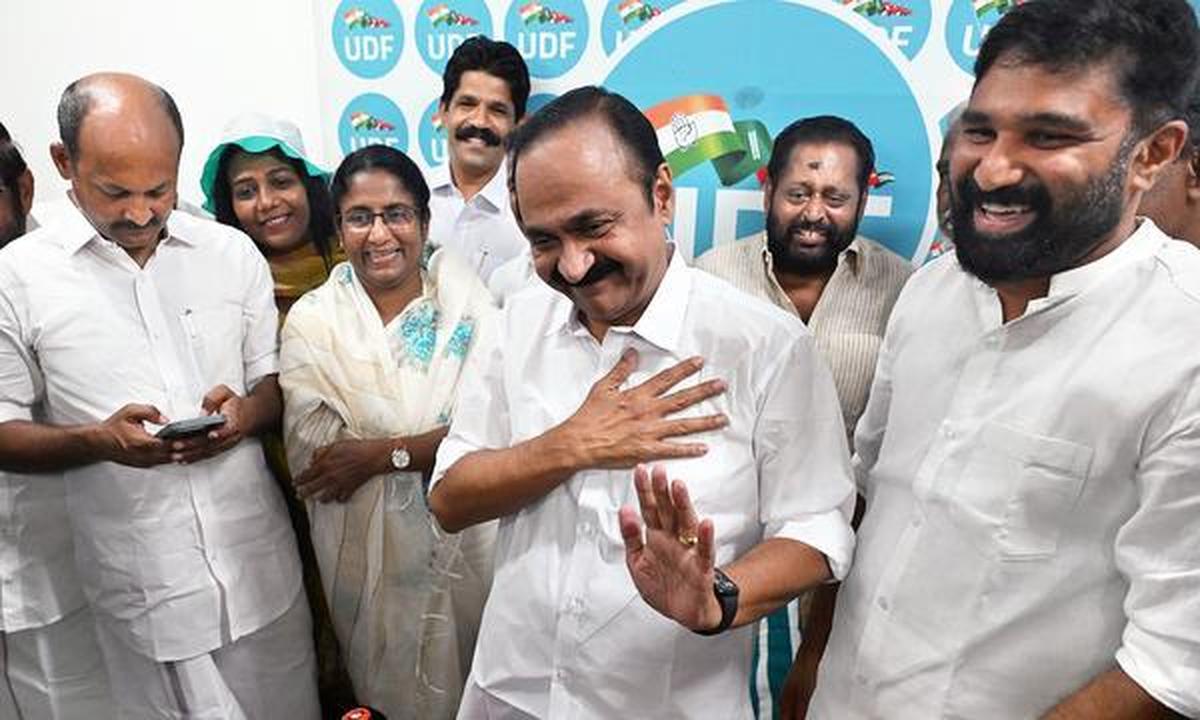
At the national level too, as the Indian National Congress intensified its confrontation with the Modi government, Satheesan appeared to internalise that oppositional spirit. He did not soften his criticism of the Modi apparatus of power, centralisation, federal pressure tactics, and the expanding ideological influence of Hindutva politics. Unlike many regional leaders who tactically maintain ambiguity, he often spoke in direct political terms, which contributed to his image as a confident opposition leader capable of confronting centralised authority.
However, the challenges before him are enormous. Electoral promises regarding welfare expansion, social protection, employment generation, rising living costs, healthcare, public education, infrastructure, and development will now have to move from rhetoric into governance. He will have to negotiate the pressures exerted by the Modi government through financial control, administrative leverage, central agencies, and the increasingly aggressive posture of the BJP’s Keralam unit. At the same time, he will face an extremely vigilant and politically experienced LDF opposition and its frontal organisations, which will not tolerate any dilution of welfare commitments or visible capitulation to central pressure. Internal dissensions within the Congress and coalition management will remain another continuing challenge.
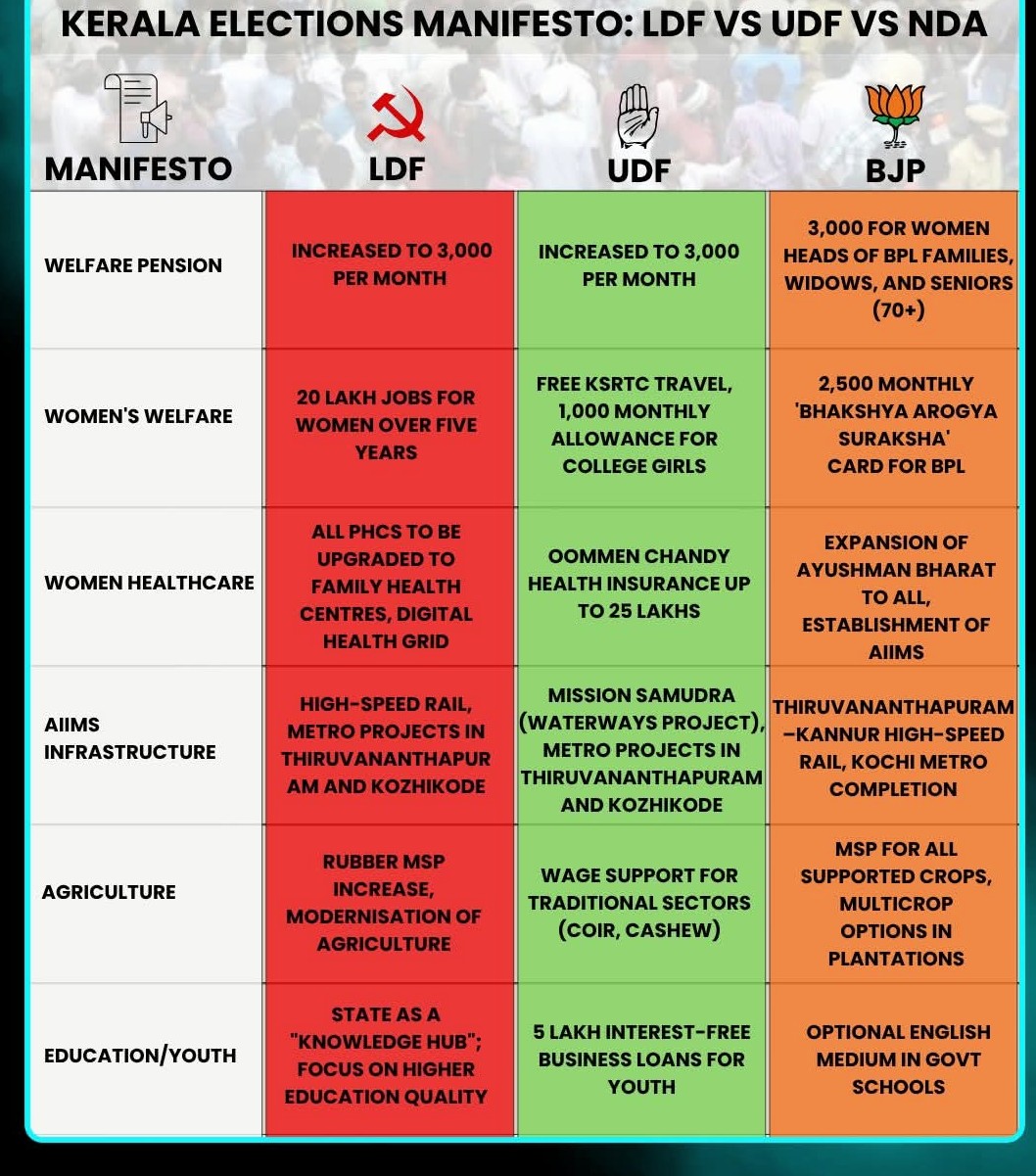
Despite the several pitfalls and political failures of the previous Left Democratic Front government that eventually contributed to its defeat — issues that the party and its cadre are now reportedly examining with seriousness — one important strategic direction evolved during that period should not be abandoned. The attempt to balance anti-neoliberal welfare politics with large-scale infrastructure expansion, public investment, and calibrated capital inflow represented a significant and imaginative political-economic experiment within the constraints of contemporary federal India. Keralam’s future cannot lie either in crude market fundamentalism or in a stagnant developmental conservatism incapable of generating employment, technological growth, and infrastructural modernisation. The challenge before the new government is therefore not to dismantle that developmental balance, but perhaps to refine it more democratically, transparently, and efficiently while preserving Keralam’s welfare commitments, social indicators, and relatively egalitarian social ethos. More than anyone else, a liberal leader like V. D. Satheesan would recognise that the contributions of the LDF are not something to be discarded or forgotten, but to be critically examined, reassessed, and refined in pursuit of better future outcomes.
Yet the ultimate challenge before V. D. Satheesan lies elsewhere. However progressive his instincts may be, he still operates within the structural and ideological limits of the liberal-democratic framework represented by the Indian National Congress and the United Democratic Front. There are institutional compulsions, entrenched interest groups, coalition pressures, electoral calculations, and inherited political taboos that no leader within that framework can easily transcend. Keralam’s liberal politics functions within a relatively ossified structure in which welfare commitments, development aspirations, market compulsions, caste-community negotiations, coalition management, and Centre-State dependencies are held together through delicate balancing acts rather than through deeper structural transformation.
This creates a fundamental contradiction. A leader may articulate socially progressive positions, defend secularism, support welfare expansion, and even criticise aggressive neoliberalism, but the political system itself imposes limits on how far such positions can be translated into policy. The compulsions of attracting investment, maintaining fiscal discipline under neoliberal federalism, accommodating dominant social blocs, and surviving within coalition arithmetic often restrict the possibility of more radical redistributive or democratic interventions. In that sense, the problem is not merely individual leadership, but the narrowing horizon of liberal politics itself under contemporary capitalism.
He is known to be a voracious reader with wide exposure to literature, political thought, and contemporary debates, and this has enabled him to establish a rapport with writers, artists, public intellectuals, and progressive cultural figures in a manner rarely seen among liberal political leaders today. He often identifies himself broadly with a Nehruvian-Left democratic orientation. More important than ideological labels, however, is his ability to resonate with progressive currents within Keralam’s public sphere that continue to value secularism, civil society freedoms, environmental concerns, democratic dissent, and human rights. This cultural credibility may become politically significant in a period when Keralam itself faces difficult questions regarding development, ecological vulnerability, minority rights, and the future of democratic public culture.
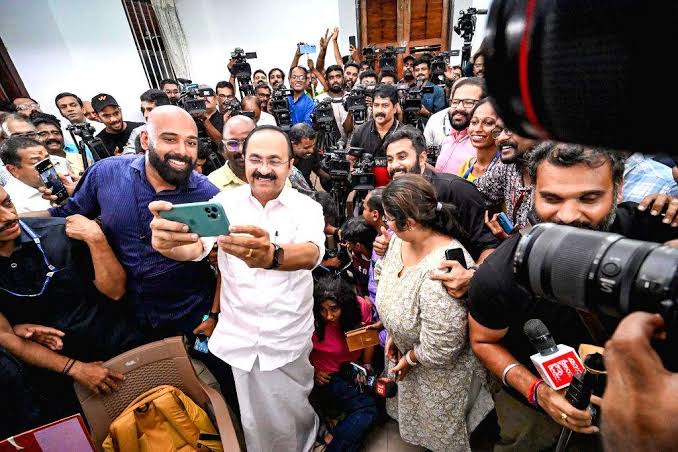
At the same time, the excessively celebratory tone adopted by sections of the media may itself become a source of future difficulty for him. Keralam’s media culture has a tendency to rapidly construct heroic political narratives around leaders during moments of transition, often inflating expectations beyond what any government can realistically deliver within existing structural constraints. Such overflowing adulation can quickly turn into impatience, scrutiny, and disappointment once governance confronts the inevitable realities of fiscal limitations, bureaucratic inertia, coalition pressures, environmental conflicts, and public dissent. In that sense, media-driven personalisation of political success may unintentionally weaken the very leadership it seeks to glorify by transforming complex structural challenges into questions of individual performance and charisma. Satheesan’s real political brilliance will lie in how carefully he navigates this slippery path.
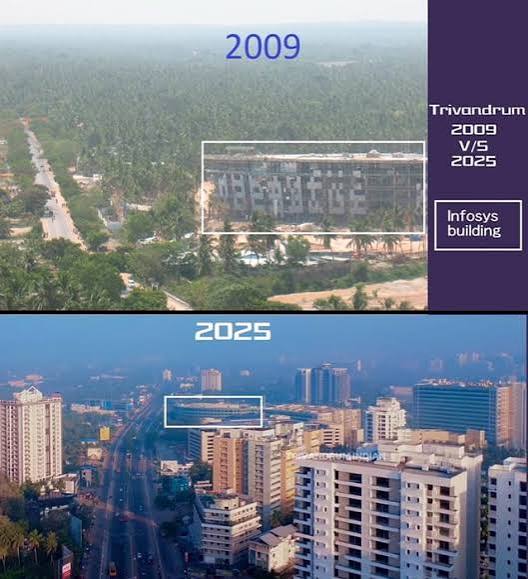
Beyond electoral politics, Keralam itself faces a new developmental crossroads. Questions of ecological sustainability, environmental vulnerability, urban expansion, climate-related disasters, public transport, digital infrastructure, and the future of welfare-oriented development demand serious attention. The expectation is not merely administrative continuity, but innovation in governance and a new developmental imagination suited to Keralam’s changing social realities.
At this moment, however, he deserves congratulations for achieving what many considered politically improbable. Against considerable odds, he succeeded in sustaining public expectations and translating them into an extraordinary mandate. He now carries the aspirations of millions of ordinary Malayalis who look towards the new government with hope — for improved living standards, humane governance, welfare assurances, and a development model capable of combining social justice with infrastructural transformation. Whether he will ultimately live up to these expectations remains to be seen, but the scale of the trust placed in him is itself politically significant in an age marked everywhere by democratic fatigue and public cynicism.







Dr. T.T. Sreekumar’s “V.D. Satheesan And The Challenges Before A Liberal Leader In Keralam” is a sharp and insightful political analysis that thoughtfully examines the role of liberal leadership in Kerala’s changing political landscape. The article goes beyond personality-centric politics and raises important questions about democracy, secular values, opposition politics, and public trust. With its depth, clarity, and balanced perspective, this piece stands out as a powerful contribution to contemporary political discourse. Congratulations to Dr. T.T. Sreekumar for such a thought-provoking and courageous write-up.