


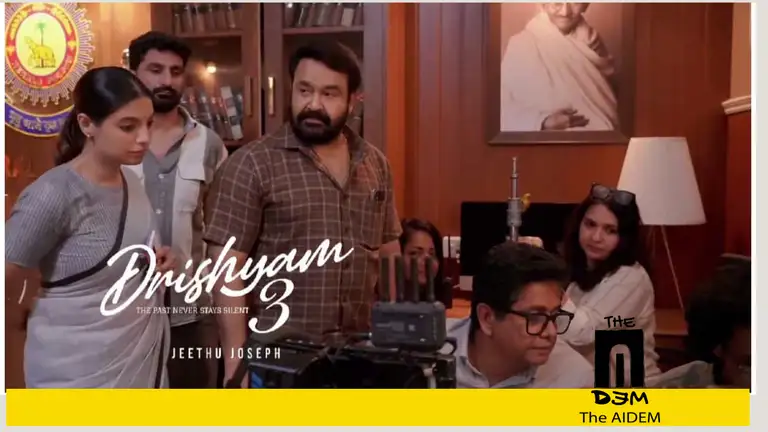
What exactly held a section of the Malayali public so anxiously captive to the Drishyam trilogy, directed by Jeethu Jospeh? The answer perhaps lies deeper than the familiar sentimental attachment to the “moral family” as a sacred social unit. The trilogy touched a far more profound anxiety embedded within middle-class social life itself: the fear that the ordinary individual today stands permanently vulnerable before institutions, surveillance, law, scandal, and unpredictable violence. Georgekutty, the protagonist became compelling not merely because he protected his family, but because he represented the fantasy of the subaltern intelligence of the ordinary man, minimally educated, culturally unrefined, yet capable of outwitting systems far more powerful than himself. The emotional investment of the audience thus emerges not simply from familial morality, but from a wider social desire to witness the restoration of agency to a subject increasingly humiliated by bureaucratic power, technological scrutiny, and institutional intimidation. In this sense, the trilogy converted everyday middle-class insecurity into a narrative of strategic intelligence and survival.
The enormous success of Drishyam and Drishyam 2 across India through remakes and adaptations in multiple languages transformed the franchise into one of the most recognizable narrative phenomena in contemporary Indian popular cinema. The story travelled into Hindi, Tamil, Telugu, Kannada, Sinhala, Chinese and several other cinematic cultures, becoming an all-India sensation that cut across linguistic and regional boundaries. Yet, despite this pan-Indian circulation, the emotional and moral intensity with which the films were received in Kerala remained distinctive. This is because Drishyam was, at its core, deeply rooted in the anxieties, aspirations, and ethical contradictions of a particular section of Malayali middle-class society. The narrative resonated profoundly with a social world shaped by high literacy, intense media exposure, fears of surveillance and scandal, aspirations toward moral respectability, and an enduring insecurity regarding the vulnerability of the family before institutions of power. While audiences elsewhere admired the brilliance of the plot and the suspense-driven structure, in Kerala the films generated a much deeper affective identification because Georgekutty’s struggles mirrored a specifically Malayali cultural imagination in which intelligence, self-respect, familial honour, and distrust of authority are tightly interwoven. The franchise thus became not merely a successful thriller, but a cultural text through which sections of Malayali society reflected upon their own fears, desires, and moral ambiguities.
One of the significant departures in Drishyam 3 lies in its disruption of the structural symmetry that viewers had come to associate with Parts 1 and 2. In the earlier films, the protagonist anticipates the movements of the police apparatus in advance and meticulously prepares countermeasures that ultimately ensure his survival. In Part 3, however, he appears older, uncertain, and unable to clearly comprehend the precise nature of the threat he still fears may confront him, even as he lives his mundane life with a lingering apprehension that something dangerous could eventually surface against him. He could begin to act only after the shock has already arrived. This results in a hurried narrative closure, leaving little room for viewers to emotionally identify with the transformation of a confused protagonist and with the vigilant, agile, and meticulous workings of his still active mind.

Cunningness as Popular Intelligence: The Violence within Liberal Imagination
The second point is that, this time, he is not confronting the State or the police apparatus directly, but rather a criminal conspiracy orchestrated by his antagonists and only partly endorsed by the police apparatus. The police remain, at best, a distant and peripheral presence. Those who have seen the film may recall how the prolonged ritual ceremonies surrounding the wedding ultimately become futile, while the very idea of the sacred familial union turns into a scandal. This becomes the trope through which the film finally undermines a man’s long-negotiated domestic ethicality and sense of purpose. Georgekutty’s appeal also compels us to rethink the political imagination of the “ordinary man” in contemporary popular culture. A fourth-standard educated individual repeatedly confronting not only the police but also criminal conspiracies through intelligence, memory, improvisation, and cunningness unsettles conventional hierarchies of knowledge and authority.
The trilogy, thus, attempts to transform ‘intelligence’ from an institutional attribute into a vernacular survival skill emerging from lived experience, cinematic imagination, and everyday observation. Georgekutty’s victories are therefore not merely personal triumphs; they dramatize the familiar fantasy, often criticised by film scholars, deeply embedded in popular cinema, that ordinary people, despite lacking formal education, institutional backing, or even wealth, may still outwit the overwhelming forces surrounding them. In this sense, Georgekutty ultimately belongs to the lineage of the larger-than-life protagonists of commercial cinema, figures whose extraordinary intelligence and improbable resilience transform the ordinary individual into an almost mythic presence, a trope long exposed and critiqued by film theorists and critics.
Another deeply disturbing dimension of Drishyam 3 lies in the manner in which Georgekutty’s protective instinct gradually absorbs violence into itself. Earlier films had already normalised deception, manipulation of evidence, and psychological endurance as necessary strategies of survival. But in this film, the logic of protection appears to move into a darker terrain where even intimate emotional bonds become instruments within a larger defensive performance. What becomes unsettling is not merely the act itself, but the extent to which Georgekutty is willing to choreograph pain, humiliation, fear, and emotional breakdown within the domestic sphere in order to construct credibility before external institutions. The family ceases to be simply the sacred object of protection; it increasingly becomes raw material within the architecture of his strategy. The father who once appeared as a defender of familial innocence now also emerges as someone capable of disciplining, scripting, and even violating emotional intimacy to preserve the larger structure he believes he must save. This marks an important transformation in the ethical universe of the trilogy. Georgekutty’s intelligence no longer operates only against the State or hostile external forces; it begins to consume the emotional interiority of the very family it seeks to defend. The distinction between care and control, protection and coercion, affection and strategic manipulation become dangerously blurred. In that sense, the film indirectly raises an uncomfortable question: at what point does the defence of the family begin to destroy the ethical foundations of the family itself?
The power of the sequence lies precisely in this ambiguity. The audience continues to admire Georgekutty’s extraordinary presence of mind, yet simultaneously confronts the frightening possibility that survival, when prolonged indefinitely, may transform cunningness into a form of moral exhaustion where every relationship becomes subordinate to strategy. Thus, Drishyam 3 simultaneously reveals the exhaustion of that fantasy. Once the moral coherence of the family itself collapses, cunningness alone can no longer sustain the ethical legitimacy of survival. What remains unresolved, therefore, is whether Georgekutty continues to be a heroic defender of familial dignity or gradually becomes the tragic custodian of an illusion that the narrative itself has already begun to rip to shreds. Drishyam 3 concludes with two interrelated hints pointing toward the possibility of a sequel. Together, they invoke a cycle of revenge and retribution that the narrative appears unable to resolve. On the one hand, the dead boy’s family continues to carry an unresolved desire for vengeance against the girl whom they hold responsible. On the other, Georgekutty’s determination to eliminate anyone who threatens his family signals a further radicalisation of his defensive logic.
The ending therefore pushes the trilogy into a darker terrain where crime no longer appears as an isolated event but as a self-reproducing chain of retaliatory actions. In this structure, violence generates further violence, while the State and its apparatuses increasingly remain external, ineffective, or merely reactive observers. What emerges is a world in which justice is displaced by private vengeance, ethical order collapses into strategic survivalism, and the boundaries separating protection, punishment, and criminality become progressively indistinguishable. Drishyam 4, continuing the same thread of the so-called defence of the family, now appears almost impossible because the film has already dismantled the liberal ideal of the family as something sacred and worth defending. Through the vengeful parents of the murdered boy, the security personnel and his wife who are deceived by the protagonist and his family, the gullible bridegroom, the fraudulent marriage brokers, and even the audacity of the second daughter, the narrative progressively exposes the family itself as a fragile and unstable house of cards.
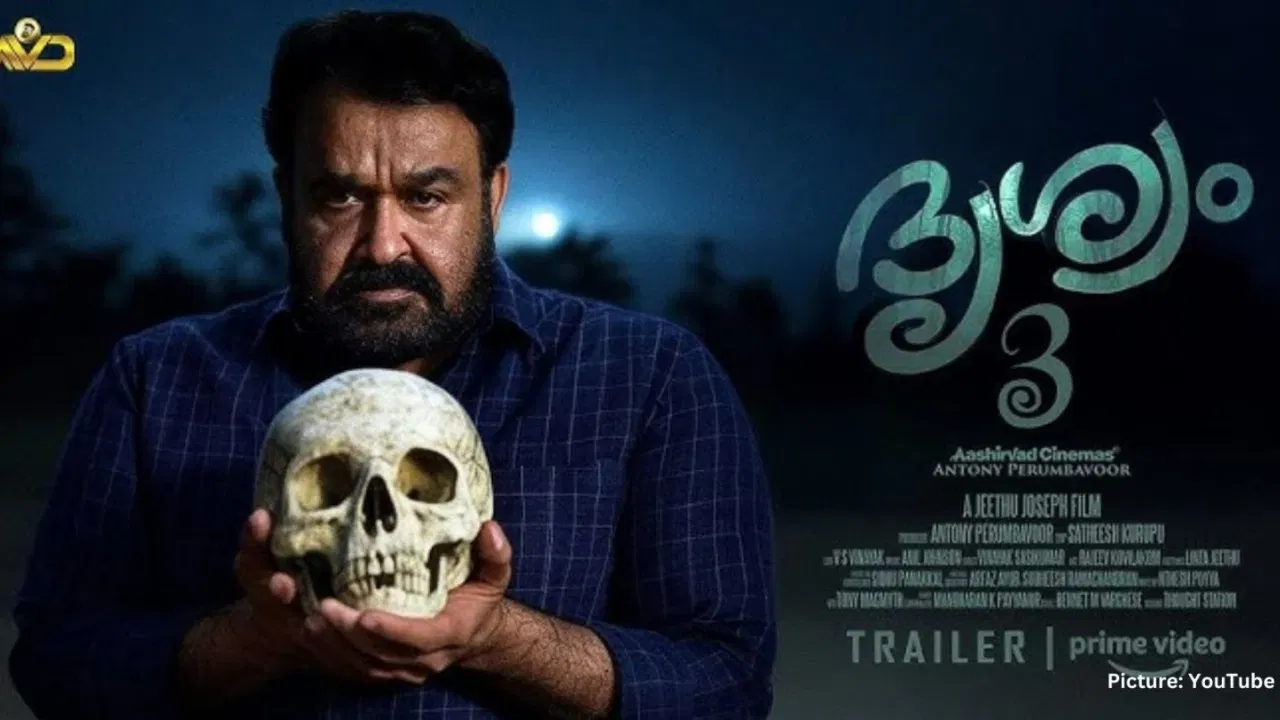
Drishyam 4? The Pettie Bourgeois Family and Its Violent Afterlife
The Drishyam trilogy may thus be read as the gradual breakdown of the delicate relationship between family, civil society, and the State that sustains the moral architecture of modern bourgeois life. In the liberal imagination, the family functions as the elementary ethical unit of civil society, a space where trust, responsibility, discipline, and communicative morality are cultivated before subjects enter the larger public sphere governed by law and institutions. The petty bourgeois family, in particular, occupies a fragile location within this order: it depends upon the legitimacy of the State and legal institutions for security and social recognition, while simultaneously fearing their intrusive power over its private life.
Georgekutty’s family initially appears as precisely such a Habermasian domestic sphere, morally conservative, emotionally cohesive, economically aspirational, and integrated into the ethical norms of civil society. However, once the family becomes threatened by criminality, scandal, and institutional surveillance, its foundational trust in the rational-legal order begins to collapse. The State no longer appears as the guarantor of justice but as a potentially destructive force capable of humiliating and disintegrating the family itself. At this moment, the family’s elemental instinct for self-preservation begins to override its moral obligations to legality, truth, and public ethics. The trilogy therefore dramatizes the moment when the bourgeois family retreats from the public ethics of civil society into a closed survivalist structure governed by instrumental rationality. Georgekutty becomes compelling precisely because he embodies this contradiction: he remains culturally attached to the moral order of society even while systematically violating its legal and ethical foundations to preserve the family as his last meaningful universe.
Audiences may still desire a fourth instalment, though perhaps no longer because of the ethical coherence with which they once identified. Rather, from the perspective of cultural studies, this continuing fascination appears to emerge from a deeper affective and ideological investment in the narrative itself, a primordial desire to witness yet another violent confrontation resolved in favour of the protagonist. Georgekutty’s increasingly ambiguous ethics are thus received not simply as moral deviation, but as an inevitable counterreaction to the relentless designs and vengeance-driven persistence of the Prabhakar family. In this sense, the trilogy reveals how popular culture often reorganises audience sympathies by normalising ethically unstable forms of violence once they are embedded within emotionally charged narratives of survival, victimhood, and familial protection. If Jeethu Joseph still wishes to remain obsessed with this notion of the moral family that he himself has now partly dismantled, the narrative will inevitably drift toward increasingly unstable attempts to restore an ethical coherence that the trilogy itself has already fractured.
Yet, one must congratulate Jeethu Joseph for creating the extraordinary cultural sensation generated by this trilogy, an accomplishment that few, if any, popular directors in the Malayalam film industry have been able to achieve. What made the films exceptionally powerful was the manner in which they succeeded in embedding the idea of the “moral family” so cohesively within the emotional imagination of the Malayali audience. The trilogy transformed familial protection, domestic suffering, fear of social humiliation, and anxiety over institutional intrusion into a deeply affective collective experience. As a result, viewers did not merely witness Georgekutty defending his family; they were drawn into the spectacle of an ordinary man’s relentless will to preserve his self-created moral universe against forces seeking to humiliate, expose, and destroy it. This is precisely why the degree of cunningness in the narrative had to be progressively elevated and intertwined with violence. The future of the family no longer rests upon the possibility of reconciliation, moral restoration, or peaceful resolution, but upon an increasingly aggressive and even bloody mode of defence. What initially appeared as the protection of familial innocence gradually transforms into a strategic ethic of survival in which deception, manipulation, intimidation, and violence become normalized instruments of preservation.
The Defensive Family and the Logic of Fascistic Nationalism
The trilogy therefore moves away from the liberal ideal of the moral family as a stable ethical unit sustained by trust, affection, and social legitimacy. Instead, the family survives only by entering a permanent state of defensive warfare against external threats. The narrative reveals how the moral universe of the family itself becomes militarised: intelligence turns tactical, emotional bonds become strategic assets, and violence emerges not as an accidental rupture of morality but as the very condition through which the family attempts to sustain its existence.
What becomes particularly disturbing here is the extent to which this survivalist logic begins to resonate with the emotional structure of cultural nationalist and even fascistic imaginations. Fascist nationalism historically operates by transforming the nation into an endangered moral organism that must constantly defend itself against internal and external enemies through vigilance, discipline, sacrifice, and legitimised violence. In Drishyam, the family gradually begins to occupy a remarkably similar symbolic position. The domestic sphere is imagined as a sacred moral territory permanently under siege, while every external institution — the police, law, civil society, surveillance mechanisms, and hostile social forces — increasingly appears as a threat to its existence. Under such conditions, deception and violence cease to appear morally problematic and instead become naturalised as necessary acts of protection.
The unconscious structure of the narrative therefore begins to equate the family with a miniature nation under siege. Georgekutty emerges not merely as a father but as a sovereign defender figure whose tactical intelligence, secrecy, emotional control, and willingness to suspend ethical norms resemble the authoritarian logic through which fascistic regimes justify exceptional violence in the name of collective survival. The trilogy’s emotional power partly derives from this ideological displacement: audiences are encouraged to identify with increasingly coercive and ethically unstable acts because they are framed within the rhetoric of protecting an endangered moral community. In this sense, the films reveal how easily the liberal moral family, once stripped of its faith in public ethics and institutional legitimacy, can slide toward a paranoid survivalism structurally analogous to the cultural unconscious of authoritarian nationalism.







यह लेख फिल्म “दृश्यम 3” के इर्द-गिर्द एक गहन नैतिक और पारिवारिक थकान के बारे में बात करता है। लेख में बताया गया है कि कैसे फिल्म में पात्रों के बीच लगातार दबाव और नैतिक द्वंद्व उनके संबंधों को प्रभावित करते हैं। लेखक ने कहा है कि फिल्म में दिखाए गए संघर्ष और अपराधबोध से दर्शक खुद भी जुड़ाव महसूस करते हैं, और यह कहानी सिर्फ मनोरंजन नहीं, बल्कि गहरी भावनात्मक और नैतिक प्रश्न भी उठाती है।