

The Beautiful Game’s Higher Calling: Soccer as a Crucible for Peace and Justice

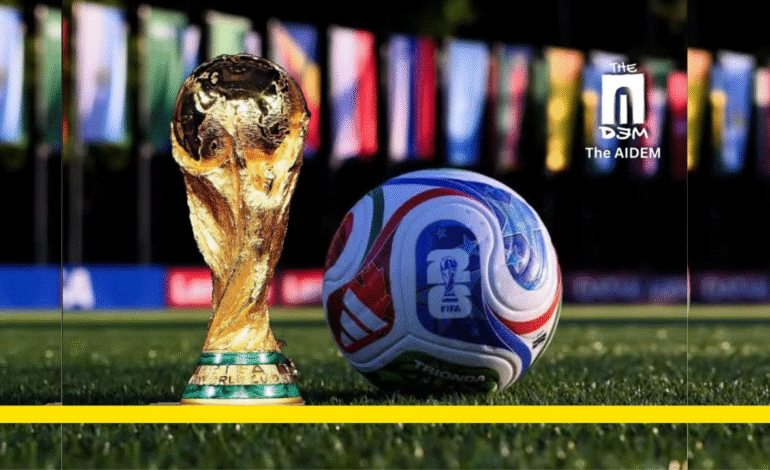
As the world anticipates the upcoming FIFA World Cup against a backdrop of global conflict, soccer’s duality is thrust into sharp focus. Moving beyond Orwellian jingoism, the tournament must reclaim the game’s highest calling: a universal stage for peace, active justice, and the courage to protect global human dignity
In June 1969, as the heat of the Central American summer peaked, the air over San Salvador grew thick not with the anticipation of rain, but of blood. The trigger was a ball made of leather. A fiercely contested three-match World Cup qualifying series between Honduras and El Salvador had unleashed a torrent of xenophobic rhetoric, stadium riots, and diplomatic fractures. On July 14, within three weeks of the final whistle in Mexico City, the Salvadoran Air Force launched a surprise attack on Honduran airfields. The ensuing conflict—the infamous “Football War” or the 100-Hour War—left nearly three thousand people dead and displaced over a hundred thousand civilians. It remains history’s most harrowing reminder that sports do not always build bridges; sometimes, they ignite powder magazines.
As the world positions itself on the cusp of another monumental FIFA World Cup, the shadow of global conflict looms larger than it has in generations. The international community is fractured by geopolitical tectonic shifts. In Eastern Europe, the fields of Ukraine remain scarred by a relentless war of attrition, while in West Asia, the catastrophic violence in Gaza and the wider Levant and the Persian Gulf continues to test the limits of international law and human endurance.
Against this grim tableau of contemporary global politics, the upcoming World Cup cannot merely be an exercise in athletic triumphalism or corporate pageantry. It must be a moment of profound introspection. We are forced to ask a foundational question: Can soccer, a game capable of catalyzing war, also be re-engineered as a potent instrument for peace and global justice?
The Pelé’s Truce
Historically, the cynical view of sports is that they are merely an extension of statecraft by other means—a sanitized theater of war. George Orwell asserted that serious sport is “war minus the shooting” in his December 1945 essay The Sporting Spirit published in the wake of the Second World War and a heavily publicized, controversial UK tour by the Soviet football team, Dynamo Moscow. In the piece, Orwell argued that competitive international sport fosters intense nationalism, hatred, and the desire to humiliate the opponent rather than creating goodwill between nations, famously writing: “Serious sport has nothing to do with fair play. It is bound up with hatred, jealousy, boastfulness, disregard of all rules and sadistic pleasure in witnessing violence: in other words it is war minus the shooting.”
Yet, football has occasionally silenced guns. The romanticism surrounding the “Beautiful Game” finds its peak in the enduring folklore of the Nigerian Civil War. In early 1969, the secessionist enclave of Biafra was locked in a brutal, starving conflict with the federal government of Nigeria. Yet, when the legendary Pelé arrived in the country with his Brazilian club, Santos FC, for exhibition matches, a remarkable pause occurred. While historians debate the existence of a formal, signed bilateral ceasefire, the material reality was extraordinary: the military government deployed massive security apparatuses, opened highly contested border bridges, and suspended curfews so that citizens from across the fractured lines could witness the grace of the King of Football. For a fleeting weekend, the shared language of a bicycle kick superseded the language of artillery.
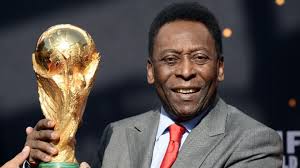
Pele – legendary Brazilian Football Player
However, peace without justice is merely a temporary absence of noise. If the World Cup is to mean anything in the current global climate, football must be viewed not just as a tool for transactional diplomacy, but as a metaphor for structural and moral justice. In an era where international institutions appear paralyzed in the face of flagrant human rights violations—whether the targeting of civilians in Gaza or the displacement of millions in Ukraine—the rule of law often feels like a distant abstraction. Here, the beautiful game offers a profound ethical framework: the concept of boundaries, the necessity of a neutral arbiter, and the absolute equality of all actors within the lines of play.
The Higuita Paradigm
This intersection of football, morality, and justice finds its finest literary expression in South Asian fiction, most notably in N.S. Madhavan’s landmark 1990 Malayalam short story, Higuita. The narrative revolves around Father Geevarghese, a quiet priest serving in Delhi who, before donning the cassock, was a passionate footballer celebrated in the local sevens circuits of Kerala. His spiritual quietude is shattered when Lucy Marandi, a vulnerable tribal girl from Ranchi working as a domestic helper in the parish, approaches him in deep distress. Lucy has fallen into the clutches of Jabbar, a brutal human trafficker who uses intimidation and the horrific threat of an acid attack to enslave her. Caught in a profound moral dilemma, Geevarghese finds himself constrained by the institutional structures of the Church, which dictate passivity and urge him to remain safely within his spiritual “goalpost.”
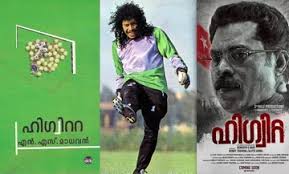
Cover of N.S Madhava’s Short Story Higuita – where René Higuita is presented as a literary metaphor
The catalyst for the priest’s transformation arrives on a television screen in the form of the iconic Colombian goalkeeper, René Higuita. Watching Higuita redefine his position—recklessly abandoning his goal line to sprint into the midfield as a sweeper-defender to actively neutralize threats—Father Geevarghese experiences a secular epiphany. He realizes that when innocence is threatened, neutrality is merely a form of complicity.
In a climactic act of liberation theology, Geevarghese shatters his institutional boundaries, steps onto the crowded street, and physically confronts the trafficker to save the girl. By shedding his passive priestly demeanor, his past life as a footballer merges with his present moral duty. The football pitch thus becomes the ultimate metaphor for active justice: a realization that to defend the vulnerable, one must occasionally abandon the safety of the status quo and rush headlong into the field of conflict.
A Manifesto for FIFA
As national teams prepare to take the pitch for the coming World Cup, FIFA and the international community must channel the spirit of Higuita. Football cannot remain a passive bystander to global injustice, hiding behind the corporate shield of keeping “politics out of sports.” The modern game is deeply intertwined with global capital, migration, and human rights. When the world gathers to watch the tournament, it will include players who are themselves refugees of war, descendants of colonized peoples, and representatives of nations currently suffering under the yoke of aggression.
Therefore, the upcoming tournament must be utilized as a hyper-visible platform to demand accountability. FIFA must move beyond superficial campaigns and use its immense leverage to champion genuine solidarity. This means ensuring absolute parity and dignity for all participating nations, creating spaces for athletes to express solidarity with victims of conflict without fear of sanction, and utilizing the tournament’s astronomical revenues to aid the rebuilding of sports infrastructure destroyed by war in places like Ukraine and Gaza.
Furthermore, sports journalism and global spectatorship must undergo a paradigm shift. We must resist the temptation to view the World Cup through the narrow lens of hyper-nationalistic jingoism—the very mindset that triggered the Honduras-El Salvador conflict. Instead, we must embrace what the philosophers Kwame Anthony Appiah and Martha Nussbaum call “cosmopolitan patriotism,” recognizing our shared humanity through a shared appreciation of athletic excellence. When a striker from one nation scores a goal, or a goalkeeper makes a breathtaking save, the joy it evokes should remind us that our vulnerabilities and aspirations are universal.
The ball is round; it has no corners, no borders, and no inherent biases. It responds equally to the boot of a billionaire superstar and a child in a refugee camp. In a world increasingly fractured by geopolitical rivalry and moral cynicism, the coming World Cup presents a choice. We can allow the beautiful game to be co-opted as an instrument of soft-power laundering for authoritarian regimes, or we can reclaim it as a universal stage for peace and justice. Like Father Geevarghese watching Higuita, the global community must find the courage to leave its safe, institutional goalposts. It is time to step onto the field, confront the injustices of our time, and ensure that the beautiful game serves its highest calling: guarding the dignity of humanity.






“This article beautifully captures why football is called the ‘beautiful game’. Its greatest victories are not always won on the scoreboard, but in its ability to unite people, heal divisions, and create hope where it is needed most. Thought-provoking and deeply relevant.” �