


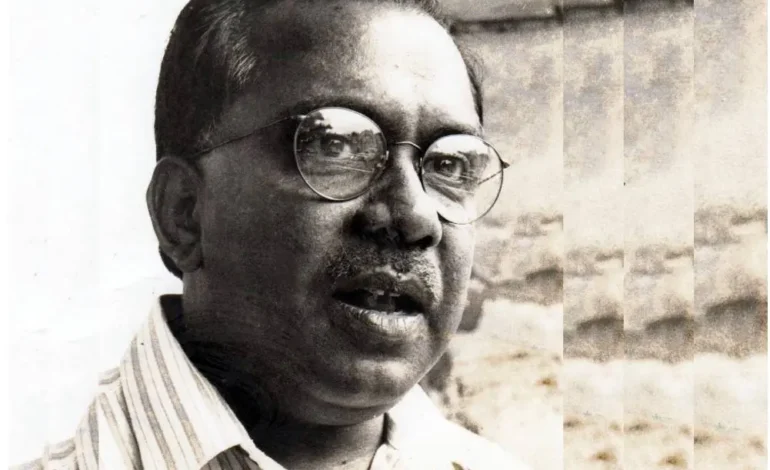
N. R. S. Babu Sir has left us.
With him departs perhaps the last living link to a remarkable generation of journalists. One by one, the patriarchs of Malayalam journalism have taken their leave, carrying with them an era that shaped not merely newspapers, but the very conscience of public life.
I first met Babu Sir in 1987 when I joined Kala Kaumudi and Kerala Kaumudi after completing my postgraduate studies in Journalism at Department o Journalism University of Kerala, Kariavattom. Yet I had known him long before that encounter. His name had already become familiar to me through the pages of newspapers and magazines that I devoured as a student.
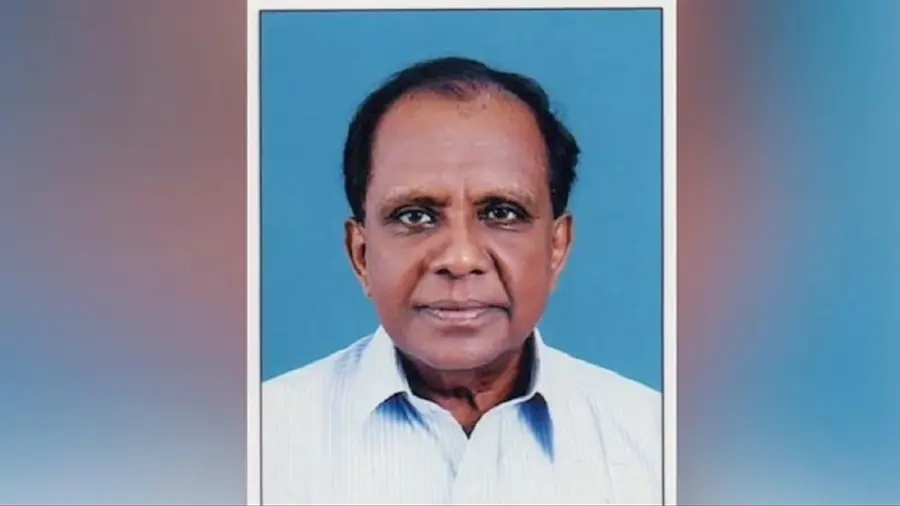
Among the writings that left a deep impression on me was his unforgettable feature on the Morbi disaster—the tragedy of August 11, 1979, when the Machchu Dam in Gujarat collapsed and swept thousands of lives away in a matter of hours. Even today, I consider that article one of the finest features ever written in Malayalam. It was not merely reportage; it was a masterclass in feature writing, a lesson in how journalism can bear witness to human suffering with both precision and compassion.
There were many such works.
As a journalism student, I had also followed with fascination the waves created by the investigative series The Looting of Forest Wealth with Government Knowledge, written by N. R. S. Babu and S. Jayachandran Nair for Kerala Kaumudi in 1974. The series shook Kerala’s political and media establishment. It is said that the courage and impact of those reports inspired M. S. Mani Sir to launch Kala Kaumudi, bringing together Babu Sir and Jayachandran Nair Sir in that pioneering venture.
I belonged to a generation that treasured old issues of Kala Kaumudi, preserving them carefully and returning to favourite essays and features like cherished books. To find myself, years later, working in that very institution was a source of immense pride.
Those were days when journalism was rarely considered a profession for women. Newsrooms were overwhelmingly male spaces.
On my first day at work, S. Jayachandran Nair Sir smiled and said:
“Babu is in the next room. Go and meet him.”
I walked into the room, introduced myself, and stood there somewhat apprehensively. Babu Sir looked up, reached for a copy of Shabdatharavali lying on his desk, and handed it to me.
That was my first assignment.
“Take a notebook,” he said. “Write down five new words from this every day and learn them.”
It was such a simple instruction.
Yet, looking back, I realise that it contained an entire philosophy of journalism. Respect language. Expand your vocabulary. Remain a student. Never stop learning.
During my two years at Kala Kaumudi and Kerala Kaumudi, I learned countless lessons from Babu Sir—not only about feature writing, but about the discipline and seriousness that journalism demands.
The Newsroom itself was a university.
There were giants everywhere:
M. S. Mani,
S. Jayachandran Nair,
M. P. Narayana Pillai,
N. N. Sathyavrathan,
A. P. Viswanathan and many others. They belonged to a generation that treated journalism not as a career but as a calling.
The first short story I ever wrote, Rakshasan (The Demon), was sent, rather audaciously, to Babu Sir. He published it prominently in Kala Kaumudi. Many stories followed, and he welcomed them with the same generosity.
Years later, when I was transferred to Guwahati in Assam, an email arrived from him.
“Our readers still know very little about Assam. A detailed travel series would interest them. Write everything. Let the readers meet Beena, Baiju and Appu through the journey.”
Those few lines eventually became Assam Yaathra, which began appearing in Kala Kaumudi in July 2003 and later evolved into my book A House on the Brahmaputra.
When I look at that book today—with Narayana Bhattathiri’s beautiful cover adorning it—I remember that its first seed was planted in the imagination of N. R. S. Babu Sir.
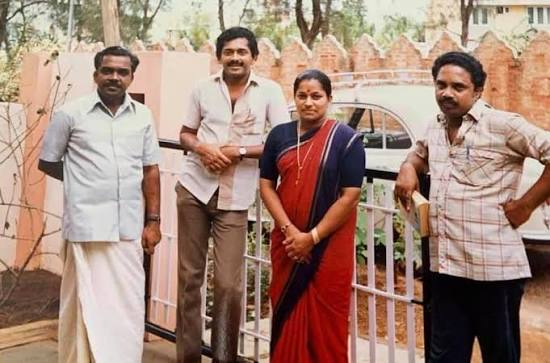
For my Dateline series on the stalwarts of Malayalam journalism, I approached him repeatedly for an interview.
He refused every time.
“I have done nothing worth writing about,” he would say.
M. S. Mani Sir and S. Jayachandran Nair Sir echoed the same sentiment.
That humility now feels almost unbelievable.
Even today, I regret that I could not adequately record the lives and contributions of those extraordinary journalists in my books Dateline and Pathrajeevithangal. They slipped away quietly, leaving behind work that spoke louder than any self-promotion.
It was a different time.
A different breed of journalists.
Men who breathed journalism.
Men who did not barter professional ethics for money, fame, influence or power.
Men who understood that journalism was, above all, a public trust.
I consider it one of the greatest blessings of my life that I began my journalistic journey under their guidance.
Memory.
I often marvelled at Babu Sir’s extraordinary memory. At times, I confess, I even envied it. Yet the final chapter of his life revealed a profound truth: memory itself is fragile, fleeting and mortal. The mind that once held entire worlds can, one day, begin to lose them.
Life had taught me that lesson earlier through my mother’s struggle with memory loss. There is little point in taking pride in something so transient.
There are countless memories of Babu Sir—some that I wish to write about, and others that I prefer to keep quietly within myself.
One of the men who carried history on his shoulders has passed into history himself.
My loving salutations to you, dear Babu Sir.
I am still learning words from Shabdatharavali.
Read the Malayalam version of the Article here








“This essay is a beautiful reminder that learning is a lifelong process. Every word carries history, culture, and meaning, and exploring them deepens our understanding of both language and life.”