

Editors and Political Leaders Stand Up for R. Rajagopal, Challenge Electoral Roll Purge

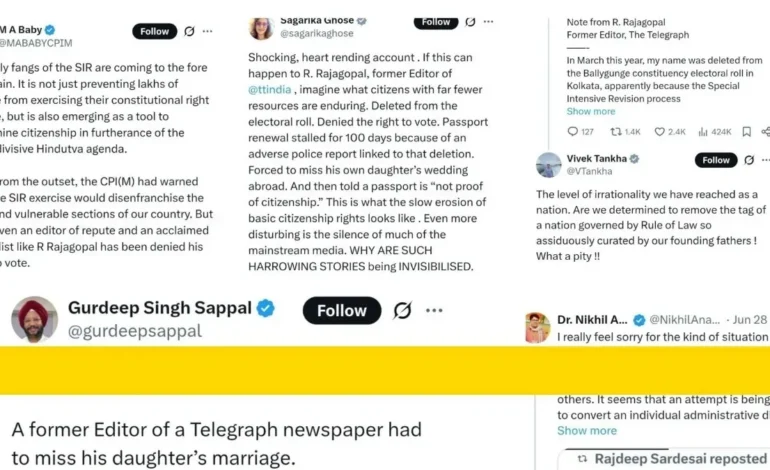
What began as the ordeal of one veteran journalist has rapidly grown into a national debate on citizenship, voting rights and administrative accountability.
The removal of former The Telegraph editor R. Rajagopal from the electoral rolls in West Bengal has triggered an unusually broad response from journalists, editors and political leaders across party lines. On June 28, 2026, the Editors Guild of India (EGI) issued a strongly worded statement warning against bureaucratic authorities effectively determining the citizenship status of Indians. Calling Rajagopal’s experience emblematic of the “misery that millions of Indians are being put through,” the Guild urged the Election Commission to exercise “common sense and sympathy” in restoring the rights of those affected.

Political reactions have been equally sharp.
CPI(M) General Secretary M.A. Baby described the Special Intensive Revision (SIR) as having “ugly fangs,” alleging that it is being used not merely to revise electoral rolls but to disenfranchise citizens and advance a divisive political agenda.
Rajya Sabha MP Sagarika Ghose pointed to the human consequences of the process, observing that if a nationally known editor could be trapped in bureaucratic uncertainty, the predicament of ordinary citizens with fewer resources could be far worse.
Congress Rajya Sabha MP Vivek Tankha questioned the “irrationality” of the exercise and asked whether India was steadily abandoning the Rule of Law.
The BJP has rejected suggestions that the case represents a constitutional crisis. BJP spokesperson Dr. Nikhil Anand argued that the Ministry of External Affairs has consistently maintained that a passport is a travel document rather than conclusive proof of citizenship. He cautioned against what he termed “selective storytelling,” saying administrative lapses should certainly be corrected but that an individual case should not be used to construct a broader narrative of democratic decline. He also noted that the complete timeline of Rajagopal’s passport renewal remains unclear and suggested that applicants bear some responsibility for renewing travel documents in time.

Yet the widespread public response stems from what Rajagopal’s case appears to reveal about the consequences of the Special Intensive Revision.
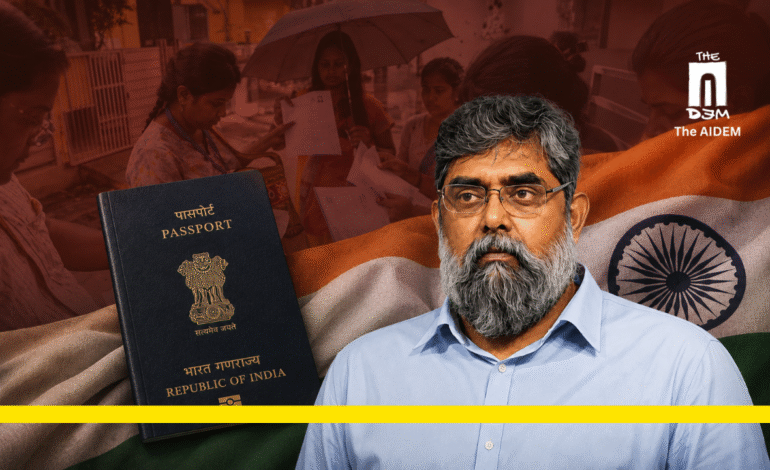
Rajagopal discovered that his name had been deleted from the electoral rolls because of unspecified “inconsistencies.” That single administrative action set off a chain reaction. During the renewal of his passport, an adverse police verification linked to his electoral status delayed the process for more than 100 days, ultimately preventing him from travelling abroad to attend his daughter’s wedding. Overnight, a citizen who had voted for decades found himself unable to establish rights that had previously been unquestioned.
His experience has acquired wider significance because it coincides with reports that nearly 2.7 million names have been removed from the electoral rolls in West Bengal. For many observers, the obvious question is whether countless ordinary citizens may now be facing similar bureaucratic uncertainty without attracting public attention or institutional support. Although the Supreme Court has directed that mechanisms for appeal should exist, navigating these processes remains a daunting challenge for many affected citizens.
Another striking aspect of R. Rajagopal’s experience was that a large section of the mainstream media pointedly refrained from reporting his case, despite many media outfits knowing that a grave injustice was being done to the former editor of The Telegraph. The AIDEM was the first media organisation to highlight the issue, drawing attention to it after sourcing the story from social media posts circulating online.
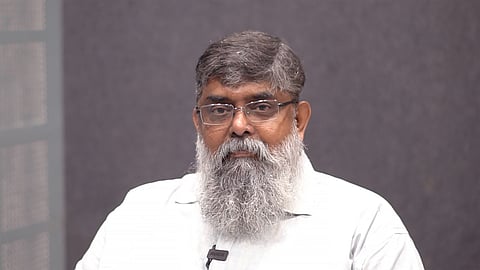
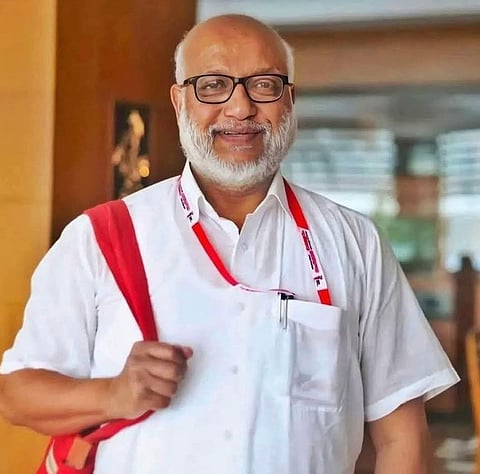
Journalism is not merely the recording of isolated incidents. Its purpose is to gather, verify and analyse facts, bring matters of public importance into the open, hold institutions accountable and enable informed public debate. The ethical obligations of journalism—accuracy, fairness, independence and public accountability—require that individual cases exposing systemic failures be reported and examined. Democracies have long relied on such reporting because institutions often become accountable only when the lived experiences of citizens enter the public domain.
Whether Rajagopal’s case ultimately proves to be an isolated administrative error or evidence of a larger systemic problem is for institutions to determine. But the public attention it has received demonstrates why individual stories matter. They transform abstract policy into lived reality and compel governments to answer questions that statistics alone cannot.

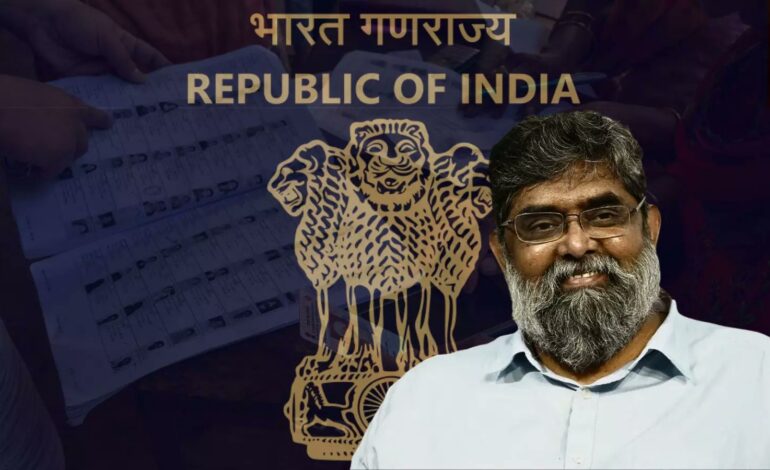






https://theaidem.com/en-editors-and-political-leaders-stand-up-for-r-rajagopal-challenge-electoral-roll-purge/
**”A democracy is strengthened not by unquestioning acceptance, but by transparency, accountability, and the protection of every citizen’s rights. When respected journalists, editors, and public figures raise concerns about electoral processes, those concerns deserve a fair, transparent, and institutional response. Public trust in democratic institutions must always remain the highest priority.”