

Hailstorms, Climate Change and Kashmir’s Apple Crisis

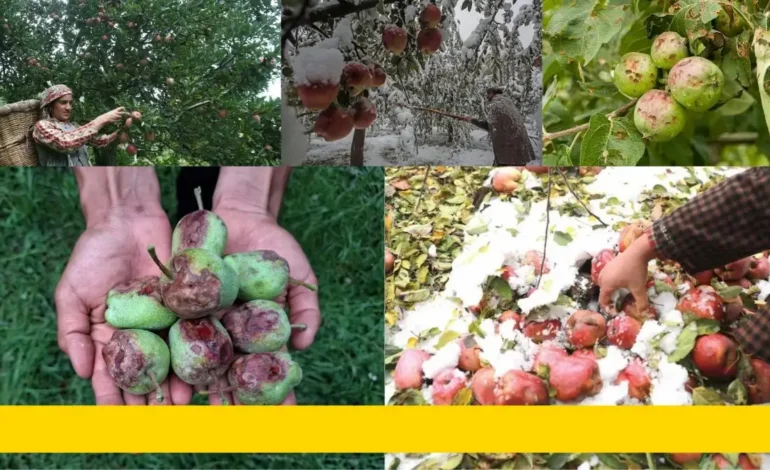
Hailstorms have become a major threat to farmers in Kashmir, causing extensive crop losses. The months of April, May and June have become a season of anxiety for farmers as they watch clouds gather overhead and lightning flash across the sky. This year alone, according to news reports, more than 100 hailstorms have struck different parts of the Valley.
Over the years, hailstorms have increasingly afflicted apple farmers. Since Kashmir produces around 75 per cent of India’s apples, and the horticulture sector supports nearly 3.5 million people directly and indirectly, the growing frequency of hailstorms poses a grave crisis.
IMD Data Shows Increase in Hailstorms
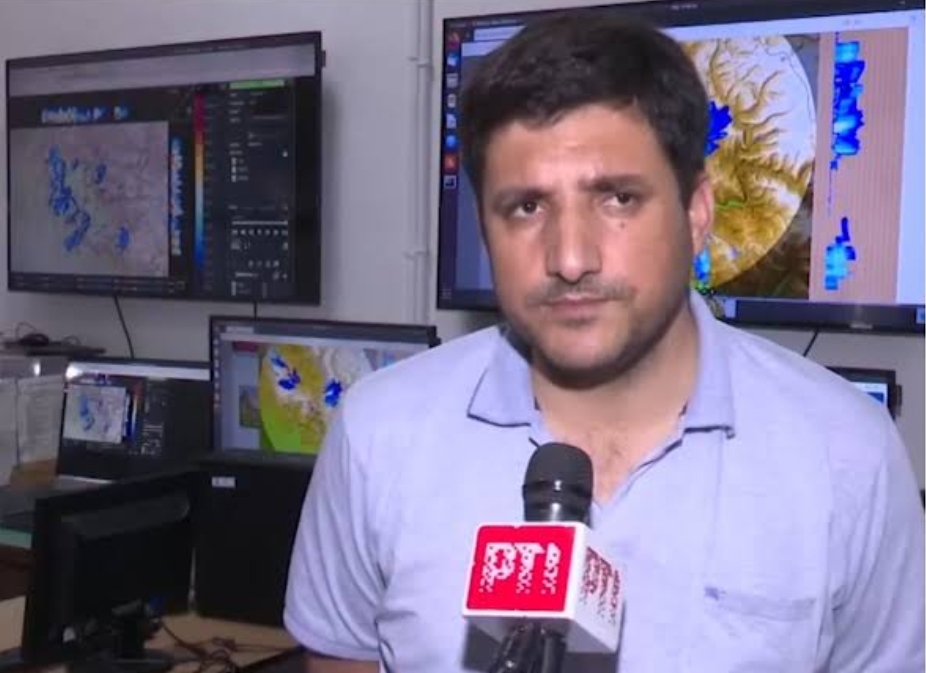
Data provided by Indian Meteorological Department (IMD) Director Mukhtar Ahmed also suggests an increase in hailstorm events across the Kashmir Valley. Compiled from automatic weather stations and newspaper records, the data show that between 2012 and 2026, IMD Srinagar’s hailstorm records reflect a clear upward trend, albeit with year-to-year variations.
The earliest years (2012–2017) were relatively quiet, with annual counts ranging from zero to about six events, mostly scattered across a handful of districts such as Kupwara, Srinagar and Ganderbal. A marked increase began around 2018–2022, when yearly totals rose to between 12 and 15 events. Districts such as Baramulla, Budgam, Kulgam and Anantnag appeared repeatedly, often recording multiple hailstorms in the same month, particularly during May and June.
After a brief dip in 2023–2024, the number of hailstorms increased again in 2025. The year 2026 stands out dramatically, with 21 recorded events through June alone, driven by clusters of storms across Kupwara (3), Shopian (4), Kulgam (4), and several other districts, including Badgam, Baramulla, Bandipora, Ganderbal and Pulwama (2 each). As data for July 2026 are not yet available, this already high total may increase further, making 2026 a potential record year for hailstorm activity in the region.
Mukhtar Ahmad also confirmed that the Kashmir region currently has 20 automatic weather stations and seven manual observatories through which weather forecasting and data collection are carried out.
Farmers Witness a Changing Climate
Farmers across the Valley say they have observed a noticeable increase in the frequency of hailstorms.
A young farmer, Zahid Tak from Shirmal village in Shopian district, said that the area had witnessed multiple spells of hailstorms. He said:
“For the last two years, we have witnessed hailstorms consecutively in our village. My grandfather recalled that the previous major hailstorm in our area occurred in 2001. However, we have now witnessed hailstorms in consecutive years. Earlier, hailstorms would occur occasionally, perhaps once in a decade in a particular area, but now we have witnessed them twice in two years, which indicates a change in climatic conditions.”
In north Kashmir, clusters of villages across the districts of Baramulla, Kupwara and Bandipora also witnessed heavy hailstorms this year, with multiple spells occurring during April, May and June.
A farmer, Mudasir Ahmad from the Tangmarg area of Baramulla district, said:
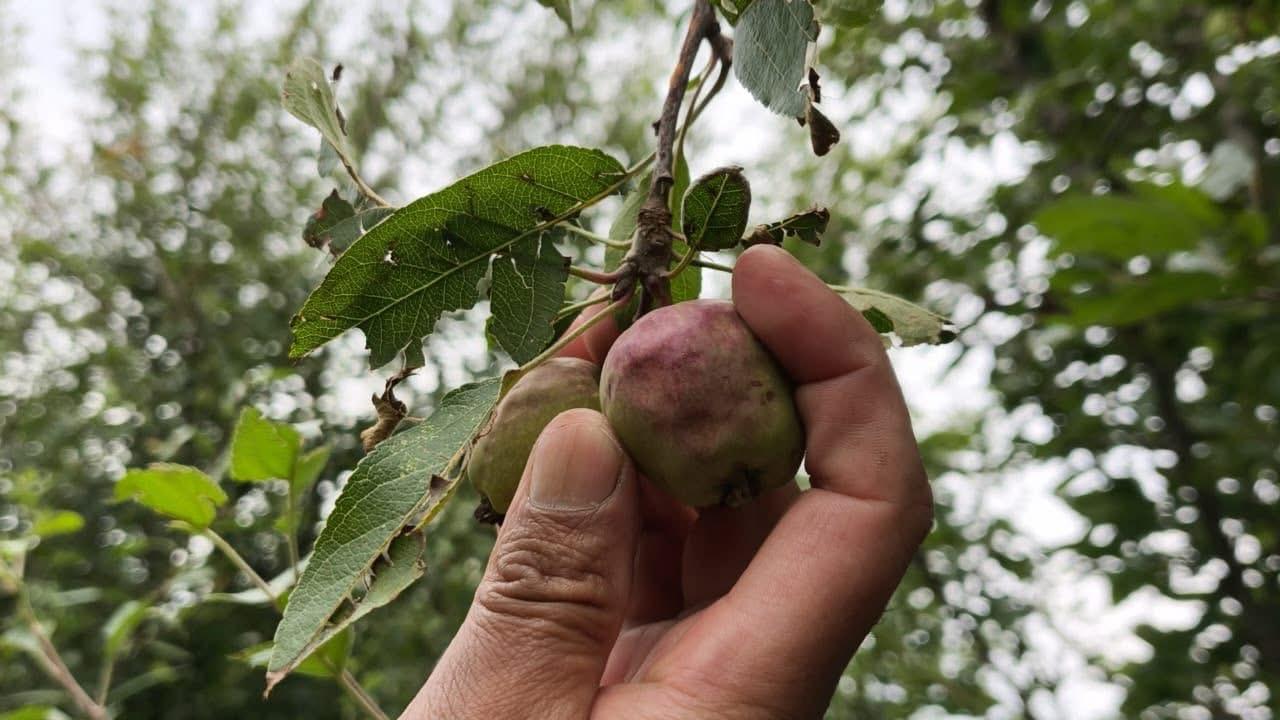
“We witnessed a hailstorm that lasted for around 20 minutes, whereas such events usually last only a few minutes. It was heavy and long-lasting. Fruits on the trees, especially apples, were completely damaged. There is no fungicide or pesticide that can repair the damage caused by hailstorms. Over the years, hailstorms have been occurring more frequently.”
Another farmer, Ashiq Ahmad Husain from the Lolab area of Kupwara district, said:
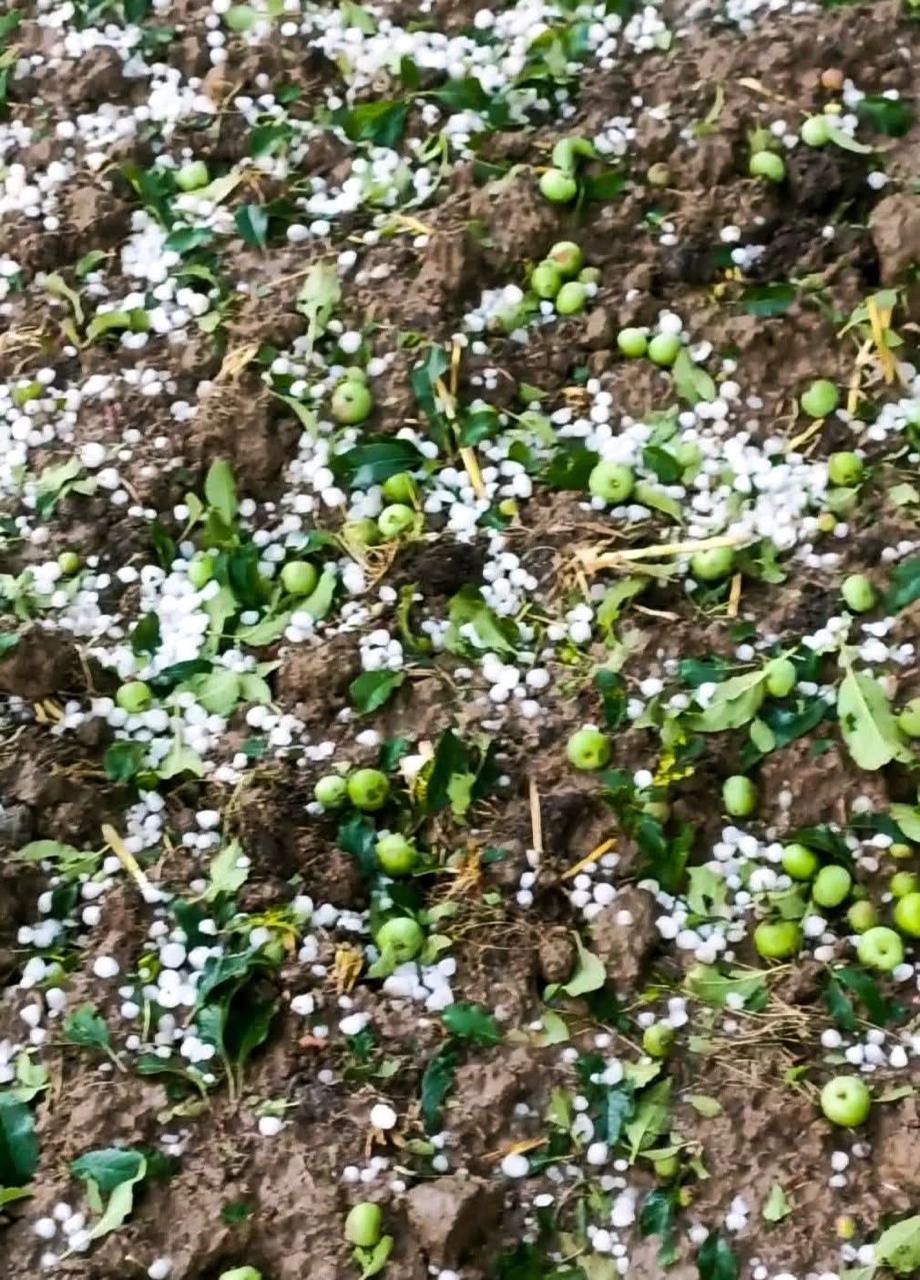
“We witnessed hailstorms multiple times this year. On the evening of May 23, it was like a disaster as the intensity of the hailstorm was severe. Not only were the fruits knocked off the trees, but even the leaves fell to the ground. We lost the entire apple crop this year. Usually, we do not witness multiple hailstorms in the same year, but it seems that due to climate change, we experienced several hailstorms this year.”
Research and Weather Observations
According to research published in the journal Natural Hazards in November 2023, titled Climate Change, Hailstorm Incidence, and Livelihood Security: A Perspective from Kashmir Valley, India, hailstorm incidents in Kashmir were compiled from archival newspaper reports covering the period from 2007 to 2022 and mapped spatially and temporally using GPS. The study also conducted a four-point Likert-scale survey across the Valley to assess public perceptions of changing climatic conditions and the intensification of hailstorm activity.
The study documented 203 hailstorm events between 2007 and 2022. Its findings revealed that both the intensity and frequency of hailstorms increased alongside rising temperatures and declining rainfall under changing climatic conditions across the Kashmir Valley. Hailstorm incidents rose from just 02 events in 2007 to 27 events in 2022.
Khursheed Ahmad, a geologist and Assistant Professor at Degree College Pulwama, told this reporter that the Kashmir Valley’s geography plays an important role in hail formation. Surrounded by snow-clad mountains, the Valley receives cool winds that descend into lower areas. Atmospheric turbulence then creates an upward movement of raindrops, which eventually develop into hailstones.
According to Ahmad, continuous uplift caused by turbulence allows raindrops to accumulate successive layers of ice, increasing the size of hailstones. Rising temperatures during April and May also strengthen atmospheric turbulence, creating conditions favourable for hailstorm formation.
He said that climate change may be contributing to more frequent hailstorms, although there is insufficient scientific data to conclusively establish the link.
“As temperatures rise, the chances of hailstorm occurrence may increase. We do not have sufficient data on how much wind speed is increasing due to rising temperatures, which would help us accurately determine changes in hailstorm intensity. However, in my opinion, such conditions can contribute to an increase in hailstorms,” he added. “Climate science still lacks sufficient data and research on hailstorms, and systematic studies have gained attention only during the last fifteen years. We still have a lot of work to do. Currently, we have made progress mainly in weather forecasting.”
Research Continues Amid Data Gaps
Independent weatherman Faizan Arif says Kashmir continues to face a shortage of weather stations. In mountainous regions like Kashmir, variations in elevation, valley orientation, localised heating and wind convergence influence thunderstorm development, making hailstorm patterns difficult to assess. He argues that establishing long-term trends in hailstorm frequency and intensity requires denser observational networks, high-resolution radar coverage and long-term localised weather stations.
Arif also links climate change to the changing nature of hailstorms. From a climate science perspective, he said, rising temperatures can theoretically enhance atmospheric instability by increasing heat and moisture availability near the surface. A warmer atmosphere can hold more water vapour, contributing to stronger convective activity and more energetic thunderstorms under favourable synoptic conditions. He said:
“Assessing long-term trends in hailstorms over Jammu and Kashmir remains scientifically challenging because hail events are extremely localised in nature. Unlike widespread rainfall systems, hailstorms may affect one village or pocket intensely while nearby areas remain untouched. Given the complex Himalayan topography and the limited density of weather observatories, it is practically impossible to capture every hail event across the region accurately. Observational datasets therefore provide only fragmented snapshots rather than a fully representative picture of district-wide or Kashmir-wide hailstorm activity.”
Discussing the relationship between climate change and hailstorms, Arif said several studies suggest that climate change may increase the likelihood of short-duration extreme weather events, including severe thunderstorms and intense precipitation. However, translating this into confirmed long-term increases in hailstorm frequency or hail size over Kashmir remains difficult because of observational limitations and the highly localised behaviour of hail-producing storms.
A journalist with a local daily newspaper, Gulzar Bhat, said that during May and June this year he filed around 12 stories on hailstorms across different parts of Shopian district, where the economy is largely dependent on apple farming. He said apple crop losses in some areas are estimated at around 70 per cent this year.
Bhat added that although he has worked as a journalist for the past decade, he has never reported so many stories on hailstorm damage in a single year.
Crop Losses Continue
Districts across south Kashmir have witnessed repeated spells of hailstorms this season. Shopian, Kulgam and Pulwama were among the worst-affected districts, with damage to apple crops ranging from 30 to 70 per cent across different areas.
Pulwama district, another region heavily dependent on apple cultivation, witnessed multiple hailstorms during April, May and June.
Amir, a young farmer from Rajpora in Pulwama district, recalled the destruction caused by one such storm. He said:
“On the evening of June 18, clouds gathered and strong winds started blowing. Within moments, a hailstorm began and lasted for around 20 minutes. It damaged around 80 per cent of the apple crop on the trees. One cannot bear such losses, as we spent lakhs on fertilisers and pesticide sprays, and we depend entirely on farming for our livelihood.”
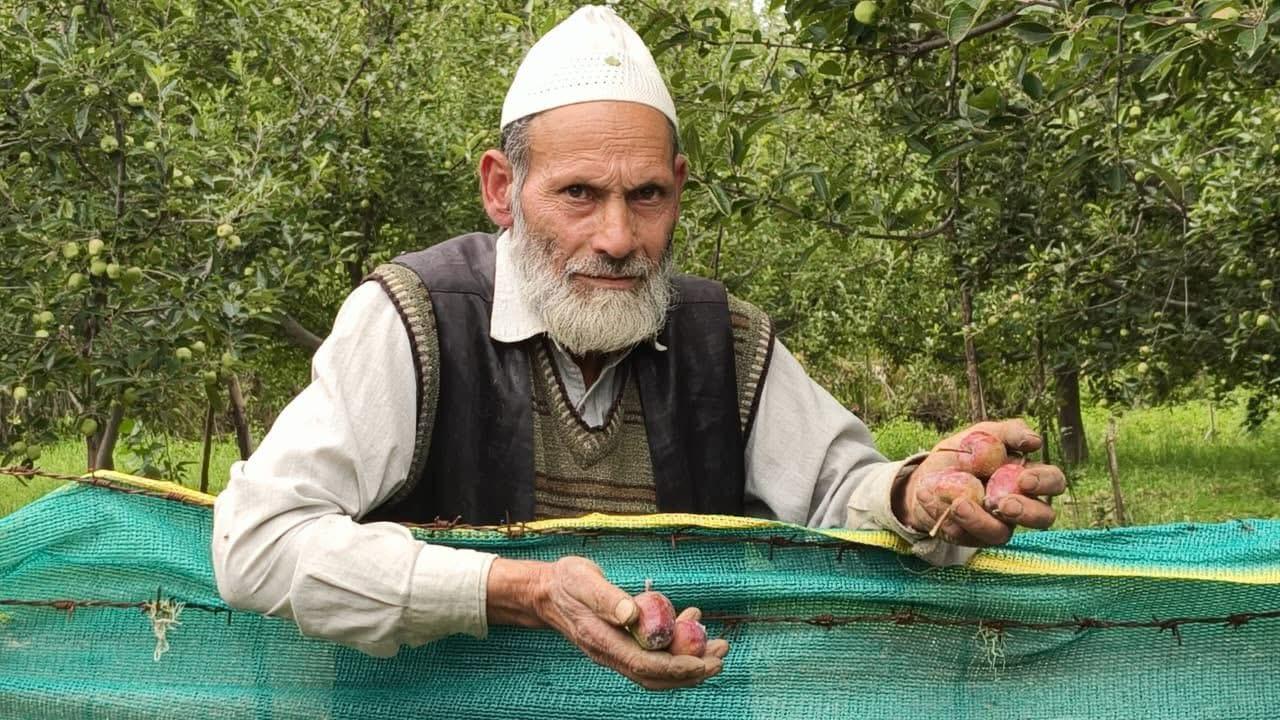
Amir’s neighbour, Ghulam Mohi-ud-Din Mir, a septuagenarian, said he had never witnessed such an intense and long-lasting hailstorm in his lifetime. He added:
“From my experience, if a hailstorm occurred in a few villages, it would generally remain confined to those villages. Now the situation is different, as hailstorms are occurring in several villages during the same year.”
Need for Better Protection
The Kashmir Valley’s economy is deeply dependent on horticulture, which contributes around 8 per cent to the Gross State Domestic Product (GSDP). With hailstorms damaging between 30 and 70 per cent of apple crops in many areas over the past few years, the livelihoods of millions of farmers are under increasing threat.
Experts and farmers alike say the Valley needs better planning and sustained scientific research to reduce the impact of hailstorms. Expanding the network of local weather stations could improve forecasting and provide timely alerts, helping farmers protect their orchards from severe weather.
Some growers who have shifted from traditional orchards to high-density plantations have installed anti-hail nets. However, many others say the cost remains prohibitive.
Mudasir Bashir, a farmer, said he has been unable to install anti-hail nets in either his traditional or high-density orchards because of the high expense. He added that although he applied for anti-hail nets last year, his application is still pending.
“The current government had also promised full crop insurance for the horticulture sector in its manifesto. However, even after nearly two years, the promise has not been implemented on the ground,” Bashir said.
Most of the farmers interviewed for this story urged the government to introduce a comprehensive crop insurance scheme for apple growers at the earliest so that they can continue farming despite recurring losses.
Farmers also argue that the increasing frequency and intensity of hailstorms are making apple cultivation progressively more uncertain. They have called for higher subsidies for anti-hail nets—similar to the 80 per cent subsidy provided by the Himachal Pradesh government—along with easier access to the nets and a stronger early warning system supported by more localised automatic weather stations.
What once appeared to be isolated weather events are now becoming an increasingly regular feature of Kashmir’s growing season. For a region whose economy and identity are closely tied to its apple orchards, adapting to a changing climate is no longer a matter of future planning. It has become an immediate necessity.









A powerful and timely article highlighting how climate change is no longer a distant concern but a daily reality for Kashmir’s apple growers. Repeated hailstorms are destroying livelihoods, exposing the urgent need for stronger climate adaptation, better crop protection, and meaningful policy support. An important read that connects environmental change with human survival. 👏