


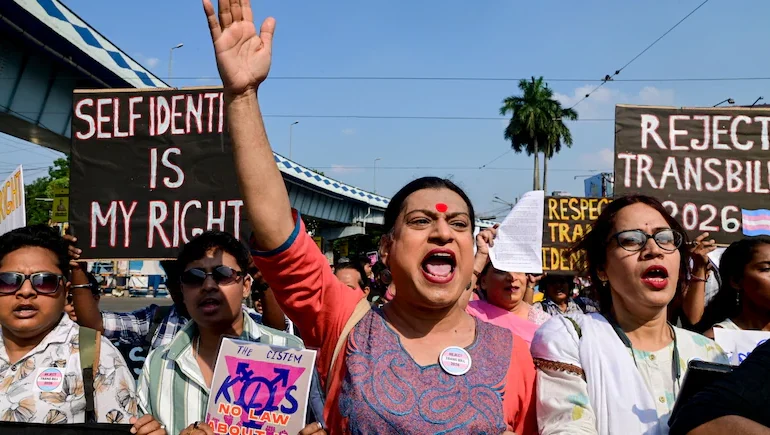
The Transgender Persons (Protection of Rights) Amendment Bill, 2026 marks a significant moment in the ongoing legal and political negotiation of gender in India. While presented as an effort to clarify definitions, strengthen protections, and address practical difficulties in implementation, the Bill also introduces a set of conceptual and structural shifts that demand critical scrutiny. After reading the Bill closely, I have encountered several issues that, though not entirely new, require careful elaboration. These concerns resonate with the broader critiques articulated by queer groups and sections of civil society, who have raised questions about the Bill’s increasingly restrictive and undemocratic character.
At stake is not merely the adequacy of legal provisions but the very framework through which gender identity is understood and governed. The amendment signals a movement away from earlier principles of self-identification and dignity towards a more controlled, bureaucratic, and medicalised regime of recognition. In doing so, it redefines the relationship between the individual and the state, transforming identity from a domain of personal autonomy into an object of institutional verification.
It is necessary to examine these shifts across three interrelated themes: identity and recognition, surveillance and criminalisation, and exclusion and constitutional contradiction, to understand how the Bill represents a broader transition from rights to regulation, medicalisation, and social marginalisation.
Identity, Recognition, and the Politics of Definition
The most fundamental shift introduced by the Transgender Persons (Protection of Rights) Amendment Bill, 2026 lies in its departure from the principle of self-identification. The earlier framework, influenced by constitutional jurisprudence, recognised gender as something rooted in self-perception. The amendment, however, removes this foundation by omitting the provision that affirmed the right to self-perceived gender identity. In its place, the Bill establishes a bureaucratic apparatus involving medical boards, district magistrates, and expert verification. Gender identity becomes something to be examined, certified, and validated by the state. This marks a profound ontological shift: identity is no longer something one is, but something one must prove. This is not a neutral administrative change but a reconfiguration of power. It transforms gender into an object of governance. The state assumes the authority to adjudicate the authenticity of identity, thereby displacing the individual as the primary locus of self-knowledge. What emerges is a regime where recognition is conditional, contingent, and revocable.

The Bill’s definitional changes reinforce this shift by privileging biological and institutional criteria. It narrows the category of “transgender person” to include intersex variations, certain socio-cultural identities, and individuals subjected to coercive bodily transformations. At the same time, it explicitly excludes self-perceived gender identities. This move effectively medicalises gender diversity. Recognition is anchored in bodily deviation or socially recognised categories rather than lived experience. Gender becomes intelligible only when it can be mapped onto biological markers or institutional categories. It implies that gender variance must be diagnosed, verified, or culturally authenticated in order to be legitimate. The fluid, performative, and experiential dimensions of gender, central to contemporary understandings, are erased. In doing so, the Bill reinstates a hierarchy in which only certain forms of difference are deemed real, while others are dismissed as illegitimate or excessive.
The Statement of ‘Objects and Reasons’ makes explicit the ideological foundation of the Bill: protections are not meant for identities based on “personal choice”. This formulation is deeply revealing. It constructs a binary between identities that are “given” (biological or traditional) and those that are “chosen” (self-articulated or fluid). This distinction is untenable. The insistence that identity must not be “acquirable” reflects an anxiety about the instability of gender. It suggests that if identity is open to self-definition, it becomes suspect, potentially fraudulent, and in need of regulation. This leads to a regime of authenticity policing. Individuals must demonstrate that their identities conform to pre-approved categories. Those who cannot do so are excluded from recognition and protection. The Bill thus produces a moral hierarchy: the “authentic” transgender subject versus the “illegitimate” queer subject. In doing so, it undermines the foundational principle that identity, even when chosen or evolving, is no less real or deserving of rights.
Surveillance, Criminalization, and the Governance of Bodies
The introduction of mandatory reporting by medical institutions marks a significant expansion of state surveillance. The Bill requires that details of individuals undergoing gender-affirming procedures be furnished to authorities. This provision transforms a deeply personal medical process into a matter of administrative record. It creates the possibility of centralised data collection on transgender persons, raising serious concerns about privacy and misuse. In a context where transgender individuals already face stigma and discrimination, such surveillance can have chilling effects. This is not merely a question of privacy but of bodily autonomy. The requirement that one’s transition be reported to the state undermines the principle that individuals have control over their own bodies and identities. It also reflects a broader logic in which marginal identities are subjected to heightened scrutiny and documentation, reinforcing their status as objects of regulation rather than subjects of rights.
The Bill introduces a detailed penal framework addressing coercion, abduction, and forced bodily transformation. While the intent to address serious forms of violence is important, the way these provisions are framed produces troubling implications. Transgender identity is repeatedly linked with acts such as mutilation, coercion, and exploitation. The narrative that emerges is one in which transness is associated with harm, either as something inflicted upon individuals or as the outcome of criminal activity. Such a framing risks reinforcing stigma. It suggests that becoming transgender is something that happens through violence rather than through self-realisation. It also reflects a form of moral panic, wherein the law imagines scenarios of “forced transgendering” that are not empirically substantiated but carry significant ideological weight. In effect, the Bill conflates protection with suspicion. While it seeks to address real harms, it does so in a manner that casts transgender identity itself as a site of anxiety and danger.
Exclusion, Assimilation, and Constitutional Contradictions
One of the most significant regressions introduced by the Bill is the erasure of non-binary and gender-fluid identities. The earlier framework allowed for a broader understanding of gender beyond the male–female binary. The amendment removes this inclusivity, effectively rendering such identities invisible. This has profound implications. Non-binary individuals, who do not identify strictly as male or female, are excluded from legal recognition. Their experiences, needs, and rights are not accounted for within the framework of the law.

This represents a closure of gender multiplicity. It reimposes a binary logic that contemporary thought has worked to dismantle. Gender, once understood as a spectrum, is reduced to fixed categories that can be administratively managed. This not only marginalises non-binary individuals but also limits the broader cultural imagination of gender.
The procedural requirements introduced by the Bill create significant barriers to recognition. Individuals must navigate a system involving medical boards, documentation, and bureaucratic approval. For many transgender persons, particularly those from marginalised socio-economic backgrounds, these processes may be inaccessible. Lack of access to healthcare, legal literacy, and financial resources can prevent individuals from obtaining the required certification. This creates a situation where rights exist in principle but are inaccessible in practice. Recognition becomes contingent on one’s ability to navigate institutional structures. Those who cannot do so are effectively excluded. This constitutes a form of structural violence. The law does not merely fail to include marginalised individuals; it actively produces conditions under which they are excluded.
The Bill reflects an assimilationist approach to gender diversity. It recognises identities that are stable, culturally legible, and administratively manageable, such as traditional hijra communities or medically defined conditions. At the same time, it marginalises identities that are fluid, emerging, or difficult to categorize. This includes many contemporary forms of gender expression, particularly among younger and urban populations. Assimilation, in this context, means incorporating certain identities into the legal framework while excluding others. It prioritises order and legibility over diversity and experimentation. Civil society and constitutional framework, by contrast, have historically sought to expand the boundaries of recognition and challenge normative frameworks. The Bill moves in the opposite direction. It narrows the field of acceptable identities, privileging those that can be easily governed.
The provisions of the Bill raise serious constitutional concerns. By excluding self-identified individuals, it undermines the principle of equality. By subjecting identity to certification and surveillance, it encroaches upon the rights to expression, dignity, and privacy. Moreover, it departs from the transformative vision articulated in key judicial pronouncements that recognised gender identity as intrinsic to personhood. These judgments emphasised autonomy, dignity, and the right to self-definition. The Bill, in contrast, adopts a managerial approach that prioritises administrative clarity over individual rights. It reflects a tension between two visions of law: one that expands freedom and one that regulates it. The amendment appears to align with the latter. Despite its stated objective of protection, the Amendment Bill fundamentally restructures the legal landscape of gender identity. It narrows the scope of recognition, replaces self-identification with certification, and introduces mechanisms of surveillance and control.
The Limits of Regulatory Recognition
What emerges is not a framework of empowerment but one of regulation. Gender diversity is treated not as a domain of freedom but as a problem to be managed. The law constructs a hierarchy of legitimacy, recognising only certain identities while excluding others. This represents a significant regression. It signals a retreat from the possibility of imagining gender as open, fluid, and self-determined. Instead, it reinstates a model in which identity must conform to predefined categories and institutional validation. The stakes are therefore not limited to the rights of transgender persons. What is at issue is the broader question of how a society understands and accommodates difference. The Amendment Bill, in its current form, suggests a vision in which diversity is tolerated only when it can be controlled. In doing so, it risks foreclosing the very possibilities of becoming that queer politics seeks to sustain.
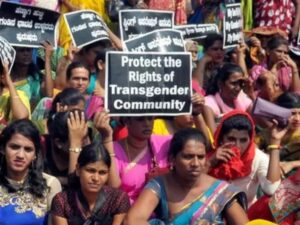
The Transgender Persons (Protection of Rights) Amendment Bill, 2026 should be withdrawn because it represents a significant regression from the principles of dignity, autonomy, and equality that underpin constitutional protections for gender minorities. By replacing self-identification with medical and bureaucratic certification, the Bill undermines the fundamental right of individuals to define their own identity. Its narrow and exclusionary definition of transgender persons erases non-binary and gender-fluid identities, while its emphasis on surveillance and reporting raises serious concerns about privacy and bodily autonomy. Moreover, the Bill introduces procedural barriers that will disproportionately affect the most marginalised within the community, effectively denying them access to recognition and rights. Rather than expanding protections, it creates a framework of control and exclusion. In its current form, the Bill risks institutionalising discrimination under the guise of protection, and therefore must be withdrawn and reconsidered through a more inclusive, rights-based approach grounded in democratic principles.









“A powerful critique that raises serious concerns about exclusion and rights—an important perspective that deserves attention.”