Conversions, A Quest for Dignity


A few months ago, I came across a review of ‘This Land We Call Home: The Story of a Family, Caste, Conversions and Modern India’. The title itself was enough to stir my curiosity, so I promptly ordered a copy online. The book arrived, well-packaged, and went straight to my shelf, where it sat silently among other “to-be-read” companions.
Weeks later, I finally pulled it out—and once I began, I read it in two sittings. Now I know why I should not have delayed. It is one of those rare books that alter the way you look at familiar things—faith, caste, and the meaning of belonging in modern India.

For me, the book was an eye-opener in many respects. It also brought back personal memories. As a child, the days before Christmas in our village meant groups of carol singers visiting our home. At least four or five sets of singers would appear each year. They sang hymns, collected small donations, and filled the night with music.
Among them, the group that impressed me the most was from the Salvation Army. They were easily recognisable—dressed in military-style uniforms, carrying big drums, tambourines, trumpets, and occasionally a tuba. Their voices were trained, their rhythm disciplined. My grandfather would give them more money than the others, perhaps because he admired their sincerity. Yet, at the time, I knew little about the Salvation Army beyond their carols and uniforms.
This book, however, brought to life their deeper role in India’s colonial and post-colonial history. During British rule, the government faced what it called the “problem” of the so-called Criminal Tribes. In 1871, it enacted a law to classify entire communities as hereditary criminals. As the book reminds us, “the British count of criminal tribes started with only a few, but later 150 communities, ranging up to 60 million, including ‘eunuchs’ were declared ‘criminal tribes’.”
Looking back, it seems ludicrous—idiotic, even—to label whole communities as criminal by birth. Nobody is born a thief or a murderer. Circumstances, deprivation, and oppression push people into desperate acts.
I remembered a powerful episode from the Malayalam movie, Udaya Studio’s Bhaarya (Wife), released in the 1960s. It featured a play in which Michelangelo sought a model to paint Judas Iscariot. He found a hardened prisoner about to be executed. As he painted, the prisoner revealed that as a youth he had once posed for Michelangelo—as the model for Jesus Christ. The artist was stunned: the same man had embodied both Jesus and Judas. The message was clear: society makes saints and sinners; nobody is born into either role.
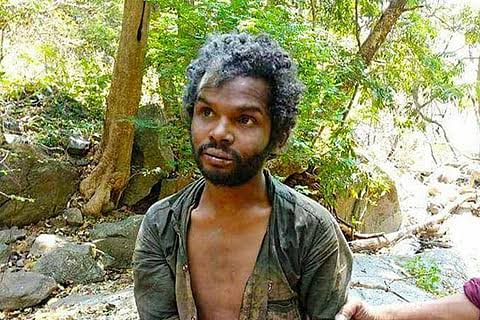
Kerala’s own tragic story of Madhu, the mentally challenged tribal youth lynched in Attappady a few years ago for stealing food because he was hungry, underlines the same truth. Hunger and exclusion create “criminals”; not bloodlines.
When the British government’s heavy-handed attempts to reform these “criminal tribes” failed, the job of managing their segregated communes was handed over to the Salvation Army. This is where the author’s great-grandparents, Hardayal Singh and his wife Kalyani, enter the picture. Belonging to the Bhantu caste of Rajasthan—classified as a criminal tribe—they had lived on the margins, facing constant persecution.
Though they claimed descent from the Rajputs, society had already written their fate. One day, their colony was set on fire by upper-caste groups who accused them of theft. Roofless, penniless, and desperate, Hardayal and Kalyani had only their children’s singing of hymns, and the glimmer of faith they had encountered, to fall back on.
Their turning point came at Sitapur in Uttar Pradesh, where they first entered a church. “The Christ Methodist Church in Bareilly, was the first Christian place of worship that Hardayal and his family had ever stepped inside.” There, Singh was encouraged to study theology, and his daughters were admitted to an English-medium Christian school. For the first time, the children were treated as equals: “In the English medium schools, Hardayal’s children were able to sit and dine with their classmates, rather than being segregated outside the classroom as they were earlier.”
It was more than education; it was dignity. Baptism, as the book puts it, “was Hardayal’s regeneration and the new birth of his entire family.” Six of his seven daughters became qualified nurses. “Their dedication to their profession was matched only by their desire to live life to the fullest.” To me, this was not merely the power of conversion, but the power of transformation.
Of course, Hardayal never escaped caste stigma entirely. The book begins with an episode where, by then a priest, he was attacked on his bicycle simply because he was still seen as a Bhantu. But his resolve to educate his daughters only grew.
The missionaries, as the book acknowledges, “not only played a vital role in uplifting their lives by offering essential resources like education and opportunities for personal growth, but, most importantly, they offered empathy—an emotion previously alien to itinerants.”

The author, Nusrat F. Jafri, is the granddaughter of Prudence, the youngest of Hardayal’s daughters. Prudence’s marriage ended in tragedy: her husband sank into alcoholism and died young. Prudence’s daughter Meera then fell in love with her tutor, a physicist named Syed Abid Ali Jafri, a Shia Muslim. They first had a church marriage and then a Nikah.
Meera embraced her new faith wholeheartedly, reading the Quran and adopting Shia practices. A family elder even remarked that she might have a better claim to heaven than many cradle-Muslims.
Syed Abid Ali Jafri, a brilliant teacher, was secular to the core. He raised his children on science more than on scripture. Yet, the book painfully recalls how his Muslim name became a burden after the demolition of the Babri Masjid in 1992. A neighbour reassured him not to worry, but Jafri realised that in India, names do matter. He even advised his daughter to use only her initials when booking train tickets, aware that Muslim passengers had been killed simply for “looking Muslim.”
The story comes down to the author herself, who fell in love with and married a Bengali Hindu, Sumit Roy. Their son, Dylan Jafri Roy, embodies the family’s journey. His very name defies easy categorisation—Hindu, Muslim, Christian? It is, perhaps, a small answer to the bigotry of our times.
This family saga, stretching across four generations, is also a mirror to India’s upheavals—the trauma of Partition, the clampdown of the Emergency, the rise of Hindutva, and today’s sharpening divisions. The private lives of Hardayal, Prudence, Meera, Nusrat, and Dylan cannot be separated from these public tremors. That, to me, is the book’s greatest achievement: it shows how caste, conversion, and community identities shape ordinary people’s destinies, and how individuals push back with strength.

The writing is elegant but unpretentious. As an award-winning cinematographer, Nusrat frames her story with the eye of someone who knows how light and shadow interplay. There is no romanticising of conversion—it is shown as a painful, contested, and often pragmatic choice. Yet, at every stage, it brought dignity and opportunity, where earlier there was only exclusion.
This is a book worth reading not just for its family chronicle but also for its wider moral lesson. Nobody is born a criminal, or a saint. What matters is whether society allows people to live with dignity. And in Nusrat Jafri’s luminous telling, we see that even amidst stigma, violence, and exclusion, families can carve out their own versions of hope, belonging, and home.

This Land We Call Home, Nusrat F. Jafri (Penguin, Hardbound, 273 pp., Rs 699)