


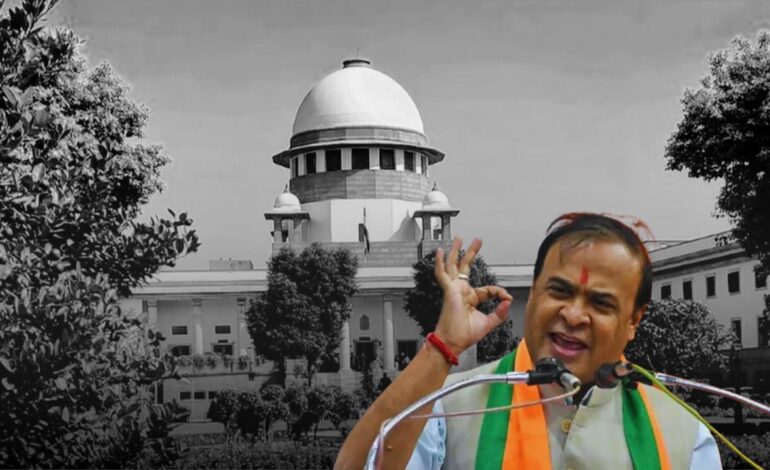
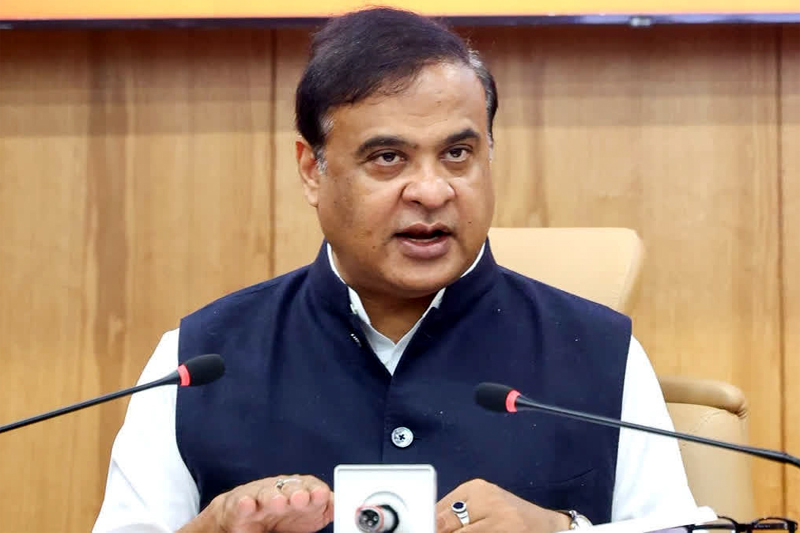
When Subhashini Ali, veteran CPI(M) leader and former MP, and Annie Raja, General Secretary of the National Federation of Indian Women and senior CPI leader, invoked Article 32 of the Constitution to challenge the communal rhetoric of Assam Chief Minister Himanta Biswa Sharma, they were not forum-shopping. They were asserting a constitutional guarantee.
The bench led by Chief Justice Surya Kant declined to entertain their plea, directing them instead to approach the Gauhati High Court. The accompanying observation — that such petitions amounted to a “calculated effort to demoralise High Courts” — transformed what could have been a routine order on maintainability into a constitutional moment with political overtones.
The petitioners alleged that the Assam Chief Minister’s public statements were communally charged and violative of constitutional commitments to equality and secular governance. The petitions were filed by various groups and individuals, including the Communist Party of India (Marxist); the Communist Party of India and its leader Annie Raja; four individuals and activists from Assam; and Jamiat Ulema-e-Hind.
While instructing the petitioners to first approach the Gauhati High Court, the bench also stated that the Supreme Court should not be used as a “political battleground”. It characterised filing directly under Article 32 as a “short-cut method” and directed the Gauhati High Court to prioritise the matter. The plea rested on Articles 14 and 21, but also on the foundational principle that holders of high constitutional office are not insulated from judicial scrutiny when their words potentially fracture the social compact.
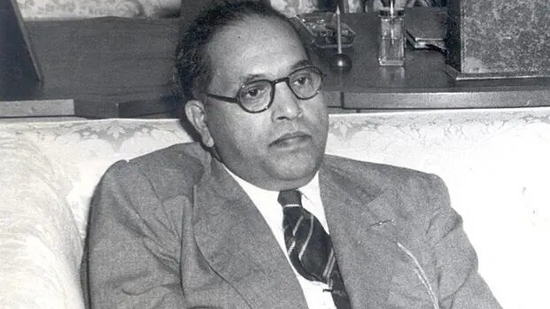
When B.R. Ambedkar described Article 32 as the “heart and soul” of the Constitution, he did so precisely to ensure that citizens could directly approach the Supreme Court in moments of constitutional anxiety. The doctrine of alternative remedy, developed later as a prudential restraint, was never intended to override that guarantee. It was a filter — not a firewall.
The Court’s own history bears this out. When a letter from death row convict Sunil Batra alleged custodial brutality, the Supreme Court did not redirect him to the Delhi High Court. Justice V.R. Krishna Iyer converted that letter into a writ petition under Article 32, inaugurating the era of epistolary jurisdiction. The presence of an “alternative remedy” did not deter constitutional intervention when liberty was at stake.
Against this backdrop, the refusal to entertain pleas against a sitting Chief Minister raises concerns that transcend procedural doctrine.
Former Madras High Court judge K. Chandru publicly criticised the order, pointing out that Article 32 is itself a fundamental right. Justice Chandru questioned whether directing petitioners away at the threshold — especially in cases alleging rights violations by powerful constitutional actors — risks hollowing out the very purpose of Article 32. His remarks echo an older judicial tradition that treated constitutional remedies as instruments of empowerment rather than inconvenience.
The Political Implications
Judicial orders do not operate in a vacuum. When the Supreme Court declines to examine allegations of communal rhetoric by a sitting Chief Minister, the political signal is unmistakable — even if unintended.
First, it shifts the terrain of accountability. The burden now falls entirely on a regional High Court to adjudicate a matter with potentially national ramifications. In politically polarised climates, such shifts can be interpreted — rightly or wrongly — as institutional reluctance at the apex level to engage with executive speech that has ideological backing.
Second, it recalibrates the relationship between political power and judicial oversight. A refusal at the threshold can embolden political actors, reinforcing the perception that rhetorical escalation carries limited immediate constitutional consequence.
Third, it alters the symbolic equilibrium between citizen and State. Article 32 was conceived as a direct constitutional conversation between the citizen and the Supreme Court. Curtailing that access in politically sensitive matters may create the impression that the Court is increasingly cautious when the respondent is an incumbent executive authority.
Finally, there is the federal dimension. While High Courts are constitutionally empowered under Article 226, the Supreme Court has historically stepped in where issues bear on national constitutional morality. The communalisation of political discourse is not a provincial concern; it touches the secular structure of the Republic.
The Supreme Court’s authority is not diminished by hearing such petitions. On the contrary, its moral capital has historically expanded when it has engaged difficult questions head-on.
The order may be defensible in doctrinal terms. But in constitutional politics, optics and impact matter. When allegations of communal rhetoric by a Chief Minister are turned away at the gates of the highest court, the message that travels beyond the courtroom is as consequential as the reasoning within it.
For if Article 32 is indeed the “heart and soul” of the Constitution, its vitality must be most visible precisely when power is at its most assertive.








As usual VRK comes up with an incisive analysis . Right from his Frontline days readers like me have wondered at VRK’s masterly summing up of a given issue , the manner in which the writer seeks to give a wholesome 360 degree perspective and all this in a semi- academic language . Thank you sir , once again .
English Comment (short, strong, accurate):
This article raises serious questions about judicial processes and the optics of power when politically sensitive cases are handled by Chief Justice–led benches. Beyond the individual case, it pushes readers to reflect on how institutional credibility is built—or weakened—by perceptions of neutrality, transparency, and constitutional propriety in a democracy.